Why Does My Dog Get Zoomies After a Walk?
By Dr. Zubair Khalid, DVM, MS, PhD ·
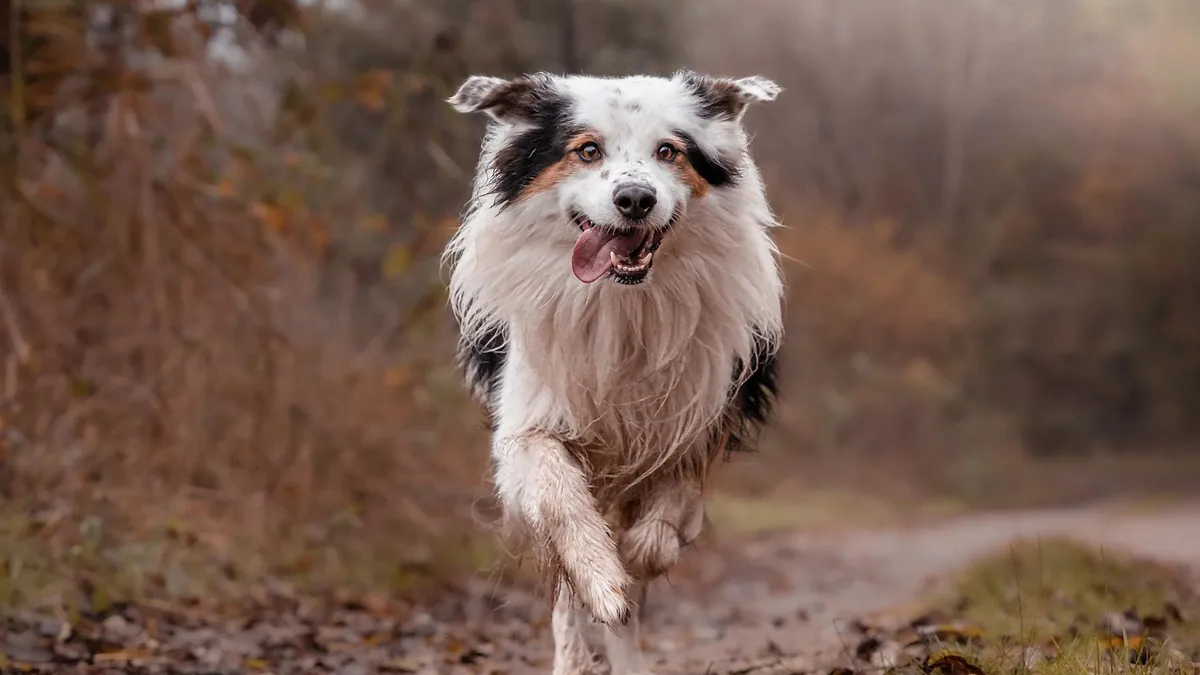
Does your dog explode into wild laps the moment you get home from a walk? That burst of running, spinning, and butt-tucking is called a frenetic random activity period (FRAP), and dog zoomies after walk are usually a harmless release of excitement or pent-up energy [1]. Most of the time it means your dog feels good and has energy to burn.
This article is educational and is not a substitute for veterinary diagnosis or treatment.
Quick Answer
- Zoomies are a normal dog behavior, most common in puppies and young dogs, and many dogs keep doing them for life [1].
- The scientific name is frenetic random activity periods (FRAPs), and there is no single known cause [1].
- A walk can trigger zoomies through excitement, sensory overload, or leftover energy that did not get used on the leash [1].
- Zoomies that come with limping, head shaking, yelping, or reluctance to move need a veterinary exam, not a training fix.
- If zoomies happen constantly, last a long time, or come with destructive behavior, ask your veterinarian about over-arousal or an ADHD-like condition [2].
Is It Normal for Dogs to Get Zoomies After a Walk?
Yes, in most cases. Zoomies are a well-recognized behavior in dogs, and they are not a sign that something is wrong with your dog's brain [1]. Dr. Pamela J. Perry, a behavior resident at Cornell University College of Veterinary Medicine, explains that FRAPs appear to be a way for dogs to release pent-up energy or relieve stress [1].
A dog who has been home alone all day with nothing to do may zoom around the house or yard to burn off that energy and get relief from hours of under-stimulation [1]. The same logic applies after a walk. Even a long walk can leave a dog mentally wired but physically under-exercised, especially if the walk was slow, stop-and-go, or full of sniffing.
Zoomies are most common in puppies and young dogs, but older dogs still get them once in a while for their whole lives [1]. Some owners can even trigger an episode on purpose by playing a certain way or making a particular sound [1].
Why Does My Dog Zoom After a Walk?
There is no known specific cause of FRAPs in dogs [1]. That said, a few common triggers line up with the timing of a walk.
Excitement and emotional release
FRAPs often happen when a dog becomes very excited, such as when an owner returns after a long absence [1]. Coming home from a walk is a similar moment. The door opens, the leash comes off, and your dog's arousal level peaks. The zoom is the physical expression of that peak.
Pent-up energy that the walk did not use
A walk is not always the same as exercise. If your dog spent 30 minutes sniffing one bush, the body may be rested while the brain is stimulated. Zoomies can be the release valve for that mismatch [1].
Stress relief
FRAPs may also help alleviate stress [1]. If your walk included a scary encounter, a loud truck, or a tense moment with another dog, the zoomies at home may be your dog's way of discharging that stress.
Sensory and social triggers on the route
Dogs gather a huge amount of information through smell, and urine marking is a central part of canine communication [3]. A walk is a long session of reading and leaving messages. That mental load can leave a dog aroused and ready to move when the leash comes off.
Medical Causes to Rule Out
Zoomies are usually behavioral, but sudden or unusual bursts of activity can sometimes have a physical cause. Your veterinarian can help sort this out.
Pain or discomfort
A dog in pain may run, spin, or pace in an attempt to relieve or distract from discomfort. Watch for zoomies that are followed by stiffness, limping, or reluctance to lie down. If your dog limps after a walk, that is a separate problem from the zoomies themselves and deserves its own evaluation. You can read more about Dog Limping After a Walk: When to Rest and When to See the Vet and Dog Limping Front Leg After Zoomies.
Paw or foot injuries
Dogs who suddenly lick, chew, or favor a paw after a walk may have stepped on something. A swollen paw after a walk can point to a bee sting, a foxtail, or an interdigital cyst. See Why Is My Dog having swollen paw after walk? Bee Sting Foxtail and Interdigital Cyst for what to look for.
Ear or head discomfort
Head shaking, head tilt, or ear scratching during or after a walk can signal an ear problem or a foreign object. If your dog is Dog Walking With Head Tilted And Shaking Head, that is a veterinary issue, not a zoomies issue.
ADHD-like syndrome
Some dogs show a pattern of impulsivity, attention problems, and hyperactivity that resembles attention-deficit/hyperactivity disorder in humans [2]. This condition is linked to dysregulation of neurotransmitters such as serotonin and dopamine, and it appears to depend on both genetics and environment [2]. Dogs with ADHD-like behavior can also have compulsive behaviors, aggression, inappropriate elimination, fearfulness, epilepsy, foreign body ingestion, and itching [2]. There is no veterinary consensus on how to diagnose it, though some questionnaires may help [2]. If your dog's zoomies are constant, hard to interrupt, and paired with other behavior problems, bring it up with your veterinarian.
When Dog Zoomies After a Long Walk Become a Problem
A dog zoomies after long walk episode is often just the last burst of energy. It becomes a concern when the pattern changes or causes harm.
Watch for these signs:
- Zoomies that last much longer than usual or do not stop when you call your dog.
- Zoomies that include crashing into furniture, walls, or people.
- Zoomies that happen every time you come home, no matter how much exercise your dog got.
- Zoomies that come with growling, snapping, or a glazed look that you cannot interrupt.
- Zoomies followed by limping, yelping, panting that does not settle, or collapse.
- Zoomies that started suddenly in an older dog with no history of them.
High arousal can also affect how dogs learn and remember. In one study of detection dogs, the effect of arousal on learning depended on the dog's baseline arousal level, with high-arousal dogs performing worse when arousal was added during learning [4]. In plain terms, a dog who is already wound up may not learn well in that moment. If your dog's zoomies are part of a broader pattern of over-arousal, training may need to happen during calm moments, not right after a walk.
What to Do Step by Step
1. Let the zoomies happen safely
If your dog is in a safe, enclosed space, let the episode run its course. Clear the area of breakable items and make sure gates are closed. Do not chase your dog, because that can increase arousal and turn the zoom into a game of keep-away.
2. Build a calm landing routine
Create a predictable routine for the last five minutes of the walk and the first five minutes at home. Use a slow leash walk up the driveway, a quiet cue like "settle," and a food puzzle or chew toy at home. This gives your dog something to do with the mouth and brain while the body winds down.
3. Match exercise to your dog's needs
If zoomies happen after every walk, your dog may need more physical exercise or more mental work. Add sniffing time, training games, or a controlled fetch session. Mental enrichment can be as tiring as physical exercise for many dogs.
4. Check the walk itself
Look at what happens on your route. If your dog reacts to other dogs, traffic, or specific places, the zoomies may be a stress response [1]. Changing the route, the time of day, or the pace can reduce the trigger.
5. Track the pattern
Keep a simple log for two weeks. Note the walk length, the route, the weather, what your dog saw, and when the zoomies started. This record helps your veterinarian or behavior professional see patterns you might miss.
6. Rule out pain first
Before you treat zoomies as a training problem, have your veterinarian examine your dog for pain, especially in the hips, knees, spine, and paws. A dog who zooms and then limps may be zooming because of pain, not in spite of it.
What Not to Do
Do not punish the zoomies
Zoomies are a normal behavior, not defiance [1]. Yelling, grabbing, or punishing your dog during a zoom can increase stress and arousal, which may make the behavior more intense over time.
Do not assume it is always harmless
Most zoomies are normal, but a sudden change in a dog's behavior pattern is worth a veterinary check. Pain, ear problems, and other medical issues can look like zoomies at first glance.
Do not use heavy sedation as a first step
Medication for behavior problems is a decision your veterinarian makes based on your dog's weight, health, and diagnosis. There is no standard dose you can apply at home. If medication is considered, your veterinarian calculates the dose for your individual dog.
Do not believe the myth that zoomies mean your dog is "getting back at you"
Dogs do not plan revenge. FRAPs are a release of energy or stress, not a message [1].
Do not ignore fear or anxiety triggers
If your dog has suddenly become afraid of the leash or the walk itself, that is a separate behavior problem. See Why Is My Dog Suddenly Scared of the Leash? for help with that pattern.
When to Involve a Veterinarian or Behavior Professional
Call your veterinarian if:
- The zoomies are new, sudden, or different from your dog's normal pattern.
- Your dog limps, yelps, or moves stiffly before or after zoomies.
- Your dog cannot be interrupted or redirected during an episode.
- The behavior is causing injuries to your dog, your family, or your home.
- Your dog shows other signs such as aggression, house soiling, fear, or compulsive behaviors [2].
Ask for a referral to a veterinary behaviorist or a certified behavior professional if your dog's zoomies are part of a larger pattern of over-arousal, anxiety, or impulsivity. These professionals can assess your dog's arousal level and build a plan that fits your dog's specific triggers.
Limitations and When to Contact a Veterinarian
Zoomies are usually normal, and most episodes do not need treatment [1]. However, this article cannot tell you what is happening with your individual dog. Only your veterinarian can examine your dog, ask about the full history, and decide whether the behavior is normal, painful, or part of a behavior disorder.
Contact your veterinarian the same day if your dog:
- Limps or refuses to put weight on a leg after zoomies.
- Yelps during or after an episode.
- Has a swollen, red, or painful paw.
- Shakes the head, tilts the head, or scratches at an ear.
- Seems disoriented, wobbly, or unusually quiet after zoomies.
Go to an emergency clinic now if your dog:
- Collapses or cannot stand.
- Has trouble breathing or gums that look pale, blue, or white.
- Has a seizure or loses consciousness.
- Shows sudden severe pain, crying, or inability to move.
- Ate something during the zoom that could be a foreign body.
Schedule a routine visit if:
- The zoomies have changed in frequency, duration, or intensity over weeks.
- Your dog's sleep, appetite, or activity level has changed.
- You are struggling to manage the behavior at home.
- You want to discuss whether an ADHD-like condition could be involved [2].
Frequently Asked Questions
Is it normal for dogs to get zoomies after a walk?
Yes, it is normal for most dogs. Zoomies are a recognized behavior pattern called FRAPs, and they are most common in puppies and young dogs, though many dogs continue to have them throughout life [1]. A walk can trigger them through excitement, stress relief, or leftover energy [1].
Why does my dog zoom after a walk?
There is no single known cause, but FRAPs appear to be a way to release pent-up energy or relieve stress [1]. Excitement is a common trigger, and coming home from a walk is an exciting moment for many dogs [1]. Some dogs also zoom because the walk was mentally stimulating but not physically tiring.
Can dog zoomies after a long walk mean something is wrong?
Sometimes. A long walk can cause muscle soreness or paw irritation, and a dog may zoom in response to discomfort. If your dog limps, yelps, or favors a paw after zoomies, have your veterinarian examine your dog. Pain in the hips, knees, or spine can also show up as sudden bursts of activity.
Should I stop my dog from doing zoomies?
You do not need to stop normal zoomies if your dog is in a safe space. Clear the area, close gates, and let the episode pass. If the zoomies are constant, destructive, or hard to interrupt, talk to your veterinarian or a behavior professional about a plan.
When should I see a vet for zoomies?
See your veterinarian if the zoomies are new, sudden, or different from your dog's usual pattern. Also call if your dog limps, yelps, shakes the head, or seems painful before or after an episode. If your dog collapses, has trouble breathing, or has a seizure, go to an emergency clinic right away.
Related Articles
- Dog Limping Front Leg After Zoomies
- Why Is My Dog having swollen paw after walk? Bee Sting Foxtail and Interdigital Cyst
- Dog Limping After a Walk: When to Rest and When to See the Vet
- Why Is My Dog Suddenly Scared of the Leash?
- Dog Walking With Head Tilted And Shaking Head
- Why Is My Dog Scooting?
- Dog Zoomies: Why They Happen and How to Manage Them
- Why Do Dogs Get the Zoomies? Causes and When to Worry
- Dog Throwing Up After Zoomies: Why It Happens
References
- What are zoomies?. Cornell University College of Veterinary Medicine.
- New Advances in Attention-Deficit/Hyperactivity Disorder-like Dogs. Animals : an open access journal from MDPI, 2024.
- Decoding dog communication through the physiology and behavior of urine marking. Scientific reports, 2025.
- The effect of arousal during and post-training on memory consolidation in detection dogs. Scientific reports, 2025.