How to Get Your Dog to Focus on You During Walks
By Dr. Zubair Khalid, DVM, MS, PhD ·
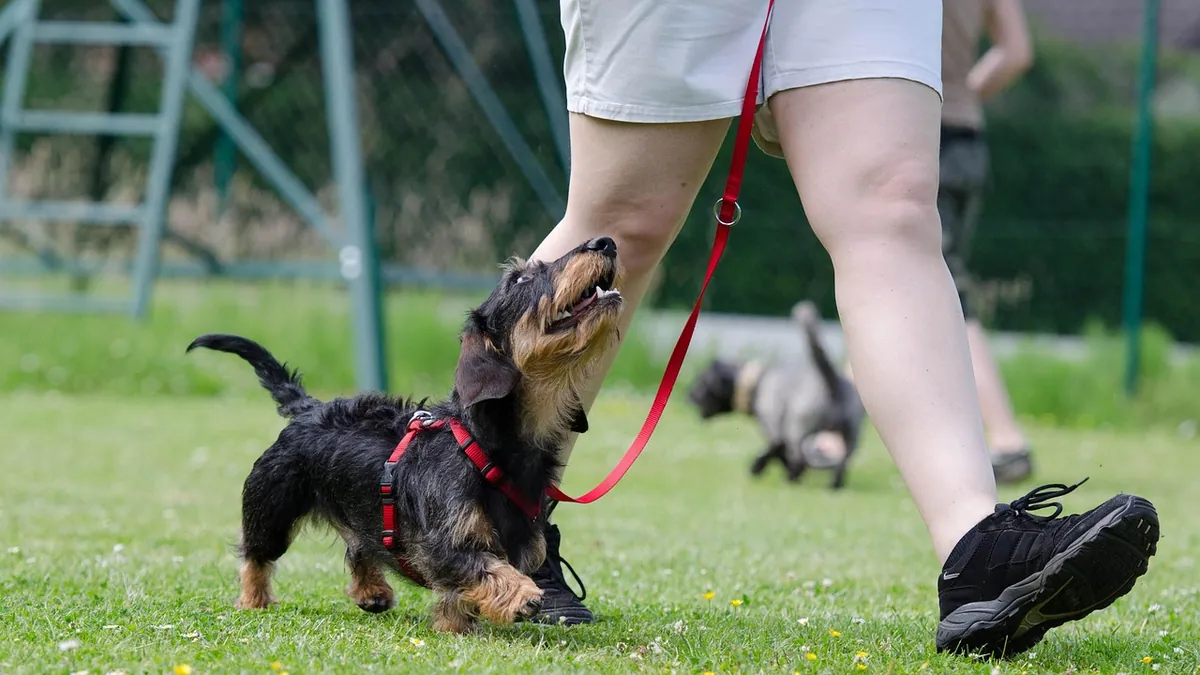
You teach focus by rewarding it, not by demanding it. Start in a quiet spot with no distractions, reward every glance at your face, then slowly add distance, other dogs, and noise. Most dogs can learn to check in with you during walks, and the skill builds over weeks of short, consistent sessions.
This article is educational and is not a substitute for veterinary diagnosis or treatment.
Quick Answer
- Reward eye contact the moment it happens. Say a marker word like "yes" and pay with a treat, so looking at you becomes the best-paying choice on the walk.
- Practice in low-distraction places first, then add challenges one at a time. A dog who can focus in your driveway is not ready for a busy park.
- Keep sessions short, about 2 to 5 minutes, several times a day. Attention is a muscle that tires fast.
- Use equipment that fits well and does not cause pain. Pulling force differs by equipment type, and aversive collars carry welfare concerns [1].
- Rule out pain and medical problems if focus suddenly gets worse in a dog who used to walk well.
Why Your Dog Gets Distracted on Walks
Distraction is normal dog behavior
Walks are a flood of information. Smells tell your dog who passed by, when, and what they ate. Motion triggers chasing instincts. Other dogs signal social opportunities. For a dog, ignoring all of that to watch your face is hard work.
Breed and individual differences matter here. Research on purebred dogs in a social learning task found that breeds vary in how much they watch a human demonstrator and how quickly they improve after watching [2]. Some dogs are wired to check in with people often. Others need more practice. Neither is a training failure.
Your dog may not have learned that you are worth watching
Many dogs were never taught engagement. They learned to pull toward interesting things because pulling worked. They learned that the owner's voice is background noise. If you have ever followed a pulling dog down the street while chatting on your phone, your dog learned that you are not part of the walk.
Arousal and stress change focus
A dog who is overexcited, anxious, or over threshold cannot learn. When arousal is high, the thinking part of the brain takes a back seat. That is why a dog who nails "watch me" in the kitchen stares past you at the park. You are not asking for obedience. You are asking for a nervous system that can pay attention.
Nose work and enrichment build mental skills
Training that makes dogs use their noses and solve problems may support executive function, which includes attention and impulse control [3]. That does not mean every walk needs to be a nose work session. It does mean that giving your dog legal outlets for sniffing and thinking can make focused walking easier.
Medical Causes to Rule Out Before Training
Sudden loss of focus in a dog who used to walk well deserves a veterinary look. Pain is a common hidden cause of behavior change. A dog with an aching neck, sore back, or painful hips may pull, lag, or scan the environment because moving hurts.
Other medical issues that can affect attention and walking include:
- Vision or hearing loss, which makes the world confusing and startles a dog
- Chronic ear infections or skin disease, which cause discomfort
- Arthritis, which is common in older dogs and often underrecognized
- Thyroid disease, which can change energy and behavior
- Seizure disorders or neurologic disease, which can cause staring, disorientation, or unusual episodes
Your veterinarian can examine your dog, ask about the timeline, and decide whether testing is needed. Bring notes about when the change started and what makes it better or worse.
When Distraction Becomes a Problem
A distracted dog is not automatically a problem dog. The behavior becomes a problem when it affects safety or quality of life.
Warning signs include:
- Lunging into traffic or toward people, bikes, or other dogs
- Pulling so hard that you lose your grip on the leash
- Choking, gagging, or coughing while pulling
- A dog who cannot be walked safely by any adult in the household
- Walks that leave you frustrated, anxious, or avoiding them
Leash pulling is one of the most commonly reported behavior problems for dog owners, which is why so many equipment types exist to reduce pulling force [1]. Equipment can help manage the problem, but it does not teach attention. Training does.
How to Get My Dog to Focus on Me During Walks: Step by Step
Step 1: Build a reward that beats the environment
Find out what your dog loves most. Small pieces of chicken, cheese, or freeze-dried treats often work better than kibble on a walk. Use tiny pieces so you can reward often without overfeeding. If your dog has food allergies or a prescription diet, ask your veterinarian what treats are safe.
Step 2: Charge a marker word
Pick one word, such as "yes," and say it right before you hand over a treat. Repeat this 10 to 20 times in your kitchen. Soon the word itself predicts a reward, which lets you mark the exact moment your dog looks at you.
Step 3: Teach a name response indoors
Say your dog's name once. When your dog looks, mark and treat. Practice in different rooms. If your dog does not look, move closer or use a kissy sound instead of repeating the name. Repeating the name teaches your dog that the first one does not matter.
Step 4: Add a focus cue
Once your dog looks reliably, add a cue like "watch" or "focus." Say it, wait for eye contact, mark, and treat. Keep sessions to 2 to 5 minutes. End while your dog is still succeeding.
Step 5: Practice in the real world, one layer at a time
Move to your front yard, then your sidewalk, then a quiet park. At each new place, lower your expectations. Reward any glance at you, even a quick one. If your dog cannot focus at all, you moved too fast. Go back to the last place where your dog could succeed.
Step 6: Use engagement games on the walk
These games build attention without feeling like drills.
- Find it: Drop a treat on the ground and say "find it." Your dog sniffs, which lowers arousal, then looks up at you for the next one.
- Ping-pong walking: Change direction often. Reward your dog for catching up and checking in.
- Treat magnet: Hold a treat near your chest and reward your dog for moving toward your hand position instead of straining forward.
- Sniff breaks on cue: Say "go sniff," let your dog explore for a minute, then say "let's go" and reward the return of attention. This teaches your dog that checking in does not end the fun.
For more leash skills, see Dog Training Tips For Leash Walking and Dog Leash Training Tips.
Step 7: Choose equipment that supports focus
A well-fitted harness or flat collar can reduce pulling force compared with equipment that causes pain [1]. The goal is comfort, not punishment. A dog who is being choked or pinched is not learning to focus. That dog is learning to endure.
If pulling is severe, a front-connection harness may give you more control while you train. Ask your veterinarian or a certified trainer to help you fit it correctly.
Step 8: Add enrichment outside of walks
A dog with a full mental bucket is easier to engage. Nose work style games, food puzzles, and training sessions at home all build attention and impulse control [3]. A tired brain often walks better than a tired body.
If barking is part of your dog's distraction pattern, see How To Get My Dog To Stop Barking.
What Not to Do
Do not punish your dog for looking away
Jerking the leash, yelling, or popping the collar when your dog glances at a squirrel teaches your dog that looking at things predicts pain. That can create anxiety and make walks worse. It also does not teach your dog what to do instead.
Do not rely on aversive collars as a shortcut
Prong collars and similar tools are debated because of their aversive design, and research comparing leash equipment has examined both pulling force and welfare impacts [1]. Even if a tool reduces pulling in the short term, it does not build voluntary attention. A dog who complies from fear is not a focused dog.
Do not repeat cues
Saying "watch, watch, watch" teaches your dog to ignore the first several. Say it once. If your dog does not respond, change the environment or lower the difficulty.
Do not train only when your dog is already over threshold
A dog who is lunging and barking cannot learn a new skill in that moment. Create distance, get your dog under threshold, then train. Prevention beats correction.
Do not expect a quick fix
Attention is a skill built over many short sessions. Progress is often measured in weeks, not days. Track small wins, like a single check-in on a busy street.
Do not skip veterinary care for sudden changes
If your dog's focus changed suddenly, or if your dog seems painful, stiff, or unwell, book a veterinary visit before assuming it is a training problem.
When to Involve a Veterinarian or Certified Behavior Professional
Call your veterinarian if your dog:
- Suddenly stops focusing on walks after previously walking well
- Shows signs of pain, stiffness, limping, or reluctance to move
- Has episodes of staring, disorientation, or unresponsiveness
- Becomes aggressive, snaps, or bites when approached on a walk
- Cannot be walked safely despite consistent training
Ask your veterinarian about a referral to a veterinary behaviorist or a certified behavior professional for severe cases. These professionals can assess medical and behavioral factors together and build a plan for your dog.
Limitations and When to Contact a Veterinarian
Training advice works best when the dog is healthy and the environment is safe. This article cannot assess your dog's pain level, vision, hearing, or neurologic status. Individual cases need a veterinarian who can examine your dog in person.
Contact your veterinarian the same day if your dog:
- Yelps, cries, or collapses during a walk
- Vomits, has diarrhea, or refuses food along with a behavior change
- Shows sudden weakness, wobbling, or a head tilt
- Has a suspected injury from pulling, slipping, or a collar incident
Seek emergency care now if your dog:
- Has trouble breathing, especially with choking or gagging after collar pressure
- Collapses or cannot stand
- Has a seizure lasting more than a few minutes or repeated seizures
- Shows severe pain, pale gums, or a distended abdomen
Schedule a routine visit if your dog:
- Has a gradual change in focus, energy, or willingness to walk
- Seems stiff after rest or slow to rise
- Has new anxiety about walks, noises, or other dogs
- Has a chronic health condition that may affect mobility
For suspected poisoning, contact the ASPCA Animal Poison Control Center at (888) 426-4435 or the Pet Poison Helpline at (855) 764-7661. Keep the product label and your dog's weight handy.
Frequently Asked Questions
How long does it take to teach a dog to focus on walks?
Most dogs show improvement within a few weeks of daily short sessions, but full reliability around big distractions can take months. Progress depends on your dog's age, breed tendencies, prior training, and how often you practice. Keep sessions brief and reward often.
Should I use treats on every walk forever?
You can thin out treats over time, but keep rewarding attention at least sometimes, especially in hard situations. A variable reward schedule often keeps behavior strong. If you stop paying entirely, your dog may decide the environment pays better.
My dog focuses at home but not outside. What should I do?
Your dog is telling you the outside world is too hard right now. Move to an easier location, increase distance from distractions, and reward any brief glance at you. Build difficulty in small steps instead of jumping straight to the busy street.
Can a harness make my dog pull more?
Some dogs pull harder in certain harnesses, and equipment effects vary by dog and design. Research has compared pulling force across leash equipment types, including martingales, front-connection harnesses, and prong-style collars [1]. Fit matters, so ask a trainer or veterinarian to check the gear on your dog.
Does breed affect how well a dog focuses on people?
Yes, breed and individual differences affect how much dogs rely on human cues. In one study, purebred dogs varied in how much they watched a human demonstrator and how quickly they improved after watching [2]. That means some dogs need more repetition and better rewards to build the same focus.
Can nose work or sniffing games help my dog pay attention?
Sniffing and problem-solving games may support attention and impulse control skills [3]. They also give your dog a legal outlet for natural behavior, which can lower arousal on walks. Try a few minutes of sniffing games before a walk to take the edge off.
Is walking my dog good for my own wellbeing too?
Interacting with a companion animal is linked to higher positive mood and lower negative mood in daily life, based on real-time reports from dog and cat owners [4]. Walks are one way to get that interaction. If walks feel stressful, improving focus can help both of you enjoy them more.
Related Articles
- Dog Training Tips For Walking
- Dog Training Tips For Leash Walking
- Dog Leash Training Tips
- Dog Training Tips Leash Pulling
- How To Get My Dog To Stop Barking
- Dog Training Tip
- How to Get Your Dog to Follow and Listen to You
- Dog Won't Walk on Leash: Causes and Training Steps
- How Much Should You Walk Your Dog Each Day?
References
- Comparing efficacy in reducing pulling and welfare impacts of four types of leash walking equipment. PeerJ, 2024.
- Attention and improvement: social learning reveals two behavioural dimensions behind dog-human interactions. Evolutionary human sciences, 2026.
- Does Nose Work Training Affect Dog Executive Function and Physical Fitness in Humans and Dogs?. Animals : an open access journal from MDPI, 2026.
- Human-animal interaction: understanding the role of dog and cat interactions in emotional wellbeing. Frontiers in psychology, 2026.