Why Won't My Dog Go Outside? Causes and What to Do
By Dr. Zubair Khalid, DVM, MS, PhD ·
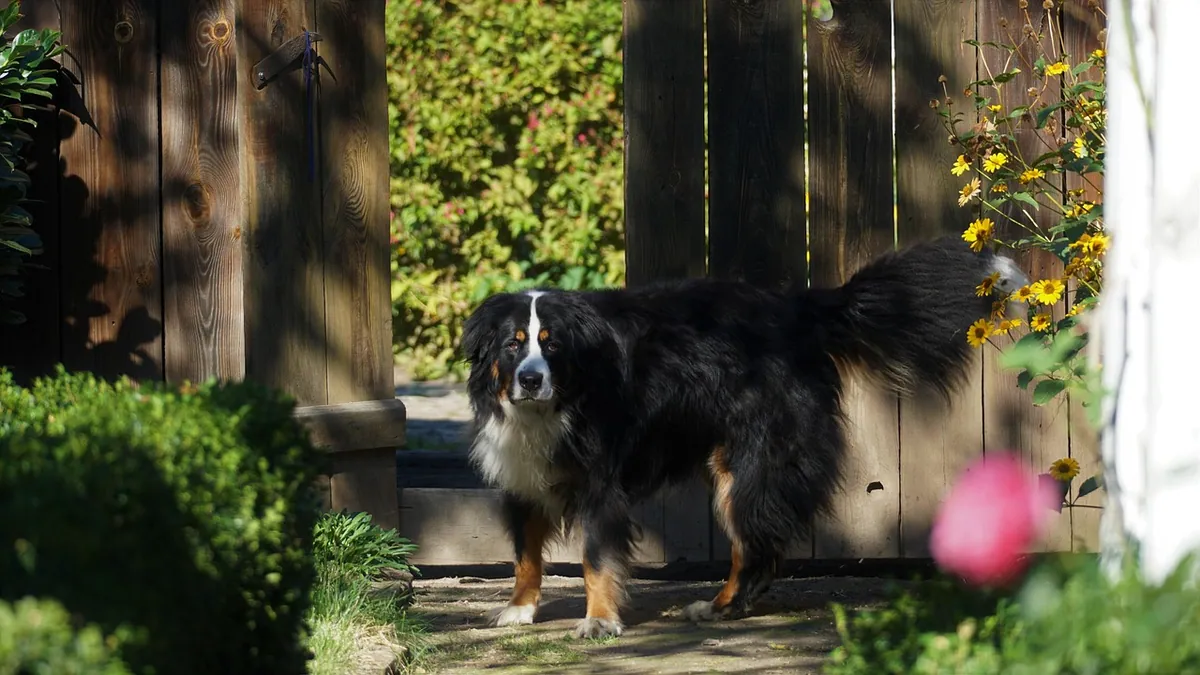
If your dog is hanging back at the door, planting their feet on the sidewalk, or hiding when you reach for the leash, there is usually a reason you can find and fix. The question "why does my dog not want to go outside" has two big buckets of answers: something physical is making the outdoors uncomfortable, or something about the outdoors has become scary or confusing. Most cases fall somewhere in between, and the fix depends on which one you are dealing with.
This article is educational and is not a substitute for veterinary diagnosis or treatment.
Quick Answer
- Pain and physical discomfort are common and easy to miss. A dog with sore hips, a sore back, or irritated paws may refuse walks because moving hurts, and owners often read that as stubbornness.
- Fear and anxiety are extremely common in dogs. In a large U.S. sample of 43,517 dogs, owners reported anxiety and fear behaviors across several categories, including reactions to unfamiliar people, unfamiliar dogs, and unfamiliar things in the environment [1].
- Weather, footing, and noise matter. Ice, salt, hot pavement, thunderstorms, and heavy traffic can all turn a routine potty break into something your dog avoids.
- Puppies who never ask to go out are usually not fully potty trained yet, not defiant. They need more frequent trips, supervision, and reward for going in the right spot.
- Do not punish a dog who refuses to go out. Punishment adds fear to an already unpleasant situation and makes the problem worse.
Normal Reasons a Dog Might Avoid or Over-Request the Outdoors
Some reluctance is completely normal and temporary.
Weather and surface discomfort. Small, short-coated, and senior dogs lose body heat fast. Hot pavement can burn paw pads. Rock salt and ice melt sting. If your dog only refuses in extreme weather, the environment is probably the whole story.
A recent change in routine. A move, a new baby, a different work schedule, or a houseguest can unsettle a dog for days. Dogs are routine animals, and a shifted potty schedule often shows up as door hesitation or accidents.
Age-related changes. Senior dogs may sleep more deeply and miss their own signals, or they may have less bladder control. A dog who used to ask clearly may simply stop asking.
Over-arousal in the other direction. If your dog keeps wanting to go outside constantly, that is often the opposite problem. Boredom, a high-energy breed with too little exercise, or a dog who has learned that the door means attention can all produce nonstop door requests. That is a training and enrichment issue, not a medical one, unless something else is going on.
Medical Causes to Rule Out First
Before you build a training plan, get pain and illness off the table. This is the step owners skip most often.
Pain and mobility problems. Owners are not always good at spotting subtle pain. When researchers asked 530 dog owners to rate 17 behavioral signs for how likely they were to indicate pain, signs like a change in personality, hesitant paw lifting, fluctuating mood, and reduced play scored higher than things like air sniffing, nose licking, and yawning [2]. Notice that list. A dog who suddenly seems "moody" or "lazy" about walks may be hurting.
Orthopedic disease. Arthritis, cruciate ligament injuries, and spinal issues all make stairs, slick floors, and long walks harder. A dog may happily go out for a two-minute potty break and refuse the longer walk.
Paw and nail problems. Torn pads, foreign objects, nail bed infections, and allergies between the toes cause real pain on rough ground. If your dog is also licking or chewing at their rear end or scooting, that points to a different set of issues, which you can read about in Why Is My Dog Scooting?.
Gastrointestinal and urinary disease. Diarrhea, constipation, urinary tract infections, and bladder stones can make a dog associate going out with discomfort. Some dogs start holding it because it hurts.
Vision and hearing loss. A dog who cannot see well in dim light or hear traffic may become cautious outdoors, especially at night.
Cognitive dysfunction. Older dogs with canine cognitive dysfunction often pace, get lost in familiar places, and change their bathroom habits.
Medication side effects. Some drugs cause sedation, nausea, or increased urination. If the timing lines up with a new prescription, call your veterinarian.
When Avoiding the Outdoors Becomes a Problem
A dog who skips one walk in a rainstorm is fine. A dog who refuses to eliminate outside for more than a day is not.
Watch for these patterns:
- The dog holds urine or stool for long stretches and then eliminates indoors.
- The dog shows fear signs outdoors: lowered body posture, hugging the sides of buildings, darting back and forth, strong leash pulling, startling at noises, trembling, refusing to walk, or panting heavily [3].
- The dog will not take treats or respond to known cues like "sit" while outside, which is a strong sign of fear or stress [3].
- The dog resists going for walks altogether [3].
- The refusal is sudden and came with other changes, like not eating, limping, vomiting, or hiding.
That last group needs a veterinary visit, not a training plan. If your dog has also stopped eating, see My Dog Won't Eat: When to Worry.
What to Do Step by Step
Step 1: Get a physical exam
Book a wellness visit and describe exactly what you see. Bring notes on when the refusal started, what surfaces or times of day are worst, and whether your dog limps, lags on stairs, or seems stiff after rest. Your veterinarian will decide whether bloodwork, urine testing, or imaging is needed. If pain is the cause, treating it often resolves the outdoor refusal on its own.
Step 2: Make the outdoors less scary
If your dog shows fear signs outside, change the outing itself [3].
- Walk during quieter times, such as early morning or later at night [3].
- Stay close to home. That may mean not leaving the area right outside your front door at first [3].
- Pair outings with high-value treats cut into pea-sized pieces, and bring plenty before you head out [3].
- Start with short trips and add distance only when your dog is relaxed.
If your dog is scared of the leash itself, that is a separate problem with its own approach. See Why Is My Dog Suddenly Scared of the Leash?.
Step 3: Rebuild potty training from the ground up
For puppies who are not asking to go out, and for adult dogs who regressed, treat it like starting over.
- Take your dog out on a schedule, not on request. Every 1 to 2 hours for young puppies, and every 3 to 4 hours for adults during retraining.
- Go to the same spot each time. Scent is a powerful cue.
- Stand still and boring. Let your dog sniff and circle.
- Reward within 2 seconds of finishing, while you are still outside.
- Supervise indoors. Use a leash, a closed door, or a crate so accidents cannot happen unnoticed.
- Clean accidents with an enzymatic cleaner so the spot stops smelling like a bathroom.
A full walkthrough is in Potty Training Your Dog To Go Outside. If your dog is going in the house despite consistent training, that is a different pattern worth reading about in Why Won't My Dog Potty Train.
Step 4: Add enrichment so the door stops being the only entertainment
If your dog keeps wanting to go outside all day, the issue may be under-stimulation or a door routine that pays off with attention.
- Add food puzzles, snuffle mats, and chew items indoors.
- Teach a settle cue on a mat so "resting" has a reward.
- Put the door on a cue. Your dog goes out when you say so, not when they ask.
- Increase real exercise. A tired dog asks for the door far less.
- Ignore demand barking at the door. Wait for quiet, then decide whether it is a real potty need.
Step 5: Build a gradual exposure plan for fear
For a fearful dog, work in small steps and stop before your dog panics.
- Open the door and stand at the threshold. Treat.
- Step onto the porch or stoop. Treat.
- Walk 10 feet. Treat and return.
- Add 10 feet per session, only if your dog stays relaxed.
- Add new streets, then new times of day.
If your dog stops eating treats, that is your signal to back up a step. Fear suppresses appetite, and a dog who will not take food is over threshold [3].
Step 6: Talk to your veterinarian about anxiety support
For travel-related and situational fear, veterinarians sometimes prescribe medications off label. In a study of 36 dogs, a single dose of trazodone at 10 mg/kg (range 9.4 to 12.8 mg/kg) reduced behavioral and physiological signs of travel-induced anxiety, and gabapentin was also evaluated at 30 mg/kg (range 27 to 35.7 mg/kg) [4]. These are research doses, not dosing instructions for your dog. Your veterinarian calculates the right drug and dose from your dog's weight, health, and other medications.
Cannabidiol (CBD) is another option owners ask about. Evidence for CBD's calming effects appears more consistent in chronic stress conditions than in acute fear responses, and mild side effects like stomach upset and sedation have been reported in dogs, along with increases in serum alkaline phosphatase activity [5]. If you want to try CBD, do it with veterinary guidance, not on your own.
What Not to Do
Do not punish fear. Yelling, jerking the leash, or forcing a scared dog out the door adds stress to an already frightening situation. Fear does not respond to correction.
Do not drag or carry a refusing dog down the block. You may win the walk and lose your dog's trust.
Do not assume it is stubbornness. Pain, fear, and illness look like stubbornness from the outside. Owners underrate subtle pain signs, especially changes in personality, mood, and play [2].
Do not skip the vet visit because the behavior seems "just behavioral." Behavior changes are often the first visible sign of a medical problem.
Do not flood your dog. Repeated forced exposure to a scary thing does not create confidence. It creates more fear.
Do not rely on a single quick fix. Retraining takes weeks, not days.
When to Call a Veterinarian or Certified Behavior Professional
Call your veterinarian if your dog refuses to go outside for more than 24 hours, if they are holding urine or stool for long stretches, if you see limping, stiffness, or paw licking, or if the refusal started suddenly.
Seek help from a certified behavior professional if your dog shows severe fear, anxiety, or stress outdoors [3]. Signs of severe fear include trembling, panic pulling, freezing, and refusing to eat treats outside [3]. A qualified behavior professional can build a structured desensitization plan and coordinate with your veterinarian on medication if needed.
Limitations and When to Contact a Veterinarian
This article covers common patterns, but every dog is different. Individual cases need a veterinarian who can examine your dog, ask follow-up questions, and see how your dog moves and behaves in person.
Contact your veterinarian the same day if:
- Your dog has not urinated in 24 hours or has not had a bowel movement in 48 hours.
- Your dog is straining to urinate, crying out, or producing only small amounts of urine.
- Your dog is limping, dragging a limb, or cannot rise.
- Your dog is refusing food along with refusing to go out.
- Your dog is vomiting, has diarrhea, or seems painful when touched.
Go to an emergency clinic now if:
- Your dog cannot urinate at all despite trying.
- Your dog's abdomen looks bloated and hard.
- Your dog collapses, has a seizure, or has trouble breathing.
- Your dog is panting heavily and cannot settle, especially in hot weather.
- Your dog shows sudden weakness in the back legs or loses control of bladder or bowel.
Schedule a routine visit if:
- The refusal has lasted more than 2 to 3 days without other symptoms.
- Your dog is an older dog with new hesitation on stairs or slick floors.
- Your dog's personality, mood, or play level has changed [2].
- You have tried basic retraining for 2 weeks with no progress.
Frequently Asked Questions
Why does my dog not want to go outside at night?
Nighttime reluctance usually comes down to reduced vision, unfamiliar shadows, or noise sensitivity. Older dogs with fading eyesight often become cautious in the dark, and dogs with noise fear may tense up when the neighborhood is quieter and every sound carries. Try a lit path, a shorter route, and high-value treats, and mention the change to your veterinarian.
My dog keeps wanting to go outside but does not potty. What does that mean?
This pattern often means the door has become a request for attention, play, or a change of scenery instead of a bathroom signal. It can also mean your dog has learned that going out earns a reward, or that they are bored indoors. Put the door on your cue, add indoor enrichment, and rule out urinary or digestive issues with your veterinarian if the behavior is new.
Why is my dog refusing to go outside after years of normal walks?
A sudden change in a long-standing habit points toward a medical cause first. Pain, a new medication, an injury, or an illness can all turn a familiar walk into something your dog avoids. Fear can also appear suddenly after a single scary event, such as a loud noise or a dog fight. Get a veterinary exam before starting a training plan.
My puppy is not asking to go outside. Is that normal?
Yes, this is normal for young puppies. Asking to go out is a learned skill that develops with age, bladder control, and repetition. Puppies need frequent scheduled trips, supervision indoors, and immediate rewards for going in the right place. Most puppies need weeks of consistent practice before they reliably signal at the door.
Can I just wait for my dog to get over it?
Waiting rarely works when fear or pain is involved, and it can make both worse. Fear tends to grow with repeated bad experiences, and untreated pain tends to progress. A better plan is a veterinary exam plus a gradual, reward-based retraining plan. If your dog shows severe fear or anxiety outdoors, work with a certified behavior professional [3].
Related Articles
- Why Won't My Dog Potty Train
- Why Is My Dog Scooting?
- Potty Training Your Dog To Go Outside
- Why Is My Dog Suddenly Scared of the Leash?
- My Dog Won't Eat: When to Worry
- Why Is My Dog Having Behavior Problems
- Dog Won't Walk on Leash: Causes and Training Steps
- How to Teach Your Dog to Ask to Go Outside
- Puppy Refuses to Potty Outside? How to Fix It
References
- Owner-reported prevalence and severity of fear and anxiety in dogs. Veterinary research communications, 2026.
- The abilities in dog pain sign recognition as assessed by presenting seventeen listed dog behavioural signs and three case descriptions to dog owners and non-dog owners. PloS one, 2026.
- Fear of the Outdoors. ASPCA Animal Poison Control Center.
- Acute trazodone administration reduces behavioral and physiological indicators of travel-induced anxiety in dogs in a road travel model. Frontiers in veterinary science, 2026.
- Cannabidiol in small animal practice: current evidence, clinical applications and practical recommendations for dogs and cats. The Journal of small animal practice, 2026.