Do Cats Understand Kisses? What Your Cat Really Thinks
By Dr. Zubair Khalid, DVM, MS, PhD ·
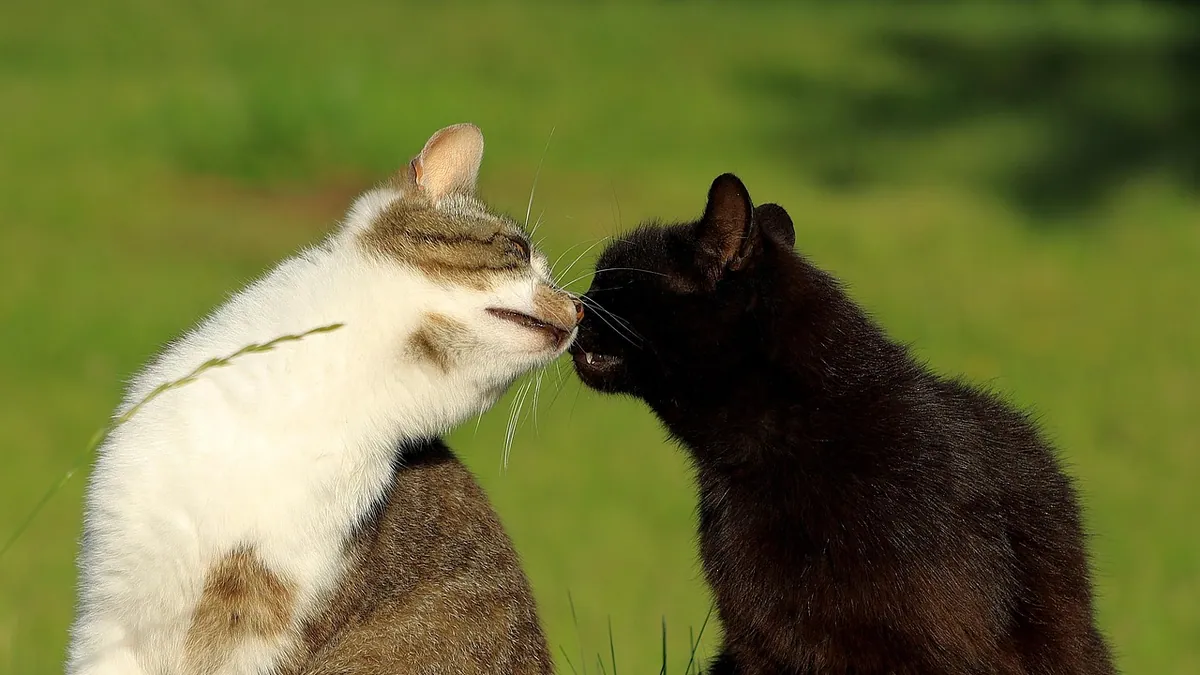
Do cats understand kisses? Not the way humans do. A kiss is a human gesture of affection, and cats do not have a cultural script for it. What matters to your cat is the pressure, smell, sound, and sudden closeness that come with a kiss, and whether those feel safe or threatening in the moment.
This article is educational and is not a substitute for veterinary diagnosis or treatment.
Quick Answer
- Cats do not read a kiss as "I love you." They read the sensory package: your face close to theirs, your breath, your scent, and any sound you make.
- Many cats accept gentle contact on the head or cheek from a trusted person, but a kiss aimed at the face or nose can feel like a threat or an invasion of space.
- Slow blinking, a relaxed tail, and staying put are green lights. Flattened ears, a twitching tail, and pulling away are red lights.
- Forced or restrained affection raises cortisol and lowers oxytocin in cats, while passive, low-pressure interaction does the opposite [1].
- You can show love in ways cats actually understand, including slow blinks, cheek rubs, and letting your cat choose the distance.
Do Cats Know What Kisses Are?
No. Cats have no concept of a kiss as a romantic or familial gesture. They do have a rich facial signaling system, and they can produce facial signals flexibly depending on the situation [2]. That means your cat is reading your face and body, just not the way another human would.
When you lean in and press your lips to your cat, your cat processes several things at once. Your face is suddenly very close, which blocks escape routes. Your breath carries scent information. Your hands may be holding your cat still. For a cat who trusts you, this can be neutral or mildly pleasant. For a cat who does not, it can be stressful.
Cats are also sensitive to emotional cues. In one study, cats looked longer and more often at negatively valenced visual stimuli, which suggests they pick up on emotional signals in faces and body postures [3]. Your cat may not know what a kiss means, but your cat can tell whether you seem calm, tense, or unpredictable.
How Do Cats Interpret Kisses?
Cats interpret kisses through touch, smell, and proximity, not symbolism. Here is what is likely going on in your cat's mind.
Touch and pressure
A kiss on the top of the head is light pressure in a spot many cats tolerate from people they trust. A kiss on the nose or mouth is more intrusive. Cats use nose touches as greetings, but a human mouth pressed to a cat's nose is not the same signal.
Scent
Your breath carries information about what you ate, your health, and your identity. Cats rely heavily on scent to identify familiar individuals. A familiar scent can be reassuring. An unfamiliar one, such as strong perfume or food your cat has never smelled, can cause your cat to pull back.
Proximity and restraint
Cats care a lot about whether they can leave. If you pick your cat up and kiss them while holding them, you remove their choice. Research on owner-cat interactions found that forced interactions increased cortisol and decreased oxytocin, while passive interactions did the opposite [1]. A kiss that traps your cat is a forced interaction.
Sound
Kissing sounds, such as a loud smack, can startle cats. Cats are sensitive to sudden noises. A quiet kiss is less likely to trigger a startle response.
Do Kittens Like Kisses?
Kittens may tolerate kisses more than adult cats, but tolerance is not the same as enjoyment. Kittens go through a socialization period from about 2 weeks to 7 weeks of age, when they learn what is safe and familiar [4]. Handling during this window can shape how a kitten responds to people later.
Even so, a kitten's small size makes restraint easy for you and stressful for the kitten. If a kitten squirms, flattens its ears, or tries to leave, that is a no. Let the kitten come back on its own terms.
Medical Causes to Rule Out
Sometimes a cat who suddenly hates being kissed is not making a statement about affection. The cat may be in pain or discomfort.
Dental disease, oral pain, and arthritis can all make a cat flinch when your face or hands come near. If your cat's breath smells bad, that can be an early clue to dental problems. You can read more about that in Why Does My Cat's Breath Smell?.
Older cats with arthritis may resist handling because their joints hurt. Learn the subtle signs in Cat Arthritis: How to Tell If Your Cat Is in Pain.
Any sudden change in how your cat accepts touch deserves a veterinary visit. Pain, thyroid disease, and other medical conditions can all change a cat's tolerance for handling.
When Does a Kiss Become a Problem?
A kiss becomes a problem when it causes stress, fear, or aggression. Watch for these signs.
- Ears flattening or rotating sideways
- Tail twitching, lashing, or thumping
- Pupils dilated in normal light
- Skin rippling along the back
- Head turning away or pulling back
- A paw raised to block your face
- A growl, hiss, or swat
- Freezing, which can be a sign of fear
If your cat shows any of these, stop. Repeated forced affection can teach your cat to avoid you or to escalate to a bite. It can also damage the bond you are trying to build.
How to Tell If My Cat Likes Kisses
You cannot ask your cat, but you can read the answer. A cat who likes kisses usually shows these signs.
- Stays in place or leans in
- Slow blinks at you
- Purrs or kneads
- Rubs their cheek or head against you afterward
- Comes back for more
- Tail held up with a gentle curve
A cat who dislikes kisses usually shows these signs.
- Pulls away or jumps down
- Turns the head or body away
- Ears go flat or back
- Tail twitches or lashes
- Bites or swats
- Avoids you for a while afterward
The best test is choice. Offer your face near your cat without touching, and see what your cat does. If your cat stays, you can try a gentle kiss on the head. If your cat leaves, respect that.
How to Show Affection in Ways Cats Understand
You do not need kisses to bond with your cat. Cats have their own language, and you can learn it.
Slow blink
Look at your cat with relaxed eyes and blink slowly. Many cats blink back. This is a calm signal that says you are not a threat.
Cheek and head rubs
Cats have scent glands on their cheeks and head. When your cat rubs against you, they are marking you as safe. You can offer your knuckles for a cheek rub instead of leaning in for a kiss.
Let your cat choose
Sit on the floor and let your cat come to you. Passive interaction is linked to higher oxytocin and lower cortisol in cats [1]. That means simply being near your cat without grabbing or restraining them can strengthen your bond.
Play
Interactive play with a wand toy is one of the best ways to build trust. Play mimics hunting and gives your cat an outlet for natural behavior.
Respect sleep and eating
Do not kiss your cat while they are eating or sleeping. Interrupting these activities can create negative associations. Cats prefer to eat multiple small meals throughout the day, so mealtime matters to them [4].
Watch the whole cat
A relaxed cat has soft eyes, forward ears, and a loose body. A tense cat has tight eyes, flat ears, and a stiff body. If you see tension, give space.
What Not to Do
Do not punish your cat for pulling away from a kiss. Punishment does not teach a cat to enjoy affection. It teaches fear.
Do not hold your cat still for a kiss. Restraint is a forced interaction, and forced interactions raise cortisol [1].
Do not assume a purring cat wants a kiss. Cats purr for many reasons, including stress and pain. Look at the whole body, not just the sound.
Do not kiss your cat on the mouth. Human mouths carry bacteria that can be harmful to cats, and your cat does not read it as affection.
Do not ignore warning signs. A cat who hisses or swats is communicating clearly. Listen the first time.
Do not believe the myth that cats are aloof. Cats are social and can form strong bonds with people [4]. They just show it differently.
When to Involve a Veterinarian or Behavior Professional
Contact your veterinarian if your cat suddenly stops tolerating touch, shows new aggression, hides more, or seems painful. These can be signs of medical problems.
Ask for a referral to a veterinary behaviorist or a certified cat behavior consultant if your cat shows fear or aggression that does not improve with changes at home. A professional can help you build a plan that respects your cat's needs.
If your cat is choking, gasping, or in distress, that is an emergency. Learn the signs in How To Know If Your Cats Choking.
If your cat is meowing much more than usual, that can signal pain, anxiety, or another problem. See Cat Excessive Meowing: What Is Your Cat Trying to Say?.
Limitations and When to Contact a Veterinarian
This article gives general information. Every cat is an individual, and your cat's health and behavior need a veterinarian's assessment.
Contact your veterinarian the same day if your cat:
- Bites or scratches you and breaks the skin
- Suddenly refuses to be touched anywhere
- Shows pain when you touch the head, mouth, or neck
- Stops eating or drinking
- Hides and will not come out
Go to an emergency clinic now if your cat:
- Has trouble breathing
- Is choking or gagging
- Collapses or cannot stand
- Has a seizure
- Is bleeding heavily
Schedule a routine visit if your cat:
- Gradually becomes less tolerant of handling
- Has bad breath or drools
- Seems stiff when getting up
- Shows new hiding or avoidance behavior
Your veterinarian can check for pain, dental disease, arthritis, and other conditions that change how a cat responds to touch.
Frequently Asked Questions
Do cats know what kisses are?
No, cats do not know what a kiss means as a human gesture. They respond to the physical sensations and your body language, not the symbolism.
How do cats feel about kisses?
It depends on the cat and the situation. Some cats tolerate or enjoy gentle head kisses from a trusted person, while others find face-to-face contact stressful.
Do kittens like kisses?
Some kittens tolerate kisses, but tolerance is not enjoyment. Watch for squirming, ear flattening, or pulling away, and let your kitten choose the contact.
How can I tell if my cat likes kisses?
Look for relaxed body language, slow blinks, staying in place, and coming back for more. Pulling away, tail twitching, and flattened ears mean your cat wants space.
Can I train my cat to like kisses?
You can build positive associations with treats and gentle contact over time. You cannot force enjoyment, and pushing past your cat's signals will backfire.
Related Articles
- Why Does My Cat's Breath Smell?
- Cat Excessive Meowing: What Is Your Cat Trying to Say?
- How To Know If Your Cats Choking
- Why Are Cats So Cute? The Science Behind Feline Adorableness
- Cat Arthritis: How to Tell If Your Cat Is in Pain
- Cat Stress Signs: How to Recognize and Reduce Stress in Your Cat
- How Do Cats Show Affection? 10 Real Signs
- How to Tell If Your Cat Loves You: Real Signs of Bonding
- Do Cats Feel Love? The Science of Feline Emotions
References
- EXPRESS: The hormonal effects of owner-cat interactions on pet cats of different potential attachment styles. Journal of feline medicine and surgery, 2026.
- Evaluating indicators of intentionality, flexibility, and goal-association in domestic cat (Felis silvestris catus) facial signals. Behavioural processes, 2025.
- Purr-ceiving feelings: domestic cats respond to intraspecific cues of emotion. PeerJ, 2026.
- Social Behavior of Cats - Behavior. Merck Veterinary Manual.