How Many Words Do Dogs Understand? Language in Dogs
By Dr. Zubair Khalid, DVM, MS, PhD ·
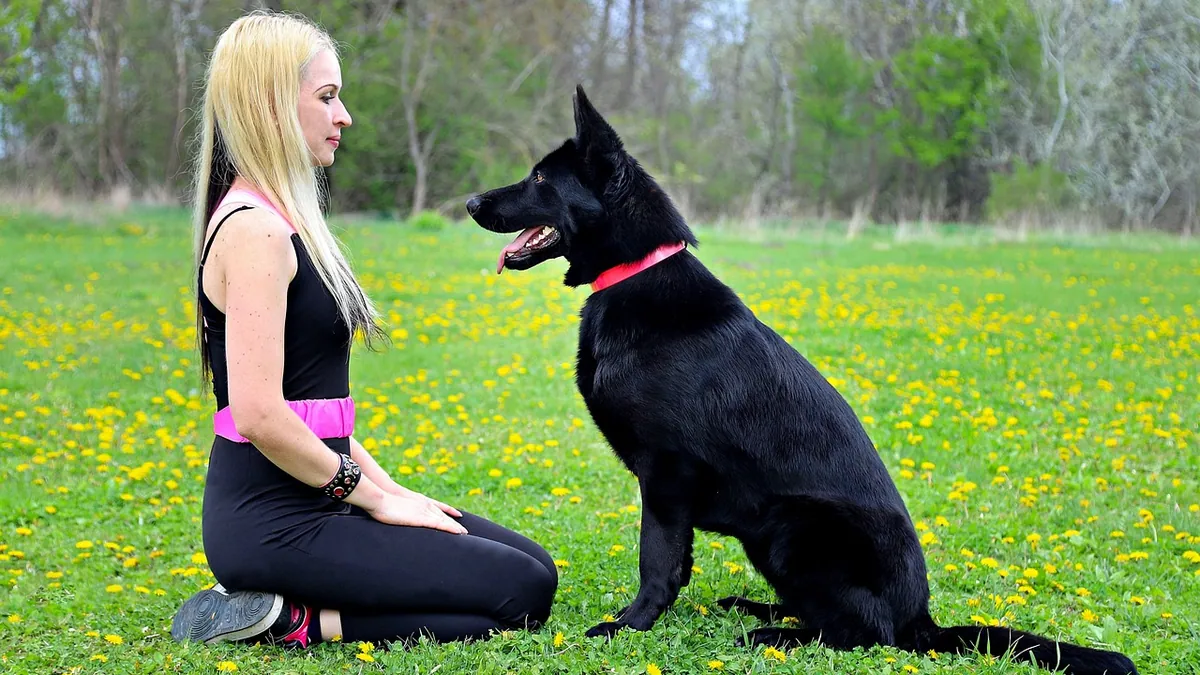
Most dogs learn a handful of words and phrases, often somewhere in the range of a few dozen to a couple hundred, and they rely heavily on tone, context, and body language to fill in the rest. How do dogs understand words at all? They do it by pairing sounds with outcomes, not by parsing grammar the way people do. This article is educational and is not a substitute for veterinary diagnosis or treatment.
Quick Answer
- Dogs learn words by repeated pairing of a sound with an object, action, or result, and they generalize from there.
- Tone and context carry a lot of the meaning. The same word said in different ways can land very differently.
- Dogs do not learn English as a language. They learn specific sound patterns tied to specific outcomes [1].
- Most dogs do best with short, consistent cues used the same way by everyone in the household.
- If your dog suddenly stops responding to words they knew well, a veterinary exam is the first step, because pain, hearing loss, and illness can all look like "ignoring you."
How Do Dogs Understand Words?
Dogs are the earliest domesticated species, and they have lived alongside people in huge numbers for a very long time [1]. That history shaped how attuned they are to human sounds, faces, and gestures. But attunement is not the same as language comprehension.
When you say "sit" and your dog plants their rear on the floor, several things are happening at once. Your dog is reading your tone, your posture, the room, the time of day, and the history of what happened the last hundred times you made that sound. The word itself is one cue among many.
Research on this topic is genuinely mixed. Reviews of behavioral studies, brain imaging, and owner reports show contradictory and inconclusive results about how much language dogs truly understand [1]. Part of the problem is that dogs can succeed on a task through many different mental routes, which makes it hard to know what they actually grasped [2]. A dog might respond correctly because they learned the word, because they read your body, or because they learned the routine.
That uncertainty is normal in this field. It does not mean your dog is faking it. It means dog comprehension is real but flexible, and it leans on more than just vocabulary.
Do Dogs Understand English?
Dogs do not understand English the way a person does. They learn sound patterns that predict something in their world [1]. A dog raised in a Spanish-speaking home learns Spanish sound patterns just as easily. A dog raised in a bilingual home can learn cues from both languages.
This is why "do dogs understand different languages" has a simple answer. Dogs are not locked into one human language. They respond to whatever sounds have been paired with consequences in their daily life. A dog who knows "sit" in English will not automatically know "sientate" in Spanish unless someone teaches it.
How Much Do Dogs Understand?
Owners often report that their dogs understand far more than researchers can confirm in a lab. That gap shows up in the research itself, where anecdotal reports, brain imaging, and behavioral tests do not always agree [1].
In practice, most dogs pick up a working vocabulary of common cues plus household routines. They also learn the sound of their name, the jingle of a leash, and the specific way you say "want to go out?" at 6 p.m. Some dogs learn far more, especially with deliberate training.
What dogs generally do not do is combine words into new sentences the way children do. A dog who seems to understand "go get your ball from the bedroom" is usually reading a chain of familiar cues plus your pointing, movement, and expectation.
Why Dogs Respond to Tone and Context More Than Words
Your dog is a social animal who has spent thousands of years learning to read people. Tone is a big part of that.
Think about how you say "good boy." Your pitch goes up, your face softens, your body relaxes. Now imagine saying the same two words in a flat, sharp voice. Your dog will likely react to the delivery, not the vocabulary.
Context works the same way. "Car" means something very different on a Tuesday morning than it does on a Saturday when you grab the leash. Your dog learns the whole picture, not the isolated word.
This is also why dogs seem to understand emotional language so well. In one experiment, parents and children used more emotional and mental state words when talking about a real dog compared to a toy dog [3]. Dogs live inside that kind of emotionally rich talk every day, and they get very good at reading it.
Word Learning Is Category Learning
When a dog learns a word, they are really learning a category. If you teach "ball," does that mean the tennis ball, the soccer ball, and the squeaky ball? Research on word learning shows that the number of examples a learner sees, and the timing of those examples, shapes how broad or narrow the meaning becomes [4].
This matters for dog training. If you only ever say "down" on the living room rug, your dog may learn "down on the rug" instead of "down anywhere." Practice in different rooms, on different surfaces, and with different distractions to help the word generalize.
Consistency Beats Variety at First
Studies with young children show that consistent labels help early word learning, while unusual variations can weaken it [5]. Dogs are not children, but the same principle applies in a practical way. Pick one word for one behavior and stick with it while your dog is learning.
Once your dog is solid, you can add variety. "Sit" and "have a seat" can both work later. Early on, keep it simple.
Medical Causes to Rule Out
If your dog used to respond to words and now does not, do not assume stubbornness. Several medical problems can look like a dog who "forgot" their vocabulary.
- Hearing loss. This is common in older dogs and in some breeds. It can come on slowly, so you may not notice at first.
- Pain. A dog with arthritis, dental pain, or a sore back may be slower to respond, especially to cues that involve movement.
- Vision changes. If your dog relied on your hand signals and facial expressions, declining vision can make them seem confused.
- Cognitive dysfunction. Older dogs can develop changes in memory, awareness, and response to familiar cues.
- Systemic illness. Any condition that causes fatigue, nausea, or weakness can reduce responsiveness.
A veterinarian can check hearing, vision, pain, and overall health. If your dog's sleep has changed along with their responsiveness, that can be a clue worth mentioning. You can read more about normal sleep patterns in How Many Hours A Day Do Dogs Sleep and How Long Do Dogs Sleep.
When Word Comprehension Becomes a Problem
Most variation in how dogs respond to words is normal. It becomes a problem in a few situations.
- Your dog stops responding to cues they knew well, especially suddenly.
- Your dog seems confused, disoriented, or startled when you speak.
- Your dog shows new anxiety, pacing, or vocalizing when you give familiar cues.
- Your dog's responsiveness changes along with appetite, energy, or sleep.
- Your dog becomes hard to handle for daily care because they no longer follow basic cues.
Sudden changes deserve attention. Gradual changes in an older dog also deserve attention, because early intervention often helps.
What to Do: Step by Step
1. Get a Health Check First
If your dog's comprehension seems to have changed, start with your veterinarian. Rule out hearing loss, pain, vision problems, and illness before you assume a training issue.
2. Pick One Word Per Behavior
Choose short, distinct words. "Sit," "down," "come," "stay," "leave it." Use the same word every time. Ask everyone in the household to use the same cues.
3. Pair the Word With the Outcome
Say the word right before your dog does the behavior, then reward. Over many repetitions, the word becomes a reliable predictor of what comes next. This is the core of how dogs learn words.
4. Train in Short Sessions
Five minutes, a few times a day, works better than one long session. End while your dog is still succeeding.
5. Add Distractions Slowly
Start in a quiet room. Then practice in the yard. Then on a quiet walk. Then somewhere busier. Each new place is a new lesson, because dogs learn context along with words.
6. Use Your Tone on Purpose
A bright, upbeat tone works well for praise and invitations. A calm, low tone works better for settling cues. Your dog is reading your voice, so make it match your message.
7. Watch Your Body Language
Dogs read posture, hand position, and eye contact. If your words and your body say different things, your dog will usually follow your body.
8. Keep Enrichment Strong
A bored, under-exercised dog is harder to train. Daily walks, sniffing time, puzzle feeders, and chew toys support focus and learning. If your dog's routine has changed recently, that alone can affect how well they respond.
9. Track What Works
Keep a simple note of which cues your dog responds to reliably and which ones are shaky. This helps you spot real changes over time, and it gives your veterinarian useful information.
10. Be Patient With Aging Dogs
Older dogs may need more time, clearer cues, and shorter sessions. They may also need a veterinary workup. Life expectancy varies a lot by size and breed, and you can read more in How Long Do Dogs Live and How Long Do Dogs Live For.
What Not to Do
- Do not punish a dog for not responding. If your dog did not hear you, did not understand, or is in pain, punishment adds fear and makes things worse.
- Do not repeat a cue louder and louder. Repeating "sit, sit, SIT" teaches your dog that the first few words do not matter.
- Do not assume your dog is being stubborn. Behavior changes often have a physical cause.
- Do not rely on one cue word alone. Add a hand signal so your dog has a second way to understand you, which also helps if hearing declines.
- Do not expect grammar. Dogs do not parse sentences. Keep cues short and clear.
- Do not believe the myth that dogs understand every word you say. They read a lot, but they are not tracking your full vocabulary [1].
- Do not switch cue words constantly. Consistency helps learning, especially early on [5].
When to Involve a Veterinarian or Certified Behavior Professional
Call your veterinarian if your dog's response to familiar words changes, especially if the change is sudden. Also call if your dog seems to have trouble hearing, seems disoriented, or shows new anxiety around sounds.
Ask for a referral to a certified behavior professional if your dog is healthy but shows fear, aggression, or distress during training or daily handling. A qualified trainer or veterinary behaviorist can build a plan that fits your dog.
If your dog's behavior changes along with their sleep, appetite, or energy, mention all of it at the visit. Changes in sleep can be an early clue, and you can read more about normal patterns in How Long Are Dogs In Heat if your dog is intact and you are tracking cycle-related changes.
Limitations and When to Contact a Veterinarian
Dog language research is still unsettled, and results from behavioral tests, brain imaging, and owner reports do not always line up [1]. That means no article can tell you exactly how many words your individual dog understands. Your dog's age, breed, health, training history, and home environment all shape the answer. Individual cases need a veterinarian who can examine your dog in person.
Contact your veterinarian the same day if your dog suddenly stops responding to their name or to cues they knew well, if they seem to have trouble hearing, or if they show new confusion or disorientation.
Seek emergency care now if your dog has a sudden change in responsiveness along with collapse, weakness, vomiting, trouble breathing, a seizure, or a possible toxin exposure. Call your veterinarian or a pet poison control hotline right away if you suspect poisoning.
Schedule a routine visit if the changes are gradual, such as an older dog who seems slower to respond, a dog who startles more easily, or a dog whose training progress has stalled without an obvious reason.
Frequently Asked Questions
Do dogs understand words or just tone?
Dogs use both, and tone often carries more weight than the word itself. They learn specific sound patterns tied to outcomes, but they also read your pitch, pace, and body language. If your words and your tone disagree, your dog will usually follow the tone.
Can dogs learn words in more than one language?
Yes. Dogs are not wired to one human language. They learn whatever sound patterns are paired with results in their daily life, so a dog in a bilingual home can learn cues from both languages.
Why does my dog ignore me when I know they heard me?
Hearing the sound and choosing to respond are two different things. Your dog may be distracted, tired, in pain, or may have learned that the cue does not predict anything rewarding. A sudden change in responsiveness is worth a veterinary check.
Do dogs understand full sentences?
Dogs generally do not process sentences the way people do. They pick out familiar sound patterns and combine them with context, gestures, and routine. A dog who seems to follow a long sentence is usually reading several cues at once.
How many words can a dog learn?
There is no single reliable number, and research on dog language comprehension remains mixed. Some dogs learn a small set of cues, while others with intense training learn far more. What matters most for daily life is consistency, clear tone, and regular practice.
Related Articles
- How Long Do Dogs Live
- How Long Do Dogs Live For
- How Many Hours A Day Do Dogs Sleep
- How Long Do Dogs Sleep
- How Long Are Dogs In Heat
- Why Do Dogs Sleep So Much? Understanding Canine Sleep Patterns
- What Do Dogs Know and Understand?
- Do Dogs Understand Pointing? The Science of Dog Communication
- Do Dogs Think? What Science Says About the Canine Mind
References
- Do dogs understand?-Contrasting anecdotal reports, neuroimaging, and behavioural evidence on language comprehension. Biologia futura, 2025.
- Comprehension of functional category labels in dogs. Journal of experimental psychology. Animal learning and cognition, 2026.
- Mind the dog: real dogs elicit emotional and mental state language in parent-child conversations. Journal of experimental child psychology, 2026.
- Word learning as category formation. PloS one, 2025.
- English-hearing toddlers learn words from consistent and variable labels. Cognition, 2026.