Do Dogs Understand Pointing? The Science of Dog Communication
By Dr. Zubair Khalid, DVM, MS, PhD ·
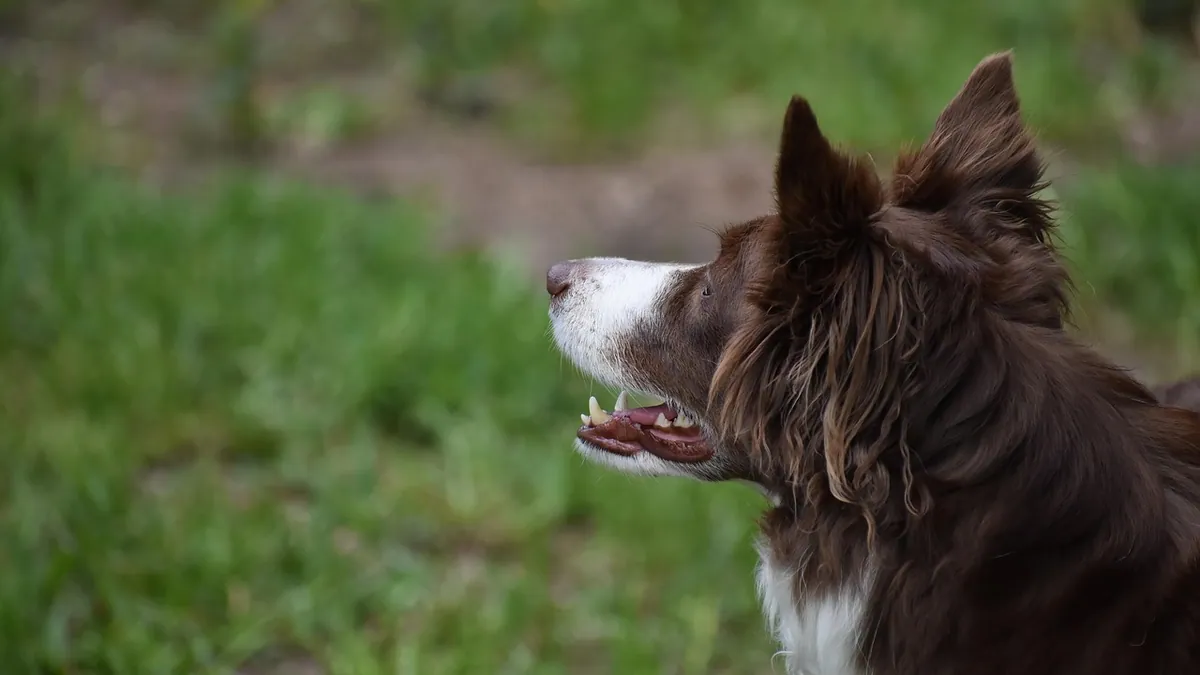
Yes, most dogs understand pointing. Given a choice between two objects, a dog will usually follow your outstretched finger or arm toward the one you indicate, and this ability shows up even in puppies with little training. It is one of the clearest examples of how well dogs read human communication, and you can use it every day.
This article is educational and is not a substitute for veterinary diagnosis or treatment.
Quick Answer
- Dogs are unusually good at following human pointing, and they outperform cats on the same object-choice task [1].
- Pointing works best when you pair the gesture with eye contact and a look toward the target, which keeps a dog's attention on the correct object longer [2].
- Dogs follow a real person pointing far better than they follow a flat, two-dimensional video or silhouette of the same gesture [3].
- This skill is part of normal canine social behavior, since dogs are highly social animals adapted to read human gestures and body language [4].
- You can build on pointing in training, but always reward the behavior you want and never punish a dog for looking the wrong way.
Why Do Dogs Understand Pointing?
Pointing is a simple gesture for people. You extend a finger or an arm toward something, and another person looks where you point. Dogs do something similar, and researchers have spent decades trying to explain why.
Dogs are wired to read human signals
Dogs are highly social animals and are well adapted to living in groups. They interact with each other and with people through body postures, facial expressions, tail and ear positions, vocalizations, and scent [4]. Pointing fits into that same channel. A pointed arm is a visual social signal, and dogs are already tuned to watch human bodies for information.
Canine social communication is complex and diverse. Dogs send and receive messages using visual signals, sounds, scents, pheromones, and touch [5]. Following a point is one more way a dog gathers information from a social partner.
Domestication gave dogs an edge
Dogs evolved from the grey wolf, and domestication and breeding have changed their appearance, temperament, and social signaling over thousands of years [4]. One result is that dogs seem especially prepared to cooperate with humans.
A direct comparison of companion dogs and cats found that dogs made more successful choices than cats when following human distal pointing gestures, both as a group and as individuals [1]. Cats also made far fewer choices in the test setting, and their willingness to choose dropped as trials went on [1]. Dogs are not the only animal that can do this, but they are among the most reliable.
It is not unique to dogs, but dogs are standouts
Goats can follow human pointing gestures in an object-choice task, including more difficult versions where the finger is far from the target [6]. Horses can also solve an object-choice task using a human pointing gesture, and they perform about as well with a simple physical marker placed in the same spot [7]. Dolphins can interpret a human point in a new situation, using it to decide which of two models to imitate [8].
So pointing is not a dog-only talent. What stands out is how readily dogs use it with people in everyday life.
Dogs pay more attention when you point and look
Eye-tracking research with dogs shows that combining pointing with gazing changes what a dog actually looks at. When a person pointed and looked at the target, dogs kept their attention on that object longer than in other conditions, and they approached it above chance levels [2]. In other words, your eyes matter as much as your hand.
Dogs treat pointing as communication, not just motion
One study tested whether dogs could follow a pointing gesture shown on a screen. Dogs did better than chance with real-life pointing and with black-and-white videos, but not with a silhouette or a point-light figure made only of moving dots. Their accuracy in those reduced conditions was significantly lower than with a real person [3].
That finding suggests dogs need more than raw movement. They seem to read pointing as a social act from a real partner, which fits with how dogs use referential communication with people. If you want to see related examples of how dogs read human cues, see The Smile Dog: Separating Myth from Reality in Canine Behavior and Is Your Dog Human? Understanding Canine Behavior and Bonding.
Medical Causes to Rule Out
A dog who suddenly stops responding to pointing, or who seems to ignore you in general, may have a health problem instead of a training gap.
- Vision loss. If your dog no longer tracks your hand or seems to lose the treat you toss, a veterinary eye exam is the first step.
- Hearing loss. Older dogs often lose hearing gradually. A dog who stops turning toward your voice may not be stubborn.
- Pain. Dogs with neck, back, or joint pain may avoid turning their head or moving toward a target.
- Cognitive changes. Older dogs can develop confusion, staring, and reduced responsiveness to familiar cues.
- Neurologic disease. Sudden changes in awareness, balance, or head position need prompt veterinary attention.
Your veterinarian can examine your dog, check vision and hearing, and decide whether testing is needed. Do not assume a behavior change is just aging or attitude.
When Does Pointing Become a Problem?
Following a point is normal and useful. Problems usually come from how people use it, not from the skill itself.
- Your dog follows every point, including at the wrong times. A dog who bolts toward a pointed direction near a road or a stranger is at risk.
- Your dog becomes frustrated or fixated. Some dogs whine, bark, or stare at your hand instead of the target.
- Your dog stops responding. A sudden drop in response can signal pain, fear, or a medical issue.
- You rely on pointing instead of clear cues. Pointing is a visual cue. Dogs with vision problems, or dogs working at a distance, may need a verbal or hand signal they can see.
- Your dog shows anxiety around training. Lip licking, yawning, turning away, or freezing during sessions means the session is too hard or too long.
If your dog's behavior changes in ways that concern you, a behavior professional can help you sort out training from health. Dog Behavior Problem Solving walks through a practical approach.
How to Use Pointing in Training and Daily Life
Start with easy, close points
Hold a treat in one hand and two identical bowls or targets in front of your dog. Point to the correct one from a short distance, about an arm's length away. Reward your dog the moment they move toward the right target. Keep sessions short, two to three minutes, and stop while your dog is still engaged.
Add your gaze
Because pointing plus gazing keeps dogs focused on the target longer [2], look at the object as you point. Turn your head slightly toward it. This makes the cue clearer and teaches your dog to watch your face, not only your hand.
Increase distance slowly
Once your dog is reliable up close, step back a little at a time. Distal pointing, where your finger is far from the target, is harder. Goats needed a pretest with close pointing before they could handle the harder versions [6], and dogs benefit from the same gradual approach.
Use pointing for real-life tasks
- Send your dog to a specific toy or bed.
- Direct your dog away from a doorway or a dropped item.
- Guide your dog to a mat before a meal.
- Help a dog find a hidden treat during nose work games.
Pair pointing with other cues
Pointing is one signal among many. Dogs read body posture, facial expression, and scent as part of normal social communication [5]. Add a verbal cue like "find it" or "this way" so your dog has more than one way to understand you.
Keep enrichment going
Dogs need mental work, not just physical exercise. Short training games, food puzzles, and sniffing walks all support the same social skills that make pointing work. For more on how dogs connect with people, see Cute Dogs: The Science of Cuteness and Its Impact.
Socialize early and often
Early and frequent socialization with many different dogs can improve a dog's ability to interact with other dogs and people [4]. That same foundation helps your dog read human gestures in new places with new people.
What Not to Do
- Do not punish your dog for looking the wrong way. A dog who is corrected for guessing will stop trying. Reward the correct choice and ignore the rest.
- Do not assume your dog is stubborn. A dog who stops responding may have a medical problem. Get a veterinary exam.
- Do not expect a video or a picture to work as well as you do. Dogs followed real-life pointing and black-and-white videos above chance, but not silhouettes or point-light figures [3]. Your live gesture is the strongest cue.
- Do not point toward things your dog should avoid. Pointing is a cue to approach. Never point at traffic, other dogs you do not want your dog to greet, or unsafe objects.
- Do not train for long stretches. Short, frequent sessions beat one long one.
- Do not compare your dog to your cat. Dogs made more successful choices than cats in a direct comparison [1]. Species differences are normal.
- Do not treat pointing as proof of human-like thinking. Dogs are skilled at reading human gestures [4], but that does not mean they understand your words or intentions the way another person would.
When to Involve a Veterinarian or Behavior Professional
Call your veterinarian if your dog's response to pointing or other familiar cues changes suddenly, if your dog seems to lose vision or hearing, or if your dog shows pain, confusion, or balance problems. These can be signs of medical disease, and a physical exam is the right first step.
Ask for a referral to a veterinary behaviorist or a certified behavior professional if your dog shows fear, aggression, or anxiety during training, if your dog stops eating or sleeping normally, or if you feel stuck after several weeks of consistent work. Your veterinarian can also help you decide whether a trainer or a veterinary behaviorist is the better fit for your dog's needs.
Limitations and When to Contact a Veterinarian
Pointing research is done in controlled settings with specific tasks. Real homes are messier, and every dog is an individual. Your dog's age, breed, vision, hearing, and history all affect how well they follow a point. No article can tell you exactly what your dog understands.
Contact your veterinarian the same day if your dog:
- Stops responding to you, your voice, or familiar cues
- Walks into objects, bumps walls, or seems to lose sight
- Stops eating or drinking
- Shows head tilt, circling, or unsteady walking
- Yelps or pulls away when you reach toward them
Go to an emergency clinic now if your dog:
- Collapses or cannot stand
- Has a seizure
- Breathes with effort or has blue gums
- Shows sudden severe pain or a swollen, painful abdomen
- Is unresponsive or hard to wake
Schedule a routine visit if your dog:
- Gradually slows down or seems less interested in training
- Has new stiffness, limping, or reluctance to move
- Is an older dog with new confusion or staring spells
- Has a change in behavior that lasts more than a few days
Individual cases need a veterinarian. Your dog's exam, history, and test results guide the plan.
Frequently Asked Questions
Do all dogs understand pointing?
Most pet dogs can follow a point, but the skill varies by individual. In one study, dogs made more successful choices than cats on a distal pointing task, and they performed well regardless of the type of point used [1]. Puppies often follow points with little training, while some adult dogs need practice.
Can dogs learn pointing without any training?
Many dogs follow a point the first time they see one, which suggests the skill comes partly built in. Dogs are highly social animals adapted to read human gestures and behavior [4]. Still, practice makes them faster and more accurate, especially at longer distances.
Does my dog need to see my face to follow a point?
Your face helps. When a person pointed and gazed at a target, dogs kept their attention on that object longer and approached it above chance levels [2]. Pointing alone can work, but adding a look toward the target makes the cue clearer for most dogs.
Why does my dog ignore my point when I point at the TV?
Dogs do not read flat images the same way they read a live person. In one test, dogs followed real-life pointing and black-and-white videos above chance, but not silhouettes or point-light figures, and their accuracy in those reduced conditions was much lower [3]. A live gesture from you is the strongest cue.
Can pointing help with training other behaviors?
Yes. Pointing is a clear directional cue you can use to send your dog to a mat, a toy, or a specific spot. Pair it with a verbal cue and reward the correct choice right away. If your dog struggles, shorten the distance and make the target easier to see.
Is pointing a sign my dog is unusually smart?
Following a point is a normal social skill in dogs, not a measure of overall intelligence. Dogs are very good at interpreting human gestures and behavior [4], and this ability likely reflects domestication and social living. A dog who ignores a point may simply have a vision or hearing problem, so check with your veterinarian.
Related Articles
- The Smile Dog: Separating Myth from Reality in Canine Behavior
- Is Your Dog Human? Understanding Canine Behavior and Bonding
- Cute Dogs: The Science of Cuteness and Its Impact
- Dog Behavior Problem Solving
- Veterinary Communication Models: Enhancing Client Interactions
- What Do Dogs Know and Understand?
- How Do Dogs Communicate With Each Other?
- How Many Words Do Dogs Understand? Language in Dogs
References
- Dogs outperform cats both in their testability and relying on human pointing gestures: a comparative study. Scientific reports, 2023.
- Using mobile eye tracking to study dogs' understanding of human referential communication. Proceedings. Biological sciences, 2025.
- Dogs fail to recognize a human pointing gesture in two-dimensional depictions of motion cues. Behavioural processes, 2021.
- Normal Social Behavior in Dogs - Dog Owners. Merck Veterinary Manual.
- Social Behavior of Dogs - Behavior. Merck Veterinary Manual.
- Goats Follow Human Pointing Gestures in an Object Choice Task. Frontiers in psychology, 2020.
- Horses (Equus caballus) successfully solve an object choice task using a human pointing gesture and a physical marker: A partial replication of Proops et al. (2010). Journal of comparative psychology (Washington, D.C. : 1983), 2026.
- Imitate that one: dolphins spontaneously interpret human pointing gesture in a novel context. Animal cognition, 2026.