Do Cats Understand Time? Feline Time Perception
By Dr. Zubair Khalid, DVM, MS, PhD ·
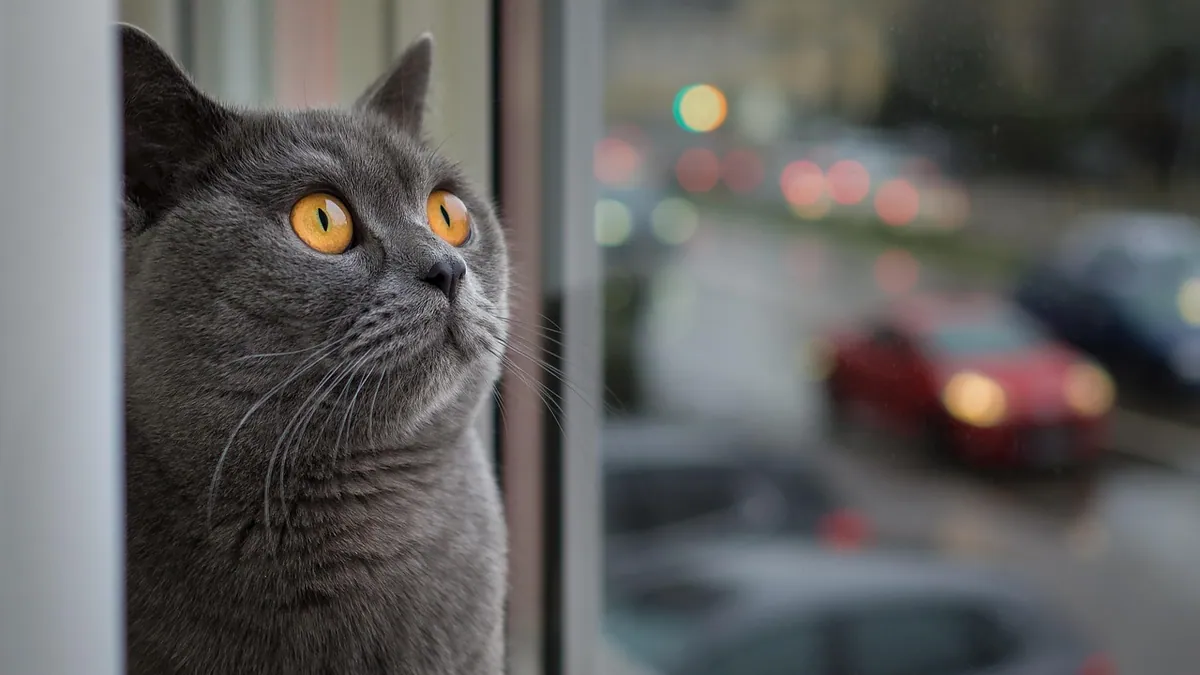
Cats do not read clocks or count hours the way people do. They live in a world of routines, light cycles, and scent cues, and they learn quickly when meals, play, and attention usually happen. So when you ask "do cats understand time," the honest answer is that cats track patterns and sequences of events, not minutes and hours.
This article is educational and is not a substitute for veterinary diagnosis or treatment.
Quick Answer
- Cats anticipate events by learning daily routines, not by reading a clock.
- Light and dark cycles, plus household activity, help set a cat's daily rhythm.
- Cats are crepuscular, meaning they are most active around dawn and dusk [1].
- Cats sleep about 40% of the day, rest about 22%, and groom about 15% [1].
- A predictable schedule is the single best tool for reducing demanding behavior and making training easier.
How Do Cats Tell Time? Routine, Light, and Scent
Cats learn sequences, not clock time
A cat's sense of "when" comes from repeated patterns. You wake up, walk to the kitchen, open a cabinet, and scoop food. After enough repetitions, the sound of the cabinet alone can send a cat running. That is pattern learning, and it is remarkably reliable.
This is why a cat may start staring at you 30 minutes before dinner. The cat is not calculating the time. It is responding to cues that usually come before food, such as you finishing work, standing up, or moving toward the kitchen.
Light sets the daily rhythm
Cats are crepuscular, which means their natural activity peaks around dawn and dusk [1]. Indoor cats often keep this rhythm, which explains the 5 a.m. sprint across the bedroom and the evening zoomies.
Because light drives so much of this rhythm, seasonal changes matter. In winter, shorter days can shift when a cat wants to eat and play. If you use timed feeders or automatic lights, keep them consistent so your cat is not getting mixed signals.
Scent is a clock of its own
Cats rely heavily on smell to understand their world, including who was where and when. Social contact between cats involves rubbing, grooming, and nose touching, and scent marks left by these behaviors carry information about recent activity [1]. Your cat can likely tell that you came home, sat on the couch, and handled the other cat before you fed them.
This is one reason a cat may seem to "know" something happened even when you were not in the room. Scent lingers and tells a story.
Do cats know what day it is?
Not in the human sense. Cats do not distinguish Tuesday from Saturday. What they notice is whether the household routine changed. A cat may act differently on weekends because you are home, sleeping in, or moving around at different times, not because the cat knows it is the weekend.
If you work from home some days and not others, expect your cat to learn your in-office days as a separate routine. That is pattern recognition at work.
Why Cats Seem to Know When You Wake Up or Come Home
Your alarm, your footsteps, and your habits
Most "how does my cat know" moments come down to cues you are not consciously giving. The sound of an alarm, the creak of a specific floorboard, the jingle of keys, or the shower turning on all become reliable predictors.
Cats are also excellent at reading body language. If you stretch and sit up, your cat may interpret that as the start of the morning routine long before you reach the kitchen.
Anticipation and social bonding
Cats regulate social contact through distancing, friendly displays like rubbing and grooming, and antagonistic behaviors like hissing or swatting [1]. In general, cats spend most of their time away from other individuals, and their interactions with humans follow similar patterns [1].
That matters for time perception because your cat decides when to seek you out based on its own rhythm and your predictable schedule. A cat that greets you at the door is often responding to a learned pattern of your return, not a clock.
Hunger drives a lot of the "clock watching"
Cats prefer to eat multiple small meals throughout the day, roughly 13 meals in a natural feeding pattern [1]. A cat fed twice daily may feel long gaps and start campaigning for food earlier and earlier.
This is one of the most common reasons owners feel their cat can tell time. The cat is not tracking hours. It is tracking hunger plus learned cues.
Medical Causes to Rule Out
Sometimes behavior that looks like a time-related habit is actually a health problem.
Sudden changes in appetite or meowing
If your cat suddenly starts demanding food at odd hours, or stops eating, that is a medical question before it is a training question. Older cats in particular can develop feeding difficulties from sensory decline, chronic pain, cognitive decline, mobility problems, and environmental or social stress, not from diet alone [2].
If your cat has stopped eating, read Cat Not Eating: How Long Is Too Long? and call your veterinarian.
Night waking and confusion in older cats
A senior cat that paces at night, yowls, or seems disoriented may have cognitive dysfunction. This is not the same as a cat that simply wants a midnight snack. Learn the signs in Cat Cognitive Dysfunction: How to Tell If Your Cat Has Dementia.
Pain and stress
Chronic pain and stress can change sleep, activity, and appetite, which then changes how a cat's day looks. Stress signs in cats can be subtle, including hiding, overgrooming, and changes in litter box habits. See Cat Stress Signs: How to Recognize and Reduce Stress in Your Cat for a practical checklist.
When Time-Related Behavior Becomes a Problem
A cat that expects dinner at 5 p.m. is normal. A cat that screams from 3 p.m. onward, wakes you repeatedly at night, or stops eating is a problem.
Early morning waking
This is the most common complaint. The fix is not punishment. It is changing the pattern that rewards the behavior. If your cat learns that meowing at 4 a.m. gets you up, the meowing will continue and often get louder.
Demanding behavior around meals
Cats that are fed on a rigid schedule can become intensely focused on that schedule. Splitting food into more, smaller meals can reduce the pressure. Puzzle feeders and food-dispensing toys also stretch out mealtime and give the cat something to do.
Nighttime activity in senior cats
If night waking is new in an older cat, treat it as a medical concern first. Your veterinarian can check for pain, thyroid disease, kidney disease, and cognitive changes.
What to Do: Step by Step
Step 1: Build a predictable daily rhythm
Pick consistent times for meals, play, and quiet time. Cats learn patterns, so consistency does more than any single training trick. Feed at the same times each day, and keep the sequence the same (play, then food, then quiet).
Step 2: Split meals to match natural feeding behavior
Because cats prefer multiple small meals [1], consider spreading food across three to five smaller portions if your veterinarian agrees. Automatic feeders can help, but only if the schedule is stable.
Step 3: Add active play before the times you want quiet
A short play session with a wand toy before bed can reduce nighttime activity. Play also supports normal social and object play, which matters especially for cats raised without other cats [1].
Step 4: Make the environment work for your cat
Food puzzles, window perches, and climbing spaces give your cat something to do besides wait for you. Environmental enrichment also helps with stress and with healthy aging [2].
Step 5: Train with cues, not clocks
You can teach a cat to come to a specific sound, such as a clicker or a word, and then use that cue instead of a fixed time. This gives you flexibility. Your cat responds to the cue, not the hour.
Keep sessions short, reward immediately, and end on a success. If your cat walks away, stop and try later.
Step 6: Adjust gradually when your schedule changes
If you need to shift meal times, move them by 15 to 20 minutes every few days. Sudden changes are more likely to trigger demanding behavior.
What Not to Do
Do not punish the behavior
Yelling, spraying water, or pushing a cat away can increase stress and damage your relationship. Punishment also does not teach the cat what to do instead.
Do not free-feed without a plan
Free-feeding can work for some cats, but it removes the structure that makes routines predictable. If you free-feed, talk with your veterinarian about whether it fits your cat's weight and health.
Do not assume the cat is being stubborn
A cat that suddenly changes its routine may be in pain, stressed, or sick. Behavior changes are information, not defiance.
Do not rely on myths
Cats do not have a hidden clock, and they do not hold grudges about being fed late. They respond to patterns, and patterns can be changed.
When to Involve a Veterinarian or Behavior Professional
Call your veterinarian if your cat's sleep, appetite, or activity changes suddenly, if night waking is new, or if your cat seems painful or disoriented. A certified behavior professional can help if the problem is purely behavioral and has not improved with routine changes.
If you are unsure whether a symptom is medical or behavioral, start with your veterinarian. A physical exam and basic lab work can rule out common causes.
Limitations and When to Contact a Veterinarian
This article covers general patterns. Your cat's individual situation needs a veterinarian who can examine your cat and review its history.
Contact your veterinarian the same day if your cat stops eating, vomits repeatedly, has diarrhea with lethargy, or shows sudden behavior changes. Seek emergency care now if your cat is struggling to breathe, collapses, has a seizure, strains to urinate, or cries out in pain.
Schedule a routine visit if your cat is gradually waking more at night, losing weight, or becoming less interactive. Early evaluation makes many conditions easier to manage.
Frequently Asked Questions
Do cats know what time it is?
No, cats do not read clock time. They learn routines and respond to cues like light, sound, and your habits, which can look like clock watching.
Why does my cat wake me up at the same time every morning?
Your cat has learned that a specific cue, such as your alarm or movement, predicts that you will get up. If you feed or pet the cat then, the behavior gets reinforced.
Can I train my cat to eat at a different time?
Yes, but change the schedule slowly. Shift meals by small increments every few days, and use a consistent cue so your cat learns the new pattern.
Do cats get confused by daylight saving time?
Cats do not track clock changes, but they do notice shifts in light and routine. Expect a few days of adjustment after any schedule change.
Is it normal for my cat to sleep all day and be active at night?
Cats are naturally crepuscular, so activity around dawn and dusk is normal [1]. If night activity is new or intense, have your veterinarian check for pain, stress, or cognitive changes.
Related Articles
- Can Cats See in the Dark? Feline Vision Explained
- OR Cat: Understanding Logical Health Decisions for Your Feline
- Cat Stress Signs: How to Recognize and Reduce Stress in Your Cat
- Cat Not Eating: How Long Is Too Long?
- Cat Cognitive Dysfunction: How to Tell If Your Cat Has Dementia
- Facts About Cats: Surprising Health and Behavior Insights
- How Long Can a Cat Remember? Feline Memory Facts
- Do Dogs Have a Sense of Time? How Dogs Perceive It
- Are Cats Nocturnal? Feline Sleep and Activity Explained
References
- Social Behavior of Cats - Behavior. Merck Veterinary Manual.
- EXPRESS: Beyond the bowl: behavioural, sensory and environmental strategies to support healthy ageing in cats. Journal of feline medicine and surgery, 2026.