Do Cats Run Away From Home? Why Cats Leave and Return
By Dr. Zubair Khalid, DVM, MS, PhD ·
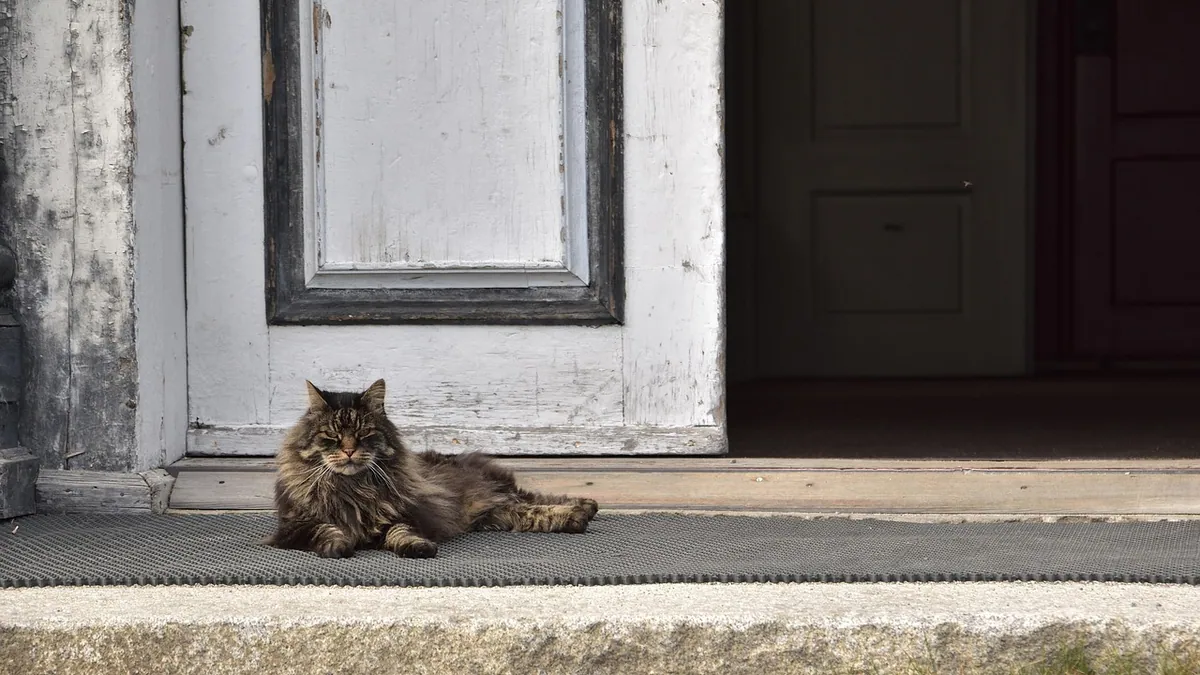
Is it normal for cats to run away? Yes, some roaming is normal cat behavior, especially for cats with outdoor access, but repeated escape attempts or a cat that suddenly bolts usually point to something you can fix. Most cats that slip outside stay close to home and come back within a day or two. The bigger concern is the risk that comes with every trip outdoors.
This article is educational and is not a substitute for veterinary diagnosis or treatment.
Quick Answer
- Roaming is normal for cats with unsupervised outdoor access, and their home ranges are often surprisingly small, averaging about 0.85 hectares (roughly a 50 meter radius) in one tracking study [1].
- A cat that keeps running away is usually bored, stressed, unfixed, or reacting to a change at home, not trying to leave you.
- The idea that cats run away to die alone is largely a myth. Sick cats hide, and hiding can look like running away.
- Indoor-only cats carry far fewer zoonotic pathogens than cats allowed to roam unsupervised, which is one of the strongest reasons to keep your cat inside [2].
- Microchipping plus a breakaway collar with ID gives a lost cat the best chance of coming home. In one desexing program, 72% of enrolled cats that were not already microchipped accepted a free microchip [3].
Why Cats Leave Home: Normal Reasons First
Cats are territorial, but their territory is smaller than most owners expect. When researchers tracked owned cats with daily outdoor access, the cats stayed within home ranges of about 0.85 hectares on average, and older cats roamed less than younger ones [1]. Cats living near natural or semi-natural open areas had larger ranges than cats in dense urban settings [1]. In other words, most "running away" is really routine patrolling of a small, familiar area.
Several normal drives push cats to expand that area or slip through an open door.
Mating behavior. An unneutered male cat will travel to find females in heat, and an unspayed female will yowl, pace, and try to get out when she is in estrus. If your cat's escape attempts come with loud calling, restlessness, or rolling on the floor, read How Often Do Cats Go Into Heat? Feline Estrous Cycle & Signs Guide to understand the cycle. Spaying and neutering remove most of this drive.
Hunting and exploration. Free-roaming cats keep strong hunting instincts, and outdoor access lets them act on those instincts [4]. A cat that stares out the window, chatters at birds, and darts past you at the door is doing what cats are wired to do.
Territorial patrol. Cats check and recheck the edges of their range. A cat that leaves for two hours and returns smelling like grass is patrolling, not abandoning home.
Social contact with other cats. Cats in the same neighborhood overlap in space and time, and their activity patterns shift depending on which other cats are around [5]. Your cat may be visiting a neighbor's porch or a nearby colony.
Medical Causes to Rule Out First
Before you treat escape behavior as a training problem, rule out illness. Pain, hormonal disease, and cognitive changes can all make a cat restless, vocal, or determined to get outside.
Hyperthyroidism. An overactive thyroid raises metabolism and often causes weight loss despite a good appetite, plus pacing, yowling, and night restlessness. If your cat is eating well but thinning out, see Why Is My Cat Losing Weight?.
Pain and dental disease. A cat with an aching mouth or sore joints may pace, hide, or avoid the litter box. Any of these can look like a cat trying to escape.
Cognitive dysfunction. Older cats can develop confusion, nighttime vocalization, and disorientation. These cats may wander outside and then not remember the way home.
Urinary or digestive problems. A cat that is uncomfortable may seek odd places to eliminate, including outside the box or outdoors. If your cat is straining or has not urinated, that is an emergency. Read How Long Can A House Cat Go Without Peeing and How Long Can A Cat Go Without Peeing Or Pooping so you know when to call.
Hiding versus leaving. A sick cat usually hides in the house instead of running off. If your cat has gone quiet under a bed or in a closet, that is a different problem. See Why Is My Cat Hiding? for the common causes.
Is It Normal for Cats to Run Away From Home? When It Becomes a Problem
Occasional roaming is normal. Repeated, determined escape is not, and it deserves attention.
Signs that the behavior has crossed into a problem include:
- Your cat bolts through the door every time it opens, even after being brought back inside.
- Your cat paces at windows and doors for hours, vocalizes, or scratches at screens.
- Your cat has escaped more than once in a month.
- Your cat comes home injured, thin, or with abscesses.
- Your cat is unneutered or unspayed and keeps trying to get out.
- Your cat has started spraying, yowling at night, or fighting with other cats.
There is also a real safety cost to unsupervised outdoor access. A global review of 174,064 cats across 88 countries found that owned cats with unsupervised outdoor access were 3 to 5 times more likely to carry zoonotic pathogens than indoor-only cats [2]. Ownership alone does not protect a cat that roams. Outdoor cats also hunt wildlife, and free-roaming cats are linked to declines in native species, especially on islands [4]. Keeping your cat indoors protects your cat, your family, and local wildlife.
Do Cats Run Away to Die?
This is one of the most common fears owners have, and the honest answer is that cats do not deliberately leave home to die. What actually happens is that a sick or injured cat seeks a quiet, hidden place. That instinct is about safety, not about leaving you.
If your cat is older, losing weight, eating less, or sleeping more, the wandering or hiding you are seeing is more likely a symptom than a choice. Cats are good at masking illness until it is advanced. A cat that suddenly wants to be alone, hides in unusual spots, or stops coming when called needs a veterinary exam, not a longer leash.
The myth causes real harm because it delays care. Owners wait, assuming the cat "wanted to go," while a treatable condition gets worse. If your cat has gone missing and you find them hiding and unwell, treat it as a medical problem and call your veterinarian.
Do Kittens Run Away?
Kittens do wander, but usually for different reasons than adult cats. They are curious, fearless, and not yet bonded to a routine. A kitten that slips outside often gets lost quickly because it has no established territory to return to.
Kittens also reach sexual maturity young, and an unspayed female kitten can go into heat and try to get out before her first birthday. Keep kittens indoors, supervise outdoor time only in a secure enclosure, and talk to your veterinarian about the right age for spaying or neutering.
Why Does My Cat Keep Running Away? Step-by-Step Fixes
If your cat keeps trying to escape, work through these steps in order.
1. Get a veterinary exam first
Book a checkup to rule out pain, thyroid disease, dental problems, and other medical causes. Bring a note of when the behavior started, what changed at home, and whether your cat is eating, drinking, and using the litter box normally. Your veterinarian will decide what testing is needed and will calculate any medication dose based on your cat's weight and health.
2. Spay or neuter if you have not already
This single step removes the strongest hormonal drive to roam. It also reduces yowling, spraying, and fighting.
3. Microchip and tag your cat
A microchip is permanent identification that a shelter or clinic can scan. In one targeted desexing program, 72% of enrolled cats that were not already microchipped received one when it was offered free [3]. Add a breakaway collar with your phone number. Breakaway collars release if they snag, which prevents choking.
4. Make the indoors more interesting than the outdoors
Boredom drives a lot of escape behavior. Rotate toys weekly, add puzzle feeders, and set up a cat tree near a window with a bird feeder outside. Schedule two or three short play sessions a day with a wand toy. A tired cat is a cat that stops staring at the door.
5. Add vertical space and hiding spots
Cats feel safer when they can climb and observe. Shelves, cat trees, and window perches reduce stress. Stress is a common trigger for escape attempts and for litter box problems.
6. Manage the doors
Install a screen door or a baby gate at the main entry. Ask visitors to text before knocking so you can secure the cat. If your cat bolts at the door, practice calm exits and reward your cat for staying on a mat a few feet away.
7. Use a secure outdoor option if your cat craves outside time
A catio, a screened porch, or a harness and leash give your cat fresh air without free roaming. Supervised time outdoors avoids the unsupervised access linked to higher pathogen exposure [2].
8. Address multi-cat tension
If you have several cats, watch for bullying, blocked litter boxes, and resource guarding. Cats in the same area shift their activity based on other cats nearby [5], and tension at home can push a cat to look for space elsewhere.
What Not to Do
Do not punish your cat. Yelling, spraying water, or scolding after an escape teaches fear, not safety. Punishment also makes your cat avoid you, which makes catching a loose cat harder.
Do not assume the cat will "just come back." Some do, but every unsupervised trip carries risk of traffic, predators, fights, and disease [2].
Do not let a cat outside to "get it out of their system." Free-roaming cats keep hunting and roaming, and their ranges can expand into natural areas where they impact wildlife [4][1].
Do not believe the dying myth. Cats hide when they are sick. That is a signal to get veterinary care, not to let them go.
Do not skip identification. A cat without a microchip or tag is far less likely to be reunited with you if picked up by a shelter.
When to Involve a Veterinarian or Behavior Professional
Call your veterinarian if your cat's escape behavior is new, if it comes with weight loss, appetite changes, night vocalization, or litter box changes, or if your cat is unspayed or unneutered and you want to discuss timing. Your veterinarian can also refer you to a certified behavior professional if the behavior continues after medical causes are ruled out.
A veterinary behaviorist or certified applied animal behaviorist can help with severe cases, including door darting that has not improved with enrichment, multi-cat conflict, and anxiety that affects daily life.
Limitations and When to Contact a Veterinarian
This article covers common patterns, but every cat is an individual. Your cat's age, health history, home setup, and neighborhood all change what is normal and what needs care. No article can replace an exam.
Contact a veterinarian the same day if your cat:
- Has been missing and returns thin, limping, drooling, or lethargic
- Is straining to urinate, crying in the litter box, or has not urinated in 24 hours
- Is vomiting repeatedly or has stopped eating
- Has a wound, bite, or abscess from a fight
- Is an unspayed female with a foul discharge
Go to an emergency clinic now if your cat:
- Was hit by a car or has trouble breathing
- Is collapsed, unresponsive, or having seizures
- Has pale gums, heavy bleeding, or a suspected broken bone
- Ate something toxic or unknown
Call your regular veterinarian for a routine visit if your cat:
- Has escaped more than once and you want help with the behavior
- Is losing weight or has a changed appetite
- Is an older cat with new night vocalization or confusion
- Needs a microchip, spay, or neuter
Frequently Asked Questions
Is it normal for a cat to run away and come back?
Yes, this is common for cats with outdoor access. Their home ranges are usually small, so most trips are short patrols instead of long departures. A cat that returns within a few hours and seems healthy is likely just roaming.
Do cats run away to die?
No, cats do not leave home on purpose to die. Sick cats hide in quiet places because they feel vulnerable, and that hiding can look like running away. If your cat is hiding and unwell, get veterinary care right away.
Why does my indoor cat keep trying to escape?
Boredom, stress, an open door routine, and hormonal drive are the usual reasons. Unneutered cats and cats in heat try hardest to get out. Add enrichment, secure your doors, and talk to your veterinarian about spaying or neutering.
Do kittens run away from home?
Kittens do wander, often because they are curious and have no established territory. They get lost easily and are at high risk outdoors. Keep kittens inside and use a secure enclosure for any outdoor time.
How do I get my cat to stop running away?
Start with a veterinary exam to rule out medical causes, then spay or neuter, microchip, and add enrichment like play sessions, puzzle feeders, and vertical space. Manage doors and offer a catio or harness walks if your cat wants fresh air. Punishment does not work and makes the problem harder to solve.
Related Articles
- How Often Do Cats Go Into Heat? Feline Estrous Cycle & Signs Guide
- Why Is My Cat Hiding?
- How Long Can A House Cat Go Without Peeing
- Why Is My Cat Losing Weight?
- How Long Can A Cat Go Without Peeing Or Pooping
- Why Is My Cat bringing live prey inside? Normal Hunting vs Obsessive Behavior
- Cat Ran Away or Got Out: Step-by-Step Plan
- How Do Cats Find Their Way Home? Navigation Explained
- How to Get Your Cat to Come Home and Back Inside
References
- Owned House Cats Show No Preference for Specific Land Cover Types When Roaming Outdoors. Animals : an open access journal from MDPI, 2026.
- Outdoor roaming of owned cats elevates risk of zoonotic pathogen exposure: A global synthesis. PLoS pathogens, 2026.
- StrayCare Metro: Evaluation of a Targeted Cat Desexing Program to Manage Free-Roaming Cats. Animals : an open access journal from MDPI, 2026.
- Living Wild in a Mediterranean Island: Spatial and Temporal Behaviour of Free-Roaming Cats in Cyprus. Animals : an open access journal from MDPI, 2026.
- Assessment of spatial and temporal overlap between wildcats (Felis silvestris) and domestic cats (Felis catus) in northeastern Iberia. Journal of mammalogy, 2026.