Cat Tail Signs: What Movement and Injuries Mean
By Dr. Zubair Khalid, DVM, MS, PhD ·
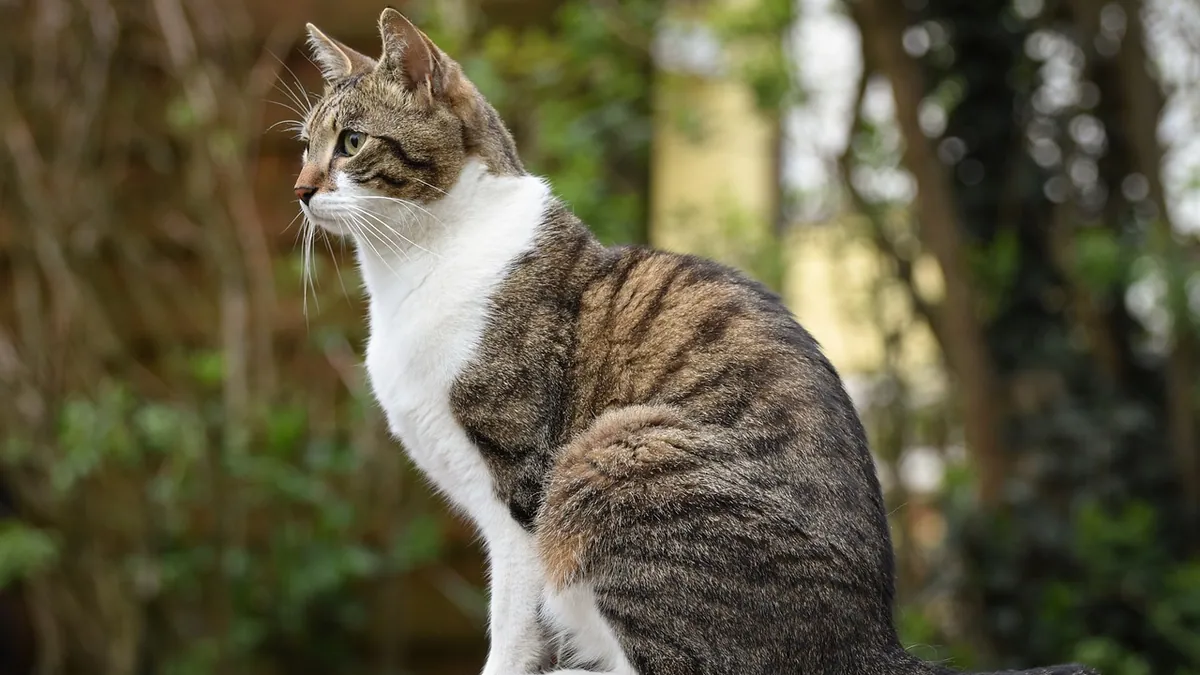
A cat's tail is a mood barometer and a balance tool, and the signs of cat tail movement range from a relaxed sway to a sharp flick that means "back off." Posture matters as much as motion, and a sudden change in how your cat holds or moves the tail can point to pain or nerve damage. This article is educational and is not a substitute for veterinary diagnosis or treatment.
Quick Answer
- A tail held high with a gentle curve is a friendly greeting, while a puffed tail signals fear and a low, tucked tail signals anxiety or submission [1].
- A twitching or quivering tail can mean excitement, but a sharp lashing tail usually means irritation.
- A tail that suddenly hangs limp, drags, or looks painful needs a veterinary exam, because nerve injury and muscle strain can both cause this [2].
- Limber tail syndrome, a painful muscle injury of the tail base, has been reported in a cat and improved with treatment within 2 weeks [2].
- Never pull, grab, or punish your cat by the tail, and never assume a limp tail will fix itself.
What Your Cat's Tail Is Telling You
Tail Up: The Friendly Signal
A tail held vertically, often with a small curl at the tip, is one of the clearest friendly signals a cat gives. Researchers have identified this "tail up" position as a greeting between cats and from cats to people [1]. If your cat walks toward you with the tail up, she is likely relaxed and open to interaction.
Some cats cannot hold a classic tail up because of how their tail is shaped. In one report, two cats with curled, Spitz-like tails showed normal tail movement when the tail hung down, but the tail curled over the back as soon as it was raised [1]. That posture had been present since adoption and was not linked to injury or pain [1]. If your cat has always had an unusual tail carriage, it may simply be her normal anatomy.
Tail Down or Tucked: What It Means
A cat tail down meaning is usually caution, stress, or submission. A tail tucked between the legs or wrapped around the body often shows a cat feels threatened or wants to avoid conflict. A tail held low and stiff can also appear when a cat is stalking or focused on something.
Context matters. A tail that dips while your cat is resting is normal. A tail that stays tucked while your cat hides, flattens her ears, or avoids you is a stress signal worth addressing.
Twitching, Quivering, and Lashing
Cat tail twitching has several meanings, and speed is your best clue.
- A slow, soft wave often means your cat is content or thinking.
- A quick quiver or vibration can mean excitement, such as when your cat sees a bird out the window.
- A rhythmic quiver with the tail raised can appear during urine spraying, which is a marking behavior tied to sexual or stress-related motivation [3].
- A fast, hard lash or thump usually means irritation or overstimulation. This is your cue to stop petting and give your cat space.
The Tail as a Balance and Communication Tool
Cats use tail position and movement to communicate with other cats and with people [1]. The tail also helps with balance during jumps and turns. Because it does so much, an injured tail can affect both mood signals and movement.
Medical Causes of Tail Changes to Rule Out
Tail Injury
Cuts, bites, burns, and crush injuries are common tail problems. Pelvic trauma is another concern, because the tail nerves run near the pelvis. In a study of 80 cats with pelvic trauma, most cats (91.2%) had more than one pelvic lesion, and sacroiliac luxation was the most common [4]. A cat hit by a car or fallen from a height can have a tail problem that is part of a larger injury.
Signs of cat tail injury include:
- A visible wound, swelling, or bleeding
- Holding the tail at an odd angle
- Crying or pulling away when the tail is touched
- Dragging the tail or an inability to lift it
- Soiling around the tail base because the cat cannot groom
Nerve Damage
The nerves that control the tail and the bladder run through the lower spine and tail base. Damage there can cause a floppy tail, poor tail control, or trouble urinating or passing stool. A 10-year-old cat with 6 weeks of abnormal tail carriage and constipation was found to have disc material pressing on the cauda equina, the bundle of nerves at the end of the spinal cord [5]. Surgery resolved the signs completely [5]. This is uncommon in cats, but it shows why a tail that stops working deserves a workup.
Limber Tail Syndrome
Limber tail syndrome is a painful muscle condition long known in dogs. A 4-year-old cat was seen for sudden abnormal and painful tail carriage, with the tail held horizontally near the base and flaccid paralysis farther out [2]. Imaging found a lesion in the tail muscles at the first tail vertebra [2]. The cat was treated with prednisolone and improved within 2 weeks [2]. Limber tail syndrome may occur in cats, though it is not well established in veterinary research [2].
Other Causes
Arthritis, infection, tumors, and anal sac disease can also change tail carriage or make the tail sore. A veterinarian can sort these out with an exam and imaging.
When Tail Behavior Becomes a Problem
A tail signal is a problem when it comes with other signs of distress or when it changes suddenly.
Call your veterinarian if your cat shows:
- A tail that is limp, dragging, or held in a new abnormal position
- Pain when the tail or rear end is touched
- Trouble urinating, straining to defecate, or leaking urine
- A wound, swelling, or discharge on the tail
- Sudden aggression or hiding that started with the tail change
Behavior problems can also show up in the tail. Spraying is the release of urine onto a surface, usually with the tail raised and quivering and sometimes with the feet treading [3]. This is a normal cat behavior with sexual or stress-related motivation, not spite [3]. It needs a behavior plan, not punishment.
If your cat is limping along with the tail change, see Cat Limping After a Jump: Is It a Sprain or a Break? and Cat Limping: Arthritis or Something Else? How to Tell. Hair loss near the tail base can point to another problem, covered in Cat Hair Loss on Back Near Tail: What It Means.
How to Read Your Cat Better
Watch the Whole Body
Tail position is one clue among many. Look at the ears, eyes, whiskers, and body posture. A study of 1,950 people found that recognizing stress-related states in cats from visual cues alone was challenging, with accuracy above chance but still low [6]. People who identified as female and those who had owned cats scored higher, and accuracy decreased slightly with age [6]. In other words, reading cats takes practice, and even experienced owners miss cues.
Keep a Simple Log
Note what your cat's tail is doing and what happened just before. Record the time, the trigger (a visitor, a noise, another pet), and the tail position. Patterns show up fast. This log is also useful for your veterinarian.
Respect the Warning Signs
When the tail starts lashing, stop what you are doing. Give your cat an escape route and a quiet place to settle. Most bites and scratches happen when a cat's early signals are ignored.
What to Do Step by Step
If You Suspect an Injury
- Do not pull or straighten the tail. Keep your cat calm and confined to a carrier or small room.
- Look for bleeding, swelling, or an open wound without pressing on the tail.
- Call your veterinarian or an emergency clinic. Tail injuries near the base can involve nerves and the spinal cord.
- If your cat cannot urinate, treat it as an emergency. That can be a sign of nerve damage or a urinary blockage.
If the Tail Change Is Behavioral
- Meet your cat's basic needs first. Provide scratching posts, perches, hiding spots, and play time.
- Reward the behavior you want. Positive reinforcement with treats or favorite toys can teach your cat to scratch, perch, or eliminate in the right places, and clicker training can help [7].
- Remove access to problem areas. Blocking access is often the simplest fix once your cat's needs are met [7].
- Make the wrong spot unpleasant. Taste, odor, texture, or a motion-activated device can teach a cat to avoid an area [7][3]. Citrus odor and double-sided sticky tape are common options [3].
- Add litter boxes. Boxes should be at least 1.5 times the length of your cat from nose to tail base, and at least two boxes should be available in every core area where cats that get along live [3].
- Address litter box deterrents. A bad location, scary noises, or limited access to a shared box can all push a cat away [3].
If Another Cat Is Involved
Aggression between cats needs separation first. The cats should be separated and only slowly reintroduced after behavior modification techniques are in place [7]. Food rewards work well in these programs, just as they do with dogs [7].
What Not to Do
- Do not punish your cat. Punishment can make your cat afraid of you and usually stops the behavior only when you are present [7].
- Do not grab or pull the tail, even to move your cat. The tail is fragile and full of nerves.
- Do not assume a limp tail is "just a sprain." Limber tail syndrome and nerve injuries both cause a floppy tail, and they need different care [2][5].
- Do not wait on urinary or bowel changes. These can signal nerve damage.
- Do not rely on tail position alone to judge mood. People are not very accurate at reading feline stress from visual cues alone [6].
When to Involve a Veterinarian or Behavior Professional
See a veterinarian first for any sudden tail change, pain, wound, or loss of tail function. A physical exam and imaging can find the cause. If the exam is normal and the problem is behavioral, your veterinarian can help build a treatment plan. The earlier a treatment program starts, the better the chances it will work [7].
For complex aggression or marking, ask your veterinarian for a referral to a veterinary behaviorist or a certified behavior professional. Your veterinarian can also rule out medical triggers such as pain, which often drives behavior changes.
Limitations and When to Contact a Veterinarian
Tail signs are clues, not diagnoses. Many conditions look alike, and only an exam and testing can tell them apart. Your individual cat needs a veterinarian who can examine her.
Contact a veterinarian the same day if your cat has a limp or dragging tail, pain at the tail base, a wound, or a sudden change in tail carriage.
Go to an emergency clinic now if your cat cannot urinate, has a tail injury with heavy bleeding, cannot stand, or was hit by a car or fell from a height. Pelvic trauma often involves more than one injury, so a full exam matters [4].
Schedule a routine visit if the tail change is mild but lasting, or if you see new spraying, overgrooming, or hiding. Bring your notes about when the behavior started and what triggers it.
Frequently Asked Questions
Why does my cat's tail twitch when she is resting?
A soft twitch while resting often means your cat is relaxed but alert. A fast, hard twitch usually means irritation, so give her space. Watch the rest of her body for a clearer answer.
What does it mean when a cat's tail is down all the time?
A tail held low or tucked often signals stress, submission, or discomfort. If it is new and comes with hiding, appetite changes, or pain, have your cat examined. If it has always been that way, it may be her normal carriage.
Can a cat break its tail?
Yes, cats can fracture tail bones, often from a fall, a door closing on the tail, or a car accident. A broken tail may hang oddly, swell, or hurt when touched. Any suspected fracture needs veterinary care because nerves can be damaged.
How long does a tail injury take to heal?
It depends on the injury. In one reported cat with limber tail syndrome, signs improved and disappeared within 2 weeks with treatment [2]. Nerve injuries can take longer, and some do not fully recover. Your veterinarian will set the timeline after an exam.
Should I pet my cat when her tail is lashing?
No. A lashing tail usually means your cat is overstimulated or annoyed, and petting can lead to a bite or scratch. Stop, let her move away, and try again later when her tail is relaxed.
Related Articles
- Cat Hair Loss on Back Near Tail: What It Means
- Cat Limping After a Jump: Is It a Sprain or a Break?
- Cat Choking Signs
- Cat Limping: Arthritis or Something Else? How to Tell
- Cat Eye Injury: Signs, First Aid, and When to See the Vet
- Cat Broken Leg: How to Tell and What to Do
- Cat Tail Movements and What They Really Mean
- How to Tell If Your Cat Broke Its Tail or Bone
- Bumps at the Base of a Cat's Tail: Causes and Care
References
- Spitz-like tail carriage in two domestic cats. Veterinary journal (London, England : 1997), 2024.
- Clinical and magnetic resonance imaging findings of presumed limber tail syndrome in a cat. The Canadian veterinary journal = La revue veterinaire canadienne, 2025.
- Behavior Problems of Cats - Behavior. Merck Veterinary Manual.
- Radiographic patterns and lesion associations in feline pelvic trauma. Journal of feline medicine and surgery, 2026.
- Lumbosacral intradural-extramedullary intervertebral disc extrusion in a cat. JFMS open reports, 2025.
- Human recognition of feline stress-related behavioral states from visual cues depends on observer characteristics. Scientific reports, 2026.
- Behavior Problems in Cats - Cat Owners. Merck Veterinary Manual.