Dual Purpose Chicken Breeds: Comparison Table for Homesteads
By Dr. Zubair Khalid, DVM, MS, PhD ·
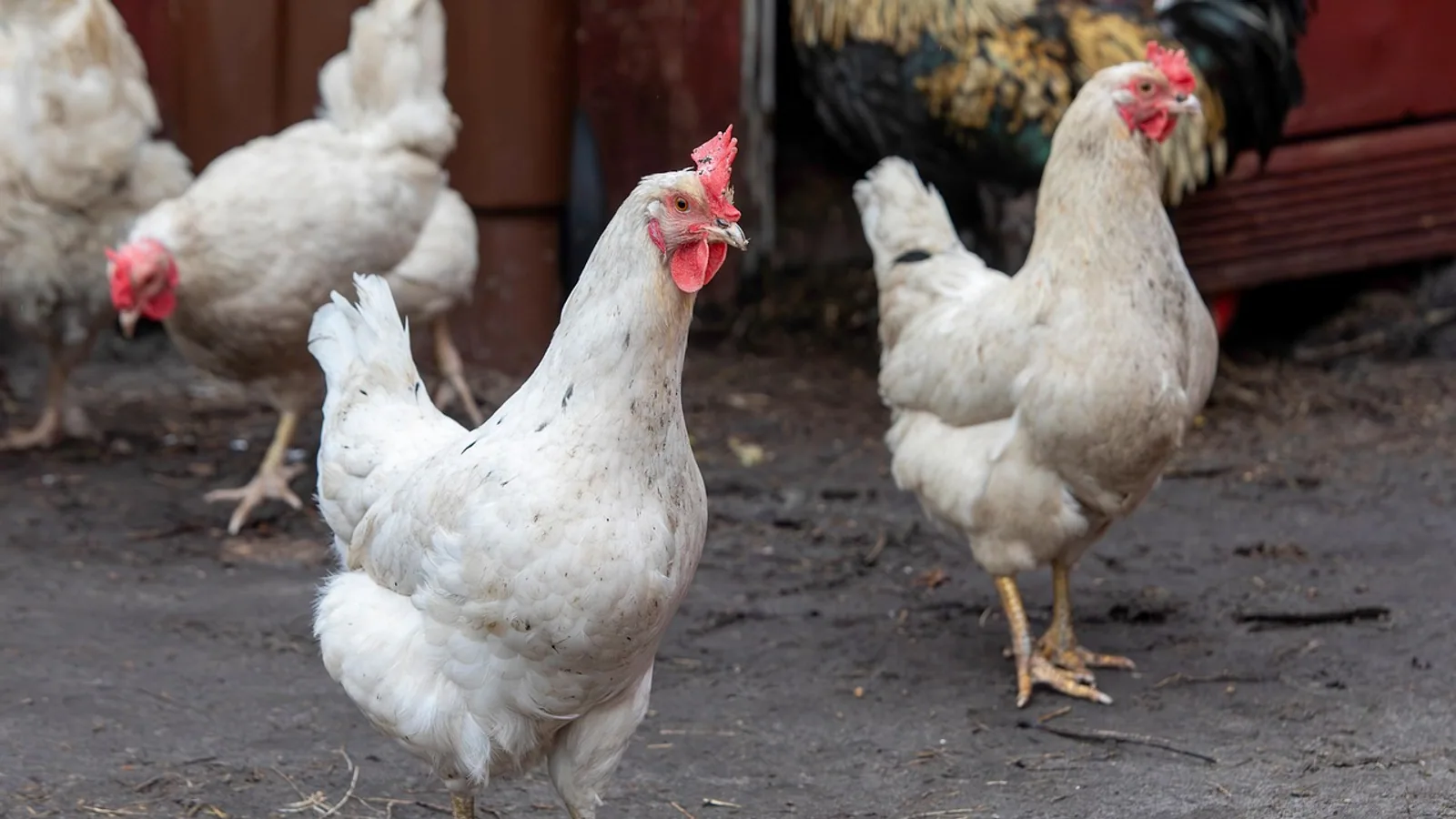
A dual purpose chicken breed is one selected to lay a respectable number of eggs while still growing a body worth processing, which is the opposite of a commercial layer that stays small and a broiler that lays poorly. The rule of thumb for a homestead is simple: pick the breed whose weaker trait you can live with, because every dual purpose bird trades some egg output for some meat, or some meat for some eggs.
This article is educational and is not a substitute for veterinary diagnosis or treatment.
What "Dual Purpose" Actually Means on a Small Farm
A true dual purpose chicken sits in the middle of a spectrum. On one end are specialized egg layers that convert feed into eggs at high efficiency but carry little breast muscle. On the other end are fast-growing meat birds that reach processing weight in weeks but lay few eggs and often have trouble with their legs and hearts. Dual purpose breeds were developed to do both jobs adequately, not either job perfectly.
The biology behind that trade-off is measurable. A study comparing a dual purpose line (Lohmann Dual) with a commercial broiler line (Ross 308) found that the dual purpose birds had a proportionally heavier gizzard, a shorter intestine, taller jejunal villi, and a thicker ileal muscle layer at the same body weight [1]. In plain terms, the dual purpose gut is built for a slower, more fibrous, more forage-heavy life, while the broiler gut is built for rapid absorption of a dense ration. That difference is why dual purpose chickens are the practical choice for pasture, orchard, and scrap-feeding systems, and why they will never match a broiler's growth curve.
Feed supply is the other half of the equation. A study of dual purpose chicken production in Tanzania found that farmers fed their birds less than the recommended 125 g per chicken unit per day, and that the feed offered was often low in crude protein and essential amino acids in both semi-intensive and intensive systems [2]. Even the best genetics underperform on a thin ration. If your goal is 250 eggs and a 3 kg carcass, the bird needs enough protein and energy to build both.
The Comparison Table
The figures below are realistic ranges for well-managed heritage stock on good feed. Expect the lower end in a free-range flock with limited supplemental feed, and the upper end in a flock on a balanced layer ration with clean water and low stress.
| Breed | Annual eggs (hen) | Mature weight (hen / rooster) | Temperament | Cold tolerance | Heat tolerance | Broodiness |
|---|---|---|---|---|---|---|
| Rhode Island Red | 250 to 300 | 2.7 to 3.0 kg / 3.6 to 4.0 kg | Active, assertive, sometimes pushy | Excellent | Good | Low to moderate |
| Barred Plymouth Rock | 200 to 280 | 2.9 to 3.4 kg / 3.6 to 4.3 kg | Calm, friendly, docile | Excellent | Moderate | Moderate |
| Orpington | 180 to 250 | 3.2 to 3.6 kg / 3.6 to 4.5 kg | Very calm, gentle, easily handled | Excellent | Poor to moderate | High |
| Australorp | 250 to 300 | 2.7 to 3.2 kg / 3.6 to 4.0 kg | Quiet, docile, hardy | Excellent | Good | Moderate to high |
| Wyandotte | 200 to 260 | 2.7 to 3.2 kg / 3.6 to 4.0 kg | Calm, alert, occasionally bossy | Excellent | Good | Moderate |
| Sussex | 240 to 300 | 2.7 to 3.2 kg / 3.6 to 4.0 kg | Curious, calm, good forager | Good to excellent | Good | Low to moderate |
Read the table as a set of compromises rather than a ranking. The Rhode Island Red and Sussex lead on eggs. The Orpington leads on body mass and gentleness. The Australorp splits the difference. The Plymouth Rock and Wyandotte sit in the reliable middle. No breed wins every column.
Breed by Breed

.jpg)
Rhode Island Red
The Rhode Island Red is the default American dual purpose bird and the one most homesteaders start with. Hens lay heavily for two to three years, and roosters reach a genuinely useful table weight. The breed's genetic history is well documented. A random amplified polymorphic DNA study that included Rhode Island Red, White Leghorn, Red Cornish, White Plymouth Rock, and Kadaknath found that Rhode Island Red clustered closely with the native Kadaknath and showed a distinct profile from the White Leghorn [3]. That genetic separation is part of why the breed behaves differently from a commercial layer: it retains body mass and foraging drive alongside egg output.
The trade-off is temperament. Rhode Island Reds are active and can be aggressive toward flockmates in tight quarters, and roosters can be assertive. Give them space and a firm pecking order establishes itself.
Barred Plymouth Rock
The Barred Plymouth Rock is the classic American barnyard bird, a heavy, calm, black-and-white barred chicken that lays brown eggs and dresses out well. Hens are notably docile and tolerate handling, which makes the breed a good fit for families and for mixed flocks where a pushy breed would cause trouble. The Plymouth Rock was one of the meat-type breeds in the genetic diversity study above, and it showed high genetic similarity to Red Cornish, the other meat-type breed in that analysis [3]. That grouping reflects the breed's heritage as a table bird first and a layer second.
Expect fewer eggs than a Rhode Island Red but a heavier, broader carcass and a calmer flock. Plymouth Rocks handle cold well and manage heat only moderately, so shade and ventilation matter in southern summers.
Orpington
The Orpington is the heaviest and gentlest bird on this list. Hens are large, fluffy, and slow, which makes them easy to catch, easy to handle, and easy for a predator to catch as well. Egg numbers are the lowest of the six, but the meat yield is the highest, and the breed's docility is unmatched. Orpingtons go broody often, and a broody hen can be a genuine asset on a homestead that wants to hatch its own chicks.
Heat is the Orpington's weak point. The dense plumage that makes the breed cold-hardy becomes a liability in humid southern summers, and these birds need deep shade, airflow, and cool water. If you live where July afternoons run above 35°C, an Orpington flock needs more management than a Wyandotte or Sussex flock.
Australorp
The Australorp was developed in Australia from Black Orpington stock and selected hard for egg production. The result is a breed that lays nearly as well as a Rhode Island Red while staying calmer and hardier. Hens are quiet, docile, and tolerant of confinement, which suits small coops and suburban lots. Roosters reach a solid table weight, and the black plumage with a green sheen is a practical advantage in a free-range flock because it absorbs heat in winter and blends into shade in summer.
Australorps go broody more often than Rhode Island Reds, and a broody Australorp is a reliable mother. The breed handles cold excellently and heat reasonably well.
Wyandotte
The Wyandotte is a rose-combed American breed that lays well, dresses out to a plump carcass, and tolerates cold better than almost anything else on the list. The rose comb is a real advantage in northern winters because it resists frostbite far better than a single comb. Hens are calm and alert, and roosters are typically manageable.
Wyandottes can be slightly bossy within a flock, and their egg numbers trail the Rhode Island Red and Sussex. They are a strong choice for a cold-climate homestead that wants one breed to do everything reasonably well.
Sussex
The Sussex is an old English breed that combines high egg output with a good carcass and a calm, curious temperament. Hens forage aggressively, which lowers feed costs on pasture, and they lay large light-brown eggs for several years. The breed handles cold well and heat better than the Orpington. Broodiness is low to moderate, so a Sussex flock keeps laying rather than sitting.
The Sussex appears in modern dual purpose breeding programs. A study of dual purpose cockerels of Dominant genotype reared on pasture included a Dominant Sussex line, and the Dominant Brown line reached the highest body weight at 77 days of age (1842 g) with the lowest feed conversion among the three genotypes tested [4]. That work confirms what homesteaders observe: Sussex-derived genetics grow efficiently on forage-based systems.
Comparing on the Criteria That Decide Real Choices
Egg output versus meat yield
The trade-off is real and roughly linear. The highest-laying breeds on this list, the Rhode Island Red and Sussex, carry less breast muscle than the Orpington. The heaviest breed, the Orpington, lays the fewest eggs. If your household eats more eggs than chicken, weight the table toward the top of the egg column. If you process several birds a year for the freezer, weight it toward mature weight and body shape.
One useful benchmark comes from a comparison of an indigenous Spanish breed, Black Castellana, with a selected white-egg layer strain. The commercial strain laid 12.3% more eggs, but the heritage breed's eggs were 15.4% heavier, so daily egg mass did not differ between the two [5]. Heavier eggs partly offset a lower count, which is why a 220-egg Sussex flock can put nearly as much egg on the table as a 280-egg hybrid flock.
Temperament and flock dynamics
Temperament determines how much work a flock is. Calm breeds like the Orpington, Australorp, and Plymouth Rock are easier to handle, easier to move, and less likely to injure each other in confinement. Active breeds like the Rhode Island Red forage better and defend themselves better against small predators but create more social friction. In a mixed flock, keep the assertive breeds in the majority or give the calm breeds extra space.
Climate tolerance
Cold tolerance is excellent across all six breeds, with the Wyandotte's rose comb giving it an edge in frost-prone regions. Heat tolerance separates them. The Orpington is the weakest in heat, the Plymouth Rock is moderate, and the Rhode Island Red, Australorp, Wyandotte, and Sussex handle heat reasonably well. A study of Tukong chickens in Indonesia found that birds maintained favorable egg quality and nutritional profiles despite afternoon temperature-humidity index values frequently exceeding the severe heat stress threshold of 82 [6]. That finding supports what experienced keepers already know: heat resilience is partly genetic and partly management. Shade, airflow, and cool water do as much work as breed choice.
Broodiness
Broodiness is a feature or a bug depending on your goals. A homestead that wants to hatch chicks values a broody hen. A homestead that wants maximum egg output does not. Orpingtons and Australorps go broody often. Rhode Island Reds and Sussex go broody rarely. Plymouth Rocks and Wyandottes sit in the middle.
Worked Scenarios
Scenario one: a family of four that eats eggs daily and processes six birds a year. A flock of eight Rhode Island Red or Sussex hens plus one rooster covers the egg demand with surplus to sell or share, and the extra roosters and spent hens dress out to a useful size. Egg output is the priority, and the meat is a byproduct.
Scenario two: a cold-climate homestead in the upper Midwest. A Wyandotte flock with a few Australorps handles frost, lays through winter with supplemental light, and produces a plump carcass. The rose comb on the Wyandotte reduces frostbite risk on the comb, which is a genuine welfare advantage in a hard freeze.
Scenario three: a hot, humid southern homestead. Sussex and Rhode Island Red are the safer picks. Avoid a pure Orpington flock unless you can provide deep shade and airflow. The Orpington's density becomes a welfare problem above 35°C.
Scenario four: a homestead that wants to hatch its own replacement chicks. An Orpington or Australorp flock with a broody hen does the incubation work for you. Expect fewer eggs from the hens but a self-sustaining flock.
Common Mix-Ups and Pitfalls
Hatchery stock is not show stock
A hatchery Rhode Island Red and a show-quality Rhode Island Red are different birds. Hatcheries select for volume, hatch rate, and uniformity, and the resulting birds often lay well but carry less body mass than the breed standard describes. Show lines carry the body mass but lay fewer eggs. If meat yield matters, ask the breeder what the line was selected for, and do not assume the breed name guarantees the carcass.
Production hybrids outlay heritage breeds
Sex-link hybrids and commercial brown-egg strains will outlay any heritage breed on this list, often by 50 to 100 eggs per year. A study comparing Italian local breeds with Hy-Line Brown and Hy-Line White hybrids under organic management found that the hybrids laid heavier eggs with heavier albumen, while the heritage breeds produced heavier yolks and higher yolk cholesterol [7]. The hybrids win on volume. The heritage breeds win on yolk size, foraging ability, and the ability to reproduce naturally. If your goal is maximum eggs per bag of feed, buy hybrids. If your goal is a self-replacing flock that forages and dresses out, buy heritage.
Roosters add management and noise
A rooster is not required for egg production. Hens lay without one. A rooster adds crowing, which starts before dawn and carries across property lines, and it adds aggression during breeding season. Many municipalities restrict or prohibit roosters, so check local ordinances before you buy straight-run chicks. If you want a rooster for flock protection or breeding, plan for one rooster per eight to twelve hens to reduce over-mating and feather damage.
Feed quality limits everything
The Tanzanian feed gap study is the clearest warning here. Farmers fed dual purpose chickens less than the recommended 125 g per bird per day, and the feed was often deficient in crude protein and essential amino acids [2]. A hen cannot lay 280 eggs a year on kitchen scraps and cracked corn. If you want the numbers in the table above, provide a balanced ration with adequate protein, and treat forage as a supplement rather than a base.
Meat quality differs from commercial chicken
Dual purpose meat is not broiler meat. A study of the Jabalpur color line, an improved dual purpose synthetic, found that breast and thigh protein concentrations were superior to those of Cobb 400 broilers, and the dual purpose meat showed better antioxidant capacity and higher levels of functional biomolecules including carnosine, anserine, and creatine [8]. The meat is firmer, more flavorful, and better suited to slow cooking. Do not expect a dual purpose bird to roast like a supermarket broiler.
Flavor and fat are breed-linked
Meat and egg flavor vary by breed and diet. Research on Jidori chicken found that arachidonic acid is associated with the rich flavor of both meat and eggs, and that the trait has a genetic component [9]. Feeding practices also shift flavor. A study of Xinghua and White Recessive Rock chickens found that omnivorous feeding altered breast muscle metabolism and produced breed-specific flavor and texture differences, with the indigenous Xinghua birds showing better flavor characteristics [10]. If flavor matters to you, breed and diet both count.
Disease is a real risk in any flock
Dual purpose flocks are not exempt from infectious disease. An outbreak of avian leukosis virus subgroup J was confirmed in a dual purpose black chicken flock in China, and the isolated strain showed genomic features consistent with hemangioma-inducing strains [11]. Biosecurity, quarantine of new birds, and prompt veterinary attention for unexplained mortality or tumors protect any flock.
Limitations and When to Contact a Veterinarian
Breed descriptions and production ranges are population averages. Individual birds vary widely, and management, nutrition, and climate shift results more than breed choice does. Contact a veterinarian if you see any of the following:
- Sudden deaths in more than one bird within a few days
- Respiratory signs such as open-mouth breathing, rattling, or facial swelling
- A drop in egg production of more than 20% without an obvious cause such as molting or short daylight
- Lameness, inability to stand, or swollen joints
- Bloody droppings, or droppings that are persistently watery or green
- Unexplained weight loss or a swollen abdomen
- Tumors, pale combs, or a comb that turns dark
- Any bird that stops eating or drinking for more than 24 hours
A veterinarian familiar with poultry can examine the flock, recommend diagnostics, and advise on treatment and culling decisions. Do not treat a sick flock with antibiotics or other medications without veterinary guidance, because drug residues in eggs and meat have legal and food-safety consequences in the United States.
Frequently Asked Questions
Which dual purpose chicken breed lays the most eggs?
Rhode Island Red, Australorp, and Sussex are the top layers among the six, typically 250 to 300 eggs per hen per year on good feed. Orpingtons lay the fewest, usually 180 to 250.
Which dual purpose breed gives the best meat yield?
The Orpington carries the most body mass, followed by the Barred Plymouth Rock. Rhode Island Red and Australorp roosters also dress out to a useful weight.
Do I need a rooster for my hens to lay eggs?
No. Hens lay eggs without a rooster. A rooster is only needed for fertilization and hatching, and it adds crowing and aggression that many homesteads prefer to avoid.
Are dual purpose chickens good for cold climates?
Yes. All six breeds handle cold well. The Wyandotte's rose comb gives it an edge because it resists frostbite better than a single comb.
Are dual purpose chickens good in hot climates?
Sussex, Rhode Island Red, Australorp, and Wyandotte handle heat reasonably well. Orpingtons struggle in heat because of their dense plumage and need deep shade and airflow.
How many eggs should I expect from a backyard dual purpose flock?
Plan on the lower half of each breed's range for a free-range flock on supplemental feed, and the upper half for a flock on a balanced layer ration with clean water and low stress.
Related Articles
- Animal Breeds: A Practical Guide to History, Purpose, Welfare, and Choice
- Predatory Journal vs. Legitimate Journal: A Side-by-Side Comparison Table
- DNA vs RNA Structure: Key Differences, Comparison Table & Functions
- Cat Breeds: Health Comparison and Care Tips for Popular Types
- Draft Horse Breeds for Farm Work: Selection Criteria and Comparison
- Purpose of scoping review
- Teeth Diagram: Types, Numbers and Animal Comparison
- Mastiff Breeds: Comparison, Traits, and Health Risks
- Incisor Teeth: Anatomy, Function, and Species Comparison
Sources
- Comparison of the gastrointestinal tract of a dual-purpose to a broiler chicken line: A qualitative and quantitative macroscopic and microscopic study.
- Feed gap analysis of dual-purpose chicken production in Tanzania: feed quantity and quality limited production.
- Genetic diversity among chicken breeds estimated through randomly amplified polymorphic DNA.
- Performance and Meat Quality of Dual-Purpose Cockerels of Dominant Genotype Reared on Pasture.
- Assessment of performance and egg quality in laying hens of Spanish indigenous breed Black Castellana as compared with a selected white egg-layer strain.
- Egg and meat quality attributes of Tukong, a rumpled chicken breed in Indonesia.
- Quality of organic eggs of hybrid and Italian breed hens.
- Functional Quality Characteristics of the Meat from a Dual-Purpose Poultry Crossbreed Suitable for Backyard Rearing in Comparison to Commercial Broilers.
- Association Between Arachidonic Acid and Chicken Meat and Egg Flavor, and Their Genetic Regulation.
- Omnivorous feeding modulates meat quality and flavor in Xinghua and White Recessive Rock chickens: A metabolomic exploration of breed-specific metabolic pathways.
- Isolation, identification, molecular characterization, and pathogenicity analysis of ALV-J in a local black chicken flock in China.