
Animal Breeds: A Practical Guide to History, Purpose, Welfare, and Choice
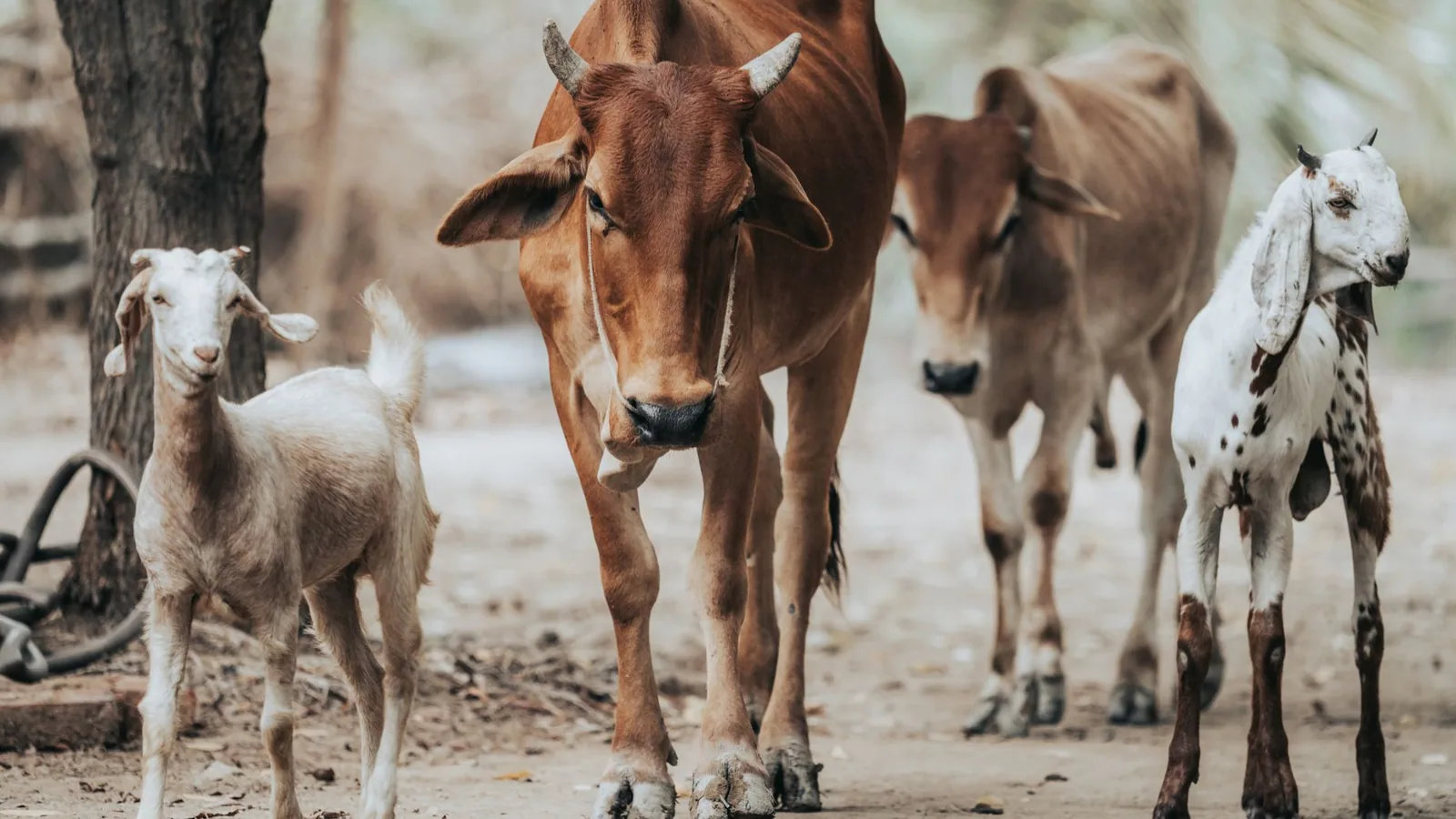
Hero image: cattle and goats in a farm setting. Photograph by Tahamie Farooqui via Pexels, used under the Pexels License. The image illustrates domestic-animal context and does not identify breeds.
Choosing or studying a breed is an exercise in reading a living history. A breed can preserve the record of a job, climate, food system, migration route, or human aesthetic. It can also supply useful starting questions about size, coat, production, athletic demands, husbandry, and inherited health risks. It cannot guarantee an individual animal's temperament, soundness, safety, productivity, or suitability for a household.
This guide treats breeds as useful maps, not verdicts. It covers the major companion and domestic animal categories people search for most often, including dogs, cats, horses, chickens, rabbits, goats, and cattle. The practical aim is to help a reader move from a breed name to a better decision: what question should be asked next, what records should be checked, and when should a veterinarian, experienced keeper, trainer, farrier, or breed organization be involved?
One final point sets the tone for every section that follows. The most responsible breed decision leaves room for an animal to be an individual. A careful keeper adjusts a plan when the animal's needs are clearer, asks for help early, and treats welfare as the first measure of success.
Quick Answer
An animal breed is a population shaped by shared ancestry and a defined breeding or registry tradition. Breed information is most useful when it is paired with an individual assessment, responsible management, verified health or production records, and realistic resources. Start with purpose and care demands, then investigate welfare, genetics, sourcing, and local regulations. Do not select an animal from a photograph, popularity ranking, or one trait alone.
At a Glance
| Category | What a breed may help predict | What it cannot promise | First practical check |
|---|---|---|---|
| Dogs | Adult size range, coat work, historical function, common screening priorities | A specific personality, behavior with children, or allergy safety | Meet the individual and review breeder or rescue records |
| Cats | Coat maintenance, body type, activity tendencies, breed-associated health questions | Affection level, indoor adjustment, or freedom from disease | Ask about socialization, parent health, and home environment |
| Horses | Typical build, discipline history, management scale, movement style | Safety for a novice rider or current soundness | Arrange an independent pre-purchase examination |
| Chickens | Egg color, body size, broodiness tendency, heritage role | Exact annual egg count or flock compatibility | Plan predator-proof housing and local flock rules |
| Rabbits | Mature size, coat commitment, ear type, show standard context | Litter training, calm handling, or health | Confirm housing dimensions and rabbit-savvy veterinary access |
| Goats | Dairy, meat, fiber, or companion purpose; mature frame | Milk yield, fencing behavior, or herd compatibility | Plan for at least two compatible goats and secure fencing |
| Cattle | Dairy, beef, draft, or local-adaptation history | Pregnancy outcome, disposition, or performance on every farm | Consult a local veterinarian and match forage, facilities, and market |
What a Breed Is, and What It Is Not
Breeds are human-maintained populations. A registry or breed association usually sets a written standard, maintains pedigrees, and decides how animals enter its records. The standard may describe appearance, performance, ancestry, or all three. It is not a diagnosis, a personality test, or a warranty.
The word is used differently across species. In dogs and cats, breed names are often connected to a closed or tightly managed pedigree system and a conformation standard. In livestock, a breed can be closely tied to a production system and regional adaptation. In poultry and rabbits, standards may describe plumage, color, body shape, coat, ears, and weight classes alongside historic use. In horses, breed identity may carry a strong association with registry rules and disciplines, yet individual training, handling, soundness, and rider skill remain decisive.
Domestic animal diversity is wider than a short list of famous breeds. The Food and Agriculture Organization maintains the Domestic Animal Diversity Information System, which documents animal genetic resources and national reporting. That perspective matters because rare, local, and heritage populations can hold adaptations that are valuable for climate, forage, disease pressures, or cultural food systems. A popularity list tends to hide that depth.
Four layers of useful breed information
| Layer | Meaning | A responsible question |
|---|---|---|
| History | Why the population was developed or maintained | What work, climate, or system shaped this breed? |
| Standard | The registry's description of eligible animals | Which registry governs this description, and does it fit my goal? |
| Population tendency | A trait that may occur more often in the population | How variable is the trait, and how will I assess this animal? |
| Individual evidence | Records and observations from the animal in front of you | What do the health, behavior, production, and handling records show? |
This distinction protects both animals and people. A livestock producer who assumes a breed label guarantees fertility may overlook nutrition, disease, and management. A family who assumes a dog label guarantees gentleness may miss socialization, pain, fear, and an individual animal's boundaries. A rider who assumes a quiet breed guarantees safety can be placed at real risk. The animal in front of you always deserves an individual evaluation.
A Better Way to Compare Breeds
The internet often turns breed selection into a quiz with a single winner. Real decisions are more like balancing a small set of constraints. The following grid helps separate preferences from non-negotiables.
| Decision factor | Questions for companion animals | Questions for livestock and poultry |
|---|---|---|
| Purpose | Companion, sport, service, show, working task? | Milk, meat, eggs, fiber, draft, breeding, conservation? |
| Space and facilities | Indoor access, exercise routes, secure containment, quiet rest space? | Fencing, shelter, handling system, manure management, predator control? |
| Time | Training, grooming, enrichment, transport, veterinary care? | Feeding, milking, egg collection, pasture moves, records, biosecurity? |
| Budget | Food, preventive care, insurance, grooming, emergency fund? | Feed, land, equipment, breeding costs, processing or marketing, losses? |
| Climate | Heat, cold, humidity, coat care, safe exercise season? | Shade, ventilation, winter water, mud control, parasite pressure? |
| Social structure | Other pets, visitors, children, handling experience? | Herd or flock companions, quarantine pen, breeding groups, isolation needs? |
| Welfare risks | Extreme body shape, chronic pain risk, poor sourcing, impulse purchase? | Overstocking, inadequate fencing, poor predator control, transport stress? |
Use this grid before opening a breed directory. It can rule out an otherwise attractive choice early. It can also prevent a misleading conclusion such as “low maintenance” when the animal is low grooming but high exercise, or low feed cost but high fencing cost.
Dogs
Dogs have the deepest popular-search ecosystem of any domestic animal category. Search data collected for this site in the United States showed broad interest in “dog breeds,” “small dog breeds,” “popular dog breeds,” “best dog breeds,” and specific breed names. That demand makes careful language especially important. People often arrive seeking certainty at a moment when they need a framework.
Dog breed history is functional history
Many dog breed groups were organized around work: herding livestock, locating game, retrieving, guarding, dispatching vermin, moving through snow, or living closely with people. The American Kennel Club overview of breed groups is a useful entry point for the way modern groups describe historical function. Those jobs may leave clues about movement needs, attention to surroundings, persistence, vocalization, coat, and handling needs. They do not give a complete behavioral forecast.
Genetic research reinforces the caution. A large survey study found that breed explained a limited portion of behavioral variation among individual dogs, while many traits varied substantially within breeds. Read the full study by Morrill and colleagues in Science. A responsible dog page should therefore say “consider investigating” or “may be common in this line,” not “will behave this way.”
| Historical dog function | Examples of questions to investigate | Household planning implication |
|---|---|---|
| Herding | Does the individual fixate on moving people, bicycles, or animals? | Build training, safe outlets, and supervised interactions into the plan |
| Sporting and retrieving | What daily activity and training does the dog already receive? | Plan consistent outdoor work and weather-safe alternatives |
| Hound work | How strong is scent or visual pursuit in this individual? | Use secure containment and long-line skills before off-leash freedom |
| Terrier work | How does the dog respond to small animals and excitement? | Consider other pets, yard security, and safe redirection skills |
| Guardian work | How has the animal been socialized with unfamiliar people and environments? | Seek experienced guidance and avoid making a “protection” assumption |
| Companion breeding | What are the grooming, dental, eye, and airway considerations? | Budget for routine care and discuss body-shape-related risks with a veterinarian |
Choosing a dog without a personality stereotype
Start with the day you actually live. How long will the dog be alone? Who will take the first and last walks? What happens during travel, illness, school holidays, and a change in housing? What existing animals share the home? A good match is often the dog whose needs can be met repeatedly on an ordinary Tuesday.
For a full decision worksheet, health-screening context, and a pedigree-reading illustration, visit Dog Breeds: How to Choose a Dog by Lifestyle, Health, and History. The page is designed to guide questions, not name a “best” breed.
Health screening needs breed-specific interpretation. The Canine Health Information Center combines recommended screening protocols from participating breed parent clubs. The AKC health-testing requirements also make it easier to see what a responsible breeder may be expected to document. A completed screening is valuable evidence, but it is not a guarantee that a puppy will remain healthy or that every issue has a known test.
Dog sourcing questions worth asking
- What health tests were performed, by whom, and can I see the actual results?
- What was the purpose of this pairing or placement, beyond appearance or demand?
- How are puppies or adult dogs socialized, handled, and introduced to ordinary household experiences?
- What is the return or rehoming policy if the match fails?
- Can I meet the mother, learn about the father, or review rescue intake and behavior history?
Cats
Cat breeds often attract attention through coat, face shape, size, and dramatic names. Those features matter for grooming and, sometimes, health discussion. They are only part of the animal's daily life. Socialization, early handling, indoor environment, litter box setup, household noise, and access to safe retreat spaces strongly influence how a cat settles into a home.
The Cat Fanciers' Association breed directory is a useful source for formal standards and breed histories. Treat a standard as a description of a registry population, not as a promise of an easy pet. For example, a long coat creates a grooming responsibility regardless of whether a cat appears tolerant of brushing as a kitten. A very active individual needs climbing space, play, and a predictable routine even if a listing calls the breed “affectionate.”
| Cat feature or history | Useful planning question | Practical follow-through |
|---|---|---|
| Long or dense coat | Can the household perform calm, regular coat care? | Learn combing technique and plan professional help if needed |
| Large body type | Is there adequate climbing equipment, carrier size, and veterinary handling plan? | Choose stable furniture and a carrier rated for adult size |
| Hairless or reduced coat | How will skin be protected from sun, cold, oils, and injury? | Discuss skin care with a veterinarian and use climate-appropriate housing |
| Flat facial structure | Are there breathing, eye, or dental questions to discuss before acquisition? | Obtain veterinary records and avoid normalizing chronic discomfort |
| High activity reputation | Can the home provide play, vertical territory, and quiet recovery space? | Set a daily enrichment routine before arrival |
The core cat question is not “Which breed is friendliest?” It is “Can this home offer safety, choice, social contact on the cat's terms, and preventive care for this individual?” Meet the adult animal where possible. Ask how it responds to handling, visitors, carriers, routine noise, and other animals. A shelter or rescue may have more individual behavior information than a polished breed profile.
For a cat whose litter box habits, appetite, breathing, mobility, or behavior changes suddenly, seek veterinary assessment. A breed description should never delay a medical workup.
Horses
Horse breed decisions have a special safety dimension because the relationship includes a rider, handler, farrier, trainer, and environment. Search Console data reviewed for this site showed impressions for “best horse breeds for beginner riders,” “best horse breeds for first time owners,” and “beginner horse breeds.” A useful answer cannot be a list of names alone. The safer question is whether a particular horse is suitable for a particular rider, with qualified support.
Breed is one part of rider fit
Breed history can explain why people seek a type of horse. Quarter Horses have deep roots in sprinting, ranch work, and American stock-horse traditions. Arabians are widely recognized for endurance history. Thoroughbreds have shaped racing and many sport-horse pedigrees. Friesians are commonly sought for their distinctive appearance and carriage. These histories can guide further research through organizations such as the American Quarter Horse Association, but they do not settle a purchase decision.
| Horse decision | Why a breed label is insufficient | Better evidence |
|---|---|---|
| Beginner suitability | Training, age, handling, soundness, and rider coaching may matter more than breed | Ride or handle the horse with an instructor and obtain a pre-purchase examination |
| Discipline fit | Conformation, training, movement, fitness, and rider goals vary within every registry | Watch the horse perform the intended work and review its record |
| Temperament | The same breed can include many individual responses to novelty and pressure | Observe catching, grooming, loading, hoof handling, and riding in a new setting |
| Soundness | A pedigree does not show current pain, lameness, or prior injury | Use an independent veterinarian chosen by the buyer |
A pre-purchase examination is a risk-assessment process, not a pass-fail stamp. The veterinarian's role is to document current findings, discuss their relevance to the intended use, and explain uncertainty. Riders should also budget for lessons, farriery, dental care, vaccination, parasite control, emergency care, turnout, tack fit, and transport. A lower purchase price can be outweighed quickly by an unsuitable management situation.
Chickens
Chicken breeds connect many readers to the history of small farms, local food systems, and conservation. Search interest often centers on “chicken breeds,” “backyard chickens,” and named birds such as Silkies. Those searches invite a quick egg-count answer, but flock success begins with housing, predator control, local rules, and a plan for veterinary or experienced poultry support.
The Livestock Conservancy provides context on heritage breeds and conservation work. Heritage classification should not be used as a shortcut for health, productivity, or suitability. It is a reason to learn more about a population's history and management.
| Chicken purpose | Examples of traits to research | Management question before purchase |
|---|---|---|
| Egg production | Laying season, egg color, body size, broodiness, feed demand | Can you collect eggs, manage winter laying changes, and care for non-laying birds? |
| Dual purpose | Frame, growth, laying pattern, heritage history | Is there enough space and a realistic plan for the whole flock's lifespan? |
| Exhibition or ornamental | Feather type, crest, leg feathering, visibility, grooming | Can housing stay dry, clean, ventilated, and predator resistant? |
| Broody or maternal lines | Broodiness tendency, flock dynamics, chick-rearing plan | What will happen if a hen stops laying to sit on eggs? |
Chickens are flock animals. A single bird is usually a welfare problem, and new arrivals need a thoughtful introduction and health observation period. Predators exploit small gaps. Moisture, poor ventilation, overcrowding, and incompatible birds can turn a beautiful breed plan into an avoidable welfare crisis. Choose facilities before birds, not birds before facilities.
Rabbits
Rabbit breed pages are frequently built around small size, floppy ears, plush coat, or a striking color. These traits can obscure the fact that rabbits need ample space, a high-fiber diet, daily observation, gentle handling, and access to a veterinarian experienced with rabbits. A compact breed may still require a large, secure living area and substantial time outside its enclosure.
The American Rabbit Breeders Association maintains breed and standard context. Its materials are helpful for understanding recognized breeds. They do not replace welfare assessment. Very long coats increase grooming responsibility. Very large rabbits increase lifting, flooring, carrier, and veterinary handling needs. Lop ears can prompt additional questions about ear health and safe handling. These are prompts for individualized veterinary discussion, not diagnoses.
| Rabbit type of interest | What to evaluate | Common planning mistake |
|---|---|---|
| Small companion rabbit | Adult size, activity, litter routine, social needs | Buying a small cage because the rabbit is small |
| Long-coated rabbit | Daily coat checks, mat prevention, heat management | Underestimating grooming time and heat stress risk |
| Giant rabbit | Flooring, transport, safe lifting, diet cost | Treating adult size as a facility and care requirement |
| Lop-eared rabbit | Ear care, handling, body condition, veterinary history | Assuming ear shape is cosmetic only |
Rabbits often hide signs of illness. Reduced appetite, fewer feces, weakness, breathing difficulty, marked behavior change, or signs of pain require prompt veterinary advice. Breed talk should never normalize a rabbit who has stopped eating or is sitting quietly in a way that is unusual for it.
Goats
Goat breeds are often divided in popular search by dairy, meat, fiber, miniature size, and novelty. The actual decision has two basic premises: goats are social herd animals, and goats are skilled at testing weak fencing. A breed name cannot solve either problem.
The American Dairy Goat Association offers registry and dairy-goat context. For a dairy goal, investigate milk-record programs, udder and teat structure, disease-testing practices where relevant, kidding management, and whether there is a plan for offspring. For meat or fiber goals, match the breed to the climate, forage base, handling facilities, market, and welfare plan. For companion homes, confirm zoning rules, noise considerations, hoof care access, and compatible companions before bringing any goat home.
| Goat goal | Breed-related questions | Non-negotiable management needs |
|---|---|---|
| Dairy | What records exist for milk production, udder health, and kidding history? | Milking routine, sanitation, kid plan, nutrition, and veterinary relationship |
| Meat | How does the population fit local forage, parasite pressure, and market needs? | Secure handling, nutrition plan, transport plan, and humane end-of-life decisions |
| Fiber | What is the fiber harvest method and seasonal labor requirement? | Grooming or shearing skill, weather protection, and clean housing |
| Companion | What adult size, horn status, and social group will be appropriate? | At least one compatible goat, safe fencing, hoof care, and enrichment |
Keep breed conservation in view. Rare livestock populations may deserve support, but conservation does not exempt a keeper from the ordinary obligations of nutrition, parasite management, vaccination decisions with a veterinarian, shelter, and humane handling. The FAO DAD-IS and the Livestock Conservancy can provide a wider context for diversity and conservation status.
Cattle
Cattle breeds carry strong associations with dairy, beef, draft, horn shape, coat color, and regional identity. Names such as Angus, Jersey, Highland, Belgian Blue, Brown Swiss, Guernsey, and Charolais draw search interest because they represent very different production histories. Yet cattle selection cannot be separated from land, facilities, handling skill, veterinary oversight, breed regulations, weather, forage, and market.
| Production context | Useful breed-history question | Individual and farm-level evidence to prioritize |
|---|---|---|
| Dairy | Was this population developed for milk volume, components, grazing, or a local system? | Milk records, udder health, fertility, feet and legs, nutrition, housing |
| Beef | What mature size, growth pattern, and forage system shaped the breed? | Calving management, temperament, structural soundness, market endpoint |
| Heritage or conservation | What regional role and population status does the breed have? | A viable breeding plan, genetic diversity, and a realistic buyer or keeper network |
| Small farm | Does the farm have safe gates, alleys, loading, and experienced help? | Handling facilities, emergency plan, fencing, water, and local veterinary access |
Avoid framing cattle as a visual landscaping choice. An adult bovine can injure people and damage facilities when stressed or handled without adequate space. Breeding decisions also carry welfare consequences. Choose a local veterinarian and experienced cattle mentor before acquiring animals, and construct safe handling facilities before the trailer arrives.
Reading Pedigrees and Records Across Species
A pedigree is an ancestry map. It can identify relationships, registry lines, and sometimes titles or records. It does not prove that an animal is healthy, trained, behaviorally safe, fertile, or appropriate for you. A meaningful review combines pedigree information with current, verifiable evidence.
| Record | What it can tell you | What to ask next |
|---|---|---|
| Registration certificate | Identity within a registry system | Is the registry relevant to the claimed breed and purpose? |
| Health test result | A result for a specific test at a specific time | What condition does it address, and what does it not address? |
| Veterinary record | A documented examination, vaccine, treatment, or finding | Is it complete, current, and transferable with permission? |
| Competition or production record | Performance under stated conditions | What management, training, age, and environment produced it? |
| Breeding record | Parentage and reproductive history | Were welfare, genetic diversity, and offspring placement considered? |
Ask for original documents or a direct way to verify them. Be wary of vague claims such as “health tested,” “champion lines,” “rare,” “hypoallergenic,” or “perfect for children” when no supporting context is provided. A seller who welcomes careful questions gives you more information to evaluate. That still does not remove uncertainty.
Why Breed History Matters in Modern Care
Breed history is most useful when it changes a care plan. A heavy-coated mountain or northern dog may need thoughtful heat management. A dairy goat's history may make milking discipline, udder assessment, and kid management central topics. A chicken developed for exhibition may need dry, clean housing that protects feather condition. A cattle breed preserved for a regional grazing system may prompt questions about local forage and mature size. History turns a decorative label into an operational question.
It is also important to distinguish a breed's past work from a modern animal's actual needs. A dog from a line associated with herding does not need access to sheep to have a good life. It may need safe exercise, well-designed training, rest, and activities that work for that individual. A retired racehorse is not defined only by its former job. It needs a current soundness evaluation, a transition plan, competent handling, and a suitable rider. A chicken bred for egg production is still a social bird requiring shelter, forage opportunities, water, and protection from predators.
Adaptation is not invincibility
Local adaptation can be valuable, especially in livestock. It may describe generations of selection under a climate, parasite pressure, forage type, or production system. It does not make an animal immune to disease, heat stress, nutritional mistakes, or poor facilities. A hardy reputation can become harmful when it discourages observation or veterinary care.
Use local adaptation as one input among many. Compare it with the actual farm or household: rainfall, shade, winter conditions, pasture rotation, mud, flies, predator pressure, water reliability, labor, and access to professional help. A breed that succeeds in one region can struggle in another even when its history sounds compatible.
How to Read Popularity, Search Demand, and Competition
Search behavior can show which questions deserve useful pages. It cannot decide which animal belongs in a home or farm. For this topic cluster, DataForSEO research identified high demand across broad categories and named breeds, while Google Autocomplete showed frequent refinements around size, family fit, shedding, beginner riders, egg production, and miniature livestock. Those refinements signal uncertainty: people want help narrowing a choice.
Search competition has two different meanings that are often confused. Paid competition describes advertiser activity in Google Ads. It does not measure how difficult a page is to rank organically. Organic keyword difficulty is an estimate derived from search results, and it changes as search results change. Neither measure is a welfare criterion. A low-competition phrase can still be a poor reason to produce a shallow page or recommend an unsuitable animal.
| Search pattern | Better editorial response | Poor editorial response |
|---|---|---|
| “Best dog breeds” | Explain the household variables and route to an individual assessment | Publish a fixed list that calls one breed best for everyone |
| “Beginner horse breeds” | Center rider skill, trainer support, handling, and pre-purchase examination | Treat breed name as a safety certification |
| “Chicken breeds for eggs” | Compare purpose, housing, climate, flock plans, and welfare needs | Promise annual egg totals without management context |
| “Hypoallergenic cat breeds” | Explain that allergen exposure is individual and seek medical advice for allergy concerns | Promise symptom-free ownership |
| “Mini goat breeds” | Explain adult care, social needs, fencing, zoning, and veterinary access | Frame goats as small lawn ornaments |
The DataForSEO Google Ads search-volume documentation explains that volume reporting and paid metrics have their own methodology. Editorial judgment belongs after the data collection step. The correct aim is a page that resolves the reader's real question without overstating certainty.
Breed Names, Crossbreeds, Landraces, and Rescues
Not every animal will have a formal pedigree, and a formal pedigree is not the only route to a good outcome. Crossbred and mixed-breed animals can be excellent companions or productive farm animals. Landraces and locally adapted populations may be maintained through community practice and local selection instead of a single global registry. Rescues may have incomplete histories, yet their current observations can be highly valuable.
The practical difference is the type of evidence available. A pedigree may offer ancestry and registry context. A rescue's foster notes may offer direct observations about a dog's home behavior, a cat's handling preferences, or a rabbit's dietary routine. A farm's records may show the outcomes that matter in its specific conditions. Ask what evidence exists and how it was collected instead of treating one identity label as automatically superior.
A fair comparison of animal sources
| Source | Possible strengths | Questions to ask |
|---|---|---|
| Responsible breeder | Parent records, early-life history, breed-specific knowledge | What testing, socialization, placement policy, and lifetime support are documented? |
| Rescue or shelter | Direct observation of the individual, foster reports, welfare-focused placement | What is known about medical history, handling, other animals, and return support? |
| Established farm or herd | Production records and local management knowledge | Can records be reviewed, and is the management system one you can reproduce? |
| Private seller | May offer a nearby or affordable option | Why is the animal being sold, what records exist, and can an independent examination be arranged? |
No source category eliminates due diligence. Avoid any transaction that prevents you from asking questions, reviewing records, or walking away.
A Welfare-First Acquisition Checklist
- Define the animal's purpose and the household or farm constraints.
- Write the ongoing costs, including preventive care and an emergency margin.
- Identify a species-appropriate veterinarian, trainer, farrier, or experienced mentor before acquisition.
- Verify that housing, fencing, ventilation, predator control, transport, and social companions are ready.
- Meet the individual animal or obtain transparent, specific history from the rescue, breeder, or seller.
- Review records in their original form and understand what each test or title does and does not mean.
- Build a return, rehoming, or contingency plan before a crisis occurs.
- Do not make a same-day purchase because of a scarcity claim, a photo, or a perceived discount.
A One-Page Decision Record You Can Reuse
Before contacting a breeder, rescue, auction, or private seller, write a short decision record. This turns an appealing breed name into a transparent plan that can be reviewed by everyone who will share the responsibility. It also makes it easier to notice when a choice has drifted away from the original welfare and budget limits.
| Prompt | Example of a useful answer |
|---|---|
| Purpose | “Indoor companion cat for a quiet apartment, with daily interactive play.” |
| Adult reality | “A 12 to 18 pound animal, a carrier that fits that size, and a 15-year commitment.” |
| Daily care owner | “One named adult handles feeding, exercise, cleaning, and observation each weekday.” |
| Back-up plan | “A second adult, paid sitter, and veterinary emergency fund are identified.” |
| Facility test | “The fence, coop, stall, enclosure, carrier, shade, and quarantine area are ready before arrival.” |
| Evidence threshold | “I will see original health or registration documents and meet the animal or review detailed foster notes.” |
| Stop rule | “I will walk away if records cannot be verified, the animal seems unwell, or the seller pressures a fast decision.” |
For children and new keepers, the record is especially useful because it converts enthusiasm into observable tasks. A child may be able to help with brushing, egg collection, or supervised feeding, but an adult must retain responsibility for cost, transport, veterinary decisions, housing safety, and the animal's lifetime care. The same principle applies to a farm partnership. Assigning roles before acquisition is kinder to animals and clearer for people.
Review the record after meeting the individual animal. If the animal has a mobility issue, a stronger flight response, a higher grooming need, a medical history, or a housing requirement that was not expected, change the plan or decline the placement. A good match is never an obligation to proceed. It is a decision supported by enough evidence to provide stable, humane care.
Common Breed-Selection Errors
| Error | Why it causes problems | A better question |
|---|---|---|
| Choosing from a celebrity image or viral post | Images hide daily care, adult size, handling, and health history | What does care look like six months and six years from now? |
| Treating a label as temperament proof | Individual behavior is shaped by experience, health, training, and context | What direct observations support this particular animal's fit? |
| Buying facilities later | Housing and containment failures can create injuries, escapes, conflict, and stress | Is the safe, species-appropriate facility already complete? |
| Focusing only on purchase price | Recurring care and emergency needs often exceed acquisition cost | Can the budget absorb routine and unexpected care? |
| Ignoring social needs | Isolation can compromise welfare for herd, flock, and many companion animals | Which compatible companions and introductions are planned? |
| Assuming a test removes all risk | Tests address defined conditions and have limits | Which conditions are covered, and what monitoring remains necessary? |
Limitations and When to Seek Professional Help
Breed guides summarize population context. They cannot examine an animal, interpret every medical record, predict behavior, or replace local knowledge. Seek veterinary advice promptly for illness, pain, breathing difficulty, reduced appetite, lameness, sudden behavior change, reproductive concerns, or welfare problems. For horses, use an independent veterinarian for a pre-purchase examination. For livestock and poultry, consult local experts who understand regional climate, disease pressure, regulations, forage, and markets.
This article is educational and is not a substitute for veterinary diagnosis, husbandry planning, legal advice, or professional safety instruction.
Related Articles
- Dog Breeds: How to Choose a Dog by Lifestyle, Health, and History
- Dog Training and Behavior Modification
- Cat Not Using the Litter Box: Medical or Behavioral?
Sources
- FAO Domestic Animal Diversity Information System
- American Kennel Club: history and breed groups
- Morrill et al., ancestry-inclusive dog behavior study
- Canine Health Information Center
- AKC breed health testing requirements
- Cat Fanciers' Association breed directory
- American Quarter Horse Association
- American Rabbit Breeders Association
- American Dairy Goat Association
- The Livestock Conservancy