Dominique Chickens: America's Oldest Breed and How to Keep Them
By Dr. Zubair Khalid, DVM, MS, PhD ·
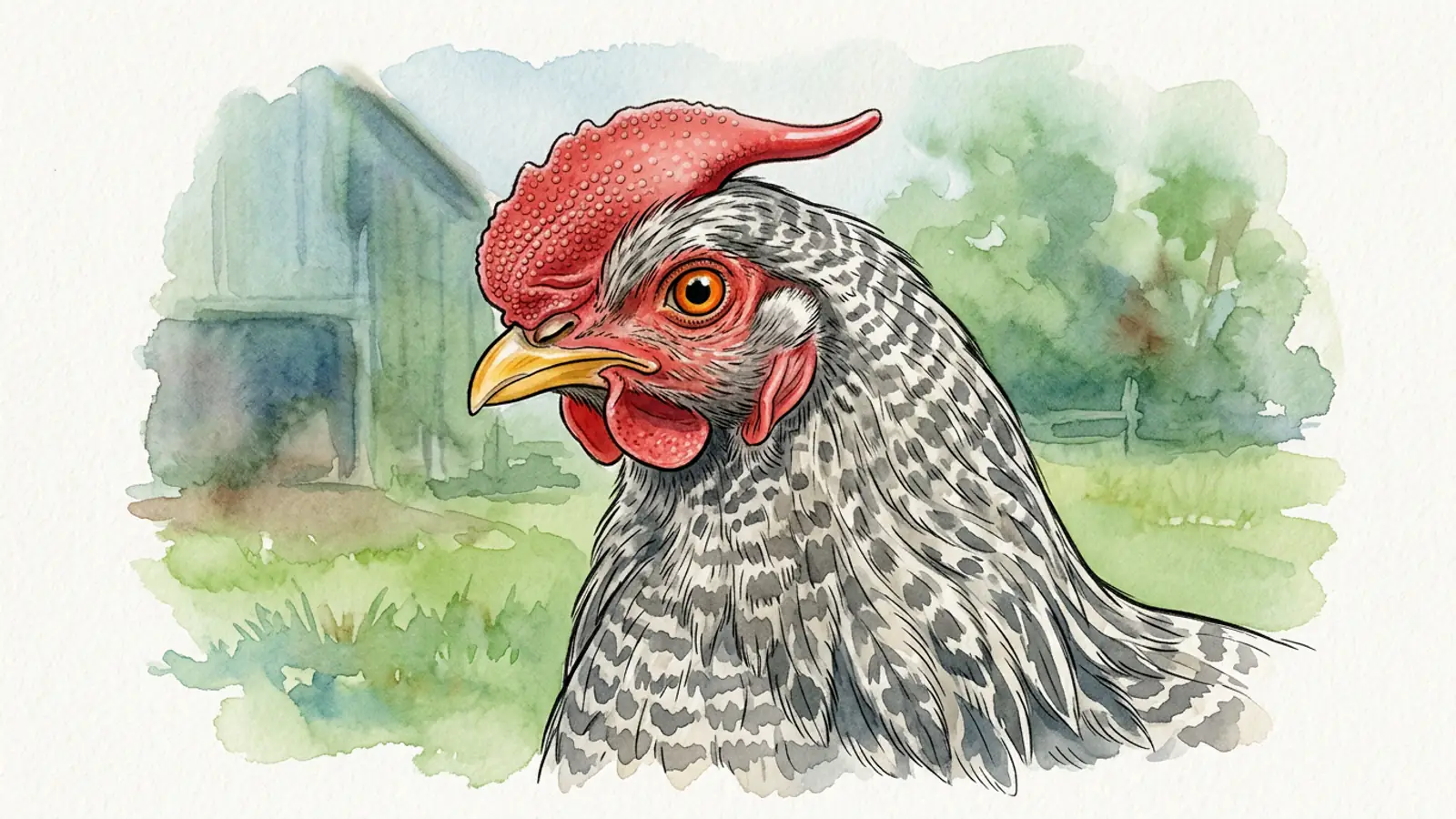
The Dominique chicken is a medium-sized American breed with a rose comb, yellow legs, and a cuckoo or barred plumage pattern. It is widely described as the oldest recognized chicken breed in the United States, and it entered the American Poultry Association Standard in 1874 [1][2]. A Dominique hen weighs about 5 pounds and a Dominique rooster about 7 pounds, though you should confirm current weights against your breed standard. The breed is calm, hardy, and an excellent forager. It suits small homesteads, families who want a dual-purpose bird for brown eggs and occasional meat, and keepers in cold climates where the rose comb offers protection against frostbite.
The Dominique nearly disappeared in the twentieth century. It survives today because of dedicated breeders and conservation programs that recognized its genetic and cultural value [1][2]. If you are deciding between a Dominique and a Barred Plymouth Rock, the two look similar at a glance but differ in comb type, barring pattern, and body shape. This guide explains those differences, the genetics behind the barring, and how to keep the breed healthy.
This article is educational and is not a substitute for veterinary diagnosis or treatment.
Key Takeaways
- The Dominique chicken is a medium-sized American breed with a rose comb, yellow legs, and cuckoo or barred plumage, recognized as America's oldest chicken breed and admitted to the American Poultry Association Standard in 1874.
- The Dominique nearly disappeared by 1970, when only four known flocks remained in the United States, and it is now listed in the Watch category on The Livestock Conservancy priority list.
- A Dominique hen weighs about 5 pounds and a rooster about 7 pounds, and the breed suits small homesteads and cold climates because its rose comb resists frostbite.
- The Dominique is distinguished from the Barred Plymouth Rock by its rose comb, irregular cuckoo barring, and more compact body, while the Plymouth Rock has a single comb and crisper barring.
- Dominique hens lay light to dark brown medium eggs, historically about 230 to 275 eggs a year, and many go broody and make good mothers.
At a Glance
| Attribute | Detail |
|---|---|
| Origin | United States, colonial-era foundation stock [1][2] |
| Standard recognition | American Poultry Association, 1874 [1][2] |
| Primary use | Dual purpose (brown eggs, meat) |
| Plumage | Cuckoo or barred (black and white bars) |
| Comb | Rose |
| Leg color | Yellow |
| Egg color | Light to dark brown, medium size |
| Egg production | Historically about 230 to 275 eggs a year, per The Livestock Conservancy |
| Temperament | Calm, active, good forager |
| Cold tolerance | Good, rose comb resists frostbite |
| Conservation status | Watch category on The Livestock Conservancy priority list; nearly lost by 1970 |
| Lifespan | Varies with management; heritage hens often live 6 to 10 years with good care |
History and Purpose of the Dominique
America's Oldest Recognized Breed
The Dominique is considered the oldest recognized chicken breed in America. It was admitted to the American Poultry Association Standard in 1874, the year the association published its first Standard of Excellence [1][2]. That date matters because it places the Dominique at the very beginning of organized American poultry breeding. Before standardized breeds existed, farm flocks across the eastern states kept barred, rose-combed birds that became the foundation of the breed.
The name itself has a history. The breed was sometimes called the "Dominicker," and you will still see the spelling "dominiquer chicken" in older texts and rural usage. These are regional variants of the same bird, not separate breeds.
From Farmyard Staple to Near Extinction
For much of the nineteenth century, the Dominique was a common farm chicken. It laid well, foraged for much of its own food, and produced a respectable carcass. That combination made it a practical choice for households that needed both eggs and meat without buying commercial feed.
The breed's decline came with competition. The Barred Plymouth Rock, developed later, offered a larger body and a single comb that many breeders preferred. As the Plymouth Rock rose in popularity, the Dominique faded from commercial and show flocks [1][2]. By the early twentieth century it had become uncommon, and by the mid-twentieth century it was genuinely rare.
Conservation and Current Status
The Dominique's recovery is a conservation success story. By 1970 only four known flocks remained in the United States. Breeders, hatcheries, and heritage poultry organizations then worked to rebuild flock numbers, and The Livestock Conservancy now lists the breed in its Watch category. The Livestock Conservancy has tracked the breed as part of its heritage poultry work, and the Cornell University Library's Backyard Revival exhibit documents the breed's history and its place among American heritage poultry [1][2].
Conservation of heritage breeds matters beyond sentiment. Poultry genetic resources have been lost at an alarming rate as commercial production consolidated into a small number of highly selected lines [3]. Gene banks and cryopreservation programs now preserve germplasm from heritage and fancier breeds so that genetic diversity is not permanently lost [3][4]. The Dominique is part of that broader effort. Its value lies in traits that commercial lines do not prioritize: foraging ability, hardiness, broodiness, and adaptation to low-input farm conditions.
Appearance: What a Dominique Looks Like
Plumage and the Barring Pattern
A Dominique's plumage is cuckoo or barred. The feathers carry alternating bands of black and white or black and lighter gray. The pattern runs across the body, wings, and tail. The overall effect is a bird that looks blue-gray from a distance because the light and dark bars blend visually.
Comb, Legs, and Head
The Dominique has a rose comb. This is a low, broad comb that sits close to the head with a series of small bumps and a spike pointing backward. The rose comb is the single most reliable feature for separating the Dominique from the Barred Plymouth Rock, which has a single upright comb.
Legs are yellow. The beak and skin tone follow the yellow-legged pattern. Eyes are reddish bay in mature birds.
Size and Body Shape
The Dominique is a medium-weight bird with a compact, somewhat triangular body. The back is fairly long, the breast is full, and the tail is carried at a moderate angle. The body shape is tighter and less blocky than the Barred Plymouth Rock. A Dominique hen is roughly 5 to 6 pounds and a Dominique rooster about 7 pounds, but confirm current figures with your breed standard or hatchery.
Dominique vs Barred Rock: How to Tell Them Apart
This is a common identification question in backyard flocks, and it is worth learning properly. The two breeds share a barred appearance and a similar size range, so hatchery birds and mixed flocks create confusion.
Comb Type
The Dominique has a rose comb. The Barred Plymouth Rock has a single comb. This is the fastest field test. Look at the top of the head. A single comb is a thin, upright, serrated blade. A rose comb is a broad, low, bumpy structure that hugs the skull.
Barring Pattern
The Dominique's barring is described as irregular or "cuckoo," meaning the bars are not perfectly even and can appear slightly staggered. The Barred Plymouth Rock's barring is typically crisper and more sharply defined, with cleaner edges between the dark and light bands. On a Dominique, the pattern can look muddier, especially on the wings and tail.
Body Shape
The Barred Plymouth Rock is a heavier, more rectangular bird with a broader breast and a deeper body. The Dominique is lighter and more compact, with a slightly more angular profile. In a side-by-side comparison, the Plymouth Rock reads as a meat breed and the Dominique reads as a farm dual-purpose bird.
Comparison Table
| Feature | Dominique | Barred Plymouth Rock |
|---|---|---|
| Comb | Rose | Single |
| Barring | Cuckoo, less uniform | Crisp, well-defined |
| Body | Compact, medium | Broader, heavier, rectangular |
| Legs | Yellow | Yellow |
| Egg color | Brown | Brown |
| Primary use | Dual purpose, foraging | Dual purpose, meat emphasis |
| Temperament | Calm, active | Docile, calm |
| Cold hardiness | Good, rose comb resists frostbite | Good |
If you are buying chicks from a hatchery, ask for the breed by name and confirm the comb type once the birds mature. Comb type is the trait that will not lie to you.
The Genetics Behind the Barring
The Sex-Linked Barring Gene
The barred pattern in chickens is produced by the sex-linked barring gene, often written as B. This gene was first identified in 1908 and has been studied for more than a century [5]. It sits on the Z chromosome, which is one of the two sex chromosomes in birds. In chickens, males are ZZ and females are ZW. Because the barring gene is on the Z chromosome, its inheritance follows a sex-linked pattern [5][6].
The gene produces the alternating white and black bars you see in the adult plumage. Research has shown that the mechanism involves premature death of pigment-producing cells in the feather follicle rather than simple inhibition of pigment production [5]. In other words, the white bars form because melanocytes in those regions do not survive to deposit pigment, not because they are switched off.
Why Cockerels Look Lighter
In autosexing breeds, male chicks that inherit two copies of the barring gene (BB) have a much lighter down color than female chicks that inherit only one copy (B-) [7]. This is the basis of autosexing, a technique that lets breeders separate male and female chicks at hatch by down color alone. The imperfect dominance of the barring gene creates the difference [7].
In Dominique chicks, which hatch with black down and a white head spot, the difference is subtler: cockerels tend to have a larger, more diffuse head spot than pullets, which gives an imperfect early guide to sex. The effect persists into adulthood, when roosters typically look lighter than hens because their light bars are wider.
Barring in Other Breeds
The barring gene is not unique to the Dominique. It appears in the Barred Plymouth Rock, Cuckoo Marans, and many autosexing breeds developed specifically to exploit the trait [7]. The barring of the Campine looks similar but comes from a different, non-sex-linked gene [8]. Researchers have mapped the gene to the Z chromosome, with the CDKN2A gene region as the leading candidate [5][9]. The gene has also been studied on gold and other color backgrounds, including for chick sexing [10][11].
The practical takeaway for a Dominique keeper is simple. Barring is a sex-linked trait, cockerels tend to show a larger head spot as chicks and lighter barring as adults, and the pattern is inherited predictably. That predictability is one reason heritage breeders value the breed.
Temperament and Behavior
Disposition
The Dominique is calm and easy to handle. It is not an aggressive breed, and a Dominique hen generally tolerates handling well once she is accustomed to her keeper. A Dominique rooster can be protective of his flock, which is normal rooster behavior, but the breed is not known for unusual aggression.
Foraging Ability
Foraging is one of the Dominique's strongest traits. The breed was developed on farms where birds ranged for much of their food, and that instinct remains. A Dominique will spend most of its day scratching, hunting insects, and finding seeds. This reduces feed costs and gives the bird good exercise. If you keep your flock confined, provide enrichment and space so the foraging drive has somewhere to go.
Broodiness and Mothering
Many Dominique hens go broody and make good mothers, although broodiness varies by line. A broody hen sits on eggs until they hatch and then raises the chicks. This is a valuable trait if you want to hatch your own stock without an incubator. It also means a Dominique hen may stop laying for a period while she sits. Plan for that if egg production is your priority.
Flock Dynamics
The breed integrates well into mixed flocks. Its medium size means it is neither bullied nor a bully in most setups. Standard flock management applies: provide enough space, enough feeders and waterers, and enough roosting area so that no single bird is crowded.
Exercise, Space, and Housing
Space and Ranging
The Dominique does best with room to move. Free-ranging or a large covered run suits the breed's active nature. If you keep birds confined, give them as much vertical and horizontal space as your setup allows, and add perches, dust baths, and foraging opportunities.
Roosting and the Rose Comb
The rose comb is a genuine cold-weather advantage. A large single comb is prone to frostbite in freezing conditions because it has more exposed surface area and poorer circulation at the tips. The Dominique's rose comb sits low against the head, which reduces exposure. This makes the breed a reasonable choice for northern climates where winter temperatures drop well below freezing.
Ventilation matters more than insulation in a chicken coop. Moisture and ammonia buildup cause more respiratory problems than cold alone. Provide ventilation above the birds' heads so that humid air escapes without creating a draft at roost level.
Predator Protection
No coop is predator-proof without attention to detail. Secure latches, hardware cloth rather than chicken wire, and a covered run reduce losses. The Dominique's foraging habit means it will range widely if allowed, which increases exposure to hawks and ground predators. Supervise free-ranging or use a protected run.
Grooming and Routine Care
Feather and Skin Checks
Chickens groom themselves through dust bathing and preening. Check your birds periodically for external parasites such as mites and lice, especially around the vent and under the wings. A dust bath area with dry dirt or sand helps birds manage parasites on their own.
Beak, Nails, and Spurs
Most backyard chickens wear their beaks and nails down naturally through foraging and scratching. Confined birds may need occasional trimming. Roosters grow spurs, which can be trimmed if they become a hazard, though this is not routine.
Molting
Chickens molt once a year, usually in late summer or fall. During molt, a hen stops laying and puts energy into new feathers. Expect a drop in egg production during this period. Provide a balanced diet and reduce stress during molt.
Seasonal Care
In winter, watch for frostbite on combs and wattles in any breed, though the Dominique's rose comb is less vulnerable. In summer, provide shade and fresh water. Heat stress is a real risk for heavy-feathered birds.
Feeding Considerations
A Balanced Base Diet
Feed a complete poultry ration appropriate to the bird's age and purpose. Laying hens need a layer ration that supplies calcium for eggshells. Growing birds need a starter or grower ration. The Dominique's foraging reduces but does not replace the need for a balanced base feed.
Free-Range Supplementation
A foraging Dominique will eat insects, seeds, and plant material. This adds variety and some nutrition but is not predictable enough to rely on. Keep the complete ration available and treat forage as a bonus.
Calcium and Grit
Laying hens need calcium. Oyster shell offered free-choice lets hens self-regulate. Insoluble grit helps birds grind food in the gizzard, which matters more for birds eating whole grains or foraging.
Water
Fresh, clean water at all times. In freezing weather, check water multiple times a day or use a heated waterer. Dehydration reduces egg production quickly.
Common Health Problems and Screening
General Approach
Chickens are prey animals and hide illness well. A bird that looks slightly off is often already sick. Daily observation is the most useful screening tool you have. Watch for changes in appetite, activity, droppings, breathing, and egg production.
Respiratory Disease
Respiratory infections are common in backyard flocks. Signs include sneezing, nasal discharge, watery eyes, and labored breathing. Mycoplasma and other respiratory pathogens spread quickly in crowded or poorly ventilated coops. Improve ventilation and isolate affected birds. A veterinarian can advise on diagnosis and treatment.
External and Internal Parasites
Mites, lice, and internal worms affect backyard chickens. External parasites cause feather damage, irritation, and reduced laying. Internal parasites can cause weight loss and poor condition. A veterinarian can help you identify the specific parasite and choose an appropriate treatment.
Reproductive Problems
Egg binding, prolapse, and internal laying occur in laying hens. A hen that strains without producing an egg, sits puffed up, or has a swollen abdomen needs veterinary attention. These are emergencies in some cases.
Frostbite
Frostbite affects combs, wattles, and toes in freezing conditions. The Dominique's rose comb reduces risk but does not eliminate it. Provide dry, draft-free roosting and avoid moisture buildup.
Biosecurity
Practice basic biosecurity. Quarantine new birds before introducing them to the flock. Wash hands and change footwear after visiting other flocks or poultry shows. Avoid sharing equipment between flocks without cleaning.
Screening Tests
There is no standard screening panel for backyard chickens the way there is for dogs and cats. The most useful "screening" is a routine physical exam by a veterinarian experienced with poultry, plus fecal testing for internal parasites when indicated. Discuss vaccination and testing with your veterinarian based on your region and flock history.
Lifespan and Longevity
There is no fixed lifespan for the Dominique. Heritage dual-purpose breeds commonly live several years, and hens often lay well for two to three years before production declines. Individual longevity depends on genetics, nutrition, predator pressure, and disease exposure. A well-managed flock with good biosecurity and prompt veterinary care gives birds the best chance at a long life.
How to Find a Responsible Breeder or Rescue
Breeders
Look for breeders who maintain the breed's standard traits, particularly the rose comb and the cuckoo barring. Ask about the health history of their flock, whether they test for common diseases, and how they manage biosecurity. A responsible breeder will answer these questions directly and will not pressure you to buy.
Hatcheries
Several hatcheries carry the Dominique as part of their heritage breed offerings. Hatchery birds are often selected for production rather than show quality, so comb type and barring may vary. Confirm the breed and inspect the birds when they arrive.
Rescue and Rehoming
Backyard flocks sometimes need rehoming when owners move or downsize. Local poultry groups, farm animal sanctuaries, and agricultural extension offices can connect you with birds needing homes. Rescued birds may have unknown health histories, so quarantine them before introducing them to your flock.
What to Ask
Ask about the age of the birds, their vaccination and parasite history, and whether they have been exposed to other flocks. Ask to see the birds in person if possible. A healthy bird is alert, has clean eyes and nostrils, moves well, and has intact plumage.
Who Should Not Get a Dominique
The Dominique is not the right choice for every keeper.
- If you need maximum egg production from a small number of birds, a specialized layer breed will outproduce a Dominique.
- If you cannot provide space for foraging or a large run, the breed's active nature may lead to boredom and feather pecking.
- If you are not prepared for broodiness and the resulting pause in laying, choose a breed that rarely goes broody.
- If you live where predators are heavy and you cannot secure a run, free-ranging a Dominique increases risk.
- If you are not prepared to seek veterinary care for a sick bird, any breed will suffer. Plan for that before you buy.
Limitations and When to Contact a Veterinarian
This article is educational and is not a substitute for veterinary diagnosis or treatment. Individual birds need individual assessment by a veterinarian.
Contact a veterinarian promptly if you see any of the following.
- Labored breathing, gasping, or a bird that cannot perch
- Refusal to eat or drink for more than a day
- Bloody or severely abnormal droppings
- A hen straining to lay an egg for more than a short period
- Swelling of the abdomen, face, or joints
- Sudden death in more than one bird
- Neurological signs such as twisting of the head, circling, or paralysis
- Visible wounds, prolapse, or a comb that turns dark and cold
Poultry veterinarians are not available in every area. Establish a relationship with one before you have an emergency. If you cannot find a poultry veterinarian, your state agricultural extension service can often point you toward resources.
Frequently Asked Questions
Is the Dominique really America's oldest chicken breed?
Yes. The Dominique is considered the oldest recognized chicken breed in the United States and was admitted to the American Poultry Association Standard in 1874 [1][2].
How do I tell a Dominique from a Barred Rock?
Look at the comb. A Dominique has a rose comb and a Barred Plymouth Rock has a single comb. The Dominique's barring is also less uniform, and its body is more compact.
What color eggs does a Dominique lay?
A Dominique hen lays brown eggs.
Are Dominique chickens good for cold climates?
Yes. The rose comb sits close to the head and is less prone to frostbite than a large single comb.
Do Dominique hens go broody?
Often. Many Dominique hens go broody and make good mothers, although broodiness varies by line.
Why do young Dominique roosters look lighter than hens?
The barring gene is sex-linked. Males carry two copies of the gene and females one, so males show more white in their barring; in some breeds this also makes male chicks lighter at hatch, which is the basis of autosexing [7].
What is a "dominiquer chicken"?
"Dominiquer" is an older or regional spelling of Dominique. It refers to the same breed.
Are Dominique chickens rare?
The breed was once rare but has recovered through conservation breeding. It is no longer considered critically endangered, and The Livestock Conservancy lists it in its Watch category.
Related Articles
- Raising Chickens for Eggs: Breed Selection, Care, and Egg Production
- Chicken Breeds for Beginners: Eggs, Housing, Climate, and Flock Welfare
- Small-Scale Chicken Farming: Breeds, Housing, and Flock Management
- Indigenous and Specialty Chicken Breeds: Farming Kadaknath, Kuroiler, and Native Breeds
- Bumblefoot in Chickens: Recognition, Treatment, and Prevention
- How Long Do Chickens Live? Lifespan by Breed and Care
- Bielefelder Chickens: Autosexing Breed Profile and Care
- White Leghorn Chickens: Egg Production, Temperament and Health
Sources
- The Dominique - Backyard Revival: American Heritage Poultry ... (exhibits-prod.library.cornell.edu)
- Backyard Revival: American Heritage Poultry (exhibits.library.cornell.edu)
- Poultry genetic heritage cryopreservation and reconstruction: advancement and future challenges.
- The National Animal Germplasm Program: challenges and opportunities for poultry genetic resources.
- Genetic mapping of the sex-linked barring gene in the chicken.
- Isolation and fixation of the sex-linked barring feather gene from white leghorn for chick sexing
- Buff Brahma, an Autosexing Breed of Chicken
- The Nature of Barred Plumage Pattern in Gallus
- Insights into the mechanism underlying feather pattern formation of sex-linked barring in Chinese native chickens
- The action of the sex linked barring gene on Spanish chickens with gold plumage
- Use of the sex-linked barring (B) gene for chick sexing on an eumelanotic columbian background.