Chocolate Orpington Chickens: Breed and Care Guide
By Dr. Zubair Khalid, DVM, MS, PhD ·
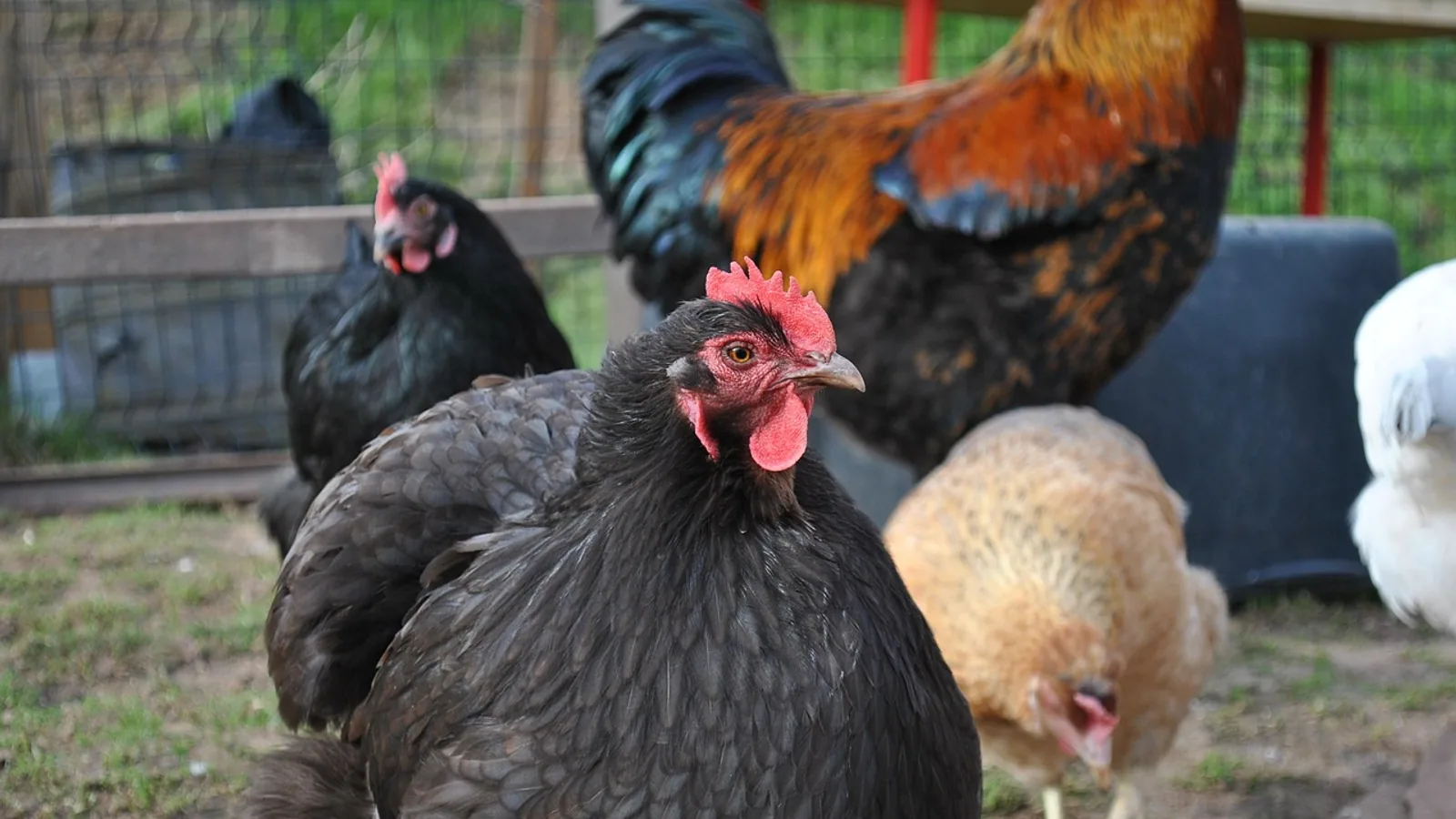
Chocolate Orpington chickens are Orpingtons. The chocolate label describes a plumage color, not a separate breed, and the bird underneath the feathers is the same large, calm, heavily feathered English Orpington that has been kept in backyards for more than a century. Hens typically weigh about 7 to 8 pounds (3.2 to 3.6 kg), lay roughly 150 to 220 large brown eggs per year, and go broody often. The chocolate color itself comes from a sex-linked recessive mutation that dilutes black pigment into a solid, even brown [1]. That single genetic detail shapes almost everything about how these birds are bred, sold, and managed, and it is the reason two chocolate parents always produce chocolate chicks while a chocolate rooster over a black hen produces chocolate daughters and black sons.
This guide covers the color genetics in plain terms, the breed's history and temperament, housing and feeding, the health problems that dense feathering creates, and how the Orpington compares with other backyard breeds. It is written for the owner who wants to understand what they are buying and how to keep the bird healthy.
This article is educational and is not a substitute for veterinary diagnosis or treatment.
At a Glance
| Attribute | Detail |
|---|---|
| Classification | Color variety of the Orpington breed, not a separate breed |
| Origin | Orpington breed developed in Kent, England, in the late 1800s |
| Primary use | Dual purpose (eggs and meat), backyard flock, exhibition |
| Hen weight | About 7 to 8 lb (3.2 to 3.6 kg) |
| Rooster weight | Larger than hens, typically 8 to 10 lb in well-grown stock |
| Plumage | Dense, loose, soft feathers with a solid chocolate (diluted eumelanin) color [1] |
| Egg color | Brown |
| Annual egg production | About 150 to 220 large brown eggs |
| Broodiness | Strong, hens set readily and often |
| Temperament | Calm, docile, slow-moving, generally easy to handle |
| Cold tolerance | Good, because of dense feathering |
| Heat tolerance | Poor, dense feathering and body mass predispose to heat stress |
| Lifespan | Commonly 6 to 8 years with good care, longer in some individuals |
| Good with children | Often yes, because of the calm disposition |
| Good with other pets | Generally yes with proper introduction and secure housing |
What "Chocolate Orpington" Actually Means
The name confuses new buyers because it sounds like a breed. It is not. Orpington is the breed. Chocolate is one of several recognized plumage colors within that breed, alongside black, buff, blue, white, and others. A Chocolate Orpington and a Buff Orpington are the same breed with different feather pigment genes switched on.
This distinction matters for three practical reasons.
First, breed standards and registries treat the Orpington as one breed with color varieties. If you are buying or showing birds, you are dealing with an Orpington that happens to be chocolate, and the body type, size, and temperament standards are the same as for any other color.
Second, the chocolate gene behaves differently from most color genes because it is carried on the sex chromosome. That changes the results of every mating, and it is why chocolate birds are priced and sold the way they are.
Third, health and husbandry advice for a Chocolate Orpington is health and husbandry advice for an Orpington. The color does not change the bird's nutritional needs, housing needs, or disease risks. The dense feathering that makes the breed attractive is also the feature that creates its main management challenges.
The Genetics of Chocolate Plumage
A sex-linked recessive mutation
The chocolate plumage color in chickens is caused by a sex-linked recessive mutation called choc that dilutes eumelanin, the black pigment in feathers [1]. The gene responsible is TYRP1, which in birds sits on the sex chromosome (the Z chromosome). A missense mutation in this gene, producing a His214Asn change in a zinc-binding domain of the protein, is completely associated with the chocolate phenotype [1]. Researchers confirmed this by screening 428 non-chocolate chickens of various origins and finding the mutation only in chocolate birds [1].
Because TYRP1 is sex-linked, the inheritance pattern follows the Z chromosome rather than the autosomes. In chickens, males are ZZ and females are ZW. A hen has only one Z chromosome, so a single copy of the chocolate allele makes her chocolate. A rooster has two Z chromosomes, so he needs two copies to be chocolate. This is the classic sex-linked recessive pattern, and it is why chocolate is often described as a color that "hides" in roosters.
What the mutation does to the feather
The mutation does not simply remove pigment. It changes the structure of the pigment granules themselves. Under electron microscopy, melanosomes in the feather follicles of chocolate chickens are more numerous than normal but have an abnormal structure, with granular content and irregular shape [1]. A similar altered melanosome morphology appears in another TYRP1 mutant in birds, the roux mutation of quail [1]. The practical result is a solid, even chocolate brown feather rather than a black one, with the underlying feather structure intact.
Breeding outcomes you can predict
The sex-linked pattern produces predictable results from common matings.
- Chocolate rooster bred to chocolate hen. Both parents carry only chocolate alleles, so every chick inherits chocolate. All offspring are chocolate, both male and female.
- Chocolate rooster bred to black hen. Daughters receive their single Z chromosome from their father and inherit his chocolate allele, so they are chocolate. Sons receive a Z from each parent, so they carry one chocolate allele from the father and a normal allele from the mother. They are black but carry chocolate and can pass it on.
- Black rooster bred to chocolate hen. Sons receive the mother's chocolate Z and are black carriers. Daughters receive the father's normal Z and are black. No chocolate chicks appear in this cross.
This is why breeders who want chocolate females keep a chocolate rooster. It is also why a chocolate hen can appear from a mating that produces mostly black birds, and why the color can seem to vanish from a flock for a generation and then reappear.
Why the color is not a separate breed
Because chocolate is a single-gene color variety, it can be bred into any Orpington line. A chocolate bird that meets the Orpington standard in body type, size, and feather quality is a good Orpington. A chocolate bird that is undersized or poorly feathered is a poor Orpington regardless of color. Buyers should evaluate the bird, not the label.
History and Purpose of the Orpington
The Orpington was developed in Kent, England, in the late 1800s by William Cook, who aimed to create a large, productive, dual-purpose fowl suited to backyard and farmyard conditions. The breed's combination of size, egg production, and calm temperament made it popular quickly, and it spread to North America and elsewhere.
The breed's plumage colors have expanded over time as breeders selected for different pigment genes. Chocolate is one of the more recent additions to the color range, made practical by the sex-linked inheritance that allows breeders to produce chocolate females reliably from a chocolate male over black or other hens.
The Orpington's original purpose was practical: a bird that laid well, grew to a good table weight, and tolerated confinement. That purpose still defines the breed. It is not a high-output commercial layer, and it is not a flighty forager. It is a heavy, calm, productive backyard bird, and the chocolate variety inherits all of those traits.
Appearance


The Orpington is a large, deep-bodied, loosely feathered bird. The plumage is dense and soft, which gives the bird a rounded, almost fluffy silhouette and makes it look even heavier than it is. The feathers are broad and the body carries a lot of them, which is the source of both the breed's cold hardiness and its heat sensitivity.
In the chocolate variety, the plumage is a solid, even chocolate brown. There should be no black in the feathers, no lacing, and no pattern. The color is the diluted form of eumelanin produced by the TYRP1 mutation [1]. Because the mutation affects eumelanin specifically, the chocolate color is a modified black rather than a separate pigment pathway.
Other features follow the breed standard. The head is small relative to the body, the comb is single and upright, the eyes are bright, and the legs and feet are clean and sturdy. The bird's overall impression is of mass, softness, and calm.
Chick down color varies with the genetics behind the cross, and breeders use down color and feather growth as early indicators of sex in some matings. Sex-linked color genes are one of the tools used to distinguish male and female chicks at day old [2].
Temperament and Behavior
The Orpington's defining behavioral trait is calmness. These are docile, slow-moving birds that tolerate handling well and rarely panic. That makes them a reasonable choice for families with children and for owners who want birds they can pick up and inspect without a chase.
The calm temperament has a downside. Orpingtons are not alert, fast, or aggressive, and they are poor at defending themselves against predators. They are also not strong fliers, which is helpful for containment but means they cannot escape a ground predator by taking to the air. Secure housing and a covered run matter more for this breed than for lighter, flightier types.
Orpingtons are generally tolerant of other chickens and integrate into mixed flocks without much drama, provided introductions are done properly and space is adequate. They are not typically aggressive toward other birds, and roosters are usually calm by rooster standards, though any rooster can become protective of hens and should be handled with respect.
The breed forages but does not range as widely or as actively as lighter breeds. It prefers to stay near food, water, and shelter. That suits a backyard setting and reduces the risk of birds wandering off the property.
Egg Production and Broodiness
A healthy Orpington hen lays roughly 150 to 220 large brown eggs per year. Production is seasonal and influenced by day length, nutrition, age, and management. Pullets typically begin laying in the range of 5 to 7 months of age, and production declines gradually after the first and second laying years.
The eggs are large and brown. Brown shell color comes from pigment deposited in the shell gland during egg formation, and it is unrelated to the chocolate plumage gene. A chocolate hen lays brown eggs just like any other Orpington.
Broodiness is a defining trait of the breed. Orpington hens go broody readily and often, and a broody hen will stop laying and sit on a nest for weeks. This is a genuine asset if you want to hatch chicks naturally, because a broody Orpington can incubate and raise a clutch with minimal intervention. It is a frustration if you want maximum egg numbers, because a broody hen is a non-laying hen.
Managing broodiness is a matter of deciding what you want. If you want chicks, let the hen set and provide her with fertile eggs. If you do not, break the broody cycle by removing her from the nest, providing a cooler and less nest-like environment, and preventing access to nesting sites. Persistent broodiness that is not managed can lead to weight loss and poor condition, so a hen that stays broody for an extended period should be monitored and, if necessary, evaluated by a veterinarian.
The breed's strong maternal instinct also makes it useful for hatching and raising chicks of other breeds, a practice common among backyard keepers.
Housing and Environment
Space and shelter
Orpingtons are large birds and need more space than lightweight breeds. Crowding a heavy, densely feathered bird increases the risk of feather damage, skin injury, and heat buildup. Provide generous floor space, good ventilation, and dry bedding.
The coop should be draft-free but ventilated. Dense feathering traps heat and moisture, and a humid, poorly ventilated coop is a recipe for respiratory problems and skin issues. Ventilation should move air without creating a direct draft on the birds.
Roosts should be low and sturdy. Heavy birds can injure themselves jumping down from high perches, and a wide, flat roost is easier on their feet than a narrow one. Nesting boxes should be accessible and lined with clean bedding.
Heat management
Heat is the single most important environmental risk for this breed. The dense feathering that makes Orpingtons cold-hardy also makes them prone to heat stress. In hot weather, provide shade, unlimited cool water, and good airflow. Avoid handling birds during the hottest part of the day, and watch for panting, wing-holding, lethargy, and reduced feed intake, which are signs of heat stress.
Heat stress is a genuine welfare and production concern in poultry, and management focuses on ventilation, shade, water availability, and reducing stocking density during hot periods. If a bird shows severe signs such as collapse, gasping, or inability to stand, contact a veterinarian promptly.
Cold management
Orpingtons handle cold well because of their dense plumage. The main cold-weather priorities are dry bedding, protection from wind and wet, and access to unfrozen water. A dry, draft-free coop is more important than added heat for a healthy, acclimated adult bird. Frostbite risk is highest when moisture and wind combine, so ventilation and dryness matter more than temperature alone.
Feeding and Nutrition
Orpingtons are large, fast-growing birds with a tendency to put on weight. Feeding should support egg production and body condition without allowing obesity, which worsens heat tolerance and can affect laying and mobility.
A complete commercial layer or all-flock ration formulated for the bird's life stage is the foundation of the diet. Chicks need a starter ration, growing birds need a grower ration, and laying hens need a layer ration with appropriate calcium. Free-choice calcium in the form of oyster shell is standard practice for laying hens and allows each bird to regulate its own intake.
Treats and scratch grains should be limited. They dilute the nutrient balance of the complete ration and add calories. A heavy breed that gets too many treats becomes overweight, and overweight birds lay poorly and tolerate heat badly.
Clean, unfrozen water must be available at all times. Water intake affects feed intake, egg production, and the bird's ability to regulate body temperature. During hot weather, water consumption rises sharply and the supply must keep up.
The chocolate plumage color does not change nutritional requirements. A Chocolate Orpington eats the same ration as any other Orpington.
Grooming and Feather Care
Orpingtons are generally low-maintenance on grooming. They do not need bathing under normal circumstances, and their dense plumage is largely self-maintaining. The main tasks are monitoring and preventing problems that dense feathers can hide.
Check birds regularly for external parasites such as mites and lice, which can build up in heavy feathering and cause irritation, feather damage, and anemia. Part the feathers and inspect the skin around the vent, under the wings, and along the breast. Treat infestations promptly with products labeled for poultry.
Watch for feather damage from crowding, wet bedding, or rough mating. Broken or soiled feathers reduce the bird's insulation and appearance. Keep bedding dry and clean, and address bullying or over-mating early.
Inspect the vent area for signs of prolapse, soiling, or injury, particularly in laying hens. Dense feathers can conceal problems until they are advanced, so a brief hands-on check every few weeks is worthwhile.
During molt, birds lose and regrow feathers and may look ragged for several weeks. Provide a complete ration and minimize stress during molt. Do not expect normal egg production during a heavy molt.
Health Problems in Chocolate Orpingtons
Chocolate Orpingtons are Orpingtons, so their health profile is the breed's health profile. The color gene does not create disease. The breed's body type and feathering do create specific risks.
Heat stress
This is the breed's leading environmental health risk. Dense feathering and large body mass reduce the bird's ability to shed heat. Prevention is the priority: shade, airflow, cool water, and reduced handling in hot weather. Early signs include panting, wing-holding away from the body, and reduced activity. Severe heat stress is an emergency.
Feather and skin problems
Heavy feathering traps moisture and parasites. Wet litter, poor ventilation, and crowded conditions promote skin irritation, feather loss, and external parasite infestations. Regular inspection and clean, dry housing prevent most of these problems.
Reproductive and egg-related issues
Laying hens can develop egg-related problems such as egg binding, prolapse, and reproductive tract infections. These are not unique to Orpingtons but are relevant to any productive hen. Signs include straining, a swollen or soiled vent, reduced appetite, and lethargy. These are veterinary concerns and should be evaluated promptly.
Broodiness-related condition loss
A hen that stays broody for weeks eats and drinks less and can lose weight and condition. Monitor broody hens and break the cycle if the hen is not being used for hatching. Persistent broodiness with weight loss warrants veterinary evaluation.
Musculoskeletal and leg issues
Heavy birds are prone to leg and foot problems, especially when they jump from height or stand on hard, wet surfaces. Provide low roosts, dry bedding, and soft footing. Lameness that persists should be evaluated by a veterinarian.
Respiratory disease
Poor ventilation and ammonia buildup from wet litter predispose any flock to respiratory disease. Orpingtons' dense feathering and large body mass make good air quality especially important. Signs include sneezing, nasal discharge, swollen eyes, and labored breathing. Respiratory disease spreads quickly in a flock and needs veterinary attention.
Parasites
Both external parasites (mites, lice) and internal parasites (worms) affect backyard flocks. Dense feathering makes external parasites harder to spot. Regular inspection and a parasite control plan developed with a veterinarian are the practical approach.
Recommended screening and monitoring
There is no breed-specific genetic screening test that owners routinely run on Orpingtons. The practical monitoring routine is physical: regular hands-on checks of the skin, vent, feet, and body condition, plus observation of behavior, appetite, and egg production. Any change in those baseline observations is the trigger to investigate.
For flock-level health planning, work with a veterinarian who sees poultry. According to the AVMA, regular veterinary care and biosecurity practices are core to keeping backyard flocks healthy, and a veterinarian can help design a monitoring and vaccination plan appropriate to your region and flock.
Lifespan and Long-Term Care
Orpingtons commonly live 6 to 8 years with good care, and some individuals live longer. Lifespan depends on genetics, nutrition, housing, predator protection, and disease management.
Long-term care priorities shift with age. Older hens lay fewer eggs and may need more support during molt and in extreme weather. Older birds are more prone to reproductive and mobility problems. A senior bird that loses weight, stops eating, or becomes lame should be evaluated by a veterinarian rather than managed at home.
Comparing the Orpington with Other Backyard Breeds
The table below compares the Orpington with several common backyard breeds on the traits that matter most to owners. Values are general breed tendencies, and individual birds vary.
| Trait | Orpington (incl. Chocolate) | Australorp | Plymouth Rock | Leghorn | Silkie |
|---|---|---|---|---|---|
| Primary use | Dual purpose | Dual purpose | Dual purpose | Egg production | Ornamental, broody |
| Hen weight | About 7 to 8 lb (3.2 to 3.6 kg) | About 6 to 7 lb | About 7 to 8 lb | About 4 to 5 lb | About 2.5 lb (1.2 kg) [3] |
| Annual eggs | About 150 to 220 large brown | High, brown | About 200 brown | Very high, white | About 50 to 200 per year [3] |
| Broodiness | Strong | Moderate | Low to moderate | Very low | Strong |
| Temperament | Very calm | Calm | Calm | Active, flighty | Docile |
| Cold tolerance | Excellent | Good | Good | Moderate | Moderate |
| Heat tolerance | Poor | Moderate | Moderate | Good | Poor |
| Feathering | Very dense | Dense | Dense | Light | Silkie-type plumage [3] |
The Orpington's profile is clear from this comparison. It trades some egg output and heat tolerance for calm temperament, cold hardiness, and strong broodiness. Owners who want maximum egg numbers in a hot climate should look at lighter breeds. Owners who want a calm, cold-hardy, dual-purpose bird that will hatch its own chicks should look at the Orpington.
Finding a Responsible Breeder or Rescue
Because chocolate is a color variety, the breeder's job is to produce birds that are both correctly colored and good examples of the Orpington breed. A responsible breeder will be able to explain the genetics behind their matings, show you the parent birds, and give you honest information about the health and temperament of their lines.
Ask specific questions.
- What is the breeding pair for this chick or bird, and what colors are the parents?
- How old are the birds, and what have they been fed?
- Have the birds been vaccinated or treated for parasites, and with what products?
- Are there any known health problems in the line?
- Can you see the birds in person or on video before buying?
Avoid sellers who cannot answer basic questions about parentage or health, who sell unsexed chicks with no explanation of the genetics, or who make health claims they cannot support. Avoid buying birds at auctions or swap meets without a health history, because those settings concentrate birds from many sources and increase disease risk.
Rescue is a realistic option for Orpingtons. Backyard flocks are sometimes surrendered when owners move, downsize, or cannot keep up with care. Contact local poultry rescues, farm animal sanctuaries, and extension offices for leads. A rescued Orpington can be a healthy, productive bird, though it should be quarantined and evaluated before joining an existing flock.
Quarantine any new bird for at least several weeks before introducing it to your flock. Watch for signs of respiratory disease, parasites, and poor condition during that period. According to the AVMA, biosecurity and quarantine practices are central to preventing disease introduction into backyard flocks.
Who Should Not Get a Chocolate Orpington
This breed is not the right choice for every owner.
- Owners in hot climates without shade and airflow. The breed's heat sensitivity makes it a poor fit where summers are severe and housing cannot be cooled or ventilated adequately.
- Owners who want maximum egg production. At 150 to 220 eggs per year, the Orpington is a moderate layer, not a high-output hen. A Leghorn or a production hybrid will out-lay it.
- Owners who want birds that forage widely and avoid predators. Orpingtons are calm, slow, and poor fliers. They need secure housing and do not do well free-ranging in areas with heavy predator pressure.
- Owners who cannot commit to regular handling and health checks. Dense feathering hides problems. Birds that are never handled are birds whose problems are found late.
- Owners looking for a small bird. At 7 to 8 pounds, this is a large chicken with corresponding space and feed needs.
Limitations and When to Contact a Veterinarian
This guide covers general breed and care information. Individual birds need individual veterinary assessment, and no article can replace an examination.
Contact a veterinarian promptly if you see any of the following.
- Labored breathing, gasping, or open-mouth breathing, especially in warm weather
- Collapse, inability to stand, or severe lethargy
- Straining to lay, a swollen or prolapsed vent, or a hen that has stopped laying and appears unwell
- Persistent loss of appetite or weight loss
- Lameness that does not improve within a day or two
- Nasal discharge, sneezing, swollen eyes, or facial swelling
- A wound, a prolapse, or a bleeding injury
- Sudden deaths in the flock, which may indicate an infectious disease that requires immediate action
- External parasites that do not respond to treatment, or signs of anemia such as pale combs
For flock-level concerns, a veterinarian who works with poultry can help with diagnosis, treatment, parasite control, and biosecurity planning. According to the Merck Veterinary Manual, poultry diseases are best managed with a combination of accurate diagnosis, appropriate treatment, and prevention through housing and management.
Frequently Asked Questions
Is the Chocolate Orpington a separate breed?
No. Chocolate Orpington is a color variety of the Orpington breed. The bird is an Orpington with a specific plumage gene, and it shares the breed's size, temperament, and management needs.
What causes the chocolate color in Orpington chickens?
A sex-linked recessive mutation in the TYRP1 gene dilutes eumelanin and produces the solid chocolate plumage [1]. The mutation also changes the structure of the pigment granules in the feathers [1].
What happens if I breed a chocolate rooster to a black hen?
You get chocolate daughters and black sons. The daughters inherit the rooster's chocolate allele on their single Z chromosome, while the sons inherit chocolate from the father and a normal allele from the mother, so they are black carriers.
Do two chocolate parents always produce chocolate chicks?
Yes. If both parents carry only chocolate alleles, every chick inherits chocolate and all offspring are chocolate, male and female.
How many eggs does a Chocolate Orpington lay?
About 150 to 220 large brown eggs per year under good management. Production is seasonal and declines with age.
Are Chocolate Orpingtons good with children?
They are generally calm and easy to handle, which makes them a reasonable choice for families. Adult supervision is still needed, and any bird can become stressed by rough handling.
Are Chocolate Orpingtons heat tolerant?
No. Their dense feathering and large body mass make them prone to heat stress. Provide shade, airflow, and cool water in hot weather, and watch for panting or lethargy.
Do Chocolate Orpingtons go broody often?
Yes. The breed is known for strong broodiness, and hens set readily. This is useful for hatching chicks and inconvenient if you want maximum egg production.
Related Articles
- Raising Chickens for Eggs: Breed Selection, Care, and Egg Production
- Hairless Cat: Care, Health, and Breed Guide
- Silkie Chicken Care Guide
- Bantam Chicken Care Guide
- Australian Cattle Dog: Complete Care Guide for This Energetic Breed
- Norwegian Forest Cat: Complete Care Guide for This Majestic Breed
Further Reading
- New insights into genetics underlying of plumage color.
- Plumage colours Stability in Inbreed Pelung Chicken
- Whole-genome SNP data unravel population structure and signatures of selection for black plumage of indigenous chicken breeds from Jiangxi province, China.