Chick in Egg: Development Stages Day by Day
By Dr. Zubair Khalid, DVM, MS, PhD ·
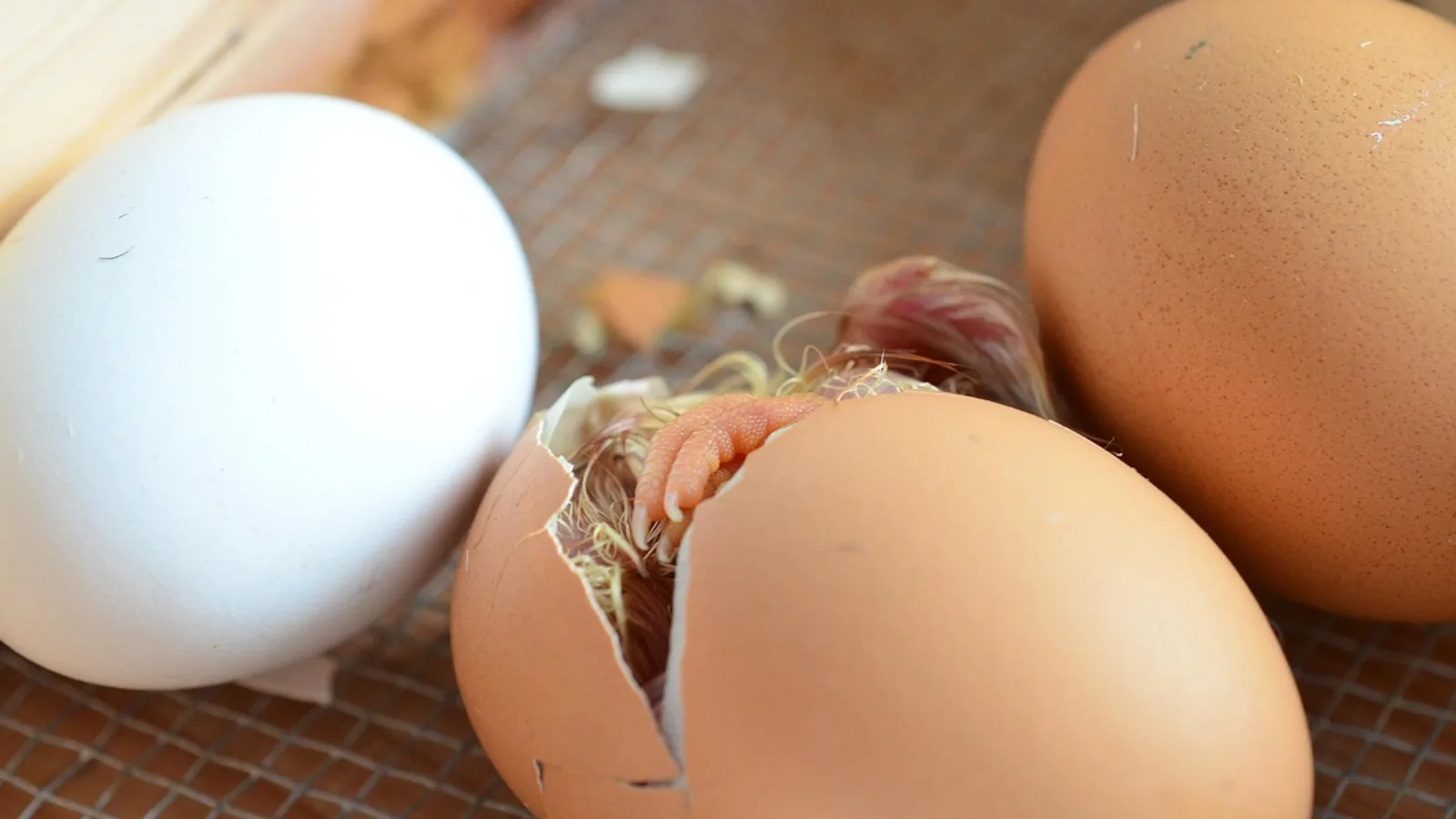
A chick in egg develops from a single fertilized cell into a standing, breathing bird in roughly 21 days of incubation. Each of those days carries a specific morphological milestone, and each milestone can be tracked by a backyard flock owner using candling, temperature control, and humidity control.
Understanding this timeline matters because incubation failures are rarely random. Most hatch losses trace back to a temperature excursion, a humidity error, a turning mistake, or an intervention taken at the wrong stage. When you know what should be visible on day 4 versus day 14, you can tell the difference between normal slow development and a stalled embryo. That distinction determines whether you adjust the incubator or leave it alone, and leaving it alone is often the correct answer.
The developmental sequence described below follows the Hamburger-Hamilton (HH) staging system, the standard framework used to classify avian embryos. A comparative morphology study of specific pathogen free chickens and ducks confirmed that early-stage embryos share conserved features, including somite formation, neural tube development, and limb bud initiation, with species divergence appearing from the middle stages onward [1]. For backyard incubation purposes, the practical takeaway is that the early days look nearly identical across breeds, and breed-specific timing claims should be treated with caution.
Quick Reference: Incubation Setpoints and Milestones
| Parameter | Days 1 to 17 | Day 18 to hatch (lockdown) |
|---|---|---|
| Incubator type | Forced-air | Forced-air |
| Temperature | 99.5 F (37.5 C) | 99.5 F (37.5 C) |
| Relative humidity | 45 to 55% | 65 to 75% |
| Turning | 4 to 6 times daily, or automatic | Stop turning |
| Candling | Days 3 to 10, sparingly | Not recommended |
| Ventilation | Normal | Increase slightly, do not open lid |
| Day | Milestone | Candling observation |
|---|---|---|
| 1 | Blastoderm begins differentiation | Not useful |
| 2 to 3 | Blood islands, early vessels | Faint red blush |
| 3 to 4 | Heart forms and begins beating | Spider-web vessels, pulsing point |
| 5 to 6 | Eye pigment, limb buds | Dark eye spot, visible limb buds |
| 7 to 10 | Feather tracts, beak formation | Beak profile, feather follicle dots |
| 11 to 13 | Down follicles, claws | Increasing opacity, active movement |
| 14 to 18 | Down coverage, yolk absorption | Egg largely dark, air cell enlarges |
| 19 to 20 | Internal pip, lung function | Air cell drawn down, no movement seen |
| 21 | External pip and hatch | Do not candle |
What Happens on Day 1: The Blastoderm
A fertile egg laid by a hen already contains a blastoderm, a small disc of cells on the surface of the yolk. This disc has completed the earliest cleavage divisions inside the hen's oviduct. Once the egg is laid and incubation begins, the blastoderm resumes rapid division and begins gastrulation, the process that establishes the three germ layers.
Day 1 is the most vulnerable period in the entire incubation cycle for chemical disruption. A study using sub-blastodermic injection of the neonicotinoid insecticide imidacloprid into specific pathogen free eggs found dose-dependent increases in neural tube defects and developmental delay when embryos were evaluated at 48 hours of incubation. Exposed embryos showed increased markers of apoptosis and reduced cellular proliferation, along with dysregulation of neurodevelopmental gene expression [2]. A parallel study with misoprostol produced comparable findings, with neural tube closure defects, decreased proliferating cell nuclear antigen expression, and increased caspase-3 expression in exposed embryos [3]. These are experimental exposures at doses far above typical environmental levels, but they establish a principle worth knowing: the first 48 hours are when the neural tube closes, and anything that disrupts cell division during that window produces structural defects rather than simple growth delay.
For a backyard flock owner, the practical implication is that incubator temperature and humidity must be correct from the moment eggs are set. There is no "warm-up" tolerance period.
Days 2 to 4: Heart, Blood Vessels, and the First Candling
The circulatory system is the first functional organ system. Blood islands form in the extraembryonic membranes, and by day 3 to 4 the heart tube has formed and begun to beat. This is the milestone that makes early candling useful.
On day 3 to 4, a candled fertile egg shows a distinct red spider-web pattern radiating from a central point, with a small pulsing structure at the center. That pulse is the embryonic heart. An infertile egg shows a clear, uniform glow with no vascular pattern. A dead embryo at this stage shows either no vessels or a faint blood ring, which is a collapsed vascular network.
Cardiac development is sensitive to oxidative stress. A study of hexavalent chromium exposure in chicken embryos found dose-dependent reductions in survival and crown-rump length, with pronounced lipid peroxidation, glutathione depletion, and reduced antioxidant enzyme activity measured at embryonic day 14. Exposed embryos showed elevated serum CK-MB, a marker of myocardial injury, along with upregulation of TGF-beta-1 and COL3A1 transcripts [4]. The mechanism, oxidative damage to developing cardiac tissue, is the same mechanism that makes prolonged temperature spikes dangerous during the first week.
Candling too early is a common mistake. Before day 3, the vascular network is too faint to distinguish from the shadow of the yolk, and repeated handling and light exposure stress the embryo. Candling too often is a second mistake. Each candling event involves removing eggs from the incubator, which drops egg temperature. Limit candling to day 4, day 7, and day 10 unless you have a specific concern.
Days 5 to 7: Eye, Limb Buds, and the Beak
By day 5 to 6, the embryo has visible eye pigment, which appears on candling as a dark spot. Limb buds have formed and begun to elongate. The neural tube has closed, and the brain is differentiating into regions.
Day 7 is the classic mid-incubation candling checkpoint. At this stage you should see a clearly defined dark eye, a distinct beak profile forming at the front of the head, and a network of vessels that has become more organized. The embryo may be visible as a distinct shape separate from the yolk mass.
Limb development at this stage depends on signaling networks that are conserved across species. A comparative study of chicken and mouse limb bud micromass cultures identified CCN1 and CCN2 as dominant hubs enriched in collagen-containing extracellular matrix, cartilage development, and growth factor signaling modules, with high conservation of IGF, EGFR, and HIF-1 signaling across species [5]. The practical relevance is that limb and skeletal development during days 5 to 10 depends on adequate oxygenation and nutrient delivery, both of which are functions of the chorioallantoic membrane.
Days 8 to 10: Feather Tracts and Beak Hardening
Feather tracts, the linear bands of follicles that will produce the chick's down, become visible during this window. On candling, the embryo appears as a denser, more opaque mass, and the beak has hardened enough to be seen in profile.
The chorioallantoic membrane is now well developed and functions as the embryonic lung, gas exchange organ, and calcium transport surface. A biodistribution study using intravenously injected carbon-coated iron nanoparticles into the chorioallantoic membrane vasculature of embryos at Hamburger-Hamilton stages 23 to 26 found deposits throughout the vascular system and in all developing organs, including the brain, with inter- and intracellular uptake confirmed by histology and electron microscopy [6]. This study demonstrates how completely the chorioallantoic circulation connects to every embryonic tissue by the middle of incubation. Anything circulating in the blood reaches the brain, liver, heart, and limbs.
This is also the stage when yolk utilization becomes measurable. A study of fatty acid composition in yolk and yolk sac across incubation sampled eggs at days 10, 13, 16, and 19 and found that relative embryo weight increased steadily while residual yolk sac weight declined, with local breeds retaining higher residual yolk sac weights than commercial hybrids [7]. The pattern confirms that yolk absorption is a continuous process across the second half of incubation, not a single event at hatch.
Candling at Days 8 to 10
At day 10, a healthy embryo fills a substantial portion of the egg. The air cell at the blunt end is clearly defined. You should see movement if you candle briefly and quietly. A dead embryo at this stage appears as a dark mass with no movement and a visible blood ring or a clouded, decomposing appearance.
Days 11 to 13: Down Follicles and Active Movement
Down follicles are forming, and the embryo begins to look like a bird rather than a generalized vertebrate shape. Claws are visible. The eyelids have formed and may be closed. Movement on candling becomes more obvious and more frequent.
Muscle development accelerates during this window. A transcriptome study of leg muscle from embryonic day 13 through growth stages identified 7,691 differentially expressed genes, with the highest number of differences between embryonic day 13 and day 35. Three expression clusters emerged: downregulated genes enriched in cell cycle and DNA replication, upregulated genes enriched in metabolic and muscle structure pathways, and a transiently upregulated cluster peaking at day 1 after hatch and enriched in oxidative phosphorylation and mitochondrial function [8]. The transition from proliferation to structural maturation begins around day 13. This is why nutritional or oxygen deficits during days 11 to 14 produce smaller chicks rather than malformed ones.
Immune development is also underway. The bursa of Fabricius, the avian-specific primary B cell organ, supports B cell development across a temporally restricted program. Pre-bursal B cell development spans embryonic days 5 to 14, and bursal development spans embryonic day 8 through hatching [9]. The bursa is colonized and active well before hatch, which is one reason late-incubation stress has consequences for post-hatch disease resistance.
Days 14 to 18: Down Coverage, Yolk Absorption, and Lockdown
By day 14, the embryo is covered in down and the egg is largely opaque on candling. The air cell has enlarged as water evaporates from the egg. The embryo is positioning itself for hatch, with the head typically tucked toward the blunt end under the right wing.
Hypothalamic maturation reaches a candidate transition point during this window. A study examining c-Fos expression in the paraventricular nucleus of chicken embryos from embryonic day 12 to 17 found that stimulated embryos had higher proportions of c-Fos-positive cells than controls at every age, and that the only significant difference between adjacent developmental stages occurred between day 14 and day 15. The authors proposed an early phase from day 12 to 14 and a late phase from day 15 to 17, with day 14 to 15 as a candidate phase boundary in hypothalamic maturation [10]. This is a neuroendocrine transition, and it coincides with the period when the embryo begins regulating its own physiology more independently.
Yolk absorption continues. The residual yolk sac is drawn into the body cavity through the umbilicus during the final days before hatch. This internalized yolk provides the newly hatched chick with energy and passive immunity for its first days of life. A study comparing local and commercial breeders found that layer hybrids had the greatest egg and chick weights while a local breed had the lowest, and that local breeds retained higher residual yolk sac weights at hatch [7].
Lockdown Protocol
Day 18 is lockdown. Stop turning. Raise humidity to 65 to 75%. Do not open the incubator lid from this point until chicks have hatched and dried. The embryo is now in position for internal pip, and every lid opening drops humidity and temperature at the moment the chick needs stable conditions most.
Turning must stop at day 18 because the embryo needs to settle into hatch position. Continuing to turn after day 18 can cause malposition, which is a leading cause of hatch failure. A study of broiler breeder lines divergently selected for abdominal fat content found that the fat line had significantly lower hatchability than the lean line, with significantly higher embryonic malposition and malformation rates and developmental delay at multiple Hamburger-Hamilton stages including HH40 and HH43, which correspond to late incubation [11]. Malposition is not always preventable, but unnecessary turning during lockdown increases the risk.
Days 19 to 20: Internal Pip and Lung Function
The embryo pierces the internal membrane into the air cell, beginning to breathe air for the first time. This is the internal pip. On candling, which should be avoided at this stage, the air cell would appear drawn down and the embryo would fill the remaining space.
The transition from chorioallantoic gas exchange to pulmonary respiration is the most physiologically demanding event of the entire incubation. The lungs must inflate, the ductus arteriosus must begin to close, and the yolk sac must be fully internalized. Auditory and neural systems are also completing maturation. A study of the avian cochlear nucleus found that high-frequency and low-frequency neurons differed in action potential rise and repolarization rates during early and middle development but that these differences disappeared by late development, indicating a tonotopic developmental progression from high-frequency to low-frequency neurons that completes near the end of incubation [12].
Day 21: External Pip and Hatch
The chick breaks through the shell with its egg tooth, a small keratinized projection on the beak. This is the external pip. Hatching can take 12 to 24 hours from external pip to complete emergence, and the chick may rest between efforts. Do not assist unless a veterinarian or an experienced poultry practitioner has assessed the situation. Premature assistance ruptures vessels that are still attached to the shell membrane and can cause fatal hemorrhage.
Once hatched, the chick is wet and exhausted. It should be left in the incubator until fully dry and fluffed, typically several hours. Chicks that are removed wet chill rapidly.
The Mermaid Workflow: Incubation Decision Path
The following flowchart shows the main decision path from setting eggs through hatch, including the points where intervention is and is not appropriate.
flowchart TD
    A[Set fertile eggs] --> B[Day 1 to 17 at 99.5 F]
    B --> C[Humidity 45 to 55 percent]
    C --> D[Turn 4 to 6 times daily]
    D --> E[Day 4 candle for vessels]
    E --> F{Vessels and pulse seen}
    F -->|Yes| G[Day 7 and 10 candle]
    F -->|No| H[Recheck day 7 before removing]
    G --> I[Day 18 stop turning]
    I --> J[Raise humidity to 65 to 75 percent]
    J --> K[Do not open lid]
    K --> L[Day 21 external pip]
    L --> M[Wait 12 to 24 hours]
    M --> N[Chick hatches and dries]
Temperature and Humidity: The Two Variables That Decide the Hatch
Forced-air incubators should be set to 99.5 F (37.5 C) for the entire incubation. Still-air incubators require a slightly higher reading at the top of the egg because of thermal stratification, but forced-air units are the standard for consistent results.
Humidity should run 45 to 55% relative humidity from day 1 through day 17, then rise to 65 to 75% at lockdown. Humidity controls the rate of water loss from the egg. Too little water loss and the air cell stays small, leaving the chick without enough space to pip internally. Too much water loss and the chick dehydrates and sticks to the shell membrane.
Temperature errors are less forgiving than humidity errors. A sustained rise above setpoint accelerates development and increases mortality. A sustained drop slows development and delays hatch. Brief fluctuations during turning or candling are normal and tolerated.
Photoperiod during incubation has measurable effects on embryo temperature. A study of two commercial broiler strains found that embryos incubated under 12 hours of light and 12 hours of dark, or 18 hours of light and 6 hours of dark, had lower air cell temperatures than embryos incubated in darkness from day 13 onward. The 12-hour photoperiod was associated with improved navel closure condition in hatchlings, with no differences in hatchability between light treatments [13]. This is an optional refinement, not a requirement for a successful backyard hatch.
How Candling Is Performed Correctly
Candling uses a bright, focused light held against the shell in a darkened room. The light passes through the shell and illuminates the internal structures.
Perform candling quickly. Have the candler set up before you open the incubator. Remove one egg at a time, candle it, and return it. Do not leave eggs out on a counter while you work through a tray.
The three useful candling windows are day 4, day 7, and day 10. Day 4 confirms fertility and early vascular development. Day 7 confirms continued growth and shows the eye and beak. Day 10 confirms that the embryo is filling the egg and moving. After day 10, candling provides little new information and increases the risk of chilling or rough handling.
Candling too early is a specific error. Before day 3, the vascular network is not developed enough to distinguish from normal yolk shadowing, and an owner may discard a fertile egg based on a false negative. If you candle on day 3 and see nothing, wait until day 7 before making any decision.
Common Misconceptions About Chick in Egg Development
Misconception: A blood ring always means the egg is dead
A blood ring at day 4 to 5 usually indicates embryonic death, because the vascular network has collapsed. However, a faint ring seen very early may be a normal stage of vessel formation. Recheck at day 7 before discarding.
Misconception: You should help a chick that has pipped but not hatched
Assisting a chick that is still absorbing yolk or has unabsorbed vessels causes hemorrhage or infection. A chick that has externally pipped but not progressed for more than 24 hours may need assessment, but the assessment should come from someone experienced with assisted hatching, not from a decision made in the moment.
Misconception: Higher humidity is always safer
Excess humidity during days 1 to 17 prevents normal water loss, keeps the air cell small, and causes chicks to drown in unabsorbed fluid at hatch. Follow the 45 to 55% range until lockdown.
Misconception: All eggs in a clutch hatch on the same day
Hatch spread of 24 to 48 hours is normal, especially if eggs were set at different times or stored for different durations before incubation.
Misconception: A dark egg at day 14 is a dead egg
A dark egg at day 14 is normal. The embryo fills the egg and blocks light transmission. Movement, not transparency, is the indicator of life at this stage.
Comparative and Clinical Relevance
The chicken embryo is one of the most widely used models in developmental biology and toxicology. Studies using this model have characterized the teratogenic effects of insecticides [2], antifective agents [3], environmental contaminants [4], and pharmaceutical compounds [14]. In each case, the timing of exposure determined the type of defect. Early exposures produced neural tube and cardiac defects. Later exposures produced growth restriction and organ-specific injury.
This has direct relevance for backyard flock owners in two ways. First, it explains why incubator conditions during the first week matter more than conditions during the last week for structural development. Second, it explains why a chick that hatches small but well-formed is more likely to thrive than a chick that hatches at normal size with a structural defect.
A study using the pre-nociceptive chicken embryo as a model for fungal infection found that inoculation of Sporothrix brasiliensis and S. schenckii onto the chorioallantoic membrane at day 8 produced mortality rates of 14.28% to 31.4% within 3 days, with cerebral inflammation significantly more pronounced in the S. brasiliensis groups and an 11.8-fold increase in IL-8 transcripts [15]. This study demonstrates that the chorioallantoic membrane is a functional immune interface by the middle of incubation, capable of mounting an inflammatory response to microbial challenge.
Quick Review
- The blastoderm is present at lay and resumes development once incubation begins.
- The heart beats by day 3 to 4 and is visible on candling as a pulsing point within a vascular web.
- Feather tracts and beak form during days 7 to 10, the best candling window.
- Lockdown begins at day 18 with turning stopped and humidity raised to 65 to 75%.
- Forced-air incubators run at 99.5 F (37.5 C) throughout.
- Internal pip precedes external pip, and hatch can take 12 to 24 hours from external pip.
- Candling too early produces false negatives, and overheating during any stage increases mortality.
Limitations and When to Contact a Veterinarian
This article describes general incubation principles for backyard poultry. Individual flocks, incubator models, and egg storage conditions vary, and a veterinarian with poultry experience should be consulted for specific hatch failures, unusual embryo malformations, or disease concerns in newly hatched chicks.
Contact a veterinarian if you observe any of the following:
- Repeated hatch failures across multiple clutches despite correct temperature and humidity
- Embryos with visible malformations at candling, such as missing limbs or exposed organs
- Chicks that hatch with unabsorbed yolk sacs, unhealed navels, or difficulty standing
- Respiratory signs, diarrhea, or mortality in chicks within the first week after hatch
- Any suspicion of infectious disease in the flock, including respiratory or neurologic signs in adult birds
This article is educational and is not a substitute for veterinary diagnosis or treatment.
Frequently Asked Questions
What is the first thing to look for when candling a chick in egg?
A pulsing point within a red vascular web, visible around day 3 to 4, is the first reliable sign of a live embryo. Before day 3, the vascular pattern is too faint to interpret.
How long does it take for a chick to hatch once it pips?
Hatching typically takes 12 to 24 hours from external pip to complete emergence. The chick may rest between pushing efforts, and this is normal.
Can I open the incubator during lockdown?
No. Opening the incubator during lockdown drops humidity and temperature at the moment the chick needs stable conditions. Wait until all chicks have hatched and dried before opening.
What happens if the incubator gets too hot for one hour?
A brief temperature spike during early incubation can cause developmental defects, and a spike during late incubation can cause mortality or premature hatching with unabsorbed yolk. Monitor temperature continuously with a calibrated thermometer.
Why is my egg dark at day 14 with no movement?
A dark egg at day 14 is normal because the embryo fills the egg. Lack of movement may indicate death, but movement is often intermittent. Recheck gently after a few hours before concluding the embryo has died.
Do all chicken eggs take exactly 21 days to hatch?
Twenty-one days is the standard for chicken eggs under correct incubation conditions. Hatch can occur from day 20 to day 22, and a spread of 24 to 48 hours within a clutch is normal.
Related Articles
- Biologics Development: Stages, Process, and Best Practices
- Layer Chicken Farming: Pullet Development, Egg Production, Nutrition, and Flock Health
- Raising Baby Chicks: A Brooder Guide
- Brooder Design for Chicks: Temperature Control and Safety
- Poultry Hatchery Management: Incubation, Sanitation, and Chick Quality
- Feeding Chicks: Starter Diets and Nutrition for Healthy Growth
- Salmon Faverolle Chicks: Care Guide From Day One
- How Long Do Fresh Eggs Last in the Fridge?
- ISA Brown Chicken: Breed Traits and Egg Yield
Sources
- Comparative analysis of morphological atlas at different HH stages of embryonic development for SPF ducks and SPF chickens.
- Teratogenic effects of imidacloprid exposure on neurogenesis and neural tube development in early stage chicken embryos.
- Misoprostol exposure disrupts neural tube development in a chick embryo model: experimental implications for forensic toxicology.
- Hexavalent Chromium Exposure Disrupts Cardiac Development in Chicken Embryos Through Oxidative Stress and Activation of TGFβ1/COL3A1 Pathway in Chick Embryos.
- Species-specific roles of cellular communication network proteins in cartilage development: A comparative study using in vitro chondrogenic models.
- Iron nanoparticles - biodistribution in the chicken embryo model.
- Fatty acid composition in the yolk and yolk sac, embryo development, IGF-I and VEGF-A gene expressions and hatching results in eggs obtained from local and commercial breeders.
- Comparative transcriptome profiling of leg muscle development from the embryonic to growth stages in Huanglang chickens.
- Unique chicken B cell development: species-specific mechanisms and contradictory requirements of B cell receptor for post-hatched B cell development.
- Hypothalamic c-Fos expression changes during late chicken embryonic development and increases following experimental stimulation.
- Embryo dysplasia in obese broiler breeders reduces hatchability: Comparison of high and low abdominal fat lines.
- Avian cochlear nucleus neurons exhibit tonotopic specializations across development.
- Effect of photoperiod during incubation on embryonic temperature, hatch traits, and performance of 2 commercial broiler strains.
- Embryotoxic and Oxidative Impact of Dapagliflozin: A Dose-Dependent Study Using a Chick Embryo Model.
- Suitability of the pre-nociceptive chicken embryo as a model for investigating Sporothrix spp. infection and inflammatory response.