Bantam Breed Chickens: Care and Characteristics
By Dr. Zubair Khalid, DVM, MS, PhD ·
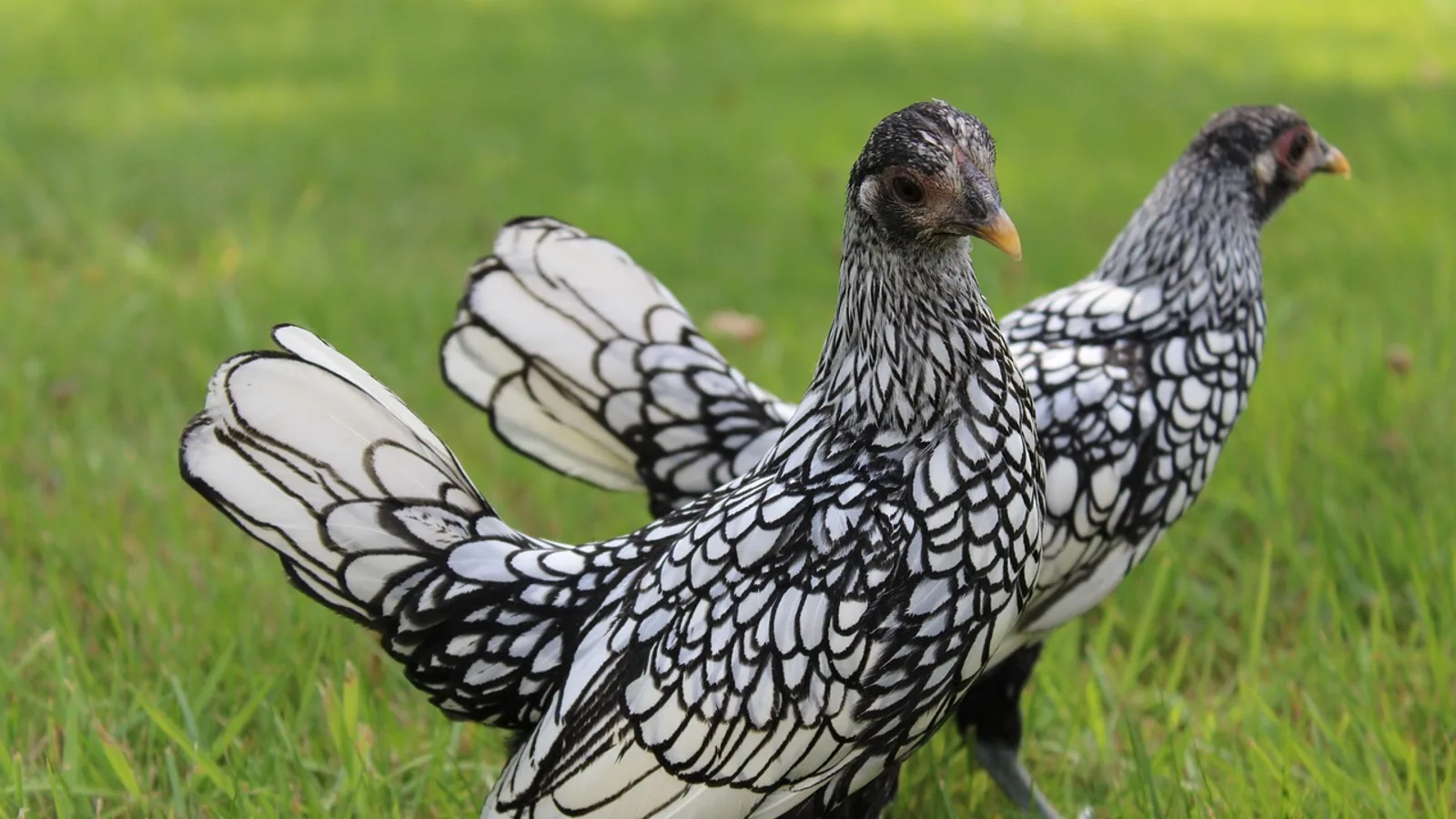
A bantam breed chicken is a small chicken, but "bantam" is a size class rather than a single breed. Some bantams are true bantams, naturally small birds such as the Sebright and the Belgian d'Uccle that have no large counterpart. Others are miniaturized versions of standard breeds, scaled-down Rhode Island Reds, Orpingtons, Wyandottes, and dozens more. Most bantams weigh roughly 0.5 to 1 kg, about one-quarter to one-third of the standard size of the same breed. That small body drives nearly everything else about their care: they need less floor space, they eat more per unit of body weight because their metabolism runs hotter, they lose heat and gain it faster than large fowl, and they are far more vulnerable to hawks, raccoons, rats, and even a determined house cat. They also tend to be the friendliest birds in a backyard flock, which is why they remain popular with families and small-flock owners.
This article is educational and is not a substitute for veterinary diagnosis or treatment.
At a Glance
| Attribute | Bantam chickens |
|---|---|
| Class | Size class, not a breed |
| Typical adult weight | 0.5 to 1 kg (about 1.1 to 2.2 lb) |
| Size relative to standard | Roughly one-quarter to one-third |
| True bantams | Sebright, Belgian d'Uccle, and other naturally small breeds |
| Miniaturized bantams | Scaled-down versions of standard breeds |
| Primary purpose | Eggs, ornament, companionship, small-flock production |
| Egg size | Small to medium, breed dependent |
| Temperament | Often calm and handleable, roosters can be assertive |
| Housing | Smaller footprint, predator-proofing is critical |
| Feeding | Higher metabolic rate, more feed per kg of body weight |
| Lifespan | Long-lived for their size, breed and management dependent |
| Good with children | Often yes, with supervision and gentle handling |
| Good with other pets | Depends on the individual bird and the other animal |
What "Bantam" Actually Means
The word bantam comes from the Indonesian port of Bantam, now Banten, where European traders encountered small chickens centuries ago. The term stuck as a description of size, not ancestry. In modern poultry keeping, a bantam is any chicken that falls into the small size class, whether it was bred small from the start or reduced from a larger standard.
True Bantams
True bantams are breeds with no standard-sized counterpart. The Sebright, a laced-feathered English breed, is a classic example. The Belgian d'Uccle, with its beard, muffs, and feathered feet, is another. These birds were developed as ornamental and exhibition chickens. They were never large, so there is no "standard" version to compare them against. True bantams are often the smallest birds in the yard and the most decorative.
Miniaturized Bantams
Miniaturized bantams are reduced versions of standard breeds. A bantam Rhode Island Red, bantam Orpington, or bantam Wyandotte is a scaled-down copy of the large fowl, bred over generations to retain the type, color, and temperament of the original at a fraction of the weight. These birds give small-flock owners the look and egg-laying character of a familiar breed without the feed bill and space demands of large fowl.
Why the Distinction Matters for Owners
The distinction matters for three practical reasons. First, true bantams and miniaturized bantams differ in egg production. A miniaturized version of a layer breed often lays reasonably well for its size, while many true bantams are ornamental and lay modestly. Second, it matters for health. A miniaturized bird carries the genetic background of a larger breed, and some of the health traits of that breed travel with it. Third, it matters for expectations. A bantam rooster is not a small version of a standard rooster in behavior. He is a full rooster in a small body, and he behaves accordingly.
History and Purpose
Small chickens have been kept for centuries for reasons that have not changed. They eat less, they fit into small spaces, they are easy to handle, and they are attractive. Ornamental breeding in Europe and Britain refined many true bantams into the exhibition birds we know today. The Sebright, for example, was developed in the early 1800s as a laced, hen-feathered show bird. The Belgian d'Uccle and its relatives were bred in Belgium for their beard, muffs, and feathered legs.
Miniaturized bantams came later and for a different reason. Breeders wanted the utility of standard breeds in a smaller package. A bantam Wyandotte or bantam Australorp could produce small eggs on a fraction of the feed. For a family with a small yard, that was a better fit than a full-sized flock.
Modern bantam keeping splits along those same lines. Exhibition breeders focus on type, color, and feather quality. Backyard owners focus on temperament, egg production, and how well the birds fit into a small flock. Both groups keep the same birds, and both benefit from understanding the size class they are working with.
Appearance and Size
Bantams are defined by their size. Most adult bantams weigh between 0.5 and 1 kg. That places them at roughly one-quarter to one-third of the weight of the standard version of the same breed. A standard Orpington hen can weigh several times what a bantam Orpington hen weighs.
Within that range, there is real variation. Some true bantams sit at the low end, and some miniaturized bantams sit closer to the top. A bantam rooster is typically heavier than a bantam hen of the same breed. Bantam cockerels, young males under a year old, are often the most variable in weight because they are still growing.
Feather type varies as much as size. Some bantams have clean legs, some have feathered legs, some have crests, beards, muffs, or five toes. The Belgian d'Uccle has a beard, muffs, and feathered feet. The Sebright has hen-feathered males, meaning the rooster carries the lacing and feather pattern of the hen. These traits are ornamental and do not affect care much, but they do affect grooming and how the bird handles cold and wet ground.
Body shape follows breed. Miniaturized bantams keep the shape of their standard counterpart, whether that is the round, fluffy Orpington or the upright, alert Leghorn. True bantams tend to have their own distinct shapes, often compact and game-like.
One practical consequence of small size is that bantams lose heat quickly. A small body has more surface area relative to its volume than a large body, so a bantam chills faster in cold, wet, or windy conditions. This is the same reason a bantam eats more per kilogram of body weight than a standard hen.
Temperament and Behavior
Bantam temperament is breed dependent, but several patterns hold across the size class.
Hens
Bantam hens are often calm, curious, and easy to handle. Many owners find them friendlier than standard hens, partly because they are small enough to pick up without a struggle. They integrate well into small flocks and are usually less intimidating to children and first-time owners.
Bantam Roosters
A bantam rooster is a rooster. He crows, he mates, he guards, and he can be aggressive. His small size does not make him less inclined to flog or spur, and it does not make the behavior less of a problem. In fact, some bantam roosters are notably assertive because they are confident in a body that other birds do not take seriously. Owners should plan for rooster behavior from the start, including the possibility that a bantam rooster may need to be separated or rehomed.
Bantam Cockerels
Bantam cockerels are young males, usually under a year old. This is the age when crowing begins, when mounting behavior starts, and when aggression toward other birds or people can first appear. Cockerels are also the birds most often surrendered or sold because owners did not plan for a male. Anyone buying straight-run bantam chicks should expect roughly half to be cockerels and should have a plan for them.
Flock Dynamics
Bantams can be kept with standard breeds, but size matters. A standard hen can injure a bantam without meaning to, and a standard rooster can seriously hurt a bantam hen during mating. Many owners keep bantams as a separate flock or pair them only with other bantams. Mixed flocks can work if the bantams have space to escape and if the males are managed carefully.
Fearfulness and exploration vary by breed and housing system. In commercial free-range laying flocks, hen responses to novelty and humans differed by breed and housing system, with some breeds showing less fear of humans than others [1]. The same principle applies in backyard flocks. Individual birds and breeds differ, and temperament should be assessed bird by bird rather than assumed from size alone.
Housing and Space Requirements
Bantams need less space than standard chickens, but they need better protection.
Space
Because a bantam weighs roughly one-quarter to one-third of a standard bird, it needs proportionally less floor area. A common approach is to scale coop and run space down from standard recommendations, but to keep the height of the structure the same so the birds can stand and move normally. Small birds still need room to walk, dust bathe, and get away from each other.
Predator Vulnerability
This is the single most important housing difference between bantams and standard chickens. A bantam is small enough to be taken by predators that would ignore a full-sized hen. Hawks, owls, raccoons, foxes, weasels, snakes, rats, and even large cats and dogs are all threats. Rats and snakes can enter gaps that a standard chicken could not, and a bantam chick or small bantam can be carried off by a hawk in daylight.
Predator-proofing for bantams means hardware cloth rather than chicken wire, secure latches, buried or skirted fencing to stop digging, and a coop that closes fully at night. Gaps larger than about an inch should be closed. Overhead protection matters because hawks and owls attack from above.
Climate and Shelter
Small bodies lose heat fast. Bantams need dry, draft-free shelter, especially in cold or wet weather. Feathered-leg breeds such as the Belgian d'Uccle are prone to mud and moisture problems on their feet, so dry bedding matters. In hot weather, bantams also overheat faster than large fowl in some conditions because their small body mass gives them less thermal buffer. Shade and ventilation are essential in summer.
Integration and Introductions
Introducing new birds to a bantam flock follows the same principles as any flock: quarantine new birds, introduce slowly, and provide multiple feeders and waterers so smaller or lower-ranking birds can eat. Because bantams are small, bullying can escalate quickly. Watch for birds that are being kept away from feed or water.
Feeding and Nutrition
Bantams have a higher metabolic rate per unit of body weight than standard chickens. A small bird burns energy faster, so it eats more feed per kilogram of body weight. Owners who scale feed down proportionally to body weight often underfeed their bantams. The right approach is to feed a complete poultry ration and let the birds eat to appetite, adjusting for body condition.
What to Feed
A complete commercial chicken feed formulated for the appropriate life stage is the foundation. Chicks need a starter ration, growing birds need a grower ration, and laying hens need a layer ration with appropriate calcium. Treats and scratch should be a small part of the diet so the birds do not fill up on low-nutrient food.
Feed Form and Feeder Design
Bantams have small beaks and can struggle with large pellets. Crumbles or small pellets are easier for them to eat. Feeders should be sized so the birds can reach the feed without climbing into it, and open troughs should be avoided because bantams can be pushed aside by larger flockmates in mixed flocks.
Digesta Transit and Nutrient Use
Feed ingredients and bird characteristics both influence how long digesta stays in the gastrointestinal tract, which in turn affects feed intake, gut fill, nutrient digestion, absorption, and utilization [2]. This is a reminder that diet formulation and bird size interact. Bantams are not simply small standard chickens when it comes to how they process feed.
Water
Clean water at all times is non-negotiable. Small birds dehydrate quickly. Waterers should be shallow enough that a bantam can drink without risk of drowning, especially chicks. In freezing weather, water must be kept thawed.
Body Condition
Because bantams eat a lot relative to their size, they can also become overweight if fed too many treats. Body condition should be checked by feel, not by eye, since feathers hide a lot. A bantam that feels sharp and bony over the keel is too thin. One that feels padded and rounded is carrying too much fat.
Health Problems in Bantam Flocks
Small size changes the health picture in several ways. Bantams are not fragile in general, but their size makes some problems more likely and some problems more serious.
Marek's Disease
Marek's disease is a viral disease of chickens that causes tumors, nerve damage, and sometimes sudden death. It is one of the most important diseases in backyard flocks. Vaccination is the standard control measure, and chicks are typically vaccinated at the hatchery before they are shipped. The vaccine does not prevent infection, but it greatly reduces the chance of tumors and clinical disease. Bantams are not uniquely susceptible, but small flocks that bring in birds from multiple sources are at higher risk. New birds should be quarantined before introduction.
Respiratory Infections
Respiratory disease is common in small flocks and can spread quickly once it enters. Mycoplasma gallisepticum is a major cause of chronic respiratory disease in chickens, and it is a well-recognized problem in backyard and commercial flocks alike [3]. Respiratory infections can cause swollen sinuses, nasal discharge, sneezing, and reduced egg production. Some respiratory pathogens are treatable and some are not, and some become chronic carriers that spread infection to new birds. Because bantams are often kept in small, close flocks, an outbreak can move through the whole group quickly.
Good ventilation, dry bedding, and avoiding overcrowding reduce respiratory risk. Quarantine of new birds is the single most effective management step.
Parasites
Internal and external parasites affect bantams as they do any chicken. Coccidiosis is a particular risk in young birds on damp ground. External parasites include mites, lice, and fleas. Because bantams are small, a heavy parasite load can cause anemia and weight loss faster than it would in a larger bird. Regular inspection of the vent area, feathers, and skin helps catch problems early.
Avian haemosporidian parasites, including Plasmodium and Leucocytozoon species, have been detected in domestic chickens, with older birds and some breeds showing higher detection rates [4]. These are blood parasites transmitted by biting insects. Mosquito and midge control, along with housing that reduces insect exposure, is the practical defense.
Nutritional and Metabolic Problems
Laying bantam hens can develop calcium deficiency if they are not on a proper layer ration, especially if they lay many eggs for their size. Egg binding, where an egg cannot pass, is a risk in small hens, particularly if they are overweight or calcium deficient. Soft-shelled eggs and thin-shelled eggs are warning signs.
Genetic and Egg-Trait Variation
Egg traits in chickens are influenced by genetics. A systematic review of the growth differentiation factor-9 gene found that variations in this gene are associated with age at first egg, egg number, and egg weight, although the specific variants differed among breeds [5]. This is a reminder that egg production is partly inherited. Two bantam hens of the same breed can differ in how early they start laying and how many eggs they produce.
Flavor and Meat Quality (For Owners Who Process Birds)
For owners who raise bantams for meat as well as eggs, meat quality varies by genotype and sex. Studies of native chicken breeds and commercial broilers show that genotype and sex significantly influence carcass yield, organ development, meat color, and volatile flavor compounds [6]. Bantams are not typically raised for meat because of their small size, but the same principles apply if they are.
Biosecurity in Small Flocks
Small flocks are not automatically safer than large ones. In fact, small flocks often mix birds from many sources, which increases disease risk. Basic biosecurity includes quarantining new birds for at least several weeks, keeping different age groups separate when possible, cleaning feeders and waterers regularly, and preventing contact with wild birds where feasible.
Recommended Screening and Preventive Care
Bantams benefit from the same preventive care as any backyard chicken.
- Vaccination. Marek's disease vaccination at hatch is standard. Other vaccines depend on regional risk and should be discussed with a veterinarian.
- Quarantine. New birds should be kept separate for several weeks before introduction.
- Parasite monitoring. Regular checks for mites, lice, and internal parasites, with treatment as needed.
- Body condition checks. Periodic weighing or handling to catch weight loss or obesity early.
- Egg quality monitoring. Thin or soft shells, unusual eggs, or a drop in production can signal a problem.
- Respiratory monitoring. Any sneezing, nasal discharge, or swollen sinuses should prompt a veterinary evaluation.
- Necropsy or diagnostic testing. When a bird dies unexpectedly, testing can identify a flock-level problem before it spreads.
These steps are not specific to bantams, but they matter more in small flocks where a single introduction can affect every bird.
Lifespan and Longevity
Bantam lifespan depends on breed, management, and disease exposure. Well-managed backyard bantams can live for many years, and small size does not shorten lifespan by itself. Predation and disease are the main threats to longevity in backyard flocks. A bantam that is protected from predators, kept in a clean environment, and fed a complete ration has a good chance of a long life.
Finding a Responsible Breeder or Rescue
Where you get your bantams matters as much as how you keep them.
Breeders
A responsible breeder will provide health information, vaccination history, and details about the parent flock. They will let you see the birds and the housing. They will not sell obviously sick birds or refuse to answer questions. For true bantams and exhibition lines, breed clubs and specialty breeders are often the best source.
Hatcheries
Hatcheries sell bantam chicks in many breeds, usually as straight-run or sexed. Straight-run means the sex is not determined, so buyers should expect both pullets and cockerels. Hatchery birds are typically vaccinated for Marek's disease before shipping.
Rescue and Rehoming
Bantams are sometimes surrendered when a cockerel starts crowing or when a family loses interest. Rescue organizations and local poultry groups can be a good source of adult birds. Adult birds have the advantage of known temperament and known sex.
What to Ask
Ask about vaccination status, age, sex if known, any history of respiratory disease in the flock, and whether the birds have been kept with other species. Ask to see the birds moving and eating. A bird that is quiet, hunched, or isolated in the corner is a bird that needs a veterinary look before you bring it home.
Who Should Not Get Bantams
Bantams are not the right choice for every household.
- Households that cannot predator-proof a coop and run. Bantams are small and vulnerable, and an unsecured setup will lose birds.
- Households that cannot tolerate crowing. A bantam rooster crows, and the sound carries. Local ordinances and neighbor tolerance matter.
- Households that want large eggs. Bantam eggs are small to medium, and some true bantams lay modestly.
- Households that want a rooster but cannot manage aggression. A bantam rooster can be assertive, and owners need a plan for that.
- Households that mix bantams with large fowl without supervision. Size differences create real injury risk.
- Households that cannot provide veterinary care. Chickens, including bantams, get sick and injured, and a veterinarian who sees poultry is a real asset.
Limitations and When to Contact a Veterinarian
This article is educational and is not a substitute for veterinary diagnosis or treatment. Individual birds need individual assessment, and a veterinarian who examines the bird is the only one who can diagnose and treat a specific problem.
Contact a veterinarian promptly if you see any of the following:
- Labored breathing, gasping, or open-mouth breathing at rest
- Nasal discharge, swollen sinuses, or facial swelling
- A sudden drop in egg production across the flock
- Weight loss, a sharp keel, or a bird that stops eating
- Diarrhea that lasts more than a day, especially with blood
- A hen straining to lay, pacing, or sitting in the nest box for hours
- Lameness, inability to stand, or a bird that isolates itself
- Sudden death of more than one bird in a short period
- Any bird that is being bullied away from feed or water
- Wounds from a predator, even small ones, because infection risk is high
Do not wait for a bird to "get better on its own." Small birds decline quickly, and early treatment is almost always easier than late treatment.
Frequently Asked Questions
What is a bantam breed chicken?
A bantam breed chicken is any chicken in the small size class, roughly 0.5 to 1 kg, about one-quarter to one-third the size of a standard chicken. Bantam is a size class, not a single breed.
Are bantams a breed or a size?
Bantam is a size class. True bantams such as the Sebright and Belgian d'Uccle are naturally small breeds. Miniaturized bantams are scaled-down versions of standard breeds.
How much does a bantam chicken weigh?
Most adult bantams weigh between 0.5 and 1 kg. Roosters are usually heavier than hens of the same breed, and bantam cockerels vary as they grow.
Do bantam roosters crow?
Yes. A bantam rooster crows, and the sound carries. Small size does not reduce crowing, and local rules about roosters still apply.
Are bantam roosters aggressive?
Some are. A bantam rooster can be assertive toward other birds and toward people, and owners should plan for that behavior rather than assume small size means docile.
What is the difference between a bantam cockerel and a bantam rooster?
A bantam cockerel is a young male, usually under a year old. A bantam rooster is an adult male. Crowing and mounting behavior often begin during the cockerel stage.
How much space do bantams need?
Bantams need less floor space than standard chickens because they are smaller, but the structure should still be tall enough for them to stand and move normally. Predator-proofing matters more than space.
Do bantams get sick easily?
Bantams are not inherently fragile, but their small size makes some problems more serious. Marek's disease, respiratory infections, parasites, and egg-binding are all concerns in small flocks. Quarantine of new birds and prompt veterinary care for sick birds reduce risk.
Related Articles
- Bantam Chicken Care Guide
- Nubian Goats: Breed Characteristics and Care Essentials
- Boer Goat Breed Profile: Characteristics and Management
- Raising Chickens for Eggs: Breed Selection, Care, and Egg Production
- Highland Cattle Farming: Breed Characteristics and Management
- Breeding Dutch Rabbits: Characteristics, Care, and Breeding Tips
- Barred Rock Chicken: Breed Traits and Care
- Bantam Silkies: Breed Care and Health Guide
Sources
- Hen fearfulness and exploration is associated with strain/breed, housing system and feeder space in Australian free-range commercial egg farms.
- Meta-analysis of dietary and animal factors influencing mean retention time of digesta in the broiler chicken gastrointestinal tract.
- Novel insights into Radix Pseudostellariae saponins assist Mycoplasma gallisepticum attenuated vaccine to enhance the immunoprotection of chicken.
- Prevalence and Molecular Characteristics of Avian Haemosporidian Infection Among Domestic Chickens in Hunan and Guangxi Provinces, China.
- Genetic Variation of Chicken Growth Differentiation Factor-9 Gene and Association With Egg Characteristics: A Systematic Review.
- Effects of genotype and sex on carcass characteristics, meat quality, volatile compounds, and flavor profiles of Thai native chickens and broilers.