Bantam Silkies: Breed Care and Health Guide
By Dr. Zubair Khalid, DVM, MS, PhD ·
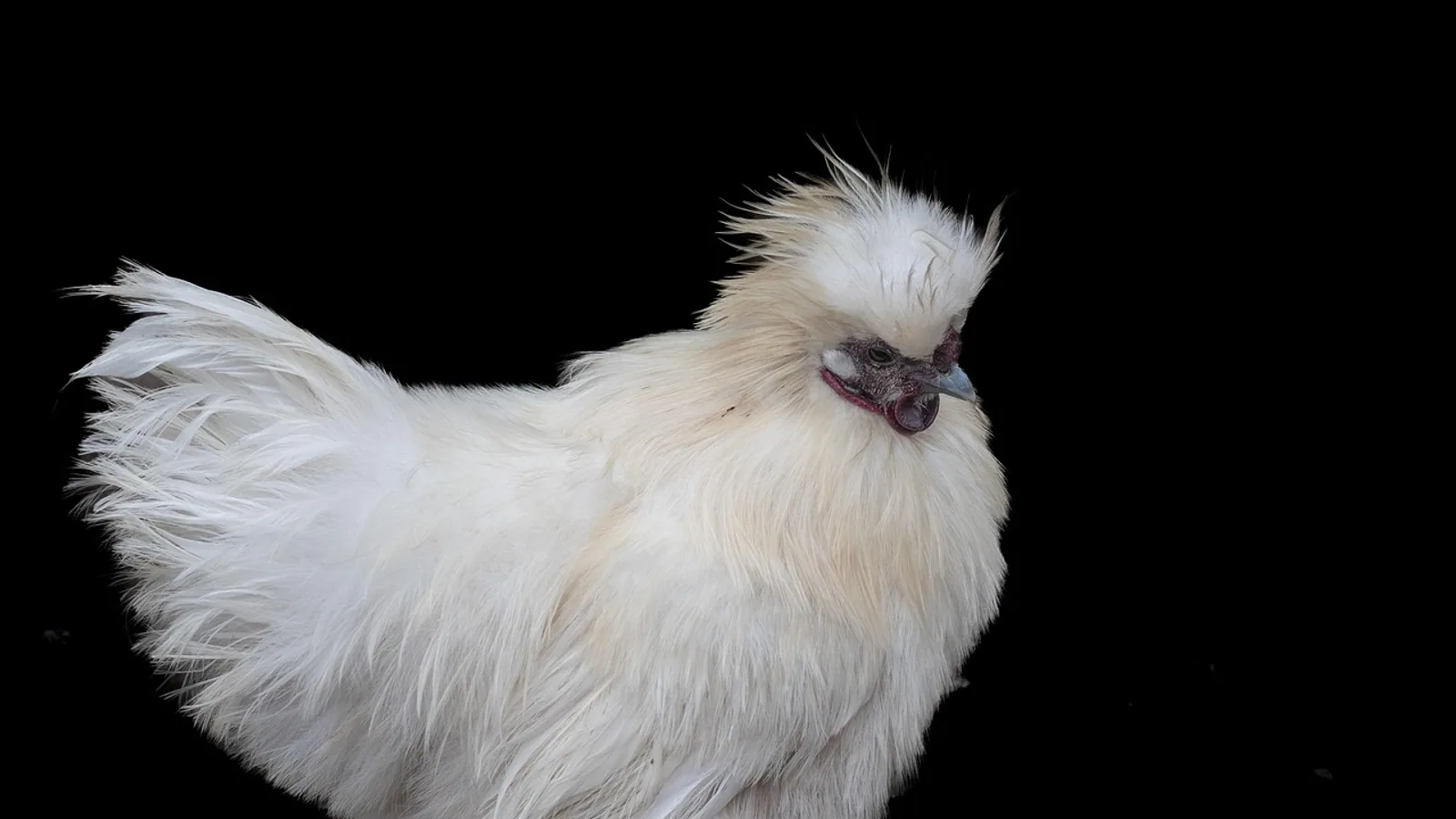
Bantam Silkies are small ornamental chickens defined by a single recessive feather mutation that strips the feather shaft of its tiny hooks, called barbicels. Without those hooks, the barbs cannot lock together, so the plumage stays loose and fluffy and feels like down. The same trait that makes a Silkie look soft makes it poorly waterproof, and that one fact shapes almost every housing, bedding, and health decision you will make for this breed. Silkies also carry fibromelanosis, a genetic rearrangement that floods the skin, periosteum, and connective tissue with dark pigment, giving the breed its black skin and black bones. Most birds have an extra toe on each foot and a crest of upraised feathers on the head that can grow forward over the eyes. Bantam Silkies are calm, poor fliers, and generally tolerant of handling, which makes them popular backyard pets, but they are not hardy in wet or cold conditions and they carry a higher genetic load than many commercial breeds. This guide covers the feather type, temperament, housing, nutrition, and the health problems that show up most often in backyard flocks.
This article is educational and is not a substitute for veterinary diagnosis or treatment.
At a Glance
| Trait | Description | Husbandry Implication |
|---|---|---|
| Feather type | Silkie feathering (hookless feathers) lacks barbicels, so feathers do not zip together and feel like down [1][2] | Feathers do not repel water. Keep birds dry at all times and provide a roofed, draft-free coop |
| Skin and bone color | Fibromelanosis causes dark pigmentation of skin, periosteum, and connective tissue [3] | Black skin can hide bruising, wounds, and external parasites. Examine birds by parting feathers and checking the feet and vent |
| Toes | Polydactyly, usually an extra toe on each foot, linked to selection at the LMBR1 locus [1] | Extra toes can catch on wire flooring and bedding. Use solid flooring and check nail length |
| Crest | Elongated upraised head feathers, associated with the crest phenotype [4] | The crest can block forward vision. Approach from the side and keep feed and water stations consistent |
| Size | Bantam, a dwarf/small breed [5] | Provide about 1 square foot of coop space per bird, plus run space |
| Temperament | Calm and handleable, but a pilot behavioral study found Silkies showed the highest fear and contact avoidance among four ornamental breeds tested [6] | Socialize early. Do not assume every Silkie will tolerate handling or work as a therapy bird |
| Genetic diversity | Silkies show relatively high inbreeding, a historical population bottleneck, and a smaller effective population size than other Chinese indigenous breeds [1] | Source stock from breeders who track pedigrees and avoid close matings |
| Egg traits | Ornamental breed eggs differ in quality traits from commercial layers, and Silkie eggs had the lowest polyunsaturated fatty acid levels among breeds tested [7] | Do not expect commercial-layer egg performance. Judge the bird as a pet and ornamental animal |
History and Purpose of the Silkie
The Silkie is a traditional Chinese breed, and its combination of unusual traits has made it a subject of genetic research for more than a century [8][1]. A bibliometric review of 114 years of Silkie research found that academic work has concentrated on the breed's nutritional value, melanin production, and the genetic mechanisms behind its appearance, while patents have focused on food formulations, breeding methods, and purebred identification [8]. That research history explains why so much of what is known about the breed is genetic rather than clinical.
Genomic work has clarified several of the breed's signature traits. The hookless feather phenotype maps to a region that includes the PDSS2 gene, and the extra toe maps to LMBR1 [1]. Fibromelanosis, the dark pigmentation of skin and connective tissue, results from an inverted duplication and junction of two genomic regions separated by more than 400 kilobases in wild-type birds. One duplicated region contains endothelin 3 (EDN3), a gene that promotes melanoblast proliferation. EDN3 expression is elevated in the developing Silkie embryo during melanoblast migration and stays elevated in adult skin tissue [3]. The same structural variant underlies dermal hyperpigmentation across multiple breeds in Asia and Europe, which means the trait was reused repeatedly during breed formation rather than arising independently each time [3].
The crest is less well understood at the molecular level. A study of a Swiss crested breed and Silkies sequenced the two exons of HOXC8 and found no polymorphisms in the coding region, so the causative mutation for the crest in these breeds remains unclear [4]. What is clear is that the crest is a real anatomical feature with real consequences for the bird's field of vision.
Silkies also appear in conservation genetics work. A study of the Russian Korolyok and five other dwarf breeds, including Silkie White, used SNP genotyping to estimate heterozygosity, inbreeding, effective population size, and runs of homozygosity. Rare breeds in that panel had lower effective population sizes both currently and historically, meaning they descend from a limited number of ancestors or have been under strong selection pressure for many generations [5]. A separate whole-genome resequencing study found that Silkies show relatively high inbreeding, are genetically distinct from other Chinese indigenous breeds, and have experienced a stronger historical bottleneck and a smaller effective population size [1]. High-density SNP genotyping comparing Silkies with White Leghorns found mean inbreeding coefficients based on runs of homozygosity of 0.396 in Silkies versus 0.175 in White Leghorns [9]. These numbers matter to owners because they predict a breed with reduced genetic buffering, which is one reason individual Silkies can vary widely in vigor.
Appearance and the Silkie Feather
The Silkie feather is the breed's defining feature and the source of most of its care requirements. Normal chicken feathers have barbicels, microscopic hooks that interlock adjacent barbs into a flat, wind-resistant vane. Silkie feathering is a recessive trait in which those hooks are absent, so the barbs stay separate and the feather remains loose and downy [1][2]. The result is plumage that traps air well but sheds water poorly.
That single difference changes the bird's thermal and moisture management. A wet Silkie cannot shake off water the way a normal-feathered chicken can, and the downy plumage holds moisture against the skin. Wet, matted feathers cool the bird quickly and create a humid microclimate on the skin and in the bedding. This is the mechanical basis for the breed's reputation as a fair-weather bird, and it is why housing for Silkies must keep rain, spilled water, and damp litter away from the birds.
Fibromelanosis adds the second visual signature. The dark pigment is not confined to the skin surface. It extends into the dermis layer and the majority of internal connective tissue, and it affects the periosteum, the membrane covering bone [3]. In practice, this means the skin, the meat, and the bones all appear dark. For owners, the practical consequence is that routine inspection is harder. A bruise, a small wound, or the early stage of a skin infection can be difficult to see against dark skin. Part the feathers and examine the skin directly, especially over the keel, the feet, and around the vent.
The crest is a third defining feature. It consists of elongated, upraised feathers on the head [4]. In birds with a large crest, the feathers grow forward and can partially or fully cover the eyes. A Silkie with a heavy crest may have an obstructed forward view, which affects how it finds food, water, and predators. The bird compensates by tilting its head, but the crest still changes how you should manage the bird. Keep feeders and drinkers in fixed locations so the bird can find them by memory and by feel. Approach from the side rather than the front so you do not startle a bird that cannot see you coming.
Polydactyly is the fourth trait. Silkies typically have an extra toe on each foot, a trait associated with the LMBR1 locus [1]. The extra toe is normal for the breed and not a defect. It does, however, change foot mechanics slightly and gives one more place for mud, bedding, or a wound to hide. Check all toes, including the extra one, during routine handling. Wire flooring is a poor choice for a bird with extra toes because the toes can catch between the wires.
Temperament and Behavior
Silkies are widely described as calm, docile, and easy to handle, and that reputation is why many owners keep them as pets rather than as production birds. The behavioral evidence is more nuanced. A pilot study that evaluated four ornamental breeds for suitability in chicken-assisted therapy tested human approach and proximity tolerance, reaction to sudden stimuli, and touch tolerance, and also ran a standard tonic immobility test. Pekin bantams scored highest for therapeutic potential. Contrary to the researchers' expectations, Silkie bantams scored lowest, showing the highest fear levels and the most avoidance of contact among the four breeds. Ko-Shamo and Chabo daruma were intermediate. The tonic immobility test did not separate the groups [6].
That result does not mean Silkies are unfriendly. It means temperament varies by individual and by line, and a calm-looking breed is not automatically a calm individual bird. The study authors concluded that breed matters when selecting chickens for therapy work and that other breeds need testing [6]. For a pet owner, the takeaway is straightforward. Handle young Silkies regularly, keep interactions predictable, and judge each bird on its own behavior rather than on the breed's reputation.
Silkies are poor fliers because of their feather structure, so they rarely clear fences. They are also small and slow, which makes them vulnerable to hawks, raccoons, foxes, and free-roaming dogs. A covered run is a reasonable precaution for a bird that cannot escape upward. Within a mixed flock, Silkies are often at the bottom of the peck order because their crest limits their vision and their feathering makes them conspicuous. If you keep Silkies with larger, more assertive breeds, watch for feather picking and bullying.
Housing Bantam Silkies
The single most important housing rule for bantam Silkies is that they must stay dry. Because their feathers do not repel water, a wet Silkie loses insulation and is at risk of chilling. Housing should be roofed, with solid walls on the prevailing weather side and ventilation that moves air without creating a draft at bird level.
Bantam Silkies need about 1 square foot of coop space per bird. That figure is the floor area inside the shelter itself, separate from any outdoor run. The small body size of a bantam makes 1 square foot workable, but crowding still causes problems in this breed. Damp litter, ammonia buildup, and close contact between birds all increase the risk of respiratory disease and feather picking. If your birds spend long periods inside during bad weather, err on the generous side rather than the minimum.
Bedding should be dry and changed often. Because Silkie feathers hold moisture, damp bedding is worse for this breed than for a normal-feathered chicken. Choose a bedding material that absorbs moisture and stays loose, and check under the roost and around the drinker daily, since those are the spots that go damp first. A drinker that spills into the litter creates a persistent wet patch. Elevate drinkers or place them on a surface that keeps spilled water off the bedding.
Perches deserve attention. Silkies can perch, but their foot structure and extra toes make wide, flat perches safer than narrow round dowels. Keep perches low, since a heavy-crested bird with limited vision and poor flight is more likely to miss a high perch. Some owners of heavily crested birds keep perches very low or omit them in favor of deep, dry bedding.
The run should be covered. An uncovered run exposes Silkies to rain and to sun that can overheat a dark-skinned, heavily feathered bird. A solid roof over at least part of the run gives the flock a dry area to use during wet weather and keeps the ground from turning to mud. Good drainage matters for the same reason. A run that stays muddy after rain will keep the birds' feet wet and dirty, which is a setup for foot problems and for scaly leg mite.
Ventilation is the balance point. You need enough air exchange to keep ammonia and moisture levels down, but not so much airflow at bird level that a damp Silkie gets chilled. Design the coop so air enters high and exits high, above the birds' heads. In cold weather, the goal is dry and draft-free rather than warm.
Grooming and Feather Care
Silkie plumage needs more attention than the plumage of a normal-feathered chicken. The downy feathers mat and felt more easily, especially around the vent, on the belly, and under the crest. Mats hold moisture against the skin and can hide wounds, external parasites, and skin infections.
A regular hands-on check is the core of Silkie grooming. Once a week, part the feathers over the keel, belly, vent, and under the wings. Look for mats, broken feathers, redness, scabs, and any sign of movement at the base of the feathers. Check the feet, including the extra toe, and look at the leg scales. Check the crest for debris and for moisture trapped against the skin.
Trim feathers only when they cause a specific problem. A crest that fully covers the eyes can be trimmed back enough to restore forward vision, but do this carefully and only as much as needed. Feathers around the vent that become soiled with droppings can be trimmed to keep the area clean. Never trim the flight or body feathers for appearance. The plumage is the bird's insulation, and cutting it reduces the bird's ability to stay warm.
Bathing a Silkie is occasionally necessary, but drying is the hard part. A wet Silkie chills quickly. If a bird must be washed, use warm water, keep the session short, and dry the bird thoroughly with towels and a low-heat dryer before returning it to the coop. Never put a damp Silkie back into a cool coop. In most cases, spot cleaning with a warm damp cloth is safer than a full bath.
Feeding Bantam Silkies
Bantam Silkies are small birds with correspondingly small appetites, but their nutritional needs are the same as those of other chickens at the same life stage. A complete poultry feed formulated for the bird's age provides the base of the diet. Chicks need a starter ration, growing birds need a grower ration, and adult birds need a layer or maintenance ration depending on whether the hens are producing eggs. Treats and scratch should be a small fraction of the total intake so the birds do not fill up on low-nutrient food.
Feeders should be designed for a bird with a crest. A Silkie with feathers over its eyes may not see feed scattered on the ground, and it may not find a feeder that moves around. Use a consistent feeder location and a feeder shape the bird can eat from without lifting its head high. Trough feeders with a lip work well. Deep, narrow feeders can trap the crest and cause the bird to avoid eating.
Water is a daily concern in this breed. Because Silkies do not shed water from their feathers, a bird that walks through a spilled drinker or a puddle gets wet and stays wet. Keep drinkers clean and positioned so the birds cannot stand in the water. In freezing weather, check that water is available and that the birds are not getting wet from melted ice or condensation.
Silkies are sometimes kept for meat in some culinary traditions, and research on the breed has examined its nutritional and metabolic profile. A multi-omics study of Silkie pectoralis muscle found upregulation of melanogenesis genes and a significant depletion of L-tyrosine and its derivatives, suggesting intense metabolic flux toward pigment synthesis [10]. A separate metabolomic and lipidomic analysis identified characteristic bioactive compounds in Silkie meat, including increased levels of several metabolites and lipids, and linked these to meat quality traits such as water-holding capacity and umami taste [11]. These findings are about the composition of the meat, not about what to feed a live bird, and they do not change the basic feeding plan. Feed a complete ration appropriate to the bird's age and stage.
Common Health Problems in Bantam Silkies
Feather Picking and Feather Loss
Feather picking is a common problem in backyard flocks and is more likely in Silkies for two reasons. First, the downy feathers are easy to pull and do not regrow quickly. Second, the crest limits vision, so a bird may not see an aggressor approaching. Crowding, damp litter, and mixed flocks with more assertive breeds all increase the risk.
Feather loss in a Silkie has several possible causes. Molting is normal and seasonal. Feather picking by flockmates causes patchy loss, usually on the back, tail, and vent. External parasites cause restlessness and broken feathers. A bird that is low in the peck order may be plucked by birds above it. The first step is to identify the pattern. Patchy loss on the back and tail points to pecking. Generalized thinning points to molt or parasites. Loss around the vent can point to soiling or to vent pecking.
Management starts with space and dryness. Give the birds more room, keep the litter dry, and separate a bird that is being picked on. Examine the skin for redness, scabs, and parasites. Because Silkie skin is dark, use good light and part the feathers to see the skin clearly. If feather loss continues despite better housing, or if the skin is broken and inflamed, contact a veterinarian.
Scaly Leg Mite
Scaly leg mite is a common external parasite problem in backyard poultry, and Silkies are at higher risk because their leg feathers and extra toes create more places for mites to hide. The mites burrow under the leg scales, causing crusting, thickening, and a rough, raised appearance on the legs and feet. Affected birds may be reluctant to walk or may stand on one foot.
Early detection matters because the damage to the leg scales is progressive. Check the legs and feet during the weekly grooming session. Look at the scales on the shanks and on the tops of the toes, including the extra toe. Lift the leg feathers to see the skin above the scales. Crusty, raised scales are the classic sign.
Treatment of scaly leg mite in backyard poultry is a matter for a veterinarian, because the appropriate product and the treatment interval depend on the bird's condition and on what is legally available for use in poultry in the United States. Do not apply products labeled for other species without veterinary guidance. Along with treatment, clean and replace bedding, and treat the housing and any perches the birds use. Recheck the legs after the treatment course to confirm that new scale growth is smooth.
Respiratory Disease in Damp Housing
Respiratory disease is a leading health concern in backyard flocks, and damp housing is a major contributing factor. For Silkies, the connection is direct. Their feathers do not shed water, so a wet bird stays wet, and wet bedding raises the humidity inside the coop. High humidity, poor ventilation, and ammonia from soiled litter all irritate the respiratory tract and create conditions where respiratory pathogens spread more easily.
Signs of respiratory disease in chickens include sneezing, nasal discharge, swollen or watery eyes, rattling or gurgling sounds when breathing, and a drop in activity or appetite. A bird with a crest may have discharge trapped in the feathers around the face, which can be missed. Check the face and nostrils during the weekly exam.
Prevention is mostly about the environment. Keep the coop dry, ventilate above bird level, remove soiled litter often, and avoid crowding. Because bantam Silkies need about 1 square foot of coop space each, a small coop fills up quickly. If you add birds, add space at the same time. Any bird with respiratory signs should be separated from the flock and examined by a veterinarian, since respiratory disease in poultry can have several causes and the treatment differs by cause.
Genetic Load and Individual Variation
Silkies carry a higher genetic load than many commercial breeds. Whole-genome resequencing found relatively high inbreeding, a stronger historical bottleneck, and a smaller effective population size compared with other Chinese indigenous breeds [1]. High-density SNP genotyping found mean inbreeding coefficients based on runs of homozygosity of 0.396 in Silkies versus 0.175 in White Leghorns [9]. A study of rare dwarf breeds, including Silkie White, found lower effective population sizes both currently and historically, consistent with descent from a limited number of ancestors or long-term selection pressure [5].
For an owner, this means two things. First, individual Silkies can differ a lot in vigor, growth, and general hardiness, even within the same flock. Second, when you acquire birds, ask the breeder how they manage relatedness. A breeder who tracks pedigrees and brings in unrelated stock periodically is doing the work that keeps a small breed viable.
Neoplasia and Other Conditions
Tumors occur in backyard chickens, and a case report from the California Animal Health and Food Safety Laboratory System described a metastatic liposarcoma in a 3-year-old backyard Silkie with a history of skin lesions over the entire body and severe weight loss. At necropsy, raised necrotic skin lesions and nodules in the liver, spleen, and bone marrow were found, and the diagnosis was confirmed with histopathology and immunohistochemistry [12]. This is a single case, not a breed-wide risk figure, but it illustrates a practical point. Unexplained skin lesions and progressive weight loss in a backyard Silkie warrant veterinary evaluation rather than watchful waiting.
Antibiotic use in Silkies has been studied specifically. A study of ciprofloxacin administration in Silkie chickens detected residues in different tissues with different elimination times, in the order liver, then kidney, then chest muscle, then skin, and found slight hepatotoxicity and nephrotoxicity along with changes in the gut microbiota that occurred mainly early in the metabolic process [13]. This is a research finding, not a treatment recommendation. It does reinforce the general principle that antibiotics in poultry should be used only under veterinary direction, with attention to withdrawal times and to the bird's liver and kidney function.
Screening and Routine Health Checks
Silkies benefit from a structured routine because so many of their problems are easier to prevent than to treat. A weekly check takes a few minutes and covers the areas where this breed gets into trouble.
- Feathers and skin. Part the feathers over the keel, belly, back, wings, and vent. Look for mats, broken feathers, bare patches, redness, scabs, and any sign of external parasites. Check the crest for trapped moisture and debris.
- Legs and feet. Examine the scales on both shanks and all toes, including the extra toe. Look for crusting, thickening, and raised scales that suggest scaly leg mite. Check nail length.
- Face and nostrils. Look for discharge, swelling, or watery eyes. A crest can hide these signs, so lift the crest feathers gently.
- Vent. Check for soiling, redness, and any sign of prolapse or discharge.
- Weight and body condition. Feel the keel. A sharp keel with little muscle cover suggests weight loss. Because Silkies are heavily feathered, weight loss can be hidden until it is advanced.
- Housing. Check litter dryness, ventilation, and ammonia smell. Fix damp spots immediately.
Any bird that is losing weight, breathing abnormally, has a swollen or crusted leg, or has skin lesions that do not heal should be seen by a veterinarian. Poultry medicine is a recognized part of veterinary practice, and a veterinarian who treats backyard flocks can examine the bird, run appropriate tests, and advise on treatment and on protecting the rest of the flock.
Lifespan and Long-Term Care
Backyard chickens, including Silkies, can live for several years with good care. A case report from a diagnostic laboratory described a 3-year-old backyard Silkie, which shows that birds of this breed do reach that age in backyard settings [12]. Lifespan in an individual bird depends on genetics, housing, nutrition, and disease exposure. Because Silkies have a higher genetic load and a smaller effective population size than many other breeds, individual variation in longevity is expected [5][1][9].
Long-term care for a Silkie revolves around the same themes as daily care. Keep the bird dry. Keep the coop ventilated and uncrowded. Keep the bedding clean. Check the feet and the skin regularly. Watch for the slow changes that indicate a problem, such as a bird that stops coming to the feeder, stands apart, or loses weight. Older Silkies may need lower perches, easier access to feed and water, and more frequent checks of the feet and vent.
Finding a Responsible Breeder or Rescue
Because Silkies are a small, inbred breed, the source of your birds matters. A responsible breeder can tell you how the birds are housed, what they are fed, and how relatedness is managed in the breeding program. Ask directly whether the breeder tracks pedigrees and whether new, unrelated stock is introduced periodically. Breeders who show birds often keep detailed records, but the question is useful for any breeder.
Ask to see the birds in person if possible. Look at the legs and feet of the adult birds, since scaly leg mite is visible on the shanks. Look at the housing and check whether the litter is dry and the coop is ventilated. Ask about the health history of the flock, including any past respiratory problems. A breeder who is open about problems is more useful than one who claims a flock has never been sick.
Rescue is a real option for Silkies. Backyard flocks are sometimes surrendered when owners move or lose interest, and breed-specific poultry rescues exist in some areas. A rescued Silkie may arrive with feather loss, leg problems, or a history of poor housing, so plan for a veterinary check soon after arrival and keep the bird separate from your existing flock during the initial period.
Who Should Not Get a Bantam Silkie
Bantam Silkies are not the right choice for every household. They are a poor fit for anyone who cannot provide dry, roofed housing, because their feathers do not repel water and wet birds chill quickly. They are a poor fit for a flock kept on open pasture without shelter, and a poor fit for a coop with damp litter or poor ventilation, since those conditions drive respiratory disease in this breed.
They are also a poor fit for anyone who wants a bird that reliably tolerates handling. The behavioral study of ornamental breeds found that Silkie bantams showed the highest fear levels and the most avoidance of contact among the four breeds tested, despite the breed's calm reputation [6]. If your goal is a hands-on therapy or companion bird, meet individual birds before deciding, and consider that other breeds scored better in that study.
Silkies are a poor fit for a flock with aggressive large breeds, because their crest limits their vision and their downy feathers are easy to pluck. They are also a poor fit for anyone who cannot commit to a weekly hands-on health check, since problems with the feet, skin, and crest are common and are easiest to manage when caught early.
Limitations and When to Contact a Veterinarian
This guide describes the breed as a whole. Individual birds vary in temperament, hardiness, and health, and a veterinarian who examines your bird can give advice specific to that bird.
Contact a veterinarian promptly if a Silkie has any of the following:
- Difficulty breathing, sneezing, nasal discharge, or swollen eyes.
- Crusting, thickening, or raised scales on the legs or feet.
- Skin lesions that do not heal, or unexplained weight loss.
- Feather loss that continues despite improved space and dry bedding, or skin that is broken and inflamed from pecking.
- A bird that is wet and chilled, shivering, or unable to stand.
- A bird that stops eating or drinking, or that stands apart from the flock.
- Any bird that dies unexpectedly, since a postmortem examination can identify a problem that affects the rest of the flock.
Do not start antibiotics or antiparasitic products on your own. Antibiotic use in poultry has consequences for tissue residues and for the bird's liver, kidney, and gut microbiota, and the appropriate product and withdrawal period depend on the diagnosis [13]. A veterinarian can determine the cause and select a legal, effective treatment.
Frequently Asked Questions
Why do Silkie feathers feel like down?
Silkie feathers lack barbicels, the microscopic hooks that lock the barbs of a normal feather into a flat vane, so the barbs stay separate and the feather remains loose and downy [1][2].
Do bantam Silkies need special housing?
Yes. Their feathers do not repel water, so they need dry, roofed, well-ventilated housing with about 1 square foot of coop space per bird.
Why do Silkies have black skin and bones?
Fibromelanosis is caused by a genomic rearrangement that duplicates a region containing the EDN3 gene, which increases melanoblast proliferation and produces dark pigment in the skin, periosteum, and connective tissue [3].
What causes the extra toe in Silkies?
Polydactyly in Silkies is linked to the LMBR1 locus, and the extra toe is a normal breed trait rather than a defect [1].
Can a Silkie's crest affect its vision?
Yes. The crest consists of elongated head feathers that can grow forward over the eyes, and a heavy crest can obstruct forward vision [4].
What health problems are most common in bantam Silkies?
Feather picking, scaly leg mite, and respiratory disease in damp housing are the most common problems, along with the general risks that come with a breed that has a high genetic load [1][9].
Are Silkies good therapy or companion birds?
Temperament varies by individual. A pilot study found Silkie bantams showed the highest fear levels and the most contact avoidance among four ornamental breeds tested, so meet individual birds before deciding [6].
How often should I check a Silkie's legs and feet?
Check the legs and feet weekly, including the extra toe, because scaly leg mite is common in backyard poultry and early crusting is easy to miss under leg feathers.
Related Articles
- Bantam Chicken Care Guide
- Hairless Cat: Care, Health, and Breed Guide
- Cat Breeds: How to Choose a Cat by Care Needs, Health, and History
- Norwegian Forest Cat: Breed Guide, Health, and Care Tips
- Dog Breeds: Health Guide and Care Tips for Popular Types
- Small Dog Breeds: Health Concerns and Care Tips
- Bully Pit Mix: Breed Traits, Health, and Care
- Golden Shepherd: Breed Traits, Care, and Health
Sources
- Genetic diversity, demographic history, and selective signatures of Silkie chicken.
- A study of linkage relationships of blood group P with naked neck, silkie feathering, and recessive white in chicken.
- A complex genomic rearrangement involving the endothelin 3 locus causes dermal hyperpigmentation in the chicken.
- Evaluation of HOXC8 in crested Swiss chicken.
- Kinglet in the Poultry Court of Russia: Whole-Genome Insights into Ancestry, Genetic Variability, Selection Footprints and Candidate Genes in a Unique Local Chicken Breed Relative to Other Bantam/Dwarf Breeds.
- Assessment of Behavioral Predispositions of Selected Chicken Breeds for Use in Animal-Assisted Therapy: A Pilot Study.
- External and internal quality traits of eggs from different ornamental chicken breeds.
- Frontiers and emerging topics in a century of Silkie chicken research: insights, challenges, and opportunities.
- Genome-wide candidate signatures of divergent selection between broody Silkie and White Leghorn chickens revealed by high-density SNP genotyping.
- Transcriptional and Metabolic Networks Underlying Melanin Deposition in Silkie Chicken Muscle: A Multi-Omics Insights.
- Identification of Characteristic Bioactive Compounds in Silkie Chickens, Their Effects on Meat Quality, and Their Gene Regulatory Network.
- Liposarcoma in a Backyard Silkie and Retrospective Summary of Neoplasms Diagnosed in Backyard Chickens Submitted to the California Animal Health and Food Safety Laboratory System, 2008-2017.
- Changes in antibiotic residues and the gut microbiota during ciprofloxacin administration throughout Silkie chicken development.