Vestigial Structures: Definition and Examples
By Dr. Zubair Khalid, DVM, MS, PhD ·
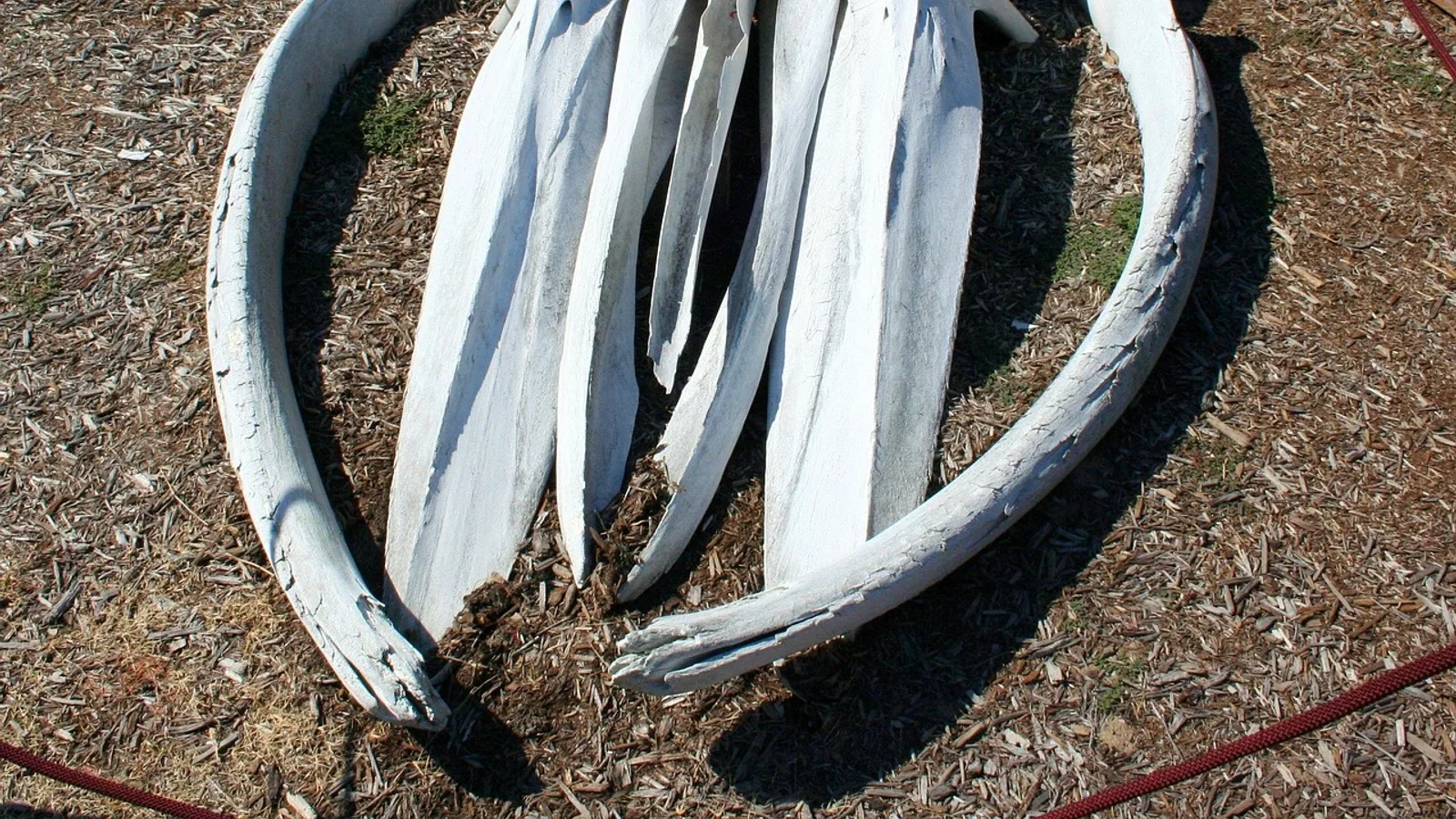
A vestige is a reduced or functionless remnant of a structure that was functional in an ancestor. A vestigial structure, therefore, is any anatomical feature that has lost most or all of its original role over evolutionary time while still being present in the body, often in a shrunken or simplified form [1].
That single definition carries a lot of weight in biology. Vestigial structures are the physical record of evolutionary history written into living bodies. They connect modern organisms to extinct ancestors, they help researchers place fossils on the tree of life, and they show that evolution does not build from scratch. It tinkers with what already exists, sometimes leaving behind parts that no longer do the job they once did. For students learning comparative anatomy, the vestige definition is the entry point to understanding how form and function drift apart across millions of years.
What Counts as a Vestigial Structure
The core idea is ancestry. A structure is vestigial when it was useful in an ancestor and is now reduced or largely without its original function. The term does not require the structure to be completely useless. Many vestigial structures keep minor roles, such as anchoring a muscle or providing a small amount of structural support. The key is that the structure no longer performs the primary job it evolved to do.
This distinction matters because the older textbook phrase "vestigial organ" implied total uselessness. Modern evolutionary biology treats vestigiality as a spectrum. A structure can be fully functionless, partially reduced, or retained with a secondary function that has nothing to do with its ancestral role [1]. The pelvic bones of whales are a good example. They no longer support hind limbs, but in some species they still anchor muscles tied to reproduction [2].
Vestige vs. Atavism
A vestige is a remnant that persists in a reduced state. An atavism is different. Atavism is when an ancestral trait reappears after it was lost in previous generations [1]. A whale born with small hind limb buds, or a human born with a short tail, would be atavistic. The underlying genetic instructions are still present and get switched on again. Vestigial structures, by contrast, are the normal, expected remnants found in every member of a species.
The two terms get confused because both involve ancestral features. The difference is whether the feature is a routine remnant (vestigial) or an unexpected reappearance (atavistic) [1].
Vestigial vs. Analogous vs. Homologous
These three terms describe different relationships between structures, and mixing them up is one of the most common errors in biology courses.
Homologous structures share a common evolutionary origin. The forelimbs of humans, whales, bats, and horses all derive from the same ancestral limb, even though they look and work differently. Homology is about shared ancestry.
Analogous structures perform similar functions but evolved independently. Bird wings and insect wings both enable flight, but they have completely different origins and internal structures. Analogy is about shared function without shared ancestry.
Vestigial structures are a special case of homology. They are homologous to a functional structure in an ancestor, but they have lost most of that function. The whale pelvis is homologous to the pelvis of land mammals. It is vestigial because it no longer supports legs.
| Term | Relationship | Example |
|---|---|---|
| Homologous | Shared ancestry, function may differ | Human arm and whale flipper |
| Analogous | Shared function, ancestry differs | Bird wing and butterfly wing |
| Vestigial | Shared ancestry, function reduced or lost | Whale pelvis, human coccyx |
The Evidence Table: Classic Animal Examples
The table below summarizes well-documented vestigial structures across animal groups. Each row lists the structure, the species, its ancestral function, and its current state.
| Structure | Species | Ancestral function | Current state |
|---|---|---|---|
| Pelvic bones | Modern cetaceans (whales, dolphins, porpoises) | Support hind limbs for walking on land | Slender rod-like bones in abdominal wall, no limb attachment [2] |
| Pelvic remnants | Snakes (many species) | Support hind limbs | Small spurs or internal bone remnants, no walking function |
| Wings | Flightless birds (ostriches, emus, kiwis) | Powered flight | Reduced wings, used for balance, display, or insulation |
| Coccyx (tailbone) | Humans | Tail support and balance | Fused vertebrae, anchors muscles and ligaments |
| Appendix | Humans | Cellulose digestion (in herbivorous ancestors) | Small pouch, minor immune tissue role |
| Median and lateral eyes | Daddy-longlegs (harvestmen) | Vision | Vestigial eyes, still innervated but reduced [3] |
| Sound-producing wing structures | Flatwing crickets | Acoustic calling song | Wing structures removed, motor behavior persists [4] |
| Bill-tip organs | Some seabirds and palaeognaths | Tactile foraging | Present but possibly vestigial in species that do not use them [5] |
The table shows a pattern. Vestigial structures tend to be small, simplified, and disconnected from the function they once served. But they are not random. They retain the developmental and anatomical connections of their ancestral form, which is exactly why they are useful for tracing evolutionary relationships.
Whale and Snake Pelvic Remnants
Whales and dolphins evolved from land mammals that walked on four legs. Fossil cetaceans from the early stages of this transition had both forelimbs and hind limbs [2]. Over time, the hind limbs disappeared and the pelvis shrank. In modern cetaceans, the pelvic bones are a pair of slender, rod-like structures embedded in the abdominal wall muscles, positioned just anterior to the anus. They have no articulation with the axial skeleton in either sex [2].
This is a textbook vestigial structure. The pelvis no longer supports legs because there are no legs to support. But the story has a twist. In male finless porpoises, the pelvic bones support the muscles involved in copulation [2]. The ischiocavernosus muscle, which relates to the pelvic bone, has been transformed along with the drastic reduction of the pelvis [2]. So the whale pelvis is not completely functionless. It has a secondary role in reproduction, but that role is not the ancestral one of bearing weight and supporting limbs.
Snakes show a similar pattern. Many snake species retain small pelvic remnants, sometimes visible as cloacal spurs. These are the leftover bones of hind limbs that their lizard ancestors used for walking. In most snakes, the spurs serve a minor role in courtship or mating, but they cannot support locomotion.
Flightless Bird Wings
Birds evolved from theropod dinosaurs, and flight is one of the most successful innovations in vertebrate history. But flight has been lost independently in many bird lineages, including ostriches, emus, kiwis, and penguins (penguins still "fly" underwater, but their wings are flippers, not aerial wings).
In ostriches and emus, the wings are reduced but not gone. They retain the same skeletal elements as flying birds, including the humerus, radius, and ulna, but the bones are smaller and the flight feathers are modified. These wings no longer generate lift. In ostriches, the wings are used for balance during running and for courtship displays. In kiwis, the wings are so reduced that they are barely visible under the feathers.
The key point is that the wing skeleton is still homologous to the wing skeleton of flying birds. The developmental pathways that build a wing are still active. The structure is vestigial because it has lost its ancestral function of powered flight, even though it may retain secondary roles in display or balance.
Human Coccyx and Appendix
Humans are not exempt from vestigial structures. Two of the most cited examples are the coccyx and the appendix.
The coccyx, or tailbone, is a small set of fused vertebrae at the base of the spine. In our primate ancestors and in many mammals, the tail is a functional structure used for balance, communication, and sometimes grasping. In humans, the tail is reduced to a short, fused remnant. The coccyx still serves as an attachment point for muscles and ligaments of the pelvic floor, but it no longer supports a tail.
The appendix is a small, tube-like pouch attached to the large intestine. In herbivorous ancestors, the appendix likely helped digest cellulose, the tough plant material that requires specialized gut structures. In modern humans, the appendix contains some lymphoid tissue and may play a minor role in gut immunity, but it is not required for digestion. It can become inflamed (appendicitis) and is often removed surgically without lasting effects on digestion.
These examples show that vestigial structures are not always harmless leftovers. They can become sites of disease, which is one reason clinicians encounter them. The appendix is a common surgical emergency. The coccyx can be injured or become painful (coccydynia). Vestigial structures are part of clinical anatomy, not just evolutionary theory [1].
Vestigial Structures in Other Animals
The whale pelvis and flightless bird wings are the classic examples, but vestigial structures appear across the animal kingdom.
Harvestmen and Vestigial Eyes
Daddy-longlegs (harvestmen) were long thought to have only one pair of eyes. Research using gene expression surveys showed that they actually retain a pair of vestigial median eyes and a pair of vestigial lateral eyes [3]. These eyes are reduced and do not function as primary visual organs, but they still innervate regions of the brain that are positionally homologous to the eye neuropils of spiders and horseshoe crabs [3]. The vestigial eyes are under the control of the retinal determination gene network, the same genetic pathway that builds functional eyes in other arthropods [3]. This finding helped resolve the placement of four-eyed harvestman fossils and showed that vestigial organs can carry phylogenetic information [3].
Crickets and Vestigial Behavior
Vestigial structures are not limited to anatomy. They can also appear in behavior. In the Hawaiian field cricket Teleogryllus oceanicus, a mutation called flatwing removes the sound-producing structures on the wings. Flatwing males cannot produce the calling song that normal males use to attract mates [4]. But researchers found that flatwing males still produce the wing movement patterns that generate the song in normal-wing males [4]. The behavior is vestigial even though the structure is gone. This is a rare example of a vestigial behavior, and it raises the possibility that such traits could be co-opted for new functions [4].
In a related cricket species, Gryllus ovisopis, the calling song has been lost entirely. But when researchers injected acetylcholine into the frontal space of the head, they were able to induce calling behavior with a temporal pattern similar to that of close relatives [6]. The neural pattern generators that underlie calling persist in a vestigial state [6]. This shows that vestigiality can affect the nervous system and behavior, not just bones and muscles.
Vestigial Circuits and Latent Potential
The idea that vestigial traits can be repurposed is important in evolutionary neuroscience. Organisms may carry vestigial circuits with the latent potential to be repurposed for new behavioral paradigms [7]. This means that vestigial structures are not always evolutionary dead ends. They can be raw material for future adaptation.
Vestigial Domains in Proteins
Vestigiality also occurs at the molecular level. In the nematode Haemonchus contortus, the enzyme phosphoethanolamine N-methyltransferase (PMT) has two catalytic domains. One domain (MT1) catalyzes one step of phosphocholine synthesis, and the second domain (MT2) completes the synthesis [8]. Crystal structures of the enzyme revealed changes leading to loss of function in the vestigial domains [8]. These vestigial domains are not completely erased. They retain structural features of their ancestral form, which helps researchers understand how the enzyme evolved.
Similarly, in bacteria, vestigial non-functional mercury resistance operons have been identified in mercury-sensitive strains [9]. The genes are still present but no longer confer resistance. This is a molecular vestige of a once-functional system.
How Vestigial Structures Are Studied
Researchers use several methods to identify and confirm vestigial structures.
Comparative anatomy is the oldest approach. By comparing the same structure across related species, anatomists can see whether it is reduced, simplified, or disconnected from its ancestral function. The whale pelvis, for example, is clearly homologous to the pelvis of land mammals, but it is much smaller and lacks limb attachments [2].
Fossil evidence provides direct evidence of ancestral function. Fossil cetaceans with hind limbs show what the whale pelvis used to do [2]. Fossil harvestmen with four eyes show what the vestigial eyes used to be [3].
Developmental biology reveals whether a vestigial structure still follows the ancestral developmental program. The vestigial eyes of harvestmen are still under the control of the retinal determination gene network [3]. The wings of flightless birds still develop using the same genetic pathways as flying birds.
Genomics and gene expression can show whether the genes that build a structure are still active. In Xenarthra (sloths, anteaters, and armadillos), researchers used a genomic approach to study the pineal gland, an endocrine organ involved in melatonin biorhythmicity [10]. They found that both the synthesis and signaling compartments of the melatonin pathway were eroded and probably lost independently among Xenarthra orders [10]. This kind of analysis can distinguish a functional organ from a vestigial one when anatomical evidence is ambiguous [10].
Behavioral experiments can reveal vestigial behaviors. The cricket studies used acetylcholine injections and recordings of wing movement to show that the neural basis of calling song persists even when the song itself is lost [6][4].
Why Vestigial Structures Matter
Vestigial structures are more than curiosities. They have practical and theoretical importance.
In medicine and clinical anatomy, vestigial structures can cause problems. The human appendix can become inflamed. The coccyx can be injured. The plica semilunaris, a vestigial remnant of the nictitating membrane in the human eye, is usually harmless but can be involved in certain conditions [1]. Physicians need to recognize these structures and understand their evolutionary origins to interpret anatomical variations [1].
In evolutionary biology, vestigial structures provide evidence for common descent. They show that organisms inherit features from ancestors, even when those features are no longer useful. They also show that evolution is not goal-directed. It does not remove every unnecessary part. It works with what is available.
In phylogenetics, vestigial structures can help place fossils and resolve evolutionary relationships. The vestigial eyes of harvestmen helped researchers reinterpret the four-eyed fossil group [3]. Vestigial organs provide a link between ancient and modern traits [3].
In developmental biology, vestigial structures reveal how developmental pathways persist even when the final structure is reduced. This helps explain why some traits reappear as atavisms [1].
Common Mistakes and Limitations
Students and researchers make several recurring errors when working with vestigial structures.
Assuming vestigial means completely functionless. Many vestigial structures retain minor functions. The whale pelvis anchors muscles [2]. The human coccyx anchors ligaments. The appendix contains lymphoid tissue. The definition of vestigiality is about loss of the ancestral function, not total uselessness [1].
Confusing vestigial with atavistic. A vestige is a normal remnant. An atavism is an unexpected reappearance of a lost trait [1]. A whale pelvis is vestigial. A whale born with hind limb buds is atavistic.
Confusing vestigial with analogous. Analogous structures share function but not ancestry. Vestigial structures share ancestry but have lost function. Bird wings and insect wings are analogous. Whale pelvic bones and land mammal pelvic bones are homologous, and the whale version is vestigial.
Assuming vestigial structures are always small. Size is not the criterion. Some vestigial structures are relatively large but have lost their ancestral function. The wings of ostriches are large enough to be visible and used in display, but they cannot generate flight.
Ignoring the role of developmental constraints. A structure may persist because the developmental pathways that build it are shared with other structures. Removing it might disrupt development in ways that reduce fitness. This is one reason vestigial structures are not always eliminated by natural selection.
Overinterpreting function. Just because a vestigial structure has a minor function does not mean it is not vestigial. The question is whether it performs the function it evolved to perform in the ancestor. If not, it is vestigial regardless of any secondary role.
Assuming all reduced structures are vestigial. A structure can be reduced for other reasons, such as adaptation to a new environment. The key is ancestry. If the structure was functional in an ancestor and is now reduced or functionless, it is vestigial. If it evolved in a new form for a new function, it is not.
Quick Review
- A vestige is a reduced or functionless remnant of a structure that was functional in an ancestor [1].
- Vestigial structures are homologous to ancestral structures but have lost the ancestral function.
- Vestigial is not the same as atavistic. Atavism is the reappearance of a lost trait [1].
- Vestigial is not the same as analogous. Analogous structures share function but not ancestry.
- Many vestigial structures retain minor functions, such as the whale pelvis anchoring muscles [2].
- Examples include whale pelvic bones [2], flightless bird wings, the human coccyx and appendix, and vestigial eyes in harvestmen [3].
- Vestigial traits can also be behavioral or molecular, such as vestigial calling behavior in crickets [4] and vestigial domains in nematode enzymes [8].
Frequently Asked Questions
What is the definition of a vestige?
A vestige is a reduced or functionless remnant of a structure that was functional in an ancestor. The term is used in evolutionary biology and comparative anatomy to describe features that have lost most or all of their original role over time [1].
Are vestigial structures always completely functionless?
No. Many vestigial structures retain minor functions. The whale pelvis, for example, no longer supports hind limbs but still anchors muscles involved in reproduction in some species [2]. The definition of vestigiality is about loss of the ancestral function, not total uselessness [1].
What is the difference between vestigial and homologous structures?
Homologous structures share a common evolutionary origin, regardless of whether they still perform the same function. Vestigial structures are a subset of homologous structures that have lost most or all of their ancestral function. The whale pelvis is homologous to the land mammal pelvis and is vestigial because it no longer supports legs [2].
What is the difference between vestigial and analogous structures?
Analogous structures perform similar functions but evolved independently, such as bird wings and insect wings. Vestigial structures share ancestry with a functional ancestral structure but have lost that function. Analogy is about function without ancestry. Vestigiality is about ancestry with reduced function.
What are some examples of vestigial structures in humans?
The human coccyx (tailbone) is a reduced remnant of a tail. The appendix is a reduced remnant of a digestive organ. The plica semilunaris is a vestigial remnant of the nictitating membrane found in other animals [1]. These structures may retain minor functions but no longer perform their ancestral roles.
Can vestigial structures regain their function?
In rare cases, ancestral traits can reappear as atavisms, but this is different from a vestigial structure regaining its original function [1]. Vestigial structures can sometimes be co-opted for new functions, and vestigial neural circuits may retain latent potential for new behaviors [7]. However, regaining the exact ancestral function is uncommon.
Related Articles
- biology def
- Genome Def
- Nucleotide Examples: Structure, Function, and Biological Significance
- Transcription Biology Def
- cell biology def
- Fitness Biology Def
- Analogous Structure: Definition and Examples
- Molecule Definition: Types and Examples
- Ionic Chemical Bond: Definition, Formation, and Examples
Sources
- Atavistic and vestigial anatomical structures in the head, neck, and spine: an overview.
- Comparative anatomical study on the relationships between the vestigial pelvic bones and the surrounding structures of finless porpoises (Neophocaena phocaenoides).
- Vestigial organs alter fossil placements in an ancient group of terrestrial chelicerates.
- Vestigial singing behaviour persists after the evolutionary loss of song in crickets.
- Tactile bill-tip organs in seabirds suggest conservation of a deep avian symplesiomorphy.
- Induced expression of a vestigial sexual signal.
- From neurons to novelty: Circuit mechanisms shaping courtship evolution.
- Evolution of structure and mechanistic divergence in di-domain methyltransferases from nematode phosphocholine biosynthesis.
- Distribution, diversity and evolution of the bacterial mercury resistance (mer) operon.
- Functional or Vestigial? The Genomics of the Pineal Gland in Xenarthra.