Molecule Definition: Types and Examples
By Dr. Zubair Khalid, DVM, MS, PhD ·
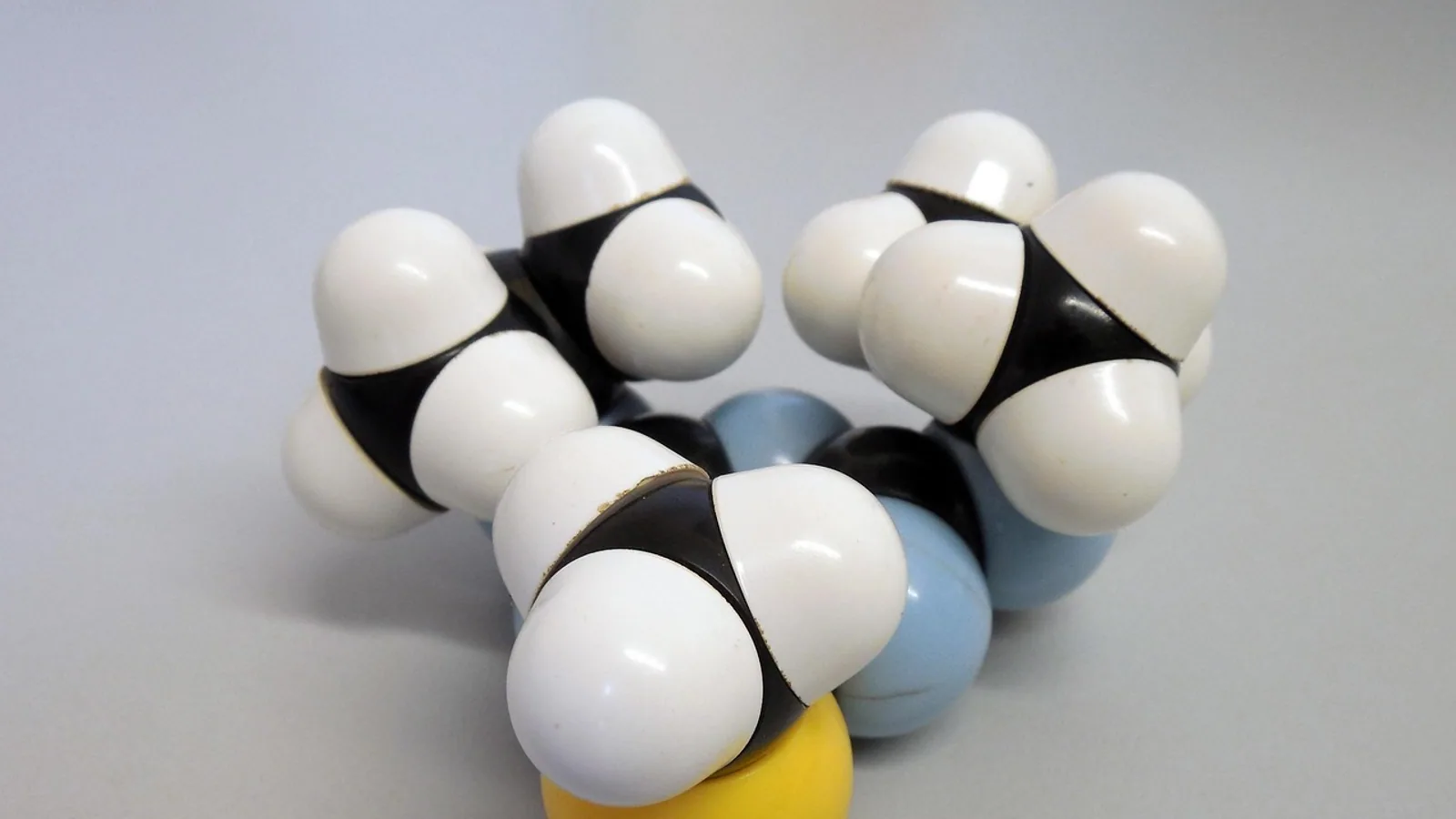
A molecule is the smallest stable unit of a substance that consists of two or more atoms held together by covalent bonds. The molecule def therefore rests on three ideas at once: a defined group of atoms, a chemical bond that holds them together, and a size small enough that the unit behaves as one particle.
That definition matters because almost every bench method in molecular biology, from a SERS sensor detecting hydrogen peroxide to a graph neural network predicting compound-protein affinity, is really a method for detecting, separating, or counting molecules. If you cannot say precisely what a molecule is, you cannot say what your assay is measuring.
Atom vs Molecule vs Compound
Three terms get mixed up constantly in first-year notes, so it helps to separate them cleanly.
An atom is a single unit of matter. It is one nucleus with its electrons, and it is the smallest unit that still carries the identity of an element. A lone gold atom, a lone oxygen atom, and a lone carbon atom are all atoms.
A molecule is two or more atoms joined by covalent bonds. The atoms can be the same element or different elements. What defines a molecule is the covalent linkage, not the identity of the atoms.
A compound is a substance made of atoms of two or more different elements combined in a fixed ratio. Water (H2O), glucose (C6H12O6), and ammonia (NH3) are compounds.
The rule that resolves most confusion
All compounds are molecules, but not all molecules are compounds.
Oxygen gas (O2) is a molecule because two oxygen atoms are covalently bonded. It is not a compound, because both atoms are the same element. Nitrogen gas (N2) behaves the same way. Ozone (O3) is a molecule of a single element. So is white phosphorus (P4) and sulfur (S8).
This is the single most tested distinction in introductory chemistry and biochemistry, and it is worth stating as a rule you can apply without hesitation: if the atoms are identical, you have a molecule but not a compound. If the atoms differ, you have both.
Why the distinction is not pedantic
The distinction matters in the lab because it changes how you calculate and how you report. A container of pure O2 is a collection of molecules of one element. A container of NaCl is not a collection of molecules at all in the strict sense, because sodium chloride is an ionic lattice rather than discrete covalent units. That is why molecular weight is straightforward to state for O2 but requires care for ionic salts.
What Counts as a Molecule (and What Does Not)
The molecule definition has boundaries, and knowing them prevents errors in calculation and in writing.
Counts as a molecule:
- Diatomic gases such as H2, O2, N2, and Cl2
- Water, H2O
- Carbon dioxide, CO2
- Glucose and other monosaccharides
- Amino acids and short peptides
- Nucleotides and polynucleotides
- Proteins and nucleic acids
- Most lipids, including fatty acids and triglycerides
Does not count as a molecule in the strict sense:
- A single atom of helium or neon (these are atoms, and the noble gases are monatomic)
- An ionic lattice such as solid NaCl, which is a repeating array of ions rather than discrete covalent units
- A free ion in solution, such as Na+ or Cl-, which is a charged particle
The reason ionic solids are excluded is that the definition hinges on covalent bonds. In an ionic solid, the attraction is electrostatic between oppositely charged ions, and there is no discrete unit you can point to and call "the molecule." In the gas phase, NaCl can exist as a discrete diatomic unit, and in that state it is reasonable to call it a molecule, but the solid is a lattice.
Molecular weight and the dalton
Molecular weight is expressed in daltons (Da), also called atomic mass units. One dalton is defined as one-twelfth the mass of a carbon-12 atom.
The molecular weight of a molecule is the sum of the atomic weights of all its atoms. Water is about 18 Da. Glucose is about 180 Da. A single amino acid is roughly 110 Da on average, which is why a 100-residue protein is roughly 11,000 Da, or 11 kDa.
The dalton is the working unit of protein biochemistry. A protein domain can be described by its mass, as in a 14 kDa BRICHOS domain, which is a compact folded module found in ten human protein families and studied for its ability to prevent amyloid toxicity [1]. When you read that a peptide blocks a channel at picomolar doses, as margatoxin does against voltage-gated K+ channels, the mass and the dose are both reported in units that trace back to the dalton and the mole [2].
Macromolecules are polymers of smaller molecules
A macromolecule is a large molecule, generally above roughly 1,000 Da, built by joining smaller units. The smaller units are called monomers, and the large product is a polymer.
This is the organizing principle of biological molecules:
- Proteins are polymers of amino acids
- Nucleic acids are polymers of nucleotides
- Polysaccharides are polymers of monosaccharides
- Triglycerides are built from glycerol and fatty acids
The bond that links monomers differs by class. Amino acids are joined by peptide bonds, nucleotides by phosphodiester bonds, and monosaccharides by glycosidic bonds. Each bond forms by removing a water molecule, a reaction called condensation, and each bond can be broken by adding water back, a reaction called hydrolysis.
Summary Table: Molecule Type, Building Blocks, and Example
| Molecule type | Building block (monomer) | Example | Approximate size |
|---|---|---|---|
| Water | Not a polymer | H2O | 18 Da |
| Monosaccharide | Not a polymer | Glucose | 180 Da |
| Disaccharide | Two monosaccharides | Sucrose | 342 Da |
| Amino acid | Not a polymer | Glycine | 75 Da |
| Peptide | Amino acids | Margatoxin | Several kDa |
| Protein | Amino acids | Bri2 BRICHOS domain | 14 kDa [1] |
| Nucleotide | Not a polymer | ATP | 507 Da |
| Nucleic acid | Nucleotides | Genomic DNA | Millions of Da |
| Fatty acid | Not a polymer | Palmitic acid | 256 Da |
| Triglyceride | Glycerol plus three fatty acids | Triolein | 885 Da |
| Phospholipid | Glycerol, two fatty acids, phosphate | Phosphatidylcholine | Roughly 760 Da |
The Main Classes of Biological Molecules
Water
Water is the most abundant molecule in living systems and the solvent for nearly all biochemistry. It is a polar molecule, meaning charge is unevenly distributed, with a partial negative charge on oxygen and partial positive charges on the two hydrogens. That polarity is what makes water dissolve salts and sugars, and it is what drives hydrophobic interactions among lipids and protein cores.
Water is also a reactant. Every condensation reaction that builds a polymer releases water, and every hydrolysis reaction that breaks one consumes it.
Carbohydrates
Carbohydrates are molecules built from carbon, hydrogen, and oxygen, usually in a ratio near 1:2:1. The simplest are monosaccharides, single sugar units such as glucose, fructose, and galactose. Two monosaccharides joined form a disaccharide, such as sucrose or lactose. Long chains form polysaccharides, such as starch, glycogen, and cellulose.
Glucose is the central fuel molecule of metabolism. Its molecular formula is C6H12O6, and its molecular weight is about 180 Da. Cells oxidize glucose to extract energy, and the nervous system depends on a steady supply of it.
Amino acids and proteins
An amino acid has a central carbon bonded to an amino group, a carboxyl group, a hydrogen, and a side chain. Twenty standard amino acids are used to build proteins, and the side chain is what makes each one different in charge, size, and polarity.
Amino acids link into chains called peptides, and longer chains fold into proteins. Proteins carry out most of the work in a cell: they catalyze reactions as enzymes, move cargo, transmit signals, and provide structure.
Protein size spans a wide range. A small peptide such as margatoxin, isolated from scorpion venom, is a polypeptide with high selectivity for a specific ion channel and activity at picomolar doses [2]. At the other end, a folded domain such as the 14 kDa BRICHOS module represents a compact functional unit within a larger protein [1]. Proteins are also the material of engineered interfaces, where they can be organized into ultrathin films at air-water and solid-liquid boundaries, a field sometimes described as protein nanoarchitectonics [3].
Nucleotides and nucleic acids
A nucleotide has three parts: a nitrogenous base, a five-carbon sugar, and one or more phosphate groups. Nucleotides serve two roles. As monomers, they build nucleic acids. As free molecules, they carry energy and signal. ATP is the universal energy currency of the cell.
Nucleic acids are polymers of nucleotides. DNA stores genetic information, and RNA carries and interprets it. Both are long, and both are informational, meaning their sequence of bases encodes something. Scorpion venoms, for example, contain nucleotides alongside polypeptides, mucoproteins, and lipids, which is a reminder that nucleotides appear in contexts far beyond the nucleus [2].
Lipids
Lipids are molecules that are largely hydrophobic, meaning they do not dissolve well in water. They include fatty acids, triglycerides, phospholipids, and steroids.
Fatty acids are chains of carbon and hydrogen ending in a carboxyl group. Triglycerides are three fatty acids attached to a glycerol backbone, and they store energy densely. Phospholipids have a hydrophilic head and two hydrophobic tails, which is why they spontaneously form bilayers, the structural basis of every cell membrane.
Lipids also serve as signaling molecules and as components of drug delivery systems. Liposomes, which are lipid bilayer vesicles, are one of the shuttle strategies explored for carrying biological drugs across the blood-brain barrier [1].
How Molecules Are Observed and Measured in Practice
You rarely see a single molecule with your eyes. Instead, you infer molecules from their behavior in an instrument.
Mass spectrometry measures the mass-to-charge ratio of ionized molecules. It reports molecular weight directly and is the standard way to confirm the identity of a peptide or small molecule.
Spectroscopy measures how molecules interact with light. Raman spectroscopy, for example, detects the vibrational signature of a molecule. A hydrogel-confined nanozyme-SERS platform uses Au@Pt nanozymes inside PEGDA microbeads to catalyze the oxidation of TMB by hydrogen peroxide into a Raman-active product, which is then read by SERS [4]. The design works because the hydrogel matrix lets small molecules such as H2O2 diffuse in quickly while excluding macromolecular interferents, which improves signal stability in complex biological samples [4].
Chromatography separates molecules by properties such as size, charge, or hydrophobicity. It is how you purify a protein away from thousands of contaminating molecules.
Computational prediction infers molecular behavior from structure. Graph neural networks can be trained on pairs of molecules with activity cliffs to predict compound-protein affinity, reported as IC50, and to highlight the molecular substructures most relevant to the difference in activity [5]. This is a molecular-level method that never puts a sample in a tube.
Atomistic simulation models molecules in motion. All-atom simulations of uranyl ions (UO2^2+) in a biphasic extraction system use pair correlation functions between the uranium atom and oxygen atoms of the phosphoryl group of a TiAP molecule to describe structure at the molecular level [6]. The same approach tracks how the first peak height of the U-OP correlation changes with acid concentration, mirroring the distribution coefficient of the uranyl ion [6].
These methods share a common logic. Each one asks a question about molecules and answers it with a physical or computational measurement.
Molecules in Catalysis and Environmental Chemistry
Molecules are not only the subject of study. They are also the tools.
In catalysis, the identity and position of individual atoms within a molecule determine performance. Doping ZSM-5 molecular sieves with transition metals such as Cu, Cr, Fe, Co, and Mn by substituting lattice Si4+ ions changes how surface reactive oxygen species reach organic receptors [7]. The shortened migration pathway improves catalytic oxidation of dichloromethane and reduces chlorine deposition, which is a molecular-level explanation for a macroscopic performance gain [7].
In environmental chemistry, the behavior of a molecule near a surface governs whether it can be removed from water. Per- and polyfluoroalkyl substances, often called forever chemicals, adsorb to solid surfaces through a combination of interactions that depend on the structure and chemistry of both the molecule and the surface [8]. Understanding adsorption at the molecular level is what makes remediation strategies testable [8].
In both cases, the practical question reduces to the same thing: what is the molecule, and how does it interact with its surroundings.
Common Mistakes and Limitations
Mistake 1: Treating every atom cluster as a molecule. Ionic solids are lattices, not discrete molecules. Do not report a formula unit of NaCl as a molecular weight without noting the distinction.
Mistake 2: Assuming molecule and compound are synonyms. They are not. O2 is a molecule but not a compound. This error shows up in exam answers and in lab reports.
Mistake 3: Confusing molecular weight with molar mass. Numerically they are the same for a given molecule, but the units differ. Molecular weight is reported in daltons, and molar mass is reported in grams per mole. A protein of 14 kDa has a molar mass of 14,000 g/mol.
Mistake 4: Forgetting that macromolecules are polymers. A protein is not a single large blob. It is a chain of amino acids, and its properties depend on the sequence of those monomers.
Mistake 5: Assuming a bigger molecule is always more important. Small molecules such as H2O2 carry enormous biological weight. Hydrogen peroxide is a central oxidative biomarker of inflammation, and detecting it reliably in complex biological systems is a genuine analytical challenge that motivates dedicated sensor platforms [4].
Mistake 6: Overlooking the solvent. In biological systems, the solvent is usually water, and water is itself a molecule that participates in reactions. Ignoring it leads to errors in mass balance for condensation and hydrolysis.
Limitations of the definition itself. The covalent-bond definition works well for most biological molecules, but it does not cleanly cover ionic compounds, coordination complexes, or noble gas atoms. For those cases, the field uses broader language such as "chemical species." When you write, state which definition you are using.
Quick Review
- A molecule is two or more atoms held together by covalent bonds.
- An atom is a single unit. A compound contains atoms of two or more different elements.
- All compounds are molecules, but not all molecules are compounds. O2 and N2 are molecules but not compounds.
- Molecular weight is reported in daltons. Water is about 18 Da and glucose is about 180 Da.
- Macromolecules are polymers of smaller monomers. Proteins come from amino acids, nucleic acids from nucleotides, and polysaccharides from monosaccharides.
- The main biological molecule classes are water, carbohydrates, amino acids and proteins, nucleotides and nucleic acids, and lipids.
- Molecules are measured by mass spectrometry, spectroscopy, chromatography, and increasingly by computational prediction and simulation.
Frequently Asked Questions
What is the simplest definition of a molecule?
A molecule is two or more atoms joined by covalent bonds. The atoms may be the same element, as in O2, or different elements, as in H2O.
Is every molecule a compound?
No. A compound must contain atoms of at least two different elements. O2 and N2 are molecules but not compounds because each contains only one element.
What is the difference between an atom and a molecule?
An atom is a single unit of matter, one nucleus with its electrons. A molecule is a group of two or more atoms bonded together.
Are proteins molecules?
Yes. Proteins are large molecules, specifically macromolecules, built as polymers of amino acids. A small protein domain can be around 14 kDa [1].
What unit is molecular weight measured in?
Molecular weight is measured in daltons (Da). One dalton is one-twelfth the mass of a carbon-12 atom.
Are all biological molecules polymers?
No. Water, glucose, amino acids, nucleotides, and fatty acids are biological molecules but not polymers. Proteins, nucleic acids, and polysaccharides are polymers.
Related Articles
- Nucleotide Molecule: Structure, Types, and Functions in DNA and RNA
- Epigenetic Modification: Types, Mechanisms, and Examples
- Epigenetic Factors: Types, Mechanisms, and Examples
- What is a Stimulus in Biology? Definition, Types & Response Examples
- Competition in Biology: Definition, Types, and Examples
- biology def
- Biome Definition: Types and Key Examples
- Inhibitor Definition: Types and Examples in Biology
- Ionic Chemical Bond: Definition, Formation, and Examples
Sources
- From Spider Webs to Brains: Can the Bri2 BRICHOS Molecular Chaperone Domain Transport Biological Drugs Into the Central Nervous System?
- Margatoxin Peptide: Preparation and the Potential Use for Biological Applications in Cancer and Neurological Disorders.
- Protein nanoarchitectonics at liquid-related interfaces: physicochemical communications with biological processes.
- Hydrogel Microbead-Confined Nanozyme-SERS Sensor for Robust Detection of Hydrogen Peroxide in Complex Biological Systems.
- Structure-Aware Compound-Protein Affinity Prediction via Graph Neural Networks with Group Lasso Regularization.
- Micro-structural analysis of aqueous uranyl ions (UO(2)(2+)) during the course of forward and back extraction in A biphasic system using all atom atomistic simulations.
- A novel method of shortening the pathway between surface reactive oxygen species and organic receptors under surface lattice metal atom substitution over HZSM-5 for intensifying catalytic oxidation CH(2)Cl(2).
- Adsorption of Forever Chemical Pollutants: The Physical Chemistry of PFAS Near Surfaces.