Is Pothos Toxic to Cats? Symptoms and Safety Steps
By Dr. Zubair Khalid, DVM, MS, PhD ·
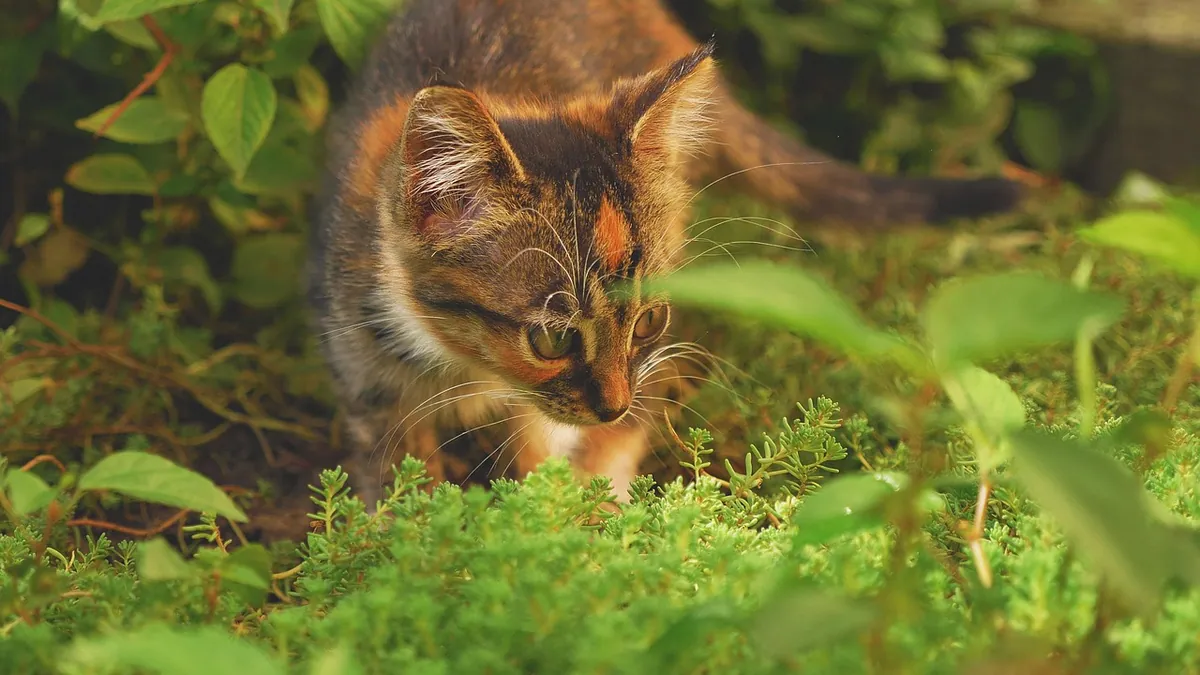
Is pothos toxic to cats? Yes. Every common pothos in American homes, including golden pothos and satin pothos, contains insoluble calcium oxalate crystals that injure a cat's mouth and digestive tract on contact [1][2]. The good news is that most exposures cause pain and drooling instead of lasting organ damage, and knowing what to watch for helps you act fast.
This article is educational and is not a substitute for veterinary diagnosis or treatment.
Quick Answer
- Pothos is toxic to cats because of insoluble calcium oxalate crystals, not a poison that spreads through the body [1][2].
- Chewing any part of the plant, including leaves and stems, causes immediate oral burning, drooling, and pawing at the mouth [1].
- Satin pothos (Scindapsus pictus) carries the same toxic principle and the same signs as golden pothos [2].
- If your cat bites or swallows pothos, call your veterinarian, the ASPCA Animal Poison Control Center at (888) 426-4435, or Pet Poison Helpline at (855) 764-7661.
- Do not make your cat vomit unless a veterinarian tells you to.
Is Pothos Toxic to Cats? What the ASPCA Says
The ASPCA classifies golden pothos (Epipremnum aureum) as toxic to both cats and dogs [1]. Its other common names include devil's ivy, taro vine, and ivy arum, so a plant label may not say "pothos" at all [1]. The toxic principle listed is insoluble calcium oxalates, and the expected signs are oral irritation, intense burning of the mouth, tongue, and lips, excessive drooling, vomiting, and difficulty swallowing [1].
Satin pothos, also called silk pothos, is a different species (Scindapsus pictus) in the same plant family, Araceae [2]. The ASPCA lists it as toxic to cats, dogs, and horses, again because of insoluble calcium oxalate crystals, with signs of oral irritation, pain and swelling of the mouth, tongue, and lips, drooling, vomiting, and trouble swallowing [2].
So when owners ask "is pothos ivy toxic to cats," the answer is the same whether the plant is a golden pothos, a satin pothos, or a cutting labeled "epi pothos." All of these are aroids, and all of them contain the same irritating crystals [1][2].
Which Parts of the Plant Matter?
Every above-ground part of the plant can contain calcium oxalate crystals. That includes leaves, stems, and new growth. The crystals are bundled inside specialized cells, and when a cat bites down, those cells rupture and release the crystals into the mouth.
Dried or fallen leaves still matter. A cat who bats a dead leaf around and chews it can get the same mouth pain. Water from a vase or saucer is not a known toxin source on its own, but a cat drinking from a saucer where plant material has been sitting may still swallow stray crystals.
Are Pothos Toxic to Cats If Not Ingested?
No. If your cat only brushes against a pothos leaf, sniffs it, or sits beside the pot, there is no toxic exposure. The crystals have to contact moist tissue, meaning the mouth, tongue, lips, or throat, to cause harm [1][2]. Skin contact with intact leaves is not a reported problem.
That said, a cat who rubs against a plant and then grooms the fur may transfer plant sap to the mouth. If you see chewed edges on leaves, treat it as an exposure even if you did not watch it happen.
The Toxic Principle: How Calcium Oxalate Crystals Work
Insoluble calcium oxalate crystals are microscopic, needle-shaped structures. They are not absorbed into the bloodstream in a meaningful way, and they do not cause the kind of internal poisoning that, say, antifreeze does. Instead, they act like tiny shards of glass on any wet surface they touch.
When a cat bites a pothos leaf, the crystals pierce the lining of the mouth, tongue, and lips. That mechanical injury triggers intense burning and pain within seconds to minutes [1]. The cat often drops the plant, paws at its face, and starts drooling heavily. Swelling can follow, and if plant material is swallowed, the crystals can irritate the throat and stomach, leading to vomiting and difficulty swallowing [1][2].
This mechanism explains why the signs are so immediate and so focused on the mouth. It also explains why most cats who taste a pothos leaf once do not go back for a second bite.
It is worth separating this from other oxalate concerns. Calcium oxalate also appears in the body in different contexts, such as kidney injury from ethylene glycol poisoning, where calcium oxalate crystals deposit in kidney tissue [3]. That is a completely different process from chewing a houseplant, and it does not mean your cat's pothos bite will harm the kidneys. Calcium oxalate stones in the urinary tract are another separate issue, studied in cats with renal disease and uroliths [4]. A pothos exposure does not cause bladder stones.
Signs of Pothos Poisoning in Cats and the Timeline
Signs usually start within minutes of chewing. The most common early signs are:
- Pawing at the mouth or face
- Drooling, sometimes profuse
- Crying out or backing away from food
- Redness or visible swelling of the lips, tongue, or gums
- Refusing to eat or drink
If plant material is swallowed, you may see vomiting and difficulty swallowing [1][2]. Some cats develop swelling serious enough to affect the airway, though this is uncommon with a single small bite.
Most mild cases peak within the first 30 to 60 minutes and begin to settle over a few hours as the crystals are diluted and washed away by saliva. Cats who swallowed a larger amount may vomit for several hours and stay uncomfortable longer. If signs are still going strong after a few hours, or if they are getting worse instead of better, that is a reason to seek care.
What to Do Right Now
First, move your cat away from the plant and check the mouth if you can do so safely. Do not put your fingers deep into the mouth of a painful cat, because you may be bitten.
Call for guidance. Your options are your own veterinarian, the ASPCA Animal Poison Control Center at (888) 426-4435, or Pet Poison Helpline at (855) 764-7661. Have the plant name ready, along with your cat's weight and an estimate of how much was chewed.
Do not induce vomiting unless a veterinarian tells you to. Vomiting will not remove crystals that are already embedded in the mouth, and forcing it can add more irritation to an already painful throat.
You can offer a small amount of water or milk to help rinse the mouth, but do not force fluids. If your cat is drooling heavily or having trouble swallowing, skip oral rinsing and go straight to the vet.
Veterinary Treatment for Pothos Exposure
Treatment depends on how much your cat chewed and how severe the signs are. For mild cases, a veterinarian may simply rinse the mouth, give pain relief, and send your cat home with instructions to monitor eating and drinking.
For more painful or swollen mouths, treatment may include:
- Intravenous fluids if your cat will not drink
- Medication for pain and swelling
- Medication to settle nausea and vomiting
- A soft or liquid diet until the mouth heals
- A mouth exam under sedation if swelling is significant
Antidotes are not part of pothos treatment, because there is no circulating toxin to neutralize. Care is supportive and aimed at comfort, hydration, and protecting the airway. Any medication dose is calculated by your veterinarian based on your cat's weight and health, so never give human pain relievers at home. Several common human pain medications are dangerous to cats.
Outlook After a Pothos Exposure
The outlook is generally good. Most cats who chew a pothos leaf recover fully within a day or two with supportive care, and many improve on their own within hours. Serious complications are uncommon and usually relate to severe swelling or a cat who refuses to eat or drink for long enough to become dehydrated.
Cats with pre-existing kidney disease, heart disease, or a history of urinary problems deserve a closer look, since dehydration and stress can worsen their baseline condition. If your cat has any chronic illness, call your veterinarian even if the mouth signs look mild.
Prevention and Safer Alternatives
The simplest fix is to remove pothos from areas your cat can reach. Hanging the plant higher is not always enough, since many cats can jump and swat. A closed room or a sturdy cabinet works better.
If you want to keep pothos, consider these steps:
- Place it where your cat cannot climb, such as a room with a closed door
- Pick up fallen leaves and trimmings right away
- Cover the soil so your cat cannot dig
- Offer cat-safe plants and cat grass as a substitute to chew on
If you are building a cat-safe plant collection, our guide to Plants Toxic To Cats covers the common offenders, and What Plants Can Be Toxic To Cats explains how to read plant labels. If you are choosing flowers for a gift or arrangement, Flowers That Are Toxic To Cats is a good starting point. For a truly low-risk houseplant, orchids are a popular option, as covered in Are Orchids Toxic To Cats.
Limitations and When to Contact a Veterinarian
This article covers the typical picture for a healthy adult cat who chews a pothos plant. Individual cases need a veterinarian, because swelling, pain tolerance, and underlying health vary from cat to cat.
Call your veterinarian the same day if your cat chewed pothos and is drooling, pawing at the mouth, or refusing food, even if the signs seem mild.
Go to an emergency clinic now if you see any of these:
- Trouble breathing, noisy breathing, or a blue tint to the gums
- Swelling that seems to be closing the throat
- Repeated vomiting that will not stop
- Collapse, weakness, or extreme lethargy
- Signs that keep getting worse after an hour or two
Schedule a routine visit if your cat had a brief mouth reaction that has fully resolved, just to confirm healing and check for any missed plant material.
Frequently Asked Questions
Is pothos toxic to cats according to the ASPCA?
Yes. The ASPCA lists golden pothos and satin pothos as toxic to cats because of insoluble calcium oxalate crystals [1][2]. The expected signs are mouth irritation, drooling, vomiting, and difficulty swallowing.
Is silver pothos toxic to cats?
Yes. Silver pothos is another common name for satin pothos (Scindapsus pictus), which the ASPCA lists as toxic to cats [2]. It contains the same calcium oxalate crystals and causes the same mouth pain and drooling.
Is epi pothos toxic to cats?
Yes. "Epi pothos" is a nickname for Epipremnum, the same genus as golden pothos, which is listed as toxic to cats [1]. Treat any plant sold under an epi or pothos name as a toxic aroid.
Will my cat die from eating a pothos leaf?
Death is very unlikely from a typical pothos bite. The crystals cause local pain and swelling instead of organ damage, and most cats recover with supportive care [1][2]. The main risks are severe airway swelling and dehydration from refusing to eat or drink.
Can I just watch my cat at home after a pothos bite?
You can watch a cat who had a brief mouth reaction and is now eating and drinking normally, but call your veterinarian or a poison control line first for advice. Seek care right away if your cat is drooling heavily, vomiting, breathing oddly, or will not eat.
Related Articles
- Are Lilies Toxic to Cats?
- Plants Toxic To Cats
- Flowers That Are Toxic To Cats
- What Plants Can Be Toxic To Cats
- Are Orchids Toxic To Cats
- What Flowers Are Toxic To Cats
- Is Monstera Toxic to Cats? Varieties and Symptoms
- Are Calla Lilies Toxic to Cats? Symptoms and Care
- Are Begonias Toxic to Cats? Types and Symptoms
References
- Toxic and Non-toxic Plants: Golden Pothos. ASPCA Animal Poison Control Center.
- Toxic and Non-toxic Plants: Satin Pothos. ASPCA Animal Poison Control Center.
- Ethylene glycol poisoning in a free-roaming cat associated with suspected animal cruelty: a forensic veterinary case report in South Korea. Frontiers in veterinary science, 2026.
- Urine metabolomic changes in cats with renal disease or calcium oxalate uroliths. PloS one, 2025.