Is Ivy Toxic to Cats? English, Devil's and Swedish Ivy
By Dr. Zubair Khalid, DVM, MS, PhD ·
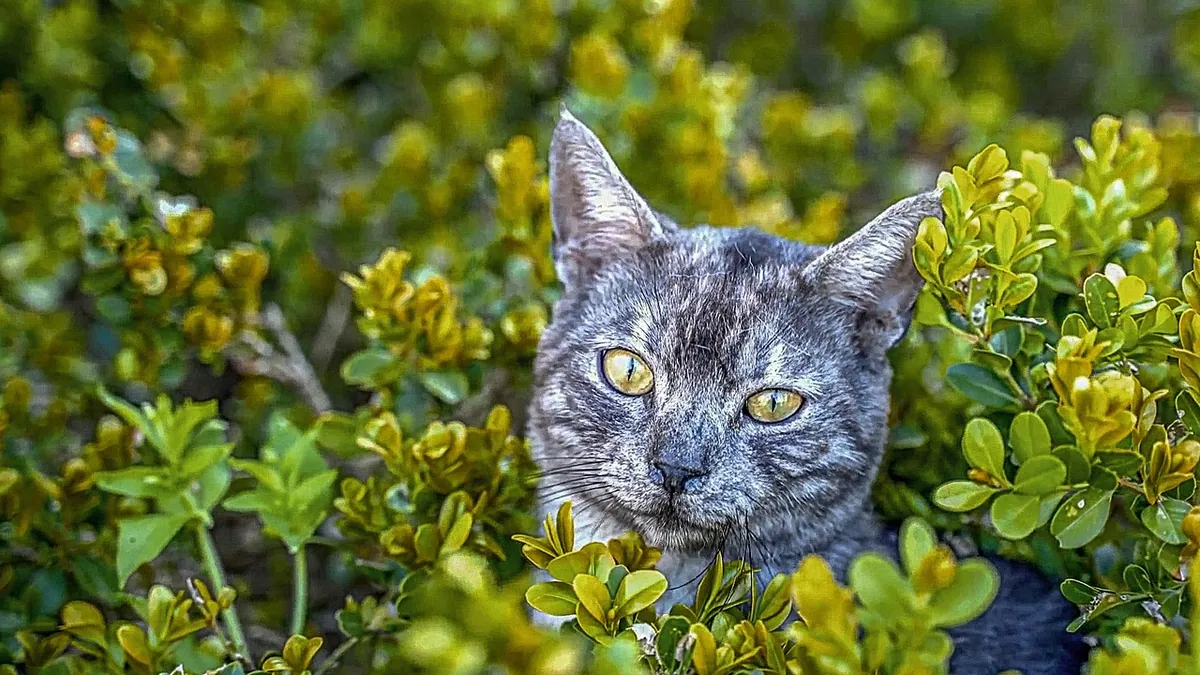
Is ivy poisonous to cats? It depends entirely on which plant you mean. True ivies in the genus Hedera, including English ivy and its variegated forms, are toxic to cats, while Swedish ivy is considered non-toxic [1][2]. Because the word "ivy" gets attached to so many unrelated plants, the name on the tag matters more than the shape of the leaf.
This article is educational and is not a substitute for veterinary diagnosis or treatment.
Quick Answer
- English ivy (Hedera helix) is toxic to cats, and the foliage is more toxic than the berries [2].
- Swedish ivy (Plectranthus australis) is listed as non-toxic to cats, dogs, and horses [1][3].
- The toxic principle in English ivy is triterpenoid saponins, specifically hederagenin [2].
- Expected signs after eating English ivy include vomiting, abdominal pain, drooling, and diarrhea [2].
- If your cat ate ivy and is vomiting or drooling, call your veterinarian or the ASPCA Animal Poison Control Center at (888) 426-4435 right away. Do not make your cat vomit unless a veterinarian tells you to.
Which Ivies Are Toxic to Cats?
The word "ivy" is a common name, not a scientific category. That is why two plants sitting side by side at a garden center can carry completely different risks for your cat.
Is English ivy toxic to cats?
Yes. English ivy is toxic to cats, dogs, and horses [2]. It also goes by branching ivy, glacier ivy, needlepoint ivy, sweetheart ivy, and California ivy, and all of these are the same species, Hedera helix [2]. The plant belongs to the Araliaceae family [2].
Is common ivy toxic to cats?
Yes. Common ivy is another everyday name for Hedera helix, the same plant as English ivy [2]. If a label says "common ivy," treat it exactly like English ivy.
Is variegated English ivy toxic to cats?
Yes. Variegated English ivy is still Hedera helix. The white or yellow edges on the leaves are a color variation, not a change in the plant's chemistry. The toxic principle, triterpenoid saponins including hederagenin, is present in the plant itself [2]. The ASPCA lists variegated cultivars such as glacier ivy and needlepoint ivy under the same toxic plant record as English ivy [2].
Is devil's ivy toxic to cats?
"Devil's ivy" is a common nickname for pothos (Epipremnum aureum), which is a different plant from English ivy. Pothos contains insoluble calcium oxalate crystals, and chewing it typically causes intense mouth irritation, drooling, and pawing at the mouth. If your cat chewed a plant sold as devil's ivy and is drooling or holding its mouth oddly, treat it as a plant exposure and call for advice. For a broader look at which houseplants cause problems, see Plants Toxic To Cats.
Is Swedish ivy toxic to cats?
No. Swedish ivy (Plectranthus australis) is listed as non-toxic to dogs, cats, and horses [1]. The white edged Swedish ivy carries the same non-toxic listing [3]. Swedish ivy is also called creeping Charlie, which is a name shared with other plants, so confirm the scientific name when you can [1][3].
One caution about common names. "Creeping Charlie" can refer to Swedish ivy, which is non-toxic, or to ground ivy (Glechoma hederacea), a different plant in the mint family. This is exactly why plant identification matters when a cat has chewed something.
The Toxic Principle in English Ivy and What It Does
English ivy contains triterpenoid saponins, with hederagenin named as the toxic principle [2]. Saponins are soap-like compounds. When a cat chews and swallows plant material, these compounds irritate the lining of the mouth and the gastrointestinal tract. That irritation is what drives the drooling, vomiting, and stomach discomfort owners typically see.
The foliage is more toxic than the berries [2]. That matters because cats usually chew leaves, and leaves are the part most likely to be within reach on a windowsill or a trellis.
Plant poisonings in cats are a real and recognized problem. An Italian survey of calls to a poison control center over a 12 year period found that cats made up 26 percent of plant poisoning inquiries, second only to dogs [4]. Most of those exposures, 73.8 percent, caused mild to moderate signs, and among cases with a known outcome, 10.6 percent were fatal [4]. That overall picture is reassuring for mild exposures, but it also shows that plant ingestion is not something to shrug off.
Signs of Ivy Poisoning in Cats and How Fast They Appear
The classic signs of English ivy poisoning are vomiting, abdominal pain, hypersalivation (drooling), and diarrhea [2].
What you may see at home
- Drooling or foamy saliva, sometimes within minutes of chewing
- Vomiting, which may repeat
- Pawing at the mouth or lip smacking
- A tender or tense belly when you touch it
- Loose stool or diarrhea
- Reduced appetite or hiding
Timeline
Signs usually follow chewing and swallowing, so they tend to show up within a few hours. Drooling can start almost immediately because the mouth is the first tissue exposed. Vomiting and diarrhea typically develop over the next several hours. If your cat ate ivy and has no signs after a full day, serious poisoning is unlikely, but keep an eye out for a day or two, especially if you did not see how much was eaten.
When signs look different than expected
If your cat is drooling heavily, gagging, or pawing at its mouth but not vomiting, the plant may contain insoluble calcium oxalate crystals, as pothos does. If your cat shows weakness, wobbliness, or a slow heart rate, that points toward a different plant entirely, such as a grayanotoxin-containing plant in the Ericaceae family [5]. Grayanotoxin poisoning has been documented in companion animals including cats, and rhododendrons and Japanese pieris are the plants most often involved [5]. Those cases need emergency care.
What to Do Right Now If Your Cat Ate Ivy
- Move your cat away from the plant and pick up any chewed pieces so it cannot eat more.
- Identify the plant if you can. Photograph the leaves and the label. The scientific name is the most useful thing you can give your veterinarian.
- Call your veterinarian, the ASPCA Animal Poison Control Center at (888) 426-4435, or Pet Poison Helpline at (855) 764-7661. Have your cat's weight, age, and a rough estimate of how much plant material was eaten ready.
- Do not induce vomiting unless a veterinarian tells you to. Making a cat vomit at home can cause aspiration, choke the airway, or worsen irritation, and it is the wrong move for some plants.
- Do not give food, milk, oil, or home remedies to "soak up" the plant.
- Offer small amounts of water if your cat wants it, and keep your cat indoors and calm until you get advice.
If your cat is having trouble breathing, is collapsed, is having seizures, or cannot stop vomiting, skip the phone call and go straight to the nearest emergency veterinary hospital.
How Veterinarians Treat Ivy Poisoning in Cats
Treatment depends on how much was eaten, how long ago, and how sick your cat is. There is no antidote for English ivy saponins, so care is supportive.
Your veterinarian will start with a physical exam and a history. They may ask you to bring the plant or a photo. If the exposure was recent and your cat is stable, they may give a medication to induce vomiting in the clinic, where it can be done safely and monitored. After that, or if too much time has passed, they often give activated charcoal to bind remaining plant material in the gut.
From there, treatment is aimed at the signs. Fluids under the skin or into a vein help replace losses from vomiting and diarrhea. Anti-nausea medications and stomach protectants ease the irritation. Pain relief may be needed if the belly is sore. A cat with severe or persistent vomiting may need bloodwork to check electrolytes and hydration, and some cats need to stay for monitoring.
If your cat is stable and only drooling, your veterinarian may simply have you watch at home and call back if signs worsen. That decision is theirs to make based on the exam.
Outlook After Ivy Ingestion
Most cats that eat a small amount of English ivy do well with supportive care. In the broader picture of plant poisonings in pets, most exposures cause mild to moderate signs [4]. The cats at higher risk are those that eat a large amount, eat it repeatedly, or already have other health problems.
Death from plant poisoning does happen. In one survey, fatal cases made up 10.6 percent of plant poisoning cases with a known outcome [4]. That number covers all plants and both species, so it is not a prediction for your cat. It is a reminder to take the call seriously and not wait a day to see what happens.
Prevention and Safer Alternatives
The simplest prevention is to keep toxic ivies out of your cat's reach. English ivy is often grown as a hanging plant or trained on a trellis, and both setups put leaves at a height a cat can reach from a shelf or windowsill. If you keep English ivy, hang it where your cat cannot climb to it, or move it to a room your cat does not enter.
If you want a trailing plant that is safe around cats, Swedish ivy is a reasonable choice because it is listed as non-toxic to cats [1][3]. Other cat-friendly options include orchids, which are a common worry for owners but are generally not a poisoning risk. You can read more in Are Orchids Toxic To Cats.
A few practical habits help:
- Check the scientific name on the plant tag before you buy, not just the common name.
- Keep a photo of each plant label on your phone for quick reference.
- Offer your cat safe chewing outlets, such as cat grass or a catnip plant.
- Keep cut ivy clippings and floral arrangements out of reach, since the foliage is the most toxic part [2].
- If you have a kitten, be extra careful. Kittens explore with their mouths and are less cautious than adults. See House Plants Toxic To Kittens for a fuller list.
For a room by room review of what to remove or relocate, House Plants Toxic To Cat walks through common household plants.
Limitations and When to Contact a Veterinarian
This article covers the general pattern for ivy exposures. Your cat is an individual, and the amount eaten, the plant species, and your cat's health all change the picture. Individual cases need a veterinarian.
Call your veterinarian or a poison control line the same day if:
- You saw your cat chew English ivy, even if it seems fine right now
- Your cat is drooling, vomiting, or has diarrhea
- Your cat has a sore belly or is refusing food
- You are not sure which plant your cat ate
Go to an emergency veterinary hospital now if:
- Your cat is struggling to breathe
- Your cat is collapsed, weak, or cannot stand
- Your cat is having seizures or tremors
- Vomiting will not stop, or you see blood
- Your cat's heart rate seems very slow or very fast
Schedule a routine visit if your cat had a mild exposure days ago and has recovered, but you want a checkup or advice on which plants to keep at home.
Frequently Asked Questions
Can a cat survive eating English ivy?
Yes, most cats survive English ivy ingestion, especially with prompt supportive care. The risk rises with the amount eaten and how quickly treatment starts. Call your veterinarian or a poison control line right away if you saw your cat eat it.
Is devil's ivy the same as English ivy?
No. Devil's ivy is a nickname for pothos, which is a different plant with a different toxin. English ivy is Hedera helix and contains triterpenoid saponins including hederagenin.
Will my cat get sick from just one bite of ivy?
One bite often causes drooling and mouth irritation, and some cats vomit. A single small bite is usually not life threatening, but you should still call for advice because you cannot know how much was swallowed.
Should I make my cat throw up after eating ivy?
No, not unless a veterinarian tells you to. Inducing vomiting at home can cause choking or make mouth and throat irritation worse. Let a veterinarian decide whether vomiting is helpful in your cat's case.
Are all plants called ivy dangerous to cats?
No. Swedish ivy is listed as non-toxic to cats, while English ivy and its cultivars are toxic. The common name "ivy" is shared by many unrelated plants, so check the scientific name before you decide.
Related Articles
- Are Orchids Toxic To Cats
- Plants Toxic To Cats
- House Plants Toxic To Kittens
- Are Lilies Toxic to Cats?
- House Plants Toxic To Cat
- Are Spider Plants Toxic To Cats
- Is English Ivy Safe for Cats? Toxicity and Symptoms
- Is Hedera Ivy Toxic to Cats? English Ivy Poisoning
- Is Ivy Toxic to Dogs and Cats? What Owners Should Know
References
- Toxic and Non-toxic Plants: Swedish Ivy. ASPCA Animal Poison Control Center.
- Toxic and Non-toxic Plants: English Ivy. ASPCA Animal Poison Control Center.
- Toxic and Non-toxic Plants: White Edged Swedish Ivy. ASPCA Animal Poison Control Center.
- Plant poisoning in domestic animals: epidemiological data from an Italian survey (2000-2011). The Veterinary record, 2013.
- Grayanotoxin poisoning in animals following the ingestion of Ericaceae plants. Veterinary journal (London, England : 1997), 2026.