Is English Ivy Safe for Cats? Toxicity and Symptoms
By Dr. Zubair Khalid, DVM, MS, PhD ·
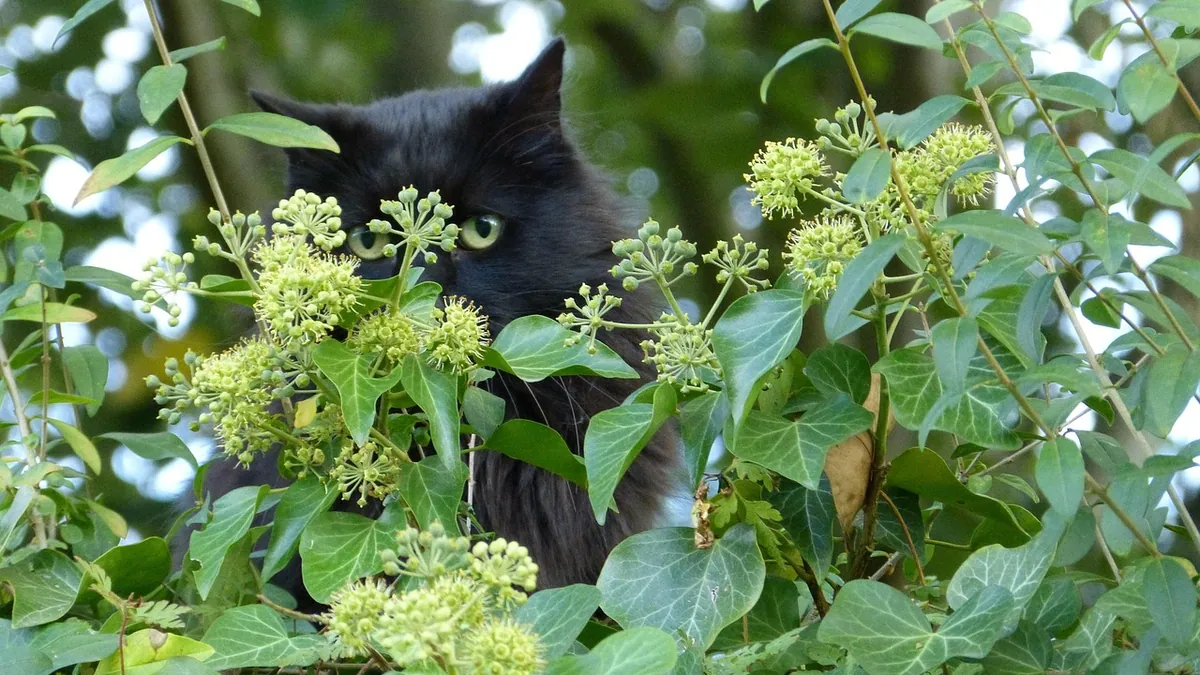
English ivy is not safe for cats. Every part of the plant contains toxic compounds, and eating even a small amount can make your cat drool, vomit, or develop stomach pain [1]. If you are asking "is English ivy ok for cats," the short answer is no, and the plant is best kept out of any home with a cat.
This article is educational and is not a substitute for veterinary diagnosis or treatment.
Quick Answer
- English ivy (Hedera helix) is listed as toxic to cats, dogs, and horses by the ASPCA Animal Poison Control Center [1].
- The leaves and stems are more toxic than the berries [1].
- Common signs include vomiting, abdominal pain, heavy drooling, and diarrhea [1].
- Skin contact with the sap can cause irritation, and some cats react after brushing against the plant.
- If your cat chewed or ate English ivy, call your veterinarian, the ASPCA Animal Poison Control Center at (888) 426-4435, or Pet Poison Helpline at (855) 764-7661 right away. Do not make your cat vomit unless a veterinarian tells you to.
Is English Ivy Toxic to Cats?
Yes. English ivy is toxic to cats [1]. The ASPCA Animal Poison Control Center lists Hedera helix, the scientific name for English ivy, as toxic to cats, dogs, and horses [1]. The plant also goes by other common names, including branching ivy, glacier ivy, needlepoint ivy, sweetheart ivy, and California ivy [1]. Hahn's self branching English ivy is the same species and carries the same toxicity warning [2].
This matters because English ivy is a popular houseplant and a common outdoor ground cover and climbing vine. Cats that live indoors may chew on trailing vines within reach. Cats with outdoor access may brush against or nibble ivy growing on fences, walls, or trees.
Which Parts Are Toxic?
The foliage is more toxic than the berries [1]. That means the leaves and stems carry the highest risk, which is bad news because those are the parts a cat is most likely to chew. The berries can still cause problems, so do not assume they are safe.
Are All Types of English Ivy a Problem?
The named varieties sold in garden centers are still Hedera helix, so the same toxicity applies. Hahn's self branching English ivy is listed separately by the ASPCA, and it is toxic to cats as well [2]. If a plant tag says "ivy" and the botanical name is Hedera helix, treat it as toxic.
Are Cats Allergic to English Ivy?
This is a common question, and the answer is that the problem is poisoning, not a true allergy. Cats are not described as allergic to English ivy in the standard toxicity references. Instead, the plant contains a toxic principle that causes direct harm after a cat eats it or contacts the sap [1]. The signs can look like an allergic reaction (drooling, vomiting, skin irritation), but the cause is the plant's chemistry, not an immune response.
What Makes English Ivy Toxic?
The toxic principle in English ivy is a group of compounds called triterpenoid saponins, with hederagenin named as the specific toxin [1]. Saponins are natural plant chemicals that foam when mixed with water, and they are irritating to mucous membranes. When a cat chews an ivy leaf, these compounds contact the mouth, throat, and stomach lining.
That irritation is what drives the classic signs. The mouth and throat sting, so the cat drools heavily. The stomach becomes irritated, so the cat vomits or shows abdominal pain. The intestines can be affected too, leading to diarrhea [1].
The same saponins can irritate skin and eyes. A cat that walks through ivy or rubs against broken stems may get sap on the coat and then groom it off, which can lead to mouth irritation even without a deliberate bite of the plant.
Signs of English Ivy Poisoning in Cats
The ASPCA lists vomiting, abdominal pain, hypersalivation (heavy drooling), and diarrhea as the expected clinical signs [1]. You may see one sign or several, depending on how much plant material your cat ate and how sensitive your cat is.
Common Signs to Watch For
- Drooling or foaming at the mouth
- Vomiting, sometimes repeated
- Pain or tenderness in the belly, which may show as pacing, hiding, or flinching when touched
- Diarrhea
- Pawing at the mouth or swallowing repeatedly
- Reduced appetite or refusing food
- Lethargy or unusual quietness
Skin and Eye Irritation
If your cat contacts the sap, you may see redness, swelling, or scratching at the skin. Eye contact can cause redness, tearing, and squinting. Rinse the area with plain water and call your veterinarian for guidance.
How Soon Do Signs Appear?
Signs usually appear within a few hours of exposure. Drooling often starts first because the mouth is the first point of contact. Vomiting and diarrhea tend to follow as the plant material moves through the stomach and intestines. If your cat ate a large amount, signs may come on faster and be more severe.
If your cat has not shown any signs within 12 to 24 hours after a known exposure, the risk of serious poisoning is lower, but you should still check in with your veterinarian. Cats can be sensitive to small amounts, and some signs are easy to miss.
What to Do Right Now
If you saw your cat chewing English ivy, or you suspect it, act quickly.
- Move your cat away from the plant.
- Remove any plant pieces from the mouth if you can do so safely. Do not put your fingers deep into the mouth of a cat that is stressed or in pain, because bites happen.
- Save a piece of the plant or take a photo. Your veterinarian or poison control will want to identify it.
- Call your veterinarian, the ASPCA Animal Poison Control Center at (888) 426-4435, or Pet Poison Helpline at (855) 764-7661.
- Do not induce vomiting unless a veterinarian tells you to. Making a cat vomit at home can cause choking, aspiration, or other harm, and it is not always the right move.
Be ready to share your cat's weight, age, health conditions, medications, how much plant you think was eaten, and when it happened. That information helps the veterinarian decide whether your cat needs to be seen.
If Your Cat Only Touched the Plant
If there was skin contact but no eating, rinse the coat with lukewarm water and mild pet-safe soap, then rinse well. Watch for drooling, vomiting, or skin redness. Call your veterinarian if signs appear.
How Veterinarians Treat English Ivy Poisoning
Treatment depends on how much your cat ate and how sick it is. There is no specific antidote for English ivy saponins, so care is supportive.
Your veterinarian may:
- Give activated charcoal or perform other decontamination steps if the exposure was recent and your cat is stable
- Give fluids under the skin or into a vein to correct dehydration from vomiting and diarrhea
- Give anti-nausea medication and stomach protectants
- Give pain relief for abdominal discomfort
- Run blood work to check electrolytes and organ function if your cat is very ill
The exact medications and doses are chosen by your veterinarian based on your cat's weight, age, and health. Never give human medications to a cat without veterinary direction, because several common pain relievers are highly toxic to cats.
If your cat has mouth or skin irritation, your veterinarian may recommend rinsing and a topical treatment. Eye irritation needs a veterinary exam, because eye damage can worsen quickly.
Outlook After Exposure
Most cats that eat a small amount of English ivy and receive prompt supportive care recover well. Signs often improve within 24 to 48 hours with treatment. Cats that eat a large amount, or that have other health problems, may need longer care and monitoring.
The outlook is worse if treatment is delayed, if your cat becomes severely dehydrated, or if there is a large exposure. That is why calling for advice early matters, even if your cat seems fine at first.
Preventing English Ivy Exposure
The simplest prevention is to keep English ivy out of your home and away from areas your cat can reach.
- Remove English ivy houseplants, or place them in a room your cat cannot enter.
- Check outdoor ivy on fences, walls, and trees. Trim it back or block access.
- Cover soil in planters so cats cannot dig, and pick up fallen leaves.
- Offer cat-safe plants and cat grass instead. Many common houseplants are also toxic, so check before you buy. Our guide to plants toxic to cats is a good starting point.
- If you want a flowering houseplant, orchids are a safer choice than ivy. See are orchids toxic to cats.
- Lilies are another plant to avoid completely. Learn why in are lilies toxic to cats.
If you are unsure whether a plant in your home is safe, ask your veterinarian or check a poison control plant list before bringing it inside. Indoor plant poisoning is a recognized risk for pets that spend most of their time in the home [3]. Common ornamental garden and house plants cause many of the documented poisoning cases in dogs and cats worldwide [4].
Limitations and When to Contact a Veterinarian
This article gives general information, but every cat is different. Your cat's weight, age, health history, and the amount of plant eaten all affect the risk. Individual cases need a veterinarian who can examine your cat and decide on treatment.
Contact your veterinarian the same day if your cat ate English ivy and is drooling, vomiting once or twice, or has mild diarrhea but is otherwise bright and alert.
Go to an emergency clinic now if your cat has repeated vomiting, cannot keep water down, has severe belly pain, is very lethargic, is breathing fast, has a swollen or painful abdomen, or is collapsing. These signs suggest a serious exposure or dehydration.
Schedule a routine visit if your cat had possible contact with ivy but seems normal. A quick exam and a weight check can confirm your cat is fine, and your veterinarian can help you plan how to remove the plant safely.
Frequently Asked Questions
Is English ivy ok for cats to chew on?
No. English ivy is toxic to cats, and chewing on the leaves or stems can cause drooling, vomiting, abdominal pain, and diarrhea. Keep the plant out of reach or remove it from your home.
What happens if my cat eats an English ivy leaf?
Most cats develop mouth irritation and drooling first, then vomiting or diarrhea. The leaves are more toxic than the berries, so even one leaf can cause signs. Call your veterinarian or a poison control line for advice.
Can English ivy cause a rash on my cat?
Yes. Contact with the plant's sap can irritate the skin and eyes. Rinse the area with plain water and watch for redness, swelling, or scratching, and call your veterinarian if it does not improve.
Do I need to make my cat vomit after eating English ivy?
No. Never induce vomiting unless a veterinarian tells you to. Home vomiting can cause choking or other harm, and it is not always the right treatment for this plant.
Are there cat-safe plants I can keep instead?
Yes, several houseplants are considered non-toxic to cats, including many orchids. Always check a reliable plant toxicity list before buying, because common plants like lilies are dangerous to cats.
Related Articles
- Are Orchids Toxic To Cats
- Are Lilies Toxic to Cats?
- Plants Toxic To Cats
- Houseplants Toxic To Cats Reddit
- What Plants Can Be Toxic To Cats
- Flowers That Are Toxic To Cats
- Is Ivy Toxic to Cats? English, Devil's and Swedish Ivy
- Is Hedera Ivy Toxic to Cats? English Ivy Poisoning
- Is Ivy Toxic to Dogs and Cats? What Owners Should Know
References
- Toxic and Non-toxic Plants: English Ivy. ASPCA Animal Poison Control Center.
- Toxic and Non-toxic Plants: Hahn's Self Branching English Ivy. ASPCA Animal Poison Control Center.
- Indoor Companion Animal Poisoning by Plants in Europe. Frontiers in veterinary science, 2020.
- Potential plant poisonings in dogs and cats in southern Africa. Journal of the South African Veterinary Association, 2009.