Is Chlorine Toxic to Cats? Pools, Water, and Gas
By Dr. Zubair Khalid, DVM, MS, PhD ·
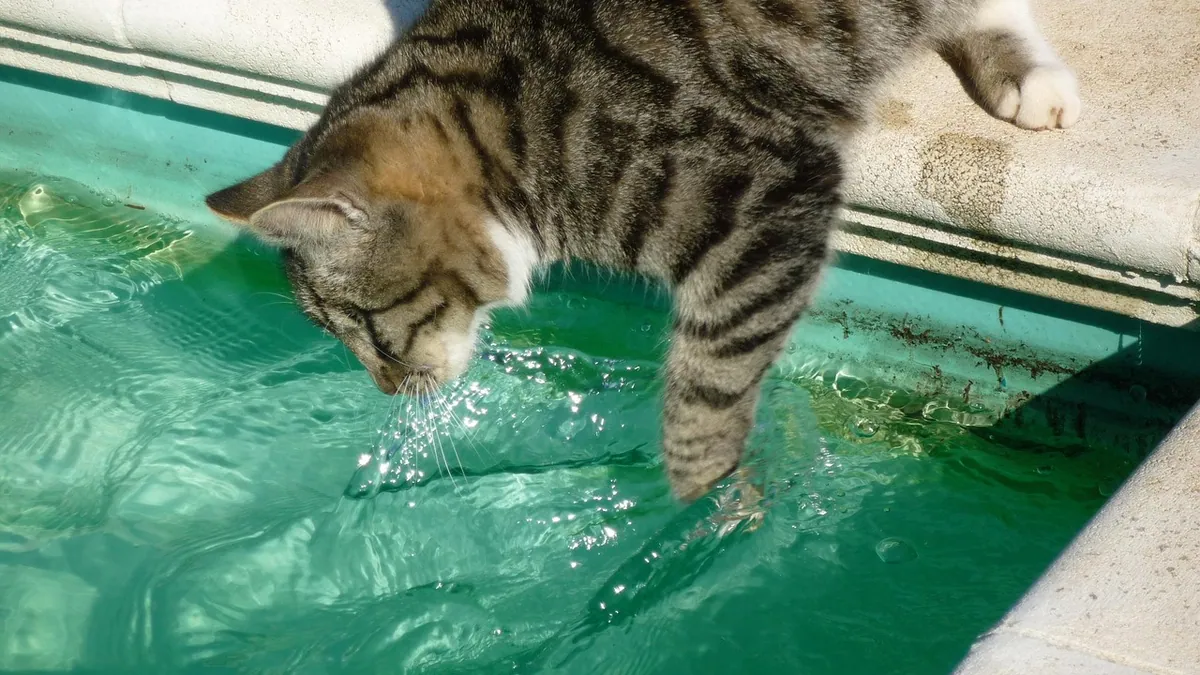
Is chlorine toxic to cats? Yes, but the answer depends entirely on the form and the amount. A few laps of properly chlorinated pool water is usually not a crisis, while chlorine gas, pool tablets, and household bleach can cause serious injury. This article is educational and is not a substitute for veterinary diagnosis or treatment.
Quick Answer
- Diluted pool water at normal levels (1 to 4 parts per million) is not immediately dangerous if your cat takes a few sips [1].
- Chlorine tablets and other concentrated pool chemicals are corrosive and can burn the mouth, throat, and stomach [1].
- Chlorine gas irritates the airways and can cause coughing, gagging, or trouble breathing, and severe exposure can be fatal [1][2].
- Household bleach is corrosive. Licking it, walking through it, or breathing its fumes can hurt your cat.
- If you suspect exposure to a concentrated product or gas, call your veterinarian, the ASPCA Animal Poison Control Center at (888) 426-4435, or Pet Poison Helpline at (855) 764-7661 right away. Do not make your cat vomit unless a veterinarian tells you to.
Is Chlorine Water Toxic to Cats?
This is the question most owners really mean when they search "is chlorine toxic to cats." The honest answer is that it depends on how concentrated the chlorine is and how much your cat swallowed.
Pool water
Pool water is the mildest scenario. The CDC considers chlorine levels up to 4 parts per million (ppm) safe, and most pool regulations keep pools between 1 and 4 ppm [1]. If your cat drinks a small amount of water at that level, it is not immediately concerning [1].
Problems start when a pool is overchlorinated or your cat drinks a large volume. In those cases, the main risk is gastrointestinal upset, including vomiting and diarrhea [1]. That is uncomfortable but usually manageable.
Tap water
Tap water in the United States is disinfected to prevent germs, and the disinfectant may be free chlorine or a related compound called monochloramine [3]. These are kept at low, regulated levels. A cat drinking normal tap water is not a poisoning case.
If your cat is a heavy water drinker, or if you are worried about the taste, you can offer fresh filtered or bottled water. There is no strong veterinary evidence that ordinary tap water harms healthy cats.
What about the bowl left outside?
A bowl of water that sat in the sun does not become toxic. The bigger risk is that standing water grows bacteria or collects lawn chemicals, fertilizers, or runoff. Dump and refill outdoor bowls often.
Is Chlorine Gas Toxic to Cats?
Yes. This is the most dangerous form of chlorine exposure for a cat, and it is the one owners often miss.
Chlorine gas forms when chlorine products mix with certain other chemicals, especially acids or ammonia. It can also escape from a poorly stored or opened container of pool shock or tablets. Because cats are low to the ground and have small airways, they can be hit hard by fumes in a garage, basement, or bathroom.
Inhaled halogen gases like chlorine cause extensive injury to the lungs and heart, and that injury can be fatal [2]. In animal research, chlorine exposure also raised markers of kidney stress and kidney damage, showing that the harm is not limited to the lungs [2]. This is why breathing problems after a chlorine spill are treated as an emergency.
If you can smell a sharp, swimming-pool odor in an enclosed space, get your cat out into fresh air immediately and call for guidance.
Chlorine Bleach and Cats
Household bleach is sodium hypochlorite, the same family of chemicals found in concentrated pool chlorine [1]. It is corrosive, meaning it damages tissue on contact.
Cats are exposed to bleach in a few common ways:
- Licking a freshly cleaned floor, counter, or bathtub
- Walking through a bleach solution and then grooming the paws
- Drinking from a toilet bowl that was cleaned with bleach
- Breathing fumes in a small, closed room during cleaning
Bleach is also used to disinfect surfaces against parasites and viruses, and its effectiveness varies with contact time, concentration, and temperature [4][5]. That tells you something useful for safety: bleach needs time and concentration to work as a disinfectant, which is exactly why it is harsh on living tissue.
Rinse every bleached surface with clean water and let it dry completely before your cat has access. Better yet, keep your cat in another room while you clean.
What Chlorine Does in the Body
The toxic principle is the same across these products. Chlorine and related compounds are oxidizers and corrosives. They strip and burn tissue they touch.
- On contact with the mouth, throat, or stomach lining, they cause chemical burns, which can lead to ulcers or bleeding [1].
- In the airways, inhaled chlorine damages the lungs and heart, and can be fatal [1][2].
- In the kidneys, inhaled halogen gases have been linked to acute renal stress and tubular damage in research animals [2].
This is why the signs differ so much between a cat that lapped pool water and a cat that bit into a chlorine tablet.
Signs and Timeline
After drinking pool water
Expect mild stomach upset within a few hours. Vomiting and diarrhea are the typical signs when a pool is overchlorinated or a lot of water was swallowed [1]. Many cats show nothing at all.
After contact with tablets or bleach
Signs can appear within minutes. Watch for drooling, pawing at the mouth, difficulty swallowing, vomiting, and possible ulceration or bleeding in the mouth or gut [1]. Chemical burns hurt, so a cat may refuse food, chatter its teeth, or hide.
After inhaling gas or fumes
Respiratory signs are the priority. You may see coughing, gagging, or struggling to breathe [1]. These can worsen over hours, so a cat that looks mildly off after a fume exposure still needs a call to a veterinarian.
If you are also worried about other household hazards, our guide to plants toxic to cats covers a different but equally common category of poisoning.
What to Do Right Now
- Move your cat away from the source. Fresh air first if fumes are involved.
- If the product is on the skin or paws, rinse with lukewarm water. Do not scrub.
- Do not induce vomiting unless a veterinarian tells you to. Corrosive products can burn the esophagus a second time on the way up.
- Do not give milk, oil, or home remedies.
- Call your veterinarian, the ASPCA Animal Poison Control Center at (888) 426-4435, or Pet Poison Helpline at (855) 764-7661.
Have the product container with you when you call. The label tells the veterinarian the concentration, which changes the advice.
If your cat is struggling to breathe, collapse, or has a swollen, burned mouth, go to an emergency clinic now. Do not wait for a callback.
How Veterinarians Treat Chlorine Exposure
Treatment depends on the route of exposure, and your veterinarian sets the plan based on your cat's weight, signs, and how long ago the exposure happened.
For mouth or stomach exposure, care usually focuses on pain control, protecting the damaged lining, and supporting hydration. Some cats need fluids, anti-nausea medication, or medication to reduce stomach acid. Severe burns may need imaging or a scope to see how deep the damage goes.
For inhaled chlorine, the focus is oxygen and breathing support. A cat with breathing trouble may need oxygen therapy, close monitoring, and sometimes imaging of the chest. Because kidney stress has been documented after halogen gas exposure in research animals, bloodwork to check kidney values is reasonable [2].
There is no at-home antidote for chlorine poisoning. Do not try to neutralize it yourself.
Outlook
The outlook tracks closely with the form of chlorine and how fast you got help.
A cat that drank a little pool water usually recovers with supportive care and time. A cat that swallowed a chlorine tablet or inhaled a heavy dose of gas has a much more guarded outlook, because corrosive burns and lung injury can be severe and sometimes fatal [1][2].
Cats that reach a veterinarian early tend to do better. If your cat is breathing normally, eating, and acting like itself a day later, that is a good sign. If signs were serious, expect follow-up visits and repeat bloodwork.
Prevention and Safer Alternatives
- Store pool tablets, shock, and bleach in sealed containers, out of reach, in a space your cat cannot enter.
- Never mix chlorine products with ammonia or acids. That is how chlorine gas forms.
- Keep your cat indoors or in another room while you clean with bleach, and rinse surfaces well.
- Cover pools when they are not in use, and give your cat a fresh water bowl away from the pool area.
- If your cat insists on drinking from odd places, add an extra water bowl or a pet fountain to redirect the habit.
Household toxins and toxic plants often overlap in the same home. If you want a broader safety sweep, see are lilies toxic to cats and house plants toxic to cat.
Limitations and When to Contact a Veterinarian
This article cannot tell you how badly your individual cat was exposed. Only a veterinarian who examines your cat can do that, and individual cases always need professional assessment.
Call the same day if your cat drank from an overchlorinated pool, vomited after pool water, licked a diluted bleach surface, or was in a room with mild bleach fumes but seems normal now.
Go to an emergency clinic now if you see any of these:
- Struggling to breathe, open-mouth breathing, or blue gums
- Drooling that will not stop, or pawing at the mouth
- Burns, ulcers, or bleeding in the mouth
- Vomiting blood or refusing all food and water
- Collapse, weakness, or extreme lethargy
- Known contact with a chlorine tablet or pool shock
Schedule a routine visit if your cat had a mild exposure, seemed fine, but you want a check and baseline bloodwork.
Frequently Asked Questions
Can my cat get sick from drinking a little pool water?
Usually not. Small amounts of water at normal pool chlorine levels are not immediately concerning [1]. If the pool was recently shocked or smells strongly of chlorine, call your veterinarian for advice.
How do I know if my cat inhaled chlorine gas?
The first signs are coughing, gagging, or trouble breathing after being near a strong chlorine smell [1]. Get your cat into fresh air and call a veterinarian or poison control right away, because lung injury can worsen over hours.
Is bleach safe to use in a home with cats?
Bleach can be used if your cat is kept away during cleaning and every surface is rinsed and fully dry before your cat returns. Fresh bleach residue on floors or counters is corrosive if licked. Never leave a bleach bucket or toilet bowl cleaner within reach.
Will my cat be okay after licking a chlorine tablet?
This is an emergency. Chlorine tablets are highly concentrated and corrosive to the mouth, throat, and gut, and can cause ulcers or bleeding [1]. Go to a veterinarian immediately and bring the product label.
Does chlorine in tap water harm cats over time?
There is no well-established evidence that regulated tap water disinfectants harm healthy cats over a lifetime. If you are concerned about taste or your cat's water intake, offer filtered water and mention it at your next routine visit.
Related Articles
- Plants Toxic To Cats
- Are Lilies Toxic to Cats?
- House Plants Toxic To Cat
- What Plants And Flowers Are Toxic To Cats
- What Plants Can Be Toxic To Cats
- My Cat Threw Up Yellow Liquid
- Is Bleach Harmful to Cats? Fumes, Dilution, Safety
- Is Clorox Toxic to Cats? Bleach and Spray Safety
- Is Disinfectant Toxic to Cats? Cleaning Spray Safety
References
- Pool Chlorine Poisoning. Pet Poison Helpline.
- Inhaled Halogen-Induced Oxidative Renal Damage and Dysfunction: A Lung Heart Kidney Axis. Comprehensive physiology, 2026.
- Continuous Monitoring of Monochloramine in Water, and Its Distinction from Free Chlorine and Dichloramine Using a Functionalized Graphene-Based Array of Chemiresistors. ACS ES&T water, 2024.
- Synergistic effects of using sodium hypochlorite (bleach) and desiccation in surface inactivation for Toxocara spp. Experimental parasitology, 2024.
- Influence of cell culture-derived media and environmental contaminants on the effect of feline calicivirus inactivation agents. Scientific reports, 2025.