Can Cats Eat Milk-Bone Dog Treats? Safety and Risks
By Dr. Zubair Khalid, DVM, MS, PhD ·
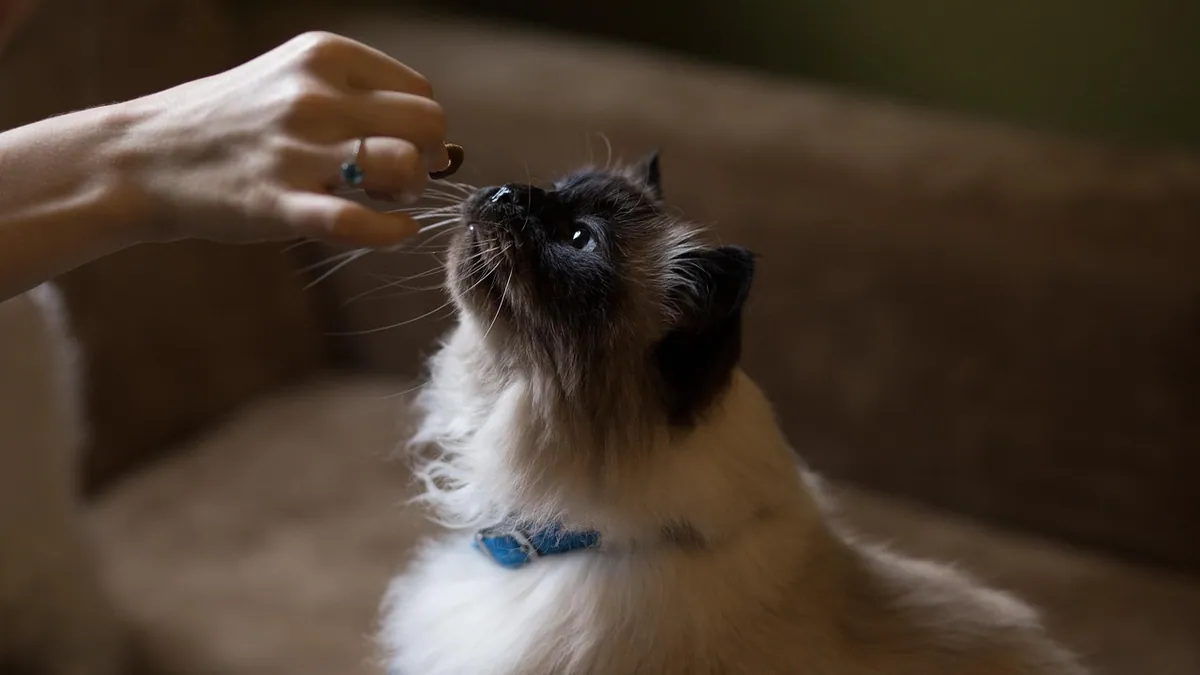
Can cats eat Milk-Bone dog treats? Technically, a plain Milk-Bone is not poisonous to a cat, so a single small piece is unlikely to be an emergency. That said, these biscuits are made for dogs, and their size, hardness, and ingredients make them a poor fit for a cat's teeth and digestive tract. This article is educational and is not a substitute for veterinary diagnosis or treatment.
Quick Answer
- Milk-Bone dog treats are not toxic to cats, but they are not food for cats either.
- The main problems are size and hardness, which raise the risk of choking and broken teeth in a small feline mouth.
- Some flavors and varieties contain added salt, garlic, onion powder, or xylitol, and those ingredients can be harmful.
- If your cat stole one small plain biscuit, watch for drooling, coughing, vomiting, or diarrhea and call your vet if anything seems off.
- A cat-appropriate treat or a piece of cooked plain meat is a safer choice every time.
Are Milk-Bone Dog Treats Safe for Cats?
The short answer is no, they are not a safe regular treat for cats, even though they are not a poison. There is no ingredient in a basic Milk-Bone that is designed to kill a cat, which is why a single accidental bite rarely turns into a poisoning case. The trouble comes from everything else about the product.
Dogs and cats are built differently. A dog biscuit is sized and baked for a dog's jaw, and many Milk-Bone varieties are hard enough that a cat cannot break them down. Cats have small mouths and sharp, slicing teeth meant for tearing meat, not for crushing dense baked biscuits. A hard disc that a dog crunches in one bite can wedge in a cat's throat or crack a tooth.
There is also the question of what the treat is made of. Dog biscuits are formulated around canine nutritional needs, and cats are obligate carnivores with very different requirements. A treat does not need to be a complete diet, but it should not work against your cat's digestion either. If you want a fuller picture of how dog and cat foods differ, see Can Cats Eat Dog Food.
Can Cats Eat Milk Bones for Dogs Without Getting Sick?
Most cats that eat one small piece of a plain biscuit will be fine. Some will vomit it back up, some will have soft stool for a day, and some will act like nothing happened. The outcome depends on the size of the piece, the hardness of the biscuit, and your cat's individual sensitivity.
The bigger concern is the cat who eats several, or who gets into a flavored variety. A large amount of any dog treat can cause stomach upset, and certain added ingredients are genuinely dangerous. Xylitol is the clearest example. It is a sugar substitute that is highly toxic to dogs, and while a study in healthy cats found no significant changes in blood glucose or blood values after doses of 100, 500, and 1,000 mg/kg by mouth, that does not make it a safe additive for your cat [1]. Cats appear far less sensitive than dogs, but there is no reason to feed it to them, and the safest plan is to avoid any treat that lists it.
What Is Actually in a Milk-Bone?
A standard Milk-Bone is mostly wheat flour, meat and bone meal, and other grains, baked into a hard biscuit. That profile tells you a lot. It is a carbohydrate-heavy product built for dogs, not a meat-based treat built for cats.
From a cat's point of view, there is no real nutritional benefit. Cats need animal protein and specific nutrients like taurine, and a wheat-based biscuit does not supply those in any meaningful way. The treat fills the stomach without helping the cat, and it can crowd out the food that actually meets their needs if it becomes a habit.
The ingredient list is where things get riskier. Depending on the variety, you may see salt, garlic powder, onion powder, or other flavorings. Garlic and onion belong to the Allium family and can damage red blood cells in cats and dogs. Salt in larger amounts can cause thirst, vomiting, and in serious cases neurological signs. These are the same categories of household hazards that show up in veterinary toxicology cases, where owners often do not realize a common product is dangerous until a pet is already sick [2].
Do Dog Treats Have Any Benefit for Cats?
No, not in any way that matters. There is no dental benefit you can count on, because the biscuit is too hard and too large for most cats to chew properly. A treat that a cat cannot break apart does not clean teeth, it just sits in the mouth or gets swallowed whole.
There is also no training benefit. Cats can be trained, but they respond to small, soft, smelly rewards, not to a big crunchy dog biscuit. If you are using treats for training, a pea-sized piece of something your cat actually likes works far better.
Risks of Feeding Milk-Bone Treats to Cats
Choking and Dental Injury
This is the most common real-world problem. A biscuit that is too big to swallow can lodge in the throat, and a biscuit that is too hard can fracture a tooth. Cats hide pain well, so a broken tooth may show up later as drooling, dropping food, or refusing to eat. Choking is an emergency and needs immediate care.
Digestive Upset
Wheat, grains, and the fat content of dog biscuits can trigger vomiting or diarrhea in cats. Some cats have sensitive stomachs, and a sudden new food is a common trigger. If your cat already has inflammatory or digestive issues, adding a dog treat is a bad idea.
Additives and Contaminants
Beyond xylitol, salt, garlic, and onion, there is a broader issue with processed pet food. A study of commercially available chicken-based cat kibbles found residues of antibiotics, per- and polyfluoroalkyl substances, toxic metals, bisphenol A, and microplastics in some products [3]. That research looked at cat food, not dog biscuits, but it makes the point that highly processed pet products are not automatically clean. You have no way to know what is in a biscuit beyond the label.
The Raw and Freeze-Dried Question
Some owners reach for raw or freeze-dried treats as a "healthier" swap. Those carry their own risks. Testing of raw commercial feline diets found bacterial cultures only in raw foods, with genera including Salmonella, Clostridium, Escherichia, Klebsiella, Enterobacter, and Cronobacter, plus multidrug-resistant organisms in some frozen raw products [4]. If you handle raw pet food, wash your hands and surfaces carefully, especially if anyone in the home is immunocompromised.
How to Offer a Dog Treat Safely, If You Insist
If your cat already grabbed a biscuit, or you want to know how to handle it, here is the practical version.
| Form | Safe? | Notes |
|---|---|---|
| One small plain Milk-Bone piece | Low risk, not recommended | Watch for choking, drooling, vomiting, or diarrhea |
| Whole large biscuit | No | Too big and too hard for a cat's mouth |
| Flavored varieties with garlic, onion, or salt | No | Allium plants and excess salt can harm cats |
| Any variety listing xylitol | No | Avoid entirely, even though cats appear less sensitive than dogs [1] |
| Soft dog treats | Still not ideal | Better texture, but still made for dogs |
| Cat-specific crunchy treats | Yes | Sized and formulated for cats |
If you do let your cat have a taste, break off a piece no larger than a pea, and only from a plain variety with a short ingredient list. Never leave the whole biscuit with your cat unattended. Never give a biscuit as a meal replacement. And never use a dog biscuit to deliver a medication, because you cannot control how much your cat actually swallows.
Parts and Preparations to Avoid
Skip anything hard enough that you cannot crumble it between your fingers. Skip anything with a coating, frosting, or "soft chew" texture that may hide xylitol or other sweeteners. Skip anything with visible garlic or onion powder on the label. Skip jerky-style dog treats, which are often tough and salty. If you are unsure, do not feed it.
What to Do If Your Cat Ate Too Much
Stay calm and assess the situation first. If your cat ate one small plain biscuit and is breathing, eating, and acting normally, you can watch at home for the next 24 hours. Look for vomiting, diarrhea, drooling, pawing at the mouth, coughing, or a change in appetite.
If your cat is choking, pawing at the mouth, breathing hard, or collapsed, that is an emergency. Go to a veterinary hospital now. Do not wait to see if it passes.
If your cat ate a large amount, or ate a variety containing xylitol, garlic, onion, or a lot of salt, call your veterinarian or a pet poison hotline right away. Have the package in hand so you can read the ingredient list and the amount eaten. Your vet will decide whether to induce vomiting, give activated charcoal, run bloodwork, or monitor at home. Do not induce vomiting on your own, because it can cause harm in some situations.
For a cat who seems mildly off after a biscuit, a same-day call to your vet is reasonable. For a cat who is vomiting repeatedly, lethargic, or not eating, treat it as urgent.
Safer Alternatives for Cats
The best treat for a cat is one made for cats. Commercial cat treats come in small sizes and textures that match a feline mouth, and they are formulated with cats in mind.
If you prefer to feed something from your kitchen, small pieces of plain cooked meat work well. Cooked chicken, turkey, or beef with no seasoning, no onion, and no garlic is a reasonable occasional reward. Keep the piece to about the size of a pea. Plain cooked fish is another option in small amounts.
Some cats enjoy a small amount of plain cooked egg or a bit of plain canned pumpkin. Go slow with anything new, and introduce one item at a time so you can tell what agrees with your cat.
Dairy is a common trap. Many cats are lactose intolerant, and milk can cause diarrhea even though cats often love the taste. If you are curious about that topic, read Can Cats Drink Milk?. The same logic applies to dog ice cream and similar products, which are made for dogs and often contain sweeteners or dairy that do not suit cats, as covered in Can Cats Eat Dog Ice Cream? Safety and Ingredients to Avoid.
If you live with both cats and dogs, expect some cross-snacking. Dogs will happily eat cat food, which is a separate problem worth understanding in Can Dogs Eat Cat Food. Keeping each pet's food and treats separate is the simplest way to prevent mix-ups.
Limitations and When to Contact a Veterinarian
This article covers general information, not your specific cat. Individual cases need a veterinarian who can examine your pet, ask about the amount eaten, and check for underlying conditions.
Call your veterinarian the same day if your cat ate a Milk-Bone and now has vomiting, diarrhea, drooling, bad breath, or a decreased appetite. Call right away if you see coughing, gagging, difficulty breathing, pawing at the mouth, or a change in behavior, because those can signal choking or a lodged piece.
Go to an emergency hospital immediately if your cat is struggling to breathe, has collapsed, is having seizures, or cannot swallow. If you know or suspect your cat ate a treat containing xylitol, garlic, onion, or a large amount of salt, treat it as an emergency and call before you do anything at home.
For a cat who ate one small plain biscuit and seems completely normal, a routine visit is not required. Mention it at your next scheduled exam so your vet has the full history.
Frequently Asked Questions
Can cats eat Milk-Bone dog treats without getting sick?
Most cats that eat one small plain piece will not get seriously ill, but that does not make it a safe treat. The main risks are choking, dental damage, and stomach upset, and flavored varieties can contain ingredients that are harmful to cats. If your cat ate one and seems fine, watch closely for a day and call your vet with any concerns.
Are Milk-Bones toxic to cats?
Plain Milk-Bones are not toxic to cats in the way that lilies or certain rodenticides are. The danger comes from the size, the hardness, and additives like xylitol, garlic, onion, or salt in some varieties. A treat does not have to be a poison to cause real harm.
What should I do if my cat ate a whole Milk-Bone?
If your cat is breathing normally and acting like themselves, call your veterinarian for advice and watch for vomiting, drooling, or diarrhea. If your cat is choking, gagging, or having trouble breathing, go to an emergency clinic right away. Bring the package so the vet can see the ingredients and the size of the biscuit.
Can I give my cat dog treats as a regular snack?
No, dog treats are not a good regular snack for cats. They do not meet a cat's nutritional needs, and repeated feeding can lead to weight gain, digestive problems, and dental wear. Choose cat-specific treats or small pieces of plain cooked meat instead.
Do dog biscuits help clean a cat's teeth?
No, and they can do the opposite. A biscuit that is too hard or too large for a cat's mouth may fracture a tooth or get swallowed without any chewing. If you are worried about dental health, ask your veterinarian about cat-safe dental products and professional cleanings.
Related Articles
- Can Cats Eat Dog Ice Cream? Safety and Ingredients to Avoid
- Can Dogs Eat Cat Food
- Can Dogs Drink Cat Milk
- Can Cats Eat Dog Food
- Can Cats Drink Milk?
- Can Cats Eat Cream Cheese? Dairy Fat and Additive Risks
- Can Cats Eat Cookies? Risks and Safe Treats
- Can Cats Eat Cereal? Milk, Sugar, and Safety
- Can Cats Eat Whipped Cream? Dairy and Sugar Risks
References
- Effects of p.o. administered xylitol in cats. Journal of veterinary pharmacology and therapeutics, 2018.
- Toxicology Case Presentations. The Veterinary clinics of North America. Small animal practice, 2023.
- Multiple contaminant detection in commercially available chicken-based cat kibbles in Italy. Frontiers in veterinary science, 2026.
- Analysis of the microbiota of raw commercial feline diets to prioritize food safety investigations. Communications biology, 2025.