Puffy Face in Cats: Causes of Facial Swelling
By Dr. Zubair Khalid, DVM, MS, PhD ·
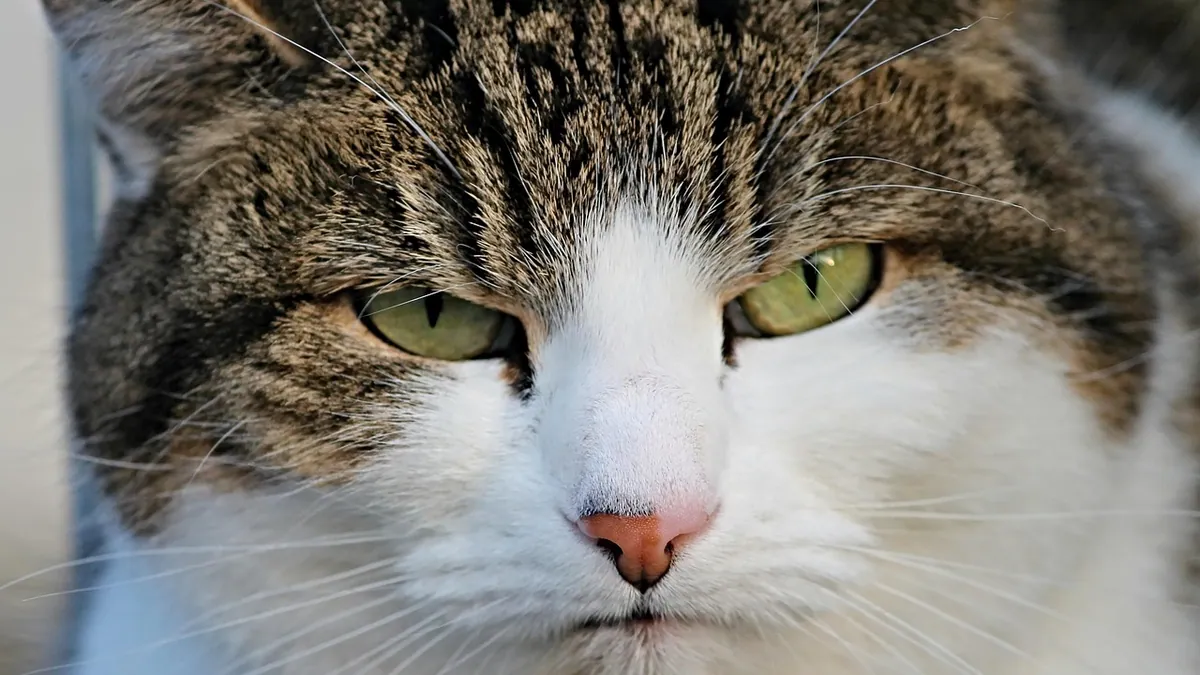
A puffy face in cats is swelling of the muzzle, cheeks, eyelids, or the area around the nose and jaw. The cause can range from a mild allergic reaction to a dental abscess, a sinus problem, or a tumor. Some causes need care within hours, so the pattern of swelling matters as much as the swelling itself.
This article is educational and is not a substitute for veterinary diagnosis or treatment.
Quick Answer
- Sudden swelling that appeared within minutes to hours, especially with hives, itching, or trouble breathing, points to an allergic reaction and needs emergency care.
- Swelling on one side of the face, with drooling, bad breath, or pain when eating, often points to a dental or sinus problem and needs a same-day or next-day visit.
- A firm, slow-growing lump that does not hurt and does not come and go is more concerning for a tumor and needs a routine but prompt workup.
- Never give your cat human allergy medicine, pain relievers, or steroids on your own. The dose depends on your cat's weight and health, and your veterinarian calculates it.
- If your cat is struggling to breathe, has a swollen tongue or throat, is vomiting, or is collapsing, treat it as an emergency and go now.
What a Puffy Face in Cats Looks Like and What Is Normal
A cat's face has very little spare tissue. The muzzle, eyelids, lips, and the bridge of the nose sit close to bone, so even mild swelling shows up quickly. You may notice one cheek looks fuller than the other, the eyelids look heavy or partly closed, the nose looks wider than usual, or the chin and jaw feel doughy when you touch them.
Normal variation exists. Some cats have full cheeks from breed or body condition. Some cats have a slightly asymmetric face from an old injury or a missing tooth. What matters is change. A face that looked the same for years and suddenly looks different within a day is a different problem from a face that has always been a little uneven.
Swelling can also be a skin problem instead of a deeper one. Dermatitis is a general term for skin inflammation, and its signs include itching, scaling, redness, thickening of the skin, color changes, oil accumulation, abnormal odor, and hair loss [1]. When those changes sit on the face, the face can look puffy even when the swelling is in the skin itself.
Main Causes of a Puffy Face in Cats
Allergic Facial Swelling
Allergies are one of the most common reasons a cat's face puffs up quickly. Feline atopic dermatitis is a condition marked by severe itching and redness and swelling of the skin, caused by abnormal sensitivity to inhaled or contacted environmental allergens [2]. Affected cats often start showing signs before age 5, and purebred cats are more likely to be affected than domestic shorthairs [2].
Airborne allergies in cats do not always stay on the skin. Inflammation of the nasal passages and asthma can also occur in about 15% of affected animals [2]. That means a cat with an allergic puffy face may also sneeze, wheeze, or have watery eyes.
Insect bites and stings, new foods, new litter, and contact with a new cleaner or plant can all trigger facial swelling. These reactions often come on fast and may fade within hours, but they can also progress.
Dental and Sinus Causes
A broken tooth, a tooth root abscess, or severe gum disease can swell the cheek or the area under the eye. Cats hide mouth pain well, so a puffy cheek is sometimes the first sign you see. Watch for drooling, dropping food, chewing on one side, bad breath, or flinching when you touch the jaw.
Sinus and nasal disease can also cause facial swelling. In one reported case, a 5-year-old cat had left-sided facial swelling and nosebleeds, and imaging found a mass in the nasal cavity with destruction of nasal bone [3]. Biopsies showed inflammation caused by the fungus Blastomyces dermatitidis, and the cat improved after 8 months of treatment with itraconazole [3]. That case shows how a sinus problem can look like a tumor on the outside.
Tumors and Growths
Cancer of the nose, sinuses, mouth, or jaw can cause a face to swell. So can benign growths. The pattern is usually slow. The swelling builds over weeks, does not respond to allergy treatment, and may come with nosebleeds, a bad odor, weight loss, or trouble eating.
Not every firm lump is cancer. A 6-year-old cat was diagnosed with benign hypertrophy of the masseter and pterygoid muscles after presenting with left-sided facial swelling [4]. This condition is uncommon and its cause is unknown [4]. The point is that a firm swelling needs imaging and often a biopsy to identify, and you cannot tell by feel alone.
Other Causes
Some causes are rare but worth knowing. Cowpox, a rare infection in cats that act as incidental hosts, can cause facial swelling with or without skin lesions [5]. Whole-body disease can also show up on the face. Dermatitis is sometimes seen with disorders of the liver, kidneys, or pancreas, and in cats with diabetes the skin disease may appear before other signs of the internal disease [6].
Feline plasma cell pododermatitis, an uncommon disease, has been reported with severe swelling of the nasal bridge along with swelling of the paw pads [7]. That case supports the idea that this condition may be a hypersensitivity-related reaction pattern [7].
| Cause | Typical clues | How urgent |
|---|---|---|
| Allergic reaction | Sudden onset, itching, hives, sneezing, may involve eyelids and muzzle | Emergency if breathing changes, otherwise same-day |
| Dental abscess or tooth root problem | One-sided cheek swelling, drooling, bad breath, pain eating | Same day to next day |
| Sinus or nasal disease | Nosebleeds, nasal discharge, one-sided swelling, sneezing | Same day to next day |
| Tumor or growth | Slow firm swelling, no itching, nosebleeds, weight loss | Routine visit, but book soon |
| Muscle hypertrophy | Firm one-sided cheek swelling, no pain, no other signs | Routine visit |
| Whole-body or rare infection | Swelling with skin changes, fever, or paw pad changes | Same day |
If the swelling is on the body instead of the face, our guide to a cat swollen belly causes covers a different set of problems. Skin changes with swelling are covered in cat skin rash with swelling: when to worry.
Red Flags That Make It an Emergency
Go to an emergency clinic now if you see any of these:
- Noisy breathing, open-mouth breathing, or a stretched-out neck
- A swollen tongue, lips, or throat
- Blue or pale gums
- Collapse, weakness, or wobbling
- Vomiting or repeated retching
- Swelling that is spreading down the neck or chest
- Hives spreading over the body within minutes
These signs suggest the airway or the whole body is involved. Minutes matter.
Call your veterinarian the same day if you see:
- One-sided facial swelling that appeared over a day or two
- Drooling, dropping food, or refusing to eat
- Nosebleeds or bloody nasal discharge
- A swollen eye or an eye that will not open
- Fever, hiding, or a sudden change in behavior
Safe Things You Can Do at Home While Waiting
You cannot treat most causes of facial swelling at home, but you can keep your cat safe and comfortable until the visit.
- Take photos of the swelling from the front and both sides. Note the time. This helps your veterinarian judge how fast it is changing.
- Keep your cat indoors and away from the trigger if you suspect an allergy. Remove new foods, new litter, new plants, and new cleaning products.
- Do not give any human medication. Never give acetaminophen, ibuprofen, or diphenhydramine unless your veterinarian prescribes it and gives you the dose for your cat.
- Offer soft food and water at room temperature. Do not force food if your cat will not eat.
- Keep the face clean and dry. Do not squeeze, poke, or apply heat or ice to a swollen cheek unless your veterinarian tells you to.
- Watch breathing closely. If your cat starts breathing through the mouth or making noise with each breath, stop waiting and go.
If you are dealing with swelling in another species, our article on dog swollen face home treatment explains how the approach differs.
What Your Veterinarian Will Check and Test
Your veterinarian will start with a full history and a hands-on exam. Expect questions about when the swelling started, whether it comes and goes, what your cat eats, whether there are new products in the home, and whether your cat goes outside.
The exam usually includes:
- Palpating the face, jaw, lymph nodes, and neck
- Opening the mouth to look at teeth and gums
- Checking the eyes, nose, and ears
- Listening to the heart and lungs
- Taking the temperature
Diagnosis of airborne allergies is difficult because no test can positively identify the condition [2]. Your veterinarian will review the history, examine the body and skin, and may run skin tests such as flea combing, microscopic analysis of skin samples and scrapings, fungal cultures, and intradermal allergy tests [2]. Allergy testing cannot diagnose allergies, but it can identify offending allergens and help build an allergen-specific immunotherapy program [2]. Your veterinarian will also rule out other causes of itching before diagnosing feline atopy [2].
Depending on what the exam shows, your veterinarian may also recommend:
- Dental X-rays or a dental cleaning with probing
- Skull or nasal imaging, such as CT
- Blood work and urine testing
- Biopsy of the swelling or the nasal tissue
- Fungal testing if you live in or have traveled to an endemic area
Treatment depends on the cause. Allergic swelling may be managed by avoiding the trigger and using medications your veterinarian selects. Dental disease needs dental treatment. Fungal disease needs a long course of antifungal medication, as in the reported blastomycosis case that required 8 months of itraconazole [3]. Tumors may need surgery, radiation, or other care. Your veterinarian sets the plan and the dose for your cat.
Prevention and Monitoring
You cannot prevent every cause of facial swelling, but you can lower the odds and catch problems early.
- Keep up with dental care. Brush your cat's teeth if your cat allows it, and ask your veterinarian how often to schedule dental checks.
- Control allergens. If your cat has atopy, work with your veterinarian on avoidance and any immunotherapy plan [2].
- Watch for early skin signs. Itching, scaling, redness, and hair loss often come before a face looks puffy [1].
- Track whole-body health. Because skin disease can appear before signs of internal disease in cats with diabetes and other conditions, keep routine exams and blood work current [6].
- Photograph changes. A dated photo log makes it easier to tell a slow growth from a fast reaction.
Limitations and When to Contact a Veterinarian
This article cannot tell you what is causing your cat's swelling. Only an exam, and sometimes imaging or a biopsy, can do that. Individual cases need a veterinarian who can see your cat, feel the swelling, and review the whole picture.
Call your veterinarian the same day for one-sided swelling, drooling, trouble eating, nosebleeds, or a swollen eye. Go to an emergency clinic now for breathing changes, a swollen tongue or throat, collapse, or hives that are spreading fast. Book a routine visit soon for a firm, slow-growing lump that does not hurt. If you are unsure which category fits, call and describe what you see. Veterinary staff can help you decide.
Frequently Asked Questions
Can a puffy face in cats go away on its own?
Sometimes, yes. Mild allergic swelling from a bite or a new product can fade within hours once the trigger is gone. But you cannot tell an allergy from an abscess or a tumor just by looking, so a face that stays puffy, gets worse, or comes with pain or breathing changes needs a veterinarian.
Is facial swelling in cats always an allergy?
No. Allergies are common, but dental abscesses, sinus disease, fungal infections, tumors, and rare conditions such as muscle hypertrophy can all cause facial swelling [3][4]. The speed of onset, whether it is one-sided, and whether your cat has pain or nosebleeds help point to the cause.
How fast can an allergic reaction swell a cat's face?
It can happen within minutes to a few hours after contact with the trigger. Swelling that fast, especially with hives or sneezing, is typical of an allergic reaction. If breathing changes at all, treat it as an emergency.
Can dental problems really make a cat's face swell?
Yes. A tooth root abscess or severe gum disease can swell the cheek or the area under the eye. Cats often hide mouth pain, so drooling, bad breath, chewing on one side, or flinching when the jaw is touched are important clues to mention to your veterinarian.
Should I wait to see if the swelling goes down before calling the vet?
Do not wait if the swelling is one-sided, painful, or came on fast. Call your veterinarian and describe what you see. For a firm lump that has been growing slowly for weeks, you can book a routine visit, but do not put it off for months.
Related Articles
- Cat Swollen Belly Causes
- Why Is My Cat's Belly Swollen?
- Cat Skin Rash with Swelling: When to Worry
- Cat Ear Infection with Swelling: What to Do and When to Worry
- Dog Swollen Face Home Treatment
- What Would Cause A Dogs Stomach To Swell
- Swollen Face or Cheek in Cats: Causes and When to Worry
- Cat Swollen Face or Eye: Causes and What to Do
- Puffy Paw in Cats: Swollen Paw Pads and What They Mean
References
- Dermatitis and Dermatologic Problems in Cats - Cat Owners. Merck Veterinary Manual.
- Allergies of Cats - Cat Owners. Merck Veterinary Manual.
- Epistaxis and Facial Swelling Due to Nasal Blastomycosis in a Cat. Journal of the American Animal Hospital Association, 2024.
- Masseter and Pterygoid Muscle Hypertrophy in a Cat. Journal of veterinary dentistry, 2026.
- A Case of Cowpox Presenting as Progressive Unilateral Facial Swelling and Fever Without Any Skin Lesions. Case reports in infectious diseases, 2026.
- Whole-body Disorders that Affect the Skin in Cats - Cat Owners. Merck Veterinary Manual.
- Feline plasma cell pododermatitis with nasal involvement suggesting a hypersensitivity associated reaction pattern - a case report and review of the literature. Tierarztliche Praxis. Ausgabe K, Kleintiere/Heimtiere, 2026.