Puffy Paw in Cats: Swollen Paw Pads and What They Mean
By Dr. Zubair Khalid, DVM, MS, PhD ·
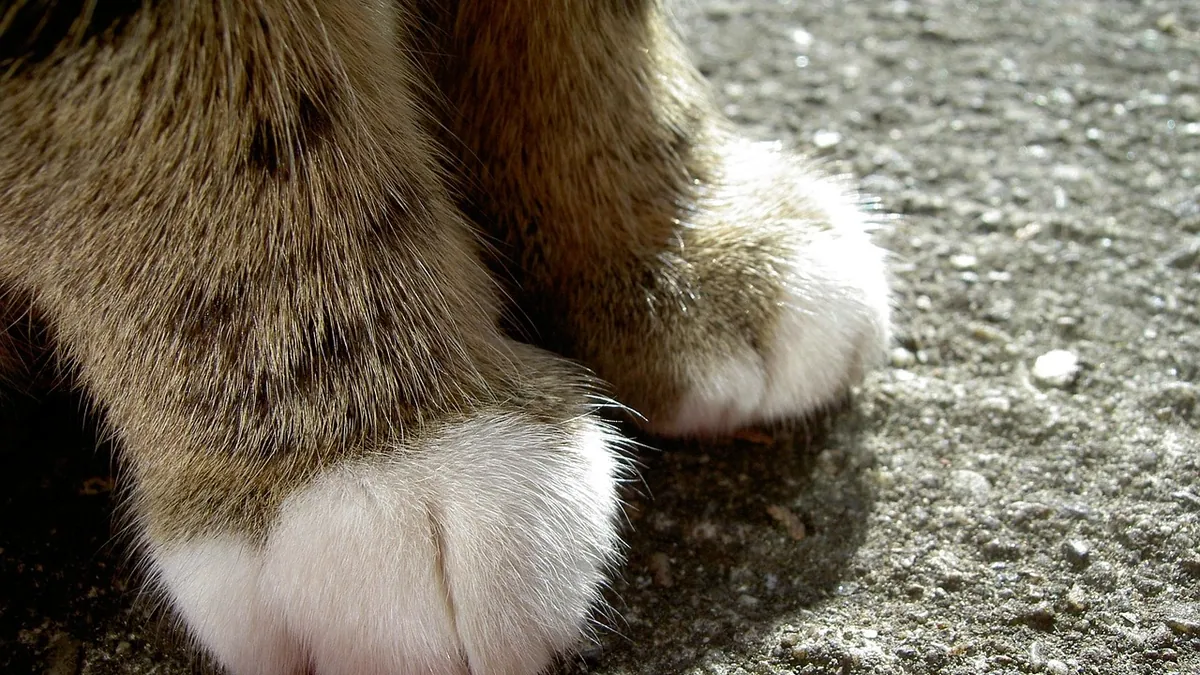
A puffy paw in cats usually means fluid, inflammation, or extra tissue has built up in the paw or its pads. Sometimes it is a minor injury that settles in a few days, and sometimes it is a sign of a deeper immune, infectious, or even cancerous problem. This article is educational and is not a substitute for veterinary diagnosis or treatment.
Quick Answer
- Swelling that involves only the paw pads, especially the large central pads, points toward plasma cell pododermatitis, an immune-related condition.
- A single swollen toe or pad after a jump, fall, or rough play is often trauma, but it still needs a vet if your cat limps or the paw is painful.
- Silica from clay cat litter has been found inside inflamed paw tissue in cats with long-standing pad swelling, so litter can be a trigger for some cases [1].
- Sudden swelling with bleeding, open sores, a bad smell, or a cat that will not walk is an urgent problem.
- Never give human pain relievers such as ibuprofen or acetaminophen to a cat, since they are toxic. Your veterinarian will choose a safe drug and calculate the dose from your cat's weight and health.
What a Puffy Paw in Cats Looks Like and What Is Normal
A normal cat paw is compact and springy. The pads feel firm but slightly soft, like a pencil eraser. The skin between the pads is thin and usually pale pink or gray, and the fur on top of the paw lies flat.
A puffy paw looks rounder and fuller than the other paws. The pads may look shiny, stretched, or spongy. You might see the space between the toes bulge outward. Some cats develop small crusts, cracks, or dark spots on the pad surface.
Compare all four paws. Cats often have one paw that looks a little different because of an old scar or a callus. What matters is change. A paw that was flat last week and is swollen today is worth a closer look.
Watch how your cat moves too. A cat with a sore paw may limp, hold the leg up, lick the paw constantly, or avoid jumping. If your cat is limping, our guide to Cat Limping Paw can help you sort out what to do next.
Main Causes of Swollen Paw Pads in Cats
Many conditions can make a paw look puffy. The table below groups the most common ones and what usually sets them apart.
| Cause | Typical clues | How urgent |
|---|---|---|
| Trauma (cut, bite, fall, foreign object) | One paw, sudden onset, pain, bleeding, a visible wound or splinter | Same-day vet visit if limping or open wound |
| Plasma cell pododermatitis | Multiple pads swollen, soft and spongy, often the central pads, sometimes with cracks or ulcers | Routine visit soon, sooner if painful or bleeding |
| Silica (cat litter) granuloma | Long-standing pad swelling, ulcers, bleeding, or draining tracts, often on the front paws [1] | Routine visit soon |
| Bacterial or fungal infection | Redness, warmth, pus, bad odor, crusting | Same-day vet visit |
| Allergy or irritant contact | Itching, redness, chewing, often several paws, sometimes linked to litter or flooring | Routine visit, same-day if severe |
| Insect sting or bite | Sudden swelling, sometimes with hives on the face or body | Emergency if breathing changes or the face swells |
| Cancer of the paw or spread from the lung | Older cat, shifting lameness that comes and goes, swollen digits, sometimes no visible sore at first [2] | Same-day vet visit |
| Heart, kidney, or circulatory problem | Swelling in more than one limb, often with other signs such as trouble breathing or belly swelling | Emergency |
Plasma Cell Pododermatitis
Plasma cell pododermatitis is an immune-related disease that targets the paw pads. The pads become soft, puffy, and spongy, and they may crack or bleed. It often affects more than one paw, and the large central pads are common targets.
This condition is diagnosed with a biopsy, since other diseases can look similar. Treatment usually involves medication that calms the immune system, and many cats improve with the right plan. Your veterinarian will set the drug and dose for your cat.
Silica and Cat Litter
Silica is a mineral found in clay-based cat litter. A study of paw biopsies from 13 cats found silica crystals inside inflamed tissue, and the material matched the Raman spectra of several brands of silica-based litter [1]. The cats in that report often had chronic or intermittent pad swelling, ulcers, bleeding, or draining tracts, mostly on the front paws [1]. Ten of the 13 biopsies also showed signs of plasma cell pododermatitis, which suggests the two problems can overlap [1].
If your cat has ongoing pad trouble, ask your veterinarian whether changing litter is worth trying. It is a simple step and does not replace medical treatment.
Trauma and Foreign Objects
Cats land hard, step on sharp objects, and get bitten by other animals. A thorn, glass sliver, or splinter can sit in the pad and cause swelling and pain. Check the underside of the paw in good light. If you can see something stuck in the pad, do not pull it out yourself. You could cause bleeding or push it deeper. Let your veterinarian remove it.
Infection
Bacteria and fungi can enter through a small cut or crack. An infected paw is often warm, red, and tender, and it may drain pus or smell bad. Deep infections need prescription medication, and some need the wound opened and cleaned.
Allergy and Irritation
Contact irritation from litter, cleaners, or rough surfaces can make paws red and itchy. Cats with allergies often lick and chew their paws, which adds swelling and hair loss. If paw licking is the main problem, see Cat Licking Paws Excessively: What It Means and What to Do.
Cancer and Lung-Digit Syndrome
Cancer can start in the paw or spread there from elsewhere. Feline lung-digit syndrome is a pattern where a lung tumor spreads to the toes. One report described an older cat with lameness that shifted between legs and came and went before any visible paw lesion appeared [2]. That waxing and waning pattern in an older cat should raise suspicion for a lung tumor, and chest imaging is part of the workup [2].
Other Rare Causes
Some causes of paw problems are rare and mostly reported in dogs, such as inherited pad overgrowth linked to a gene variant [3]. Muscle and soft tissue masses can also cause lameness in cats, though they usually affect the limb instead of the paw itself [4][5]. If your cat's lameness does not improve, your veterinarian may look beyond the paw.
Red Flags That Make a Puffy Paw an Emergency
Call an emergency clinic right away if you see any of these:
- Your cat cannot or will not put the paw down at all.
- The swelling is growing fast, or the paw is hot, dark, or discolored.
- There is heavy bleeding, a deep cut, or bone showing.
- The paw smells foul or drains thick pus.
- Your cat is crying, hiding, or will not let you touch the leg.
- More than one limb is swollen, or the belly looks swollen too. A swollen belly with limb swelling can point to a body-wide problem, and our article on Why Is My Cat's Belly Swollen? explains what those signs can mean.
- Your cat is breathing fast, open-mouth breathing, or seems weak.
- You suspect a snake bite, insect sting with facial swelling, or exposure to a toxin.
Safe Things You Can Do at Home While You Wait
You cannot treat a swollen paw at home, but you can keep your cat comfortable and avoid making things worse.
- Keep your cat indoors and limit jumping. Use low litter boxes and move food and water close by.
- Look at the paw in bright light. Note which pads are swollen, whether the swelling is soft or firm, and whether there are cuts, crusts, or discharge.
- Do not squeeze, poke, or cut the paw. Do not try to remove a foreign object.
- Do not apply human creams, ointments, or essential oils. Cats lick their paws and can swallow products that are not safe for them.
- Do not give any human pain reliever. Ibuprofen and acetaminophen are toxic to cats.
- If your veterinarian approves, a cool compress wrapped in a thin towel for a few minutes can ease comfort. Never leave a wet paw wrapped, since damp skin can grow yeast and bacteria.
- Take a photo of the paw each day so you can show your vet whether it is improving.
What Your Veterinarian Will Check and Test
Your veterinarian will start with a full physical exam, including all four paws, the legs, and the joints. They will check for pain, warmth, wounds, and swelling that extends up the limb. They will also check your cat's general health, since paw swelling can be a clue to a body-wide disease.
Next steps may include:
- A close look at the pads with a magnifying lens or otoscope to find foreign material.
- X-rays of the paw to look for fractures, bone changes, or a mass.
- Blood work and a urinalysis to check organ function and look for infection or immune disease.
- A sample of fluid or discharge for cytology and culture.
- A biopsy of the pad, which is the only way to confirm plasma cell pododermatitis or a silica granuloma [1].
- Chest X-rays if your cat is an older cat with shifting lameness, to rule out a lung tumor [2].
Treatment depends on the cause. Options include removing a foreign object, antibiotics or antifungals, immune-suppressing medication, a change in litter, or surgery for a mass. Your veterinarian will explain the plan and the expected timeline for improvement.
Prevention and Monitoring
You cannot prevent every paw problem, but you can lower the risk and catch trouble early.
- Check your cat's paws once a week. Look at the pads, between the toes, and the nails.
- Keep nails trimmed so they do not curl into the pads.
- Choose a litter your cat tolerates. If pad irritation keeps coming back, ask your vet about trying a different substrate.
- Keep your cat indoors to reduce bites, cuts, and car injuries.
- Manage allergies and skin disease with your veterinarian so your cat does not chew its paws.
- For older cats, watch for lameness that shifts between legs or comes and goes. That pattern deserves a vet visit and chest imaging [2].
- If your cat has arthritis or another chronic condition, our guide Cat Limping: Arthritis or Something Else? How to Tell can help you track changes over time.
Limitations and When to Contact a Veterinarian
This article cannot tell you what is causing your cat's puffy paw. Only a veterinarian who examines your cat can do that, and individual cases always need a professional exam.
Contact your veterinarian the same day if your cat has a swollen paw with limping, pain, a wound, discharge, or a pad that looks cracked or bleeding. Book a routine visit soon if the swelling is mild, your cat is walking normally, and there is no wound, but the puffiness has lasted more than a day or two.
Go to an emergency clinic now if your cat will not bear weight, the swelling is spreading quickly, there is heavy bleeding, the paw is hot or discolored, your cat is breathing hard, or more than one limb is swollen.
Frequently Asked Questions
Is a puffy paw in cats always serious?
No, not always. A mild puffy paw can come from a small injury or irritation and may settle with rest. However, because swelling can also signal infection, immune disease, or cancer, a vet exam is the safest way to know.
Can cat litter cause swollen paw pads?
It can be a trigger in some cats. Silica from clay-based litter has been found inside inflamed paw tissue, and many of those cats also had plasma cell pododermatitis [1]. If pad problems keep returning, ask your veterinarian about changing litter.
Why does my cat's paw look puffy but not painful?
Some immune-related pad disease causes soft, spongy swelling with little obvious pain at first. Cats are also good at hiding discomfort. If the puffiness lasts more than a day or two, have your veterinarian look at it.
Should I pop or drain a swollen paw at home?
No. Never open, squeeze, or drain a swollen paw yourself. You can cause bleeding, push infection deeper, or miss a foreign object that needs proper removal. Let your veterinarian handle it.
Can a puffy paw be a sign of cancer in cats?
Yes, in some cases. Cancer can start in the paw or spread there from the lungs, and one report described an older cat with lameness that shifted between legs before any paw lesion was visible [2]. Any new, lasting paw swelling in an older cat deserves a vet visit.
Related Articles
- Why Is My Cat's Belly Swollen?
- Cat Licking Paws Excessively: What It Means and What to Do
- Cat Limping Paw
- Cat Swollen Belly Causes
- Cat Limping: Arthritis or Something Else? How to Tell
- Dog Paw
- Swollen Paw or Leg in Cats: Causes and What to Do
- Cat Bump on the Paw Pad: Causes and When to Worry
- Cat Paw Abscess: Causes, Signs, and Treatment
References
- Cutaneous silica-associated (cat litter) granulomas in the paws of 13 domestic cats. Veterinary pathology, 2026.
- Feline lung-digit syndrome: A differential diagnosis for shifting, waxing and waning lameness in a cat. The Canadian veterinary journal = La revue veterinaire canadienne, 2024.
- GJB6 missense variant in a Labrador Retriever with paw pad hyperkeratosis. Animal genetics, 2026.
- Brachialis muscle contracture as a cause of lameness in cats: A study of four cases. Australian veterinary journal, 2026.
- Lameness caused by intramuscular osteochondroma in semimembranosus muscle in a male cat. JFMS open reports, 2026.