Laryngeal Paralysis in Cats: Symptoms, Meow Changes, Treatment
By Dr. Zubair Khalid, DVM, MS, PhD ·
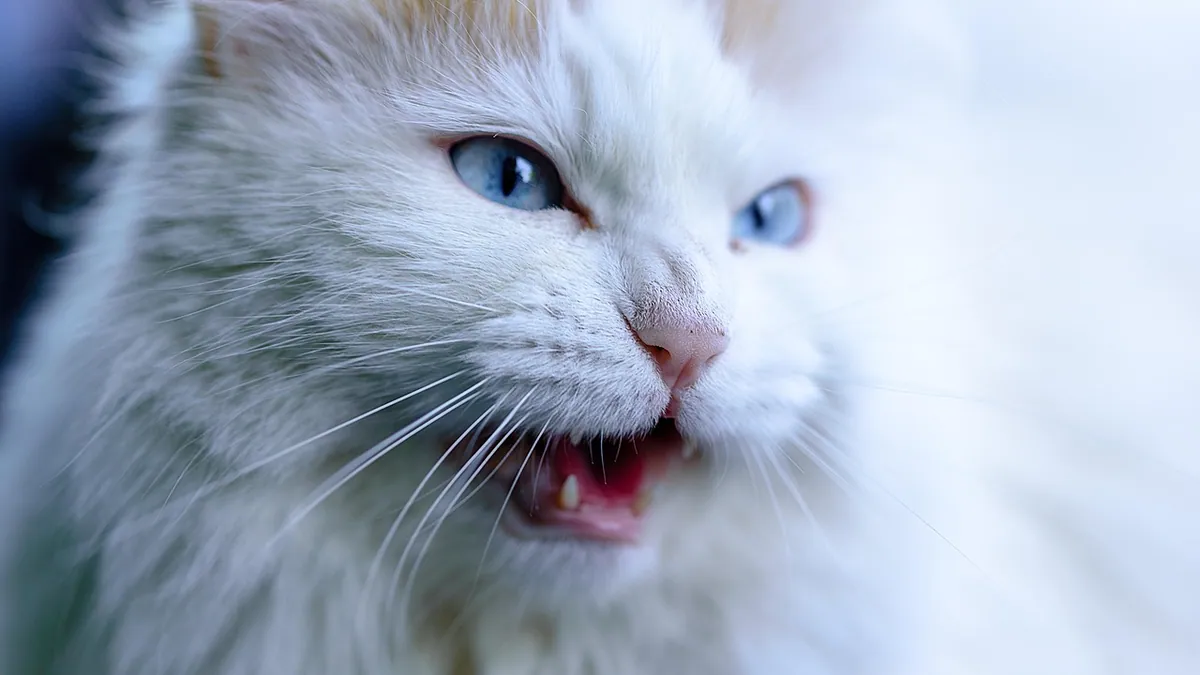
Laryngeal paralysis in cats symptoms usually start with a voice change. Your cat's meow may sound deeper, raspier, or hoarse, and you may hear noisy breathing when your cat inhales. This condition is uncommon in cats, but it can become life threatening when the airway narrows [1].
This article is educational and is not a substitute for veterinary diagnosis or treatment.
Quick Answer
- The most common early sign is a changed meow, often deeper or hoarse, along with a harsh noise when breathing in [1].
- Laryngeal paralysis is rare in cats compared with dogs, so a voice change has many other possible causes too [1].
- Diagnosis requires laryngoscopy under light anesthesia, because plain X-rays cannot confirm it [1].
- Definitive treatment is surgery, and several surgical methods have been used in cats [1][2].
- Severe breathing difficulty is an emergency. Go to a veterinarian right away if your cat is struggling for air.
What Is Laryngeal Paralysis in Cats?
The larynx is the part of the throat often called the voice box [3]. It sits at the top of the windpipe and does two jobs. It helps produce sound, and it opens when your cat breathes in.
In laryngeal paralysis, the muscles that open the larynx stop working normally. The nerves that control those muscles are damaged or not functioning. As a result, the opening does not widen properly when your cat inhales. Air has to push through a narrower space, which creates noise and makes breathing harder [1].
Some cats also have a condition called laryngitis, which is inflammation of the larynx. Laryngitis can come from infection, inhaled irritants like dust or smoke, trauma, excessive meowing, or a tumor in the larynx [3]. Laryngitis and laryngeal paralysis are different problems, but both can change your cat's voice and breathing.
Vocal cord paralysis in cats is another term owners may hear. It describes the same basic problem, since the vocal cords sit within the larynx and depend on the same nerve supply.
Laryngeal Paralysis in Cats Symptoms: What Owners Notice First
The signs often build slowly. Many owners notice the voice first and assume their cat has a cold or has been meowing too much. That is understandable, because laryngitis alone can cause similar changes [3].
Voice and meow changes
A deep, raspy, or hoarse meow is a common early clue. Some cats lose their voice entirely. In one reported case, a cat had a two-month history of hoarseness before a laryngeal mass was found [4]. Another cat showed progressive voice loss along with breathing trouble from a laryngeal tumor [5]. These cases show that a lasting voice change deserves a veterinary exam.
Breathing sounds
Inspiratory stridor is the medical term for the harsh, high-pitched noise made when air moves through a narrowed larynx. In a group of eight cats with laryngeal paralysis, every cat had severe trouble breathing and inspiratory stridor [2]. The noise is usually loudest when your cat breathes in.
Other signs to watch
- Open-mouth breathing, which is not normal in a calm cat
- Increased effort to breathe, with the belly or chest moving strongly
- Reduced activity or reluctance to play
- Trouble eating or drinking if breathing is hard
- Drooling, which can signal nausea, pain, or airway trouble. Sudden drooling is worth a closer look, and our guide on Cat Drooling Suddenly: When to Call the Vet can help you decide how urgent it is.
- Weakness or collapse in severe cases. If your cat seems suddenly weak, see Cat Lethargy: Sudden Weakness and When to Rush to the Vet.
Some cats with airway problems also shake their heads or paw at their ears, which can be confusing. Head shaking has many causes, including ear disease. Our article on Cat Head Shaking and Ear Problems: What to Know explains those signs.
| Sign | What it may sound or look like | Urgency |
|---|---|---|
| Changed meow | Deeper, raspy, hoarse, or silent | Routine visit soon |
| Noisy breathing | Harsh sound on inhale (stridor) | Same-day or urgent visit |
| Open-mouth breathing | Panting while resting, mouth open | Emergency now |
| Blue or gray gums | Poor oxygen levels | Emergency now |
| Collapse or weakness | Sudden inability to stand | Emergency now |
Causes and Risk Factors
Laryngeal paralysis is common in older, large-breed dogs and rare in cats [1]. When it does occur in cats, veterinarians look for an underlying cause.
Possible causes include:
- Nerve damage. The recurrent laryngeal nerve or vagal nerve can be affected by a tumor or other disease [1].
- Laryngeal tumors. Cancer and other masses in the larynx can block the airway and change the voice. Examples reported in cats include squamous cell carcinoma and a plasma cell tumor of the epiglottis [4][5].
- Laryngitis. Infection, irritants, trauma, or excessive meowing can inflame the larynx and cause similar signs [3].
- Swelling after procedures. Edema of the larynx can follow placement of a breathing tube during anesthesia or surgery in the area [3].
- Idiopathic cases. Sometimes no cause is found, which is called idiopathic laryngeal paralysis.
Age matters. Laryngeal paralysis is seen most often in older dogs, and affected cats in published reports have generally been middle-aged to older [1][4][5]. If your cat is older and its meow has changed, that is a reason to have it checked, not a reason to wait.
How Laryngeal Paralysis in Cats Is Diagnosed
Diagnosis starts with a full history and physical exam. Your veterinarian will ask when the voice changed, whether breathing is noisy, and whether your cat has trouble eating or playing.
Laryngoscopy
Laryngoscopy under light anesthesia is needed to confirm laryngeal paralysis [1]. During this exam, the veterinarian watches the larynx as the cat breathes. In a normal cat, the arytenoid cartilages open wide on each breath. In a paralyzed larynx, movement is absent or moves the wrong way with breathing (called paradoxical movement) [1].
Light anesthesia matters. If the cat is too deeply anesthetized, the larynx may not move even if it is normal, which can confuse the results.
Other tests
- Electromyography can show abnormal electrical activity in the laryngeal muscles, including positive sharp waves and denervation potentials [1].
- Radiographs (X-rays) are not diagnostic for laryngeal paralysis [1].
- Biopsy and imaging. If a mass is seen, a biopsy taken with laryngoscopic guidance can confirm the type of tumor [4]. Ultrasound, fluoroscopy, endoscopy, and contrast-enhanced CT have been used to map laryngeal masses in cats [4].
- Histology. Denervation atrophy can be seen when laryngeal muscle samples are examined under a microscope [1].
Because several conditions can mimic laryngeal paralysis, your veterinarian may test for other causes of voice change and breathing noise before settling on a diagnosis.
Treatment Options for Laryngeal Paralysis in Cats
Treatment depends on the cause, the severity of signs, and your cat's overall health. Mild cases may be managed with rest, reduced stress, and treatment of any underlying inflammation. Moderate to severe cases usually need surgery.
Surgery
Surgery is required for definitive treatment of laryngeal paralysis [1]. Two approaches have been described in cats.
- Unilateral arytenoid lateralization. This procedure appeared to be a suitable method to treat laryngeal paralysis in cats [1]. It is generally considered the treatment of choice, though complication rates in cats appear higher than in dogs [2].
- Transoral partial arytenoidectomy. In a study of eight cats, this technique was used when cats had severe breathing difficulty and did not respond to medical stabilization. No intraoperative complications occurred, and no catastrophic or major complications were recorded. All cats showed immediate improvement [2].
Your surgeon will discuss which option fits your cat. Factors include the cause, the shape of the larynx, and whether an emergency procedure is needed.
Temporary tracheostomy
A temporary tracheostomy tube creates a direct airway through the neck. In a review of 24 cats, the most common reasons for this procedure were inflammatory or infectious laryngitis (8 of 24 cats, 33%) and laryngeal neoplasia (6 of 24 cats, 25%). Other reasons included upper airway obstruction after ventral bulla osteotomy (2 of 24, 8%), trauma (2 of 24, 8%), and single cases such as laryngeal paralysis. Three cats (13%) had the tube placed electively. Fourteen of 24 cats (58%) survived to discharge [6].
This is a serious procedure with real risks, and it is usually reserved for cats who cannot breathe safely on their own.
Treatment for tumors
If a mass is the cause, treatment targets the tumor. One 14-year-old cat with laryngeal squamous cell carcinoma was treated with stereotactic radiation therapy in three 10 Gray fractions on consecutive days (total 30 Gray). The cat had a partial response 45 days later with improvement in signs, stayed in remission without late side effects until day 520, showed progressive disease on day 603, and died on day 644 [4]. Traditional surgery such as laryngotomy with or without tracheostomy often leads to severe or fatal complications in these cases [4].
Feline laryngeal cancer is rare and has a poor prognosis, and there is no single established treatment protocol [4]. Your veterinary team will tailor recommendations to your cat.
Medical support
Your veterinarian may use medications to reduce swelling or control other problems. Doses are calculated from your cat's weight and health, so follow your veterinarian's instructions exactly. Never give human medications to a cat without veterinary guidance.
Recovery, Outlook, and Long-Term Management
Recovery depends on the cause and the treatment chosen. Cats treated with transoral partial arytenoidectomy showed immediate improvement after surgery in one study [2]. That is encouraging, but every cat is different.
After surgery, expect a period of rest and restricted activity. Your veterinarian will explain how to monitor the surgical site, what to feed, and when to return for a check. Some cats need a temporary feeding tube or a short hospital stay.
Long-term care often includes:
- Keeping your cat at a healthy weight to reduce breathing effort
- Avoiding smoke, dust, and strong fumes that irritate the airway [3]
- Using a harness instead of a neck collar if the throat area is sensitive
- Limiting strenuous play and heat exposure
- Watching for any return of noisy breathing or voice change
If your cat had a tumor, follow-up imaging and exams help track the disease. In the radiation case described above, remission lasted more than a year before the disease progressed [4].
Prevention
You cannot always prevent laryngeal paralysis, especially when the cause is nerve damage or a tumor. Still, some steps may lower the risk of laryngeal irritation:
- Keep your cat indoors and away from smoke and chemical fumes [3]
- Treat respiratory infections promptly
- Avoid prolonged, intense meowing triggers when you can, since excessive meowing can inflame the larynx [3]
- Schedule regular wellness exams, especially for older cats
These steps support general airway health. They do not guarantee that paralysis will not develop.
Limitations and When to Contact a Veterinarian
This article covers general information only. Every cat needs an individual exam, and only your veterinarian can diagnose and treat your cat's specific condition.
Call your veterinarian the same day if you notice:
- A meow change that lasts more than a few days
- Noisy breathing that comes and goes
- Reduced appetite or activity with any voice change
Go to an emergency clinic now if you see:
- Open-mouth breathing while resting
- Blue, gray, or pale gums
- Struggling to breathe, with the belly or chest working hard
- Collapse, extreme weakness, or unresponsiveness
- Sudden severe drooling with breathing trouble
These signs mean the airway may be critically narrow. Minutes matter.
Frequently Asked Questions
Can a cat recover from laryngeal paralysis without surgery?
Mild cases may be managed for a time with rest and treatment of any underlying inflammation, but surgery is required for definitive treatment [1]. Cats with severe breathing difficulty often need surgery, and some need it as an emergency [2]. Talk with your veterinarian about which path is safest for your cat.
Does laryngeal paralysis always change a cat's meow?
A voice change is a common sign, and hoarseness or voice loss has been reported in cats with laryngeal disease [4][5]. However, not every cat with this condition will sound different at first. Some cats show breathing changes before the voice changes.
Is laryngeal paralysis painful for cats?
The condition itself is mainly a problem of airway opening and muscle function, not pain in the usual sense [1]. Cats can still feel distress from struggling to breathe, which is why breathing difficulty is treated as urgent. If your cat seems painful or anxious, tell your veterinarian.
How is laryngeal paralysis different from laryngitis?
Laryngitis is inflammation of the larynx, often from infection, irritants, trauma, or excessive meowing [3]. Laryngeal paralysis is a failure of the laryngeal muscles to open the airway properly [1]. The signs can look similar, so a veterinary exam is needed to tell them apart.
Can laryngeal paralysis in cats be cured?
Surgery can improve the airway and relieve signs, and cats in one study showed immediate improvement after a partial arytenoidectomy [2]. A cure depends on the cause. Cases linked to a tumor may need cancer treatment, and the outlook varies [4]. Your veterinarian can give you a realistic picture for your cat.
Related Articles
- Cats Ears Twitching And Shaking Head
- Cat Head Shaking and Ear Problems: What to Know
- Cat Drooling Suddenly: When to Call the Vet
- Cat Lethargy: Sudden Weakness and When to Rush to the Vet
- Ear Infections In Cats Symptoms
- FIP in Cats: Symptoms, Diagnosis, and How It Is Treated Today
- Tracheal Collapse in Cats: Symptoms, Diagnosis, and Treatment
- Why Is My Cat's Voice Changing? Causes and When to Worry
- Cat Losing Its Voice: Causes and When to Worry
- Bacterial Respiratory Infections in Cats: Etiology, Diagnosis, and Treatment
References
- Laryngeal Paralysis in Dogs and Cats - Respiratory System. Merck Veterinary Manual.
- Transoral Endoscopic-Assisted Partial Arytenoidectomy as a Treatment for Laryngeal Paralysis in Eight Cats. Animals : an open access journal from MDPI, 2026.
- Laryngeal Disorders in Cats - Cat Owners. Merck Veterinary Manual.
- Long-term remission in a cat with laryngeal squamous cell carcinoma treated with stereotactic radiation therapy. JFMS open reports, 2026.
- Solitary extramedullary plasmacytoma in the larynx of a domestic cat. Topics in companion animal medicine, 2026.
- Complications and outcomes of temporary tracheostomy in 24 cats. The Journal of small animal practice, 2026.