Laryngeal Collapse in Dogs: Symptoms, Sounds, and Treatment
By Dr. Zubair Khalid, DVM, MS, PhD ·
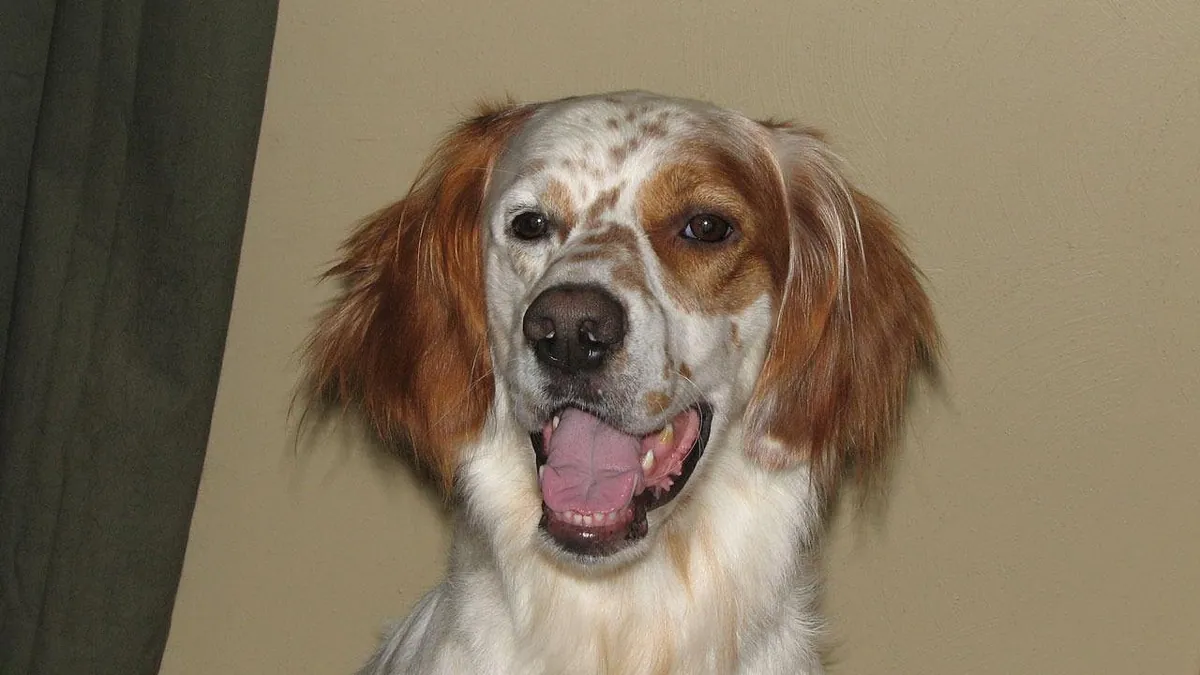
Laryngeal collapse in dogs means the cartilage box at the top of the windpipe weakens and folds inward, so the airway narrows when your dog breathes in. It is most common in flat-faced breeds such as French Bulldogs and Pugs, and it usually develops on top of other airway problems. The result is a raspy, honking, or snoring sound that gets worse with exercise, heat, or excitement.
This article is educational and is not a substitute for veterinary diagnosis or treatment.
Quick Answer
- A honking or raspy noise on breathing in points to the larynx (voice box) or the trachea (windpipe), and only a veterinarian can tell them apart.
- Laryngeal collapse is a structural failure of the laryngeal cartilage and is seen mainly in brachycephalic (flat-faced) breeds, often alongside brachycephalic obstructive airway syndrome, or BOAS [1].
- Tracheal collapse is a separate problem of the windpipe itself, and the classic sound is a dry honking cough, often triggered by pressure on the neck.
- Both conditions are diagnosed with imaging and airway examination, and both can be managed, but neither is cured with a pill alone.
- Sudden severe breathing difficulty, blue gums, or collapse is an emergency. Go to a veterinary hospital right away.
What Is Laryngeal Collapse in Dogs?
The larynx sits at the top of the trachea. It is built from several pieces of cartilage that open when your dog inhales and close when he swallows. In laryngeal collapse, those cartilages lose their stiffness and get pulled inward during inhalation. The opening shrinks, and air has to squeeze through a narrow gap.
This is different from laryngeal paralysis, where the cartilages are the right shape but do not move normally because the nerves that control them are not working [2]. In collapse, the problem is the structure itself. Many dogs have both problems at once, which is one reason the noise can be hard to sort out at home.
Laryngeal collapse is graded in stages. In a review of 80 dogs having surgery for BOAS, 18.75% had no laryngeal collapse, 57.50% had stage I, 16.25% had stage II, and 7.50% had stage III [1]. Higher stages mean more cartilage folding and a tighter airway.
Symptoms of Laryngeal Collapse in Dogs
Owners usually notice the sound first. The most common sign is stridor, a harsh, high-pitched noise heard when the dog breathes in [3]. It can sound like honking, snoring, or a raspy whistle.
Other signs include:
- Noisy breathing that gets louder with exercise, heat, or excitement
- Reduced exercise tolerance and tiring on normal walks
- A dry cough or voice change [2]
- Retching, gagging, or bringing up foam
- Restlessness at night and trouble settling
- In severe cases, distress with the neck and elbows stretched forward, and gums that look blue or gray
Because laryngeal collapse often comes with BOAS, you may also see the other classic flat-faced problems: narrow nostrils, a long soft palate, and everted laryngeal saccules. One study of inflammatory laryngeal masses in dogs found stridor was the most common sign, followed by voice changes and snoring, and all of those signs were mild at first [4]. That pattern is typical. Early signs are easy to dismiss.
Laryngeal Collapse vs Tracheal Collapse: What Is That Honking Sound?
This is the question most owners are really asking. The two conditions sound similar, but they come from different places and behave differently.
| Feature | Laryngeal Collapse | Tracheal Collapse |
|---|---|---|
| Location | Voice box at the top of the airway | Windpipe (trachea) further down |
| Typical sound | Raspy or honking noise on breathing in | Dry honking cough, often on breathing out |
| Common trigger | Exercise, heat, excitement, panting | Pressure on the neck, excitement, drinking |
| Typical breeds | French Bulldogs, Pugs, Boston Terriers, other flat-faced breeds [1] | Small breeds such as Toy and Miniature Poodles, Yorkshire Terriers, Pomeranians |
| Main problem | Laryngeal cartilage folds inward | Tracheal rings flatten and the airway narrows |
| Diagnosis | Laryngoscopy under light anesthesia [2] | Radiographs, fluoroscopy, or tracheoscopy |
A few practical clues help. If the noise is a cough that sounds like a goose honk and happens when your dog pulls on a collar, tracheal collapse is more likely. If the noise is a raspy breath on inhalation that shows up when your dog gets hot or excited, the larynx is the better suspect. Many dogs have more than one airway problem, so the distinction often has to be made with an examination. For a closer look at the coughing side of this question, see Why Is My Dog Coughing honking sound? Kennel Cough vs Collapsed Trachea.
You may also see "esophageal collapse in dogs" in your searches. The esophagus is the swallowing tube, not the airway. Collapse or dilation there causes regurgitation and weight loss, not honking breathing. If your dog is bringing up food without coughing, that is a different workup.
Causes and Risk Factors
Laryngeal collapse almost always has a cause underneath it.
Brachycephalic airway syndrome. Flat-faced dogs are built with a shortened skull and crowded upper airway. The extra effort needed to breathe creates suction that pulls the laryngeal cartilages inward over time. In the surgical review above, French Bulldogs made up 53.75% of the dogs presented for BOAS surgery [1].
Laryngeal paralysis. When the larynx does not open properly, the tissues are stressed and can secondarily collapse. Laryngeal paralysis is common in middle-aged to older large and giant breeds such as Labrador Retrievers, Irish Setters, and Great Danes, and it appears as a hereditary problem in Bouvier des Flandres, Leonbergers, Siberian Huskies, Bulldogs, and racing sled dogs [2]. For a deeper look at that disease, read Canine Laryngeal Paralysis: Diagnosis and Management.
Chronic inflammation and swelling. Severe panting or respiratory effort during excitement or overheating can cause laryngeal edema and laryngitis in brachycephalic and obese dogs and in dogs with laryngeal paralysis [3]. Ongoing inflammation can lead to cartilage damage over time.
Laryngeal chondropathy. This condition involves necrosis and ulceration of the laryngeal mucosa over or just behind the vocal cords, with abscessation inside the arytenoid cartilage. Progressive enlargement of the cartilages then produces a fixed upper airway obstruction that is present on both inhalation and exhalation, with audible breathing and reduced exercise tolerance [3].
Other causes. Laryngeal masses, including inflammatory ones, can obstruct the airway and cause stridor [4]. A glottic web, a rare band of tissue across the larynx, is another cause of obstruction [5]. Laryngeal stenosis, a narrowing of the airway, is a frequent and life-threatening cause of upper airway obstruction in dogs [6]. Nerve injury during chest surgery is a rare cause of laryngeal paralysis, with one study reporting left-sided laryngeal paralysis in 12.5% of dogs after patent ductus arteriosus ligation [7].
Weight and heat. Obesity and hot weather both increase breathing effort, which worsens any laryngeal problem.
How Laryngeal Collapse Is Diagnosed
Your veterinarian starts with the history and the sound. When the noise happens, what triggers it, and how fast it has progressed all matter.
The physical exam focuses on the upper airway. Your vet will check the nostrils, look at the soft palate, listen to the throat and chest, and assess your dog's breathing pattern at rest and after a short walk.
Laryngoscopy is the key test. The veterinarian examines the upper airway with an endoscope under light anesthesia to confirm what is happening to the laryngeal cartilages [2]. Light anesthesia matters because the larynx must still move on its own for the exam to be meaningful.
Imaging. Radiographs are not diagnostic for laryngeal paralysis [8], but they can show tracheal collapse, heart size, and lung changes. Fluoroscopy and other dynamic imaging can help identify moving structures such as inflammatory laryngeal masses [4].
Staging. If your dog has BOAS, the surgeon will grade the laryngeal collapse during the airway exam, because the stage guides how much surgery is needed [1].
Bloodwork and screening. Your vet may run blood tests and, in older dogs, screen for underlying disease that makes anesthesia riskier. If a nerve problem is suspected, additional testing such as electromyography may be used, since it can show denervation changes in laryngeal muscles [8].
Treatment Options for Laryngeal Collapse in Dogs
Treatment depends on the stage, the underlying cause, and how much distress your dog is in.
Emergency stabilization
If your dog cannot move air, the first goal is to open the airway. Tranquilizers and corticosteroids are temporarily effective in mild cases of laryngeal paralysis, and severe obstruction may require placement of a tube into the trachea, called a tracheotomy [2]. Oxygen and cooling are also used when a dog arrives overheated. Emergency tracheostomy may be necessary in severe airway impairment [3].
Medical management
Medical care does not reverse collapsed cartilage, but it reduces the swelling and effort that make it worse. Your veterinarian may prescribe anti-inflammatory drugs, cough suppressants, or sedatives for stressful events. The dose is calculated from your dog's weight and health, so never use a leftover medication or a human drug without asking.
Surgery
Surgery is the definitive treatment for laryngeal paralysis [8]. For collapse related to BOAS, the surgeon typically corrects all the obstructing levels at once. This can include widening the nostrils, shortening the soft palate, and removing everted saccules.
For advanced laryngeal collapse, a procedure called cuneiformectomy may be added. In a study of 180 dogs having BOAS surgery, 94 had modified multilevel surgery and 86 also had cuneiformectomy. Overall complication rates were 19.4% without cuneiformectomy and 16.3% with it, and major complication rates were 7.4% and 11.6%. Median hospital stay was one day in both groups, and both groups improved in BOAS grade [9]. In other words, adding the procedure did not raise the risk of complications in that group.
Other surgical options exist for specific problems. A dorsal glottic web has been treated successfully with transoral endoscopic laser lysis plus temporary placement of a keel to prevent recurrence [5]. For laryngeal stenosis, custom 3D-printed laryngeal stents are being studied as a less invasive option, and a cadaver study found the stent produced a more physiologic dilation than an endotracheal tube [6]. These are newer approaches, so ask your specialist whether they fit your dog's case.
What about cats?
Laryngeal paralysis is rare in cats, and complication rates after arytenoid lateralization appear higher in cats than in dogs [10]. A transoral partial arytenoidectomy has been described as an alternative for cats in severe distress, with all eight cats in one report showing immediate improvement and no major complications [10]. This matters only if you also have a cat with similar signs.
Recovery, Outlook, and Long-Term Management
Most dogs improve after surgery, but recovery takes planning.
Expect a quiet first couple of weeks. Your dog needs rest, short leash walks, and no excitement. Coughing and gagging can happen after laryngeal surgery, and your vet will tell you what is normal and what needs a call.
Long-term care usually includes:
- Keeping your dog at a healthy weight
- Avoiding heat and heavy exercise, especially in summer
- Using a harness instead of a neck collar
- Managing stress and excitement around visitors, storms, and travel
- Treating any underlying heart or nerve disease
The progression of laryngeal paralysis signs usually takes months or even years before respiratory distress is evident [2]. That slow timeline is good news in one way. It gives you time to plan surgery before a crisis. It is bad news in another way, because owners often wait until the signs are severe.
Dogs with laryngeal collapse from BOAS tend to do well when all levels of the airway are addressed, but some continue to have noisy breathing, especially when hot or active. Your veterinarian will set expectations based on your dog's stage and other conditions.
Prevention
You cannot prevent every case, but you can lower the odds and the severity.
- Keep your dog lean. Obesity increases breathing effort and is a known factor in laryngeal swelling during heavy panting [3].
- Avoid overheating. Walk in the early morning or evening, and never leave your dog in a hot car.
- Use a harness. Neck pressure is a problem for dogs with any airway disease.
- Screen flat-faced breeds early. If you have a French Bulldog, Pug, or Boston Terrier, ask your vet about BOAS at every wellness visit. Early surgery tends to be easier than emergency surgery.
- Know the breed risks. Large and giant breeds such as Labrador Retrievers and Great Danes are prone to laryngeal paralysis [2], so watch for voice changes and noisy breathing as they age. For senior dogs with a dragging back end and voice change, see Laryngeal Paralysis in Senior Dogs: GOLPP Symptoms and Tie-Back Surgery.
- Treat other airway problems. Nostril narrowing, a long soft palate, and everted saccules all add to the suction that damages the larynx.
Limitations and When to Contact a Veterinarian
No article can tell you what is happening in your dog's throat. The sound, the stage, and the underlying cause all need a hands-on exam.
Go to an emergency hospital now if your dog:
- Breathes with the neck stretched out and elbows spread wide
- Has blue, gray, or white gums
- Collapses or cannot stand
- Makes a loud noise with every breath and cannot settle
- Has a body temperature that feels very high after heat exposure
Call your veterinarian the same day if your dog:
- Has a new honking or raspy sound that started today
- Coughs up foam or vomits after breathing hard
- Refuses food or seems weak
- Has a voice change that has lasted more than a few days
Schedule a routine visit if your dog:
- Has slowly worsening noisy breathing over weeks to months
- Tires faster on walks than he used to
- Snores much more than before
Any individual case needs a veterinarian who can examine your dog, grade the problem, and recommend a plan.
Frequently Asked Questions
Is laryngeal collapse the same as laryngeal paralysis?
No, they are different problems that often occur together. In paralysis, the cartilage does not move normally because of nerve dysfunction. In collapse, the cartilage itself folds inward and loses its shape. A dog can have both, and the treatment plan has to address each one.
Can laryngeal collapse be cured with medication?
No. Medication can reduce swelling and calm your dog, but it does not restore collapsed cartilage. Surgery is the definitive treatment for laryngeal paralysis, and BOAS-related collapse is usually managed by correcting all the obstructing levels of the airway.
Will my dog need a permanent breathing tube?
Usually not. A tracheotomy tube is placed to get a dog through a severe crisis, and it is typically temporary while the airway is stabilized or surgery is planned. Long-term tube use is uncommon and is reserved for specific cases.
Is anesthesia safe for a dog with a collapsing airway?
Airway examination and surgery do carry risk, which is why these procedures are done with careful planning. Laryngoscopy is performed under light anesthesia so the larynx can still move during the exam. Your veterinarian will assess your dog's overall health first and choose the safest approach.
Should I switch my dog from a collar to a harness?
Yes, if your dog has any airway noise. Neck pressure can worsen coughing and breathing in dogs with laryngeal or tracheal disease. A well-fitted harness takes pressure off the throat and is a simple change you can make today.
Related Articles
- Canine Laryngeal Paralysis: Diagnosis and Management
- Laryngeal Paralysis in Senior Dogs: GOLPP Symptoms and Tie-Back Surgery
- Why Is My Dog Coughing honking sound? Kennel Cough vs Collapsed Trachea
- Comprehensive Guide to Head Shaking in Dogs: Causes, Diagnostics, and Treatment
- Dog Obstruction Symptoms
- Dog Honking Cough After Drinking Water: Tracheal Collapse vs Kennel Cough & Triage
- Collapsed Trachea in Dogs: Life Expectancy and Prognosis
- Laryngeal Paralysis in Cats: Symptoms, Meow Changes, Treatment
- Collapse in Dogs: Causes and When It's an Emergency
References
- Prevalence and severity of laryngeal collapse in dogs undergoing surgery for brachycephalic obstructive airway syndrome: 80 dogs (2018-2022). Frontiers in veterinary science, 2025.
- Paralysis of the Larynx in Dogs - Dog Owners. Merck Veterinary Manual.
- Laryngeal Disorders in Animals - Respiratory System. Merck Veterinary Manual.
- Clinical characteristics and histopathologic features of movable inflammatory laryngeal masses in five dogs. The Journal of veterinary medical science, 2025.
- Endoscopic diode laser lysis of dorsal acquired glottic web and custom-made Silastic keel placement in a dog. The Canadian veterinary journal = La revue veterinaire canadienne, 2026.
- Anatomical adaptation of a custom 3D prosthesis for canine laryngeal stenosis: a preliminary cadaveric study. Journal of veterinary science, 2026.
- Effects of left vagus nerve retraction on post-operative unilateral left-sided laryngeal paralysis following surgical closure of patent ductus arteriosus in dogs. The Journal of small animal practice, 2025.
- Laryngeal Paralysis in Dogs and Cats - Respiratory System. Merck Veterinary Manual.
- Complication rate and outcomes of laryngeal cuneiformectomy in dogs with advanced laryngeal collapse. Veterinary surgery : VS, 2025.
- Transoral Endoscopic-Assisted Partial Arytenoidectomy as a Treatment for Laryngeal Paralysis in Eight Cats. Animals : an open access journal from MDPI, 2026.