Wheezing in Dogs While Sleeping: Normal or a Problem?
By Dr. Zubair Khalid, DVM, MS, PhD ·
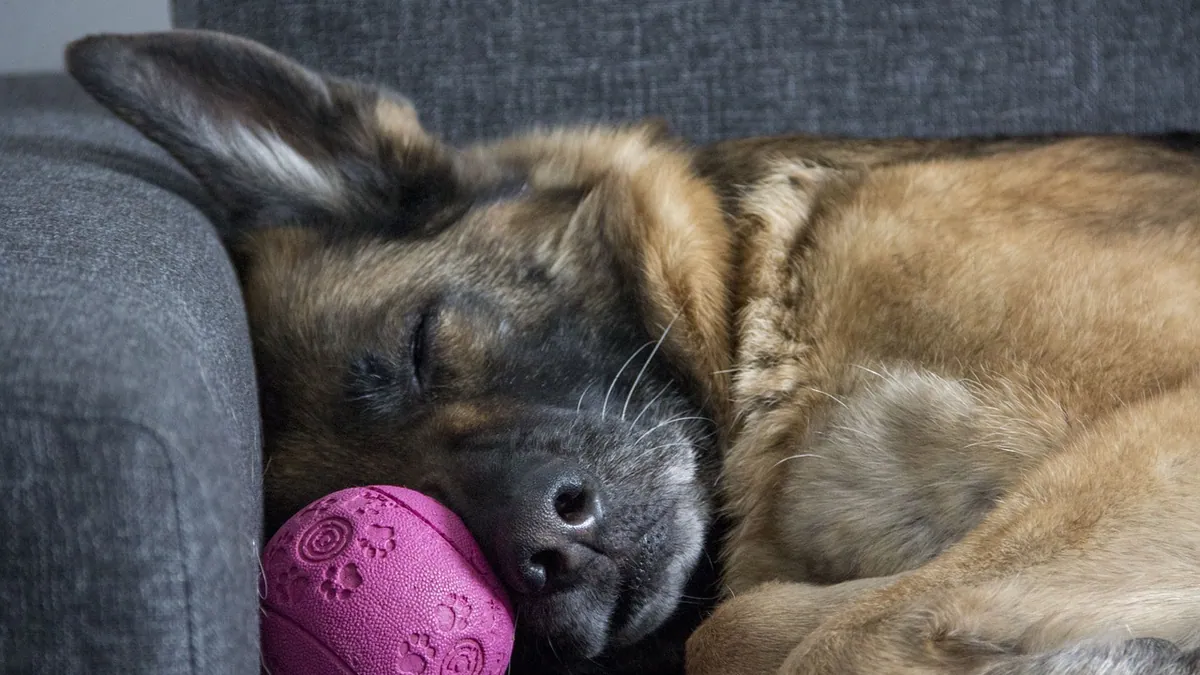
Wheezing in dogs while sleeping is often normal, especially in flat-faced breeds like Bulldogs and Pugs, or in older dogs with relaxed upper airways. But it can also be an early sign of heart disease, lung disease, or an airway obstruction that needs treatment. This article explains how to tell the difference and when to record a video for your vet.
This article is educational and is not a substitute for veterinary diagnosis or treatment.
Quick Answer
- Occasional soft wheezing during sleep is common in flat-faced breeds because their shortened airways vibrate as air moves through them [1].
- Older dogs may wheeze at rest because airway muscles relax during sleep, but new or worsening noise still deserves a check.
- Wheezing that wakes your dog, comes with coughing, blue gums, or heavy belly breathing is an emergency.
- Record a 30 to 60 second video of the sound while your dog sleeps. It is one of the most useful things you can bring to a vet visit.
- Never give human asthma inhalers, cough syrups, or antihistamines to a dog without veterinary direction.
What Wheezing in Dogs While Sleeping Looks and Sounds Like
Wheezing is a high-pitched, whistling sound made when air squeezes through narrowed airways. In dogs it usually happens on breathing in (inspiration), though it can happen on breathing out. You may hear it from across the room, or only when you put your ear near your dog's chest.
Normal sleep sounds in dogs include soft snoring, light snuffling, and occasional deep sighs. Flat-faced dogs often make more noise than other breeds because their nostrils, soft palate, and throat are crowded [1]. A dog with brachycephalic obstructive airway syndrome (BOAS) can have noisy breathing at rest and during sleep, and the severity varies from mild to severe [1].
Older dogs may also wheeze more at rest. As dogs age, the muscles that hold the upper airway open relax more during sleep, and the airway can narrow slightly. That said, age alone does not explain a sudden change in breathing noise.
The key question is not whether your dog makes any noise. It is whether the noise is new, getting worse, or paired with other signs.
Main Causes of Wheezing in Dogs While Sleeping
| Cause | Typical clues | How urgent |
|---|---|---|
| Brachycephalic airway syndrome (BOAS) | Flat face, snoring, snorting, noisy breathing at rest, worse in heat or exercise [1] | See your vet soon for a baseline exam |
| Pharyngeal sialocele (salivary cyst in the throat) | Drooling, neck swelling, stridor, trouble breathing [2] | Urgent, can obstruct the airway [2] |
| Inflammatory muscle disease (myositis) | Upper airway noise, trouble swallowing, muscle wasting [3] | Urgent, needs diagnostics |
| Pituitary tumor with excess growth hormone | Older dog, new inspiratory stridor, diabetes that is hard to control [4] | Urgent, needs imaging and blood tests |
| Heart disease | Coughing, exercise intolerance, fast breathing at rest, fainting | Same-day to emergency, depending on severity |
| Lung disease (asthma, bronchitis, pneumonia) | Cough, wheeze, fast breathing, low energy | Same-day visit |
| Obesity or relaxed airway in sleep | Mild noise only during sleep, normal daytime breathing | Routine visit |
| Foreign object or mass in the airway | Sudden onset, gagging, distress, one loud noise then struggle | Emergency now |
A pharyngeal sialocele is a rare salivary cyst that sits in the throat and can block airflow. In a small case series, dogs with this condition showed drooling, neck swelling, stridor, and difficulty breathing, and most were male [2]. This is one reason a new wheeze with drooling or a neck lump should never wait.
Inflammatory muscle conditions can also change breathing sounds. One dog with masticatory myositis and polymyositis had long-standing upper airway noise and trouble swallowing, along with high muscle enzyme levels [3]. Muscle disease is not common, but it shows how airway noise can come from tissues outside the lungs.
Rare hormone problems can cause airway noise too. A dog with a growth hormone producing pituitary tumor had progressive inspiratory stridor along with poorly controlled diabetes [4]. This is uncommon, but it is a reminder that a new breathing sound in an older dog deserves a full workup.
How to Tell Sleep Noise From Heart or Lung Disease
Heart and lung disease often change breathing in ways you can measure at home. Count your dog's breaths while they are asleep and calm. A normal sleeping respiratory rate for most dogs is under 30 breaths per minute, though your vet will set the target for your dog. If the rate is rising night after night, or if your dog's belly moves a lot with each breath, that points away from simple sleep noise.
Sleep noise from the upper airway usually stops or changes when your dog wakes and shifts position. Heart or lung disease tends to keep causing fast or labored breathing even when your dog is awake and resting. A dog with heart disease may also cough, tire on walks, or faint.
If your dog breathes fast while sleeping, that pattern is worth tracking separately. You can read more about normal and abnormal rates in Dog Breathing Fast While Sleeping: Normal or a Problem?.
Some sleep sounds are not wheezing at all. Reverse sneezing is a sudden, snorting intake of air that can happen during sleep and usually lasts seconds. It is different from the steady whistle of wheezing. You can compare the two in Dog Reverse Sneezing In Sleep.
Red Flags That Make It an Emergency
Go to an emergency clinic now if you see any of these:
- Blue, gray, or pale gums or tongue
- Open-mouth breathing in a dog that normally breathes through the nose
- Standing with elbows out and neck stretched to breathe
- Breathing that gets worse over minutes, not days
- Collapse, fainting, or a dog that will not wake normally
- A loud, sudden breathing noise followed by gagging or distress
- A neck swelling that is growing fast, with drooling or trouble swallowing [2]
These signs mean the airway or the heart may be failing right now. Do not wait for a morning appointment.
Safe Things You Can Do at Home While Waiting
Stay calm and keep your dog calm. Stress makes airway noise worse, especially in flat-faced breeds [1].
- Keep the room cool and quiet. Heat and excitement narrow the airway further in BOAS dogs [1].
- Do not put anything in your dog's mouth. You cannot safely clear a throat obstruction at home.
- Do not give human medications. Cough syrups, inhalers, and antihistamines can harm dogs, and doses must be calculated by your vet based on weight and health.
- Record a video. Use your phone to capture 30 to 60 seconds of the sound, including your dog's chest and nostrils. Note the time and whether your dog was asleep.
- Track breathing rate. Count breaths for 15 seconds and multiply by 4, then write it down with the date.
- Prop the head slightly if your dog tolerates it. A small pillow under the head can sometimes ease upper airway noise, but never force a position.
- Keep the collar off if your dog has a neck swelling. A harness is safer.
If your dog also paces or whines at night, that can be a sign of pain or anxiety on top of breathing trouble. See Dog Pacing and Whining at Night: Is It Anxiety or a Medical Emergency? and Dog Whining at Night: Anxiety, Pain, or Something Else?.
What Your Veterinarian Will Check and Test
Your vet will start with a full physical exam, including listening to the heart and lungs and checking the nostrils, mouth, and throat. They will ask when the noise started, whether it happens only in sleep, and whether it has changed.
Common tests include:
- Blood work, including a thyroid panel and muscle enzymes if muscle disease is suspected [3]
- Chest X-rays to look at heart size and lung patterns
- Airway exam under light sedation to see the soft palate, larynx, and throat
- Ultrasound of the heart if a murmur or arrhythmia is found
- CT or MRI if a mass, cyst, or pituitary problem is suspected [2][4]
For a pharyngeal sialocele, diagnosis may involve cytology and imaging, and treatment is surgical removal of the affected salivary glands [2]. For muscle disease, muscle biopsies and antibody tests can confirm the diagnosis [3]. For a pituitary tumor, MRI and hormone testing are needed [4].
Your vet will also ask about your dog's sleep and activity. A video you recorded at home is often more useful than a description, because the sound may not happen in the clinic.
Prevention and Monitoring
You cannot prevent every cause of wheezing, but you can lower risk and catch problems early.
- Keep flat-faced dogs at a healthy weight. Extra fat around the throat worsens BOAS [1].
- Avoid heat, stress, and long flights for dogs with known airway disease [1].
- Use a harness instead of a neck collar if your dog has airway noise.
- Track sleeping breathing rate a few nights a week and write it down.
- Schedule a checkup if the noise changes, even if your dog seems fine.
- Tell your vet about any new drooling, swallowing trouble, or neck swelling right away [2].
Dogs sleep a lot, so you have many chances to notice changes. If you want to understand normal sleep patterns better, see Why Do Dogs Sleep So Much? Understanding Canine Sleep Patterns.
Limitations and When to Contact a Veterinarian
No article can tell you whether your dog's wheeze is harmless or dangerous. That takes an exam, and often tests. Individual cases need a veterinarian who can see your dog and hear the sound in person.
Contact your vet the same day if your dog has new wheezing that lasts more than a day, a cough, a drop in energy, or a sleeping breathing rate that is rising.
Go to an emergency clinic now if your dog has blue gums, open-mouth breathing, a neck swelling with drooling, collapse, or breathing that is getting worse by the minute.
Call your vet for a routine visit if the noise is mild, only in sleep, and your dog is eating, playing, and breathing normally when awake.
Frequently Asked Questions
Is wheezing in dogs while sleeping always a sign of illness?
No, mild wheezing during sleep can be normal, especially in flat-faced breeds and older dogs. The sound matters less than the pattern. New, worsening, or daytime noise is more concerning.
Should I record a video of my dog wheezing?
Yes, a short video is one of the most helpful things you can bring to a vet visit. Capture the sound, the chest movement, and the nostrils. Note whether your dog was asleep or awake.
Can I give my dog human asthma medicine for wheezing?
No, never give human inhalers or cough medicine without veterinary direction. The dose and drug must be chosen by your vet based on your dog's weight and health.
Does wheezing at night mean heart disease?
Not always, but heart disease is one possible cause. A rising sleeping breathing rate, coughing, or fainting along with the wheeze makes heart disease more likely and needs a same-day visit.
When should I worry about my dog's breathing at night?
Worry if the noise is new, if your dog wakes up struggling, if the gums look blue or pale, or if your dog needs to sit up or stand to breathe. Those signs mean an emergency visit right away.
Related Articles
- Dog Breathing Fast While Sleeping: Normal or a Problem?
- Dog Whining at Night: Anxiety, Pain, or Something Else?
- Dog Pacing and Whining at Night: Is It Anxiety or a Medical Emergency?
- Dog Reverse Sneezing In Sleep
- Why Do Dogs Sleep So Much? Understanding Canine Sleep Patterns
- Dog Sleeping In Bed Behavior Problems
- Why Is My Dog Wheezing? Causes and When to Worry
- Dog Breathing Heavily at Night: Causes and When to Worry
- Labored Breathing in Dogs at Rest or Sleeping
- Bordetella bronchiseptica in Dogs and Cats: Kennel Cough Pathogenesis, Diagnosis, and Control
References
- Canine brachycephalic obstructive airway syndrome as a model for studying the effects of obstructive sleep apnea during pregnancy. Animal models and experimental medicine, 2026.
- Clinical presentation, surgical management, and long-term outcomes of pharyngeal sialoceles in dogs: 6 cases (2015-2025). BMC veterinary research, 2025.
- Case Report: Overlap syndrome with concurrent polymyositis, masticatory myositis, and lymphocytic thyroiditis in a dog. Frontiers in veterinary science, 2026.
- Case Report: Treatment of hypersomatotropism in a diabetic dog with transsphenoidal hypophysectomy. Frontiers in veterinary science, 2026.