Dog Breathing Heavily at Night: Causes and When to Worry
By Dr. Zubair Khalid, DVM, MS, PhD ·
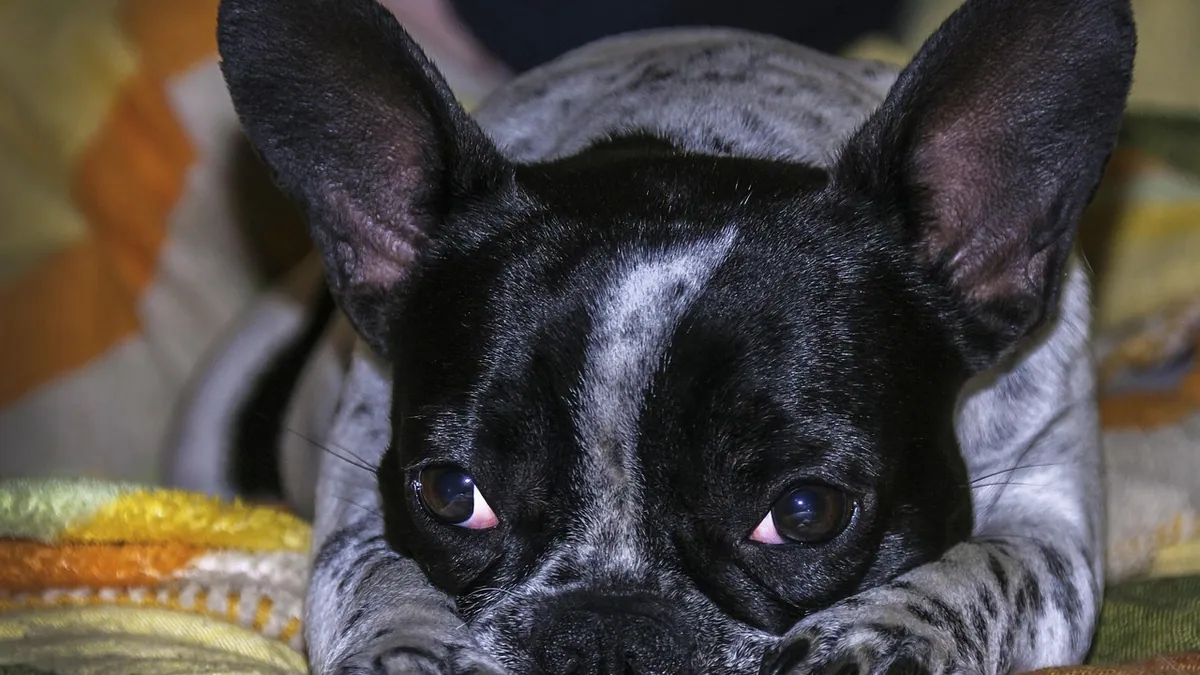
If your dog is breathing heavily at night, the cause can range from something harmless like a warm room or a dream to a serious problem with the heart, lungs, or airway. The pattern matters as much as the sound, so note when it started, how long it lasts, and whether your dog seems comfortable between episodes. This article is educational and is not a substitute for veterinary diagnosis or treatment.
Quick Answer
- Occasional heavy breathing during sleep is normal, especially in warm rooms or during REM sleep, but breathing that is loud, effortful, or different from your dog's usual pattern deserves a closer look.
- Nocturnal breathing problems that come and go in severe episodes are a recognized pattern in some dogs and have been linked to serious lung and bleeding conditions [1].
- Breathing trouble that starts suddenly, comes with blue or gray gums, collapse, or a distended belly is an emergency, so call your vet or an emergency hospital right away.
- Record a short video of the breathing at night, since dogs often look normal by the time they reach the clinic.
- Never give human medications, sedatives, or leftover pet prescriptions to slow breathing at home, because the dose depends on your dog's weight and health and must be set by a veterinarian.
What Normal and Abnormal Night Breathing Looks Like
A healthy dog at rest breathes quietly through the nose with the mouth closed. You may see gentle chest movement and a slow, steady rhythm. Puppies, flat-faced breeds like pugs and bulldogs, and dogs in a hot room often breathe a little louder and faster than others, and that can be normal for them.
Sleep itself changes breathing. During dreaming, many dogs twitch, paddle their legs, and breathe faster for a few seconds. That usually settles without waking them. If your dog's nighttime breathing is fast but smooth and he wakes up bright and alert, you can read more about that pattern in Dog Breathing Fast While Sleeping: Normal or a Problem?.
What is not normal is effort. Watch the belly and the sides of the chest. If the abdomen pumps hard with every breath, if the nostrils flare, if your dog stretches his neck out to breathe, or if he cannot lie down comfortably, that is labored breathing. Noisy breathing at night, including wheezing, honking, or a raspy sound, is another sign that air is moving through a narrowed or irritated airway.
Position matters too. Some dogs with breathing problems at night pace, sit up, or sleep with the head propped on a pillow or the arm of a couch. Others wake suddenly gasping. Any of these patterns is worth a call to your veterinarian.
Why Is My Dog Breathing Heavy at Night?
Many different problems can change breathing after dark. Some are mild and temporary. Others are serious and need treatment. The table below groups the most common causes and what makes each one stand out.
| Cause | Typical clues | How urgent |
|---|---|---|
| Heat or a stuffy room | Panting starts when the room is warm, stops once your dog cools off | Try cooling first, call your vet if it does not help |
| Anxiety or a stressful change | Pacing, whining, panting at night, normal breathing when relaxed | See your vet soon, especially if it happens most nights |
| Pain | Restlessness, panting, trouble settling, stiffness when getting up | See your vet soon, since pain control needs a prescription |
| Obesity or a narrow airway | Snoring, snorting, noisy breathing at night, worse in flat-faced breeds | Routine visit, but call sooner if breathing gets effortful |
| Heart disease | Coughing at night, tiring on walks, heavy breathing when lying flat | See your vet promptly, since heart failure can worsen quickly |
| Lung disease or pneumonia | Fast, shallow breathing, cough, fever, low energy | Same day or emergency, depending on severity |
| Airway mass or collapse | Loud, honking breathing that gets worse over weeks, exercise intolerance | Urgent, since a mass can block most of the airway [2] |
| Sudden lung injury or bleeding | Severe episodes out of nowhere, sometimes with blood, normal between events | Emergency now |
| Medication or anesthesia reaction | Breathing trouble within hours of a drug or procedure | Emergency now |
Heat, Exercise, and Body Shape
Dogs cool themselves mostly by panting. A warm bedroom, a thick coat, or a walk right before bed can all leave a dog breathing quickly at night. Flat-faced breeds have extra trouble because their airways are built differently, so they often snore and breathe noisily even when healthy.
Anxiety and Stress
Anxious dogs pant, pace, and whine at night, and the behavior tends to repeat at the same time each evening. If your dog is also restless, destructive, or clingy after dark, the breathing may be part of a larger nighttime anxiety pattern. You can read more in Dog Anxiety at Night: Why It Happens and How to Help and Dog Whining at Night: Anxiety, Pain, or Something Else?.
Pain
Dogs in pain often pant instead of crying. Arthritis, dental disease, back pain, and abdominal discomfort can all make a dog restless and short of breath at night, when there is nothing to distract him. Panting from pain is a common reason owners search for answers about why a dog is panting at night.
Heart Disease
A failing heart backs fluid into the lungs, and that fluid pools when a dog lies flat. The result is a dog who sleeps poorly, coughs, and breathes heavily at night but seems better during the day. This pattern needs a veterinary exam and imaging, not home remedies.
Lung and Airway Disease
Pneumonia, chronic bronchitis, collapsing trachea, and tumors can all narrow or clog the airway. A mass in the windpipe is rare but can cause severe, worsening breathing episodes, and one reported dog had a tumor blocking about 90 percent of the airway before it was found [2]. Sudden, severe lung injury is another possibility. In one case, a dog developed acute respiratory distress with diffuse lung damage, and the underlying cause turned out to be a tumor of the adrenal gland [3]. Another dog had repeated severe breathing crises at night with coughing up blood, and the episodes were tied to diffuse lung infiltrates instead of a typical heart problem [1]. A young dog with a coronavirus infection and suspected aspiration also developed acute respiratory distress syndrome with severe lung changes [4]. These are uncommon situations, but they show why repeated nighttime breathing crises should never be dismissed.
Medications and Procedures
Some drug combinations used for sedation and anesthesia can cause sudden breathing difficulty, nosebleeds, and fluid in the lungs, and young or atropine-premedicated patients may be at higher risk [5]. If breathing trouble starts within a day of a procedure or a new medication, treat it as an emergency.
Red Flags That Mean Emergency
Call an emergency hospital immediately if you see any of these:
- Gums, lips, or tongue that look blue, gray, or white
- Breathing that is fast and shallow at rest and does not slow down when your dog relaxes
- Standing with elbows out, neck stretched, and belly pumping hard
- Collapse, weakness, or inability to stand
- A swollen or distended abdomen along with heavy breathing
- Coughing up blood or pink frothy fluid
- Breathing that gets worse over minutes, not hours
- A known heart or lung condition that suddenly seems worse
Do not wait until morning for these signs. Breathing emergencies can progress quickly, and oxygen and other treatments need to start right away.
What You Can Safely Do at Home Tonight
While you wait for your appointment or decide whether to go to the emergency clinic, keep your dog calm and cool.
- Move him to the coolest room in the house and point a fan toward him, without blowing air directly into his face.
- Keep the collar off and use a harness if you need to move him, so nothing presses on the throat.
- Let him choose his position. Do not force him to lie flat if he prefers to sit or stand.
- Offer small sips of water, but do not push food or treats if he seems uncomfortable.
- Stay quiet and close. Your calm presence helps an anxious dog settle.
- Record a 20 to 30 second video of the breathing pattern, including the belly and chest, to show your veterinarian.
- Do not give any medication, including antihistamines, sedatives, or pain pills, unless your own veterinarian prescribed it for this problem.
If your dog's breathing does not improve within a few minutes of cooling and calming, or if any red flag appears, go to the emergency hospital.
What Your Veterinarian Will Check
Your veterinarian will start with the story: when the breathing changed, what it sounds like, how long episodes last, and whether anything makes it better or worse. Then comes a full physical exam, including listening to the heart and lungs, checking gum color, feeling the pulse, and measuring how hard your dog is working to breathe.
Testing depends on what the exam suggests. Common steps include:
- Pulse oximetry to measure oxygen levels, since a reading under 95 percent signals a problem [3]
- Chest X-rays to look for fluid, infiltrates, or an enlarged heart [3][1]
- Blood work, including a packed cell volume, because red blood cell counts can rise and fall with some breathing crises [1]
- Heart ultrasound when heart disease is suspected
- Bronchoscopy, a camera exam of the airway, when a mass or collapse is possible [2]
- Advanced imaging such as CT to plan treatment for an airway obstruction [2]
Treatment might include oxygen, medications to move fluid out of the lungs, anti-inflammatory drugs, or procedures to open the airway. The exact plan and every dose are set by your veterinarian based on your dog's weight, test results, and overall health.
Preventing and Monitoring Night Breathing Problems
You cannot prevent every cause, but you can lower the odds and catch problems earlier.
- Keep your dog at a healthy weight, since extra body fat makes every breath harder.
- Cool the bedroom and avoid heavy exercise in the hour before bed.
- Treat pain and anxiety promptly instead of waiting for them to worsen.
- Keep routine vet visits, especially if your dog has a heart murmur or a chronic cough.
- Track episodes in a notebook or phone app, including the time, duration, and what your dog was doing.
- Video the breathing at night, because many dogs look normal in the clinic.
- Follow your veterinarian's monitoring plan if your dog has a known heart or lung condition, since changes in breathing are often the first sign that treatment needs adjusting.
Limitations and When to Contact a Veterinarian
This article cannot tell you what is causing your dog's breathing pattern. Only a veterinarian who examines your dog can do that, and individual cases always need professional assessment.
Contact your veterinarian the same day if your dog has new noisy breathing, a cough that wakes him at night, exercise intolerance, or nighttime restlessness that has lasted more than a day or two. Go to an emergency hospital now for blue gums, collapse, severe effort, coughing up blood, or breathing that worsens over minutes. Schedule a routine visit if the breathing is mild, stable, and only happens in warm rooms or during sleep, but mention it so your vet can decide whether testing is needed.
Frequently Asked Questions
Is it normal for a dog to breathe heavily at night?
Occasional heavy breathing during sleep can be normal, especially in warm rooms, during dreams, or in flat-faced breeds. It becomes a concern when the breathing is effortful, noisy, or different from your dog's usual pattern, or when it wakes him up.
Why does my dog breathe fast only at night?
Nighttime is when distractions fade, so pain, anxiety, and heart or lung problems become more obvious. Lying flat also lets fluid shift in the chest, which can make heart-related breathing worse after dark. If this happens most nights, have your dog examined.
Can anxiety cause heavy breathing at night in dogs?
Yes. Anxious dogs often pant, pace, and whine after dark, and the pattern tends to repeat at the same time each night. If the breathing settles when your dog is relaxed and calm, anxiety is a likely contributor, but a vet visit can rule out medical causes first.
What should I do if my dog is struggling to breathe at night?
Keep your dog calm and cool, remove the collar, and let him choose a comfortable position. If the effort does not ease within a few minutes, or if you see blue gums, collapse, or a swollen belly, go to an emergency hospital right away.
Can heavy nighttime breathing be a sign of heart disease in dogs?
It can. A failing heart backs fluid into the lungs, and that fluid pools when a dog lies flat, so coughing and heavy breathing at night are common early signs. A veterinary exam with chest X-rays and possibly a heart ultrasound can confirm it.
Related Articles
- Dog Breathing Fast While Sleeping: Normal or a Problem?
- Dog Whining at Night: Anxiety, Pain, or Something Else?
- Why Is My Dog Panting at night? Pain, Anxiety & Heart Disease Signs
- Dog Anxiety at Night: Why It Happens and How to Help
- Dog Panting Excessively: When to Worry
- Dog Coughing at Night: Why It Happens and When to Seek Help
- Dog Breathing Problems: Causes and When to Worry
- Why Is My Dog Breathing Loudly at Rest?
- Dog Breathing Hard and Coughing: Causes and Urgency
References
- Successful Management of Recurrent Hemoptysis, Polycythemia and Respiratory Distress in a Dog. Animals : an open access journal from MDPI, 2026.
- Primary Tracheal Leiomyoma in a Dog: A Case Report. Animals : an open access journal from MDPI, 2026.
- Acute respiratory distress syndrome associated with a pheochromocytoma in an adult dog. The Canadian veterinary journal = La revue veterinaire canadienne, 2024.
- Acute Respiratory Distress Syndrome in a Dog With Canine Respiratory Coronavirus Infection. Journal of veterinary emergency and critical care (San Antonio, Tex. : 2001), 2026.
- Dyspnea Induced by Alpha 2-Adrenergic Agonists and Dissociative Anesthetics Combination in Dogs and Cats. Animals : an open access journal from MDPI, 2026.