Dog Paw or Leg Injury: How to Tell If It's Sprained or Broken
By Dr. Zubair Khalid, DVM, MS, PhD ·
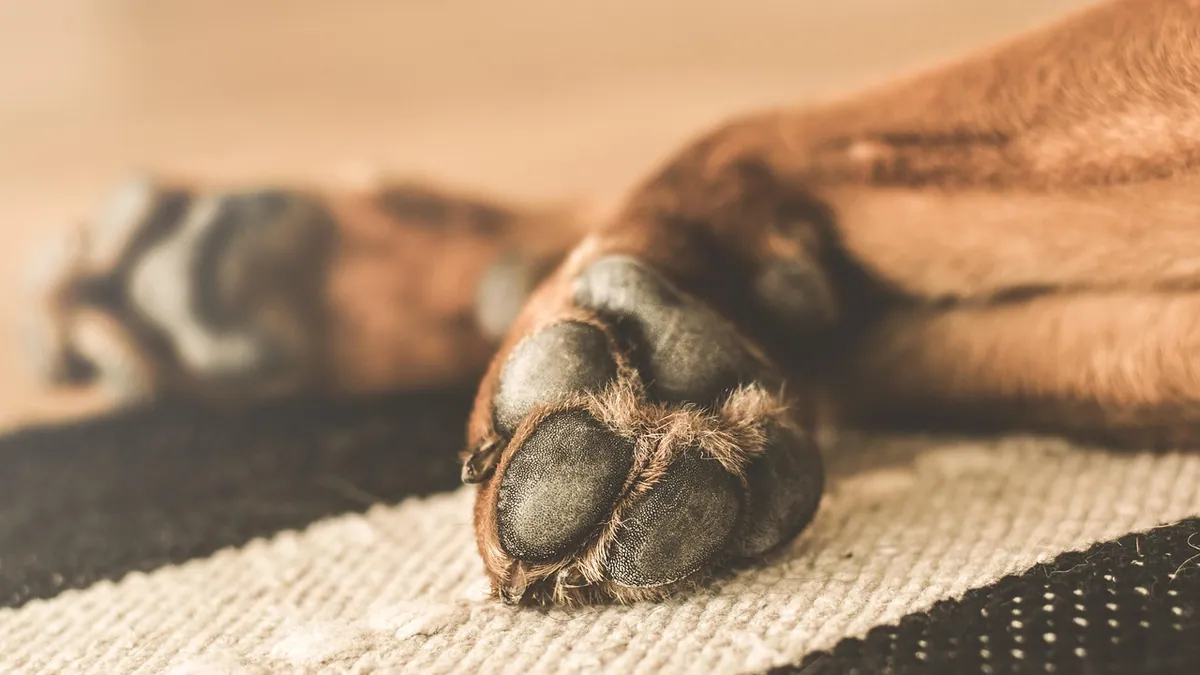
A sprain and a break can look almost identical at home, because both cause limping, swelling, and pain when you touch the leg. To learn how to tell if my dog sprained his paw, start by watching how your dog holds the limb, how much weight he puts on it, and whether he will let you handle the paw. This article is educational and is not a substitute for veterinary diagnosis or treatment.
Quick Answer
- A sprain is a stretched or torn ligament, while a break is a crack or complete fracture of bone. You cannot reliably tell them apart by look or feel alone.
- A dog that will not put any weight on the leg, holds the paw up, or cries when it is touched needs same-day veterinary care.
- Swelling, heat, and a swollen toe or paw pad can happen with both injuries, so swelling alone does not prove a break.
- Do not give human pain medications. Many are toxic to dogs, and your veterinarian will calculate any dose from your dog's weight and health.
- An X-ray is usually the fastest way to confirm or rule out a fracture, and it also helps find tendon or ligament damage that radiographs can miss.
What a Paw or Leg Injury Looks Like in Dogs
Dogs hide pain well, so the first sign is often a change in how they walk. You may see a head bob when the sore leg is on the ground, a shortened stride on that side, or a hop when the paw touches down. Visual gait assessment is subjective, and different people watching the same dog may disagree about how lame the dog is [1].
Normal versus not normal
Normal walking is even, with each paw bearing weight for a similar time. A mild sprain may cause a slight limp that gets better with rest. A more serious injury causes obvious limping, a carried leg, or a refusal to walk at all. If your dog will not bear weight on the leg, treat that as a serious sign until a veterinarian says otherwise.
What owners often notice first
- Licking or chewing at one paw or toe
- A swollen paw, ankle, or toe that looks larger than the other side
- Crying or pulling away when the leg is touched
- Reluctance to climb stairs, jump on the couch, or go for a walk
- A toe that sits at an odd angle or a paw that drags
Common Causes of Limping and Paw Pain
Limping in dogs has many causes, and orthopedic, neurologic, infectious, inflammatory, vascular, and even cancerous conditions can produce overlapping signs [2]. That is why a hands-on exam matters. A torn ligament, a broken bone, a torn tendon, and a soft tissue sprain can all look similar from across the room.
Sprains, strains, and tendon injuries
A sprain stretches or tears a ligament, the tissue that connects bone to bone. A strain injures muscle or tendon. Tendon injuries can be subtle. In one young dog, a partial avulsion of two tendons in the hind limb caused persistent weight-bearing lameness for 11 days after an abnormal landing, and it took MRI and ultrasound to confirm the injury [3]. That dog was still using the leg, which shows how easily a serious soft tissue injury can be mistaken for a mild sprain.
Breaks and fractures
A fracture is a crack or break in bone. Some fractures are complete and unstable, while others are small cracks that still allow some weight bearing. Fractures around the knee joint can also occur after certain orthopedic surgeries in small-breed dogs, and some of those dogs did not show lameness even with a fracture present [4]. This is another reason a physical exam and imaging matter more than how the dog looks at home.
Other causes that mimic a sprain
Arthritis, a torn cruciate ligament, a luxating patella, nerve pain, and bone cancer can all cause limping. Some of these problems worsen over time, and delayed diagnosis can limit treatment options [2]. If your dog has been limping for more than a few days, or the limp keeps coming back, a veterinary visit is the right next step. For help sorting out chronic limping, see Dog Limping: How to Tell If It's Arthritis or a Torn Ligament.
| Cause | Typical clues | How urgent |
|---|---|---|
| Paw sprain or strain | Mild to moderate limp, swelling, no deformity, improves with rest | Routine visit if mild, same day if not bearing weight |
| Broken paw or leg bone | Will not bear weight, swelling, pain, sometimes a crooked or unstable limb | Emergency or same-day visit |
| Torn ligament (such as cruciate) | Sudden limp, hind limb, may hear a click, sits with leg out | Same-day to routine visit |
| Tendon injury | Persistent limp after a jump or landing, often weight bearing [3] | Same-day to routine visit |
| Arthritis | Slow onset, stiffness after rest, worse with cold or exercise | Routine visit |
| Nerve or spinal problem | Dragging paw, knuckling over, wobbling, pain in the neck or back | Same-day or emergency visit |
How to Tell If My Dog Sprained His Paw: A Safe Home Check
You can gather useful information at home without causing more harm. Keep the check short, calm, and gentle. If your dog growls, snaps, or screams, stop and call your veterinarian.
Step 1: Watch your dog walk
Walk your dog on a leash on a non-slip surface. Watch from the side and from behind. Note which leg is sore, how much weight he puts on it, and whether the limp gets worse with speed. A dog that holds a leg up completely is more concerning than one with a mild limp.
Step 2: Look before you touch
Look at the paw from a few feet away. Compare it to the other paws. Check for swelling, a cut, a torn nail, a foreign object, or a toe that points the wrong way. Look at the leg for bruising or a bend where there should not be one.
Step 3: Gently feel the leg
If your dog allows it, run your fingers lightly down the leg from the shoulder or hip to the toes. Feel for heat, swelling, or a spot that makes your dog pull away. Do not squeeze a bone or force a joint to move. If you feel a hard, sharp edge or the limb moves in a way it should not, stop and go to the veterinarian.
Step 4: Check the paw pads and nails
Flip the paw over gently and look between the pads. A small stone, burr, or torn nail can cause dramatic limping that looks like a sprain. If you can remove a loose object easily, do so. If it is stuck or the pad is cut deeply, leave it and call your veterinarian.
Step 5: Test weight bearing, not the joint
Place your dog on a non-slip floor and see if he will stand on the leg for a few seconds. Do not push on the leg or try to make him bear weight. If he refuses, that is your answer. Stop the check.
Red Flags That Mean an Emergency
Some signs mean you should stop checking and go to an emergency clinic now.
- The limb is bent at an unnatural angle or looks shorter than the other side
- A bone is visible through the skin, or there is an open wound near the injury
- Bleeding that will not stop with gentle pressure
- Your dog is screaming, panting heavily, or cannot be touched
- The paw is cold, pale, or blue compared to the other side
- Your dog cannot stand or walk at all
- The injury happened with a car, a fall from height, or a hard impact
- Your dog seems confused, weak, or has trouble breathing
For more on sorting urgent from non-urgent limping, see Dog Limping: How to Tell If It's an Emergency. If you suspect a broken leg, follow the steps in Dog Broken Leg: Signs, First Aid, and Transport while you arrange transport.
What You Can Safely Do at Home While You Wait
Home care is about comfort and preventing more damage. It is not a substitute for a diagnosis.
Restrict activity
Crate your dog or keep him in a small, quiet room. No walks beyond a short leash trip to potty. No stairs, jumping, or playing. Rest gives a mild sprain a chance to settle and keeps a possible fracture from shifting.
Use a sling or towel for support
If your dog is large and you need to move him, place a towel under the belly as a sling. Support the hind end for stairs or car rides. Keep the sore leg from bearing full weight.
Cold packs, done safely
A cold pack wrapped in a thin towel for a few minutes at a time can reduce swelling. Never place ice directly on the skin. Stop if your dog objects.
Do not give human pain pills
Never give ibuprofen, acetaminophen, naproxen, or aspirin without veterinary direction. These can cause serious harm to dogs. Your veterinarian will calculate any pain medication dose from your dog's weight and health.
Keep the paw clean and dry
If there is a small cut, rinse it with plain water and cover it lightly with a clean bandage. Change the bandage if it gets wet or dirty. Do not wrap tightly, because swelling can worsen under a tight bandage.
Watch for changes
Check the paw every few hours. Note whether the swelling is getting better or worse, and whether your dog is putting more or less weight on the leg. Write down what you see so you can tell your veterinarian.
What the Veterinarian Will Check and Test
Your veterinarian will start with a full history, then a hands-on exam. They will watch your dog walk, feel the leg from top to bottom, and compare both sides. They will also check the joints above and below the sore spot, because the problem is not always where the limping seems to come from.
The orthopedic and neurologic exam
The exam includes checking for swelling, heat, joint stability, and pain on flexion or extension. Your veterinarian will also test nerve function, because neurologic problems can cause limping or dragging that looks orthopedic [2]. They may check the tail and spine too, since a tail injury can change how a dog walks and sits.
Imaging
X-rays are the usual first step for a suspected fracture. Radiographs can show many breaks, but they do not always show tendon or ligament damage. In the young dog with two torn tendons, radiographs, MRI, and ultrasound were all needed to confirm the injury [3]. If your dog's exam and X-rays do not explain the limp, your veterinarian may recommend ultrasound or advanced imaging such as CT or MRI [2]. Referral to a specialist may be suggested for complex or unresolved cases [2].
Other tests
Depending on the exam, your veterinarian may recommend blood work, joint fluid analysis, or a trial of rest and medication. Some knee problems, such as trochlear dysplasia, are assessed with specific radiographic signs, and CT can be used as an alternative in some cases [5]. Your veterinarian will choose the tests that fit your dog's signs.
Prevention and Monitoring
You cannot prevent every injury, but you can lower the risk.
- Keep nails trimmed so toes do not catch or twist.
- Use non-slip mats on slick floors, especially for older dogs.
- Warm up before hard play, and avoid sudden high jumps on hard ground.
- Keep your dog at a healthy weight to reduce stress on joints.
- Check paws after hikes, runs, or time in tall grass.
- If your dog has had a paw or leg injury before, watch for a return of limping and call your veterinarian early.
If your dog has ongoing stiffness or pain in more than one leg, joint disease may be the cause. Learn more in Dog Joint Pain: How to Tell If It's Arthritis or Something More Serious.
Limitations and When to Contact a Veterinarian
No home check can tell a sprain from a break with certainty. Only a veterinarian can examine the limb, take X-rays if needed, and give you a diagnosis and treatment plan. Individual cases need a veterinarian, so use the timing below as a guide.
Emergency now: an open wound with bone showing, a limb at an odd angle, heavy bleeding, a cold or blue paw, collapse, trouble breathing, or an injury from a car or a fall.
Same day: your dog will not bear weight on the leg, cries when it is touched, has a swollen paw that is getting worse, or has a toe that points the wrong way.
Routine visit within a day or two: a mild limp that is not improving, a limp that comes and goes, or a dog that is eating and acting normally but still favors one leg.
Call right away if: your dog's condition changes at any point, the swelling spreads, or your dog seems more painful than before.
Frequently Asked Questions
Can a dog walk on a broken paw?
Sometimes, yes. A dog with a small crack in a bone may still put some weight on the leg, and some dogs with fractures around the knee showed no lameness at all [4]. A dog that will not bear weight is more concerning, but a dog that walks does not rule out a break. Only an exam and X-rays can tell for sure.
How long does a sprained paw take to heal in a dog?
Mild sprains often improve with rest over days to a couple of weeks, but healing time depends on which tissue is injured and how severe it is. A partial tendon avulsion caused lameness for at least 11 days in one reported case before it was diagnosed [3]. If your dog is not improving with rest, call your veterinarian.
Should I wrap my dog's paw if I think it is broken?
A light, clean bandage can protect a small wound, but do not wrap tightly and do not try to splint a broken bone at home. A bad splint can cut off circulation or shift the fracture. Keep the leg still, support your dog with a sling, and get to a veterinarian.
Can a dog sprain its tail?
Yes. The tail is part of the spine, and a tail injury can cause pain, limping, or a change in how your dog sits and walks. A tail that hangs limp, is painful to touch, or cannot wag normally deserves a veterinary exam. Your veterinarian will check the tail along with the rest of the spine and limbs.
Do all broken bones show up on an X-ray?
Most fractures show on X-rays, but some small cracks and some tendon or ligament injuries do not. In one dog, radiographs plus MRI and ultrasound were needed to find two torn tendons [3]. If X-rays look normal but your dog is still lame, your veterinarian may recommend ultrasound or advanced imaging such as CT or MRI [2].
Related Articles
- Dog Limping: How to Tell If It's a Sprain or a Break
- Dog Limping: How to Tell If It's Arthritis or a Torn Ligament
- Dog Broken Leg: Signs, First Aid, and Transport
- Dog Joint Pain: How to Tell If It's Arthritis or Something More Serious
- Dog Limping: How to Tell If It's an Emergency
- Why's My Dog Limping On His Front Leg
- Dog Sprained or Broken Leg: What to Do Right Now
- Dog Limping With a Swollen Paw, Leg, or Joint
- Foreign Body in a Dog's Paw or Leg: Signs and Care
References
- Determining Minimum Trial Numbers for Reliable Lameness Detection in Canine Kinematic Studies. Animals : an open access journal from MDPI, 2026.
- Diagnosing Thoracic Limb Lameness in Dogs. The Veterinary clinics of North America. Small animal practice, 2026.
- Concurrent Partial Avulsion of Popliteal and Long Digital Extensor Tendons in a Juvenile Dog. Veterinary radiology & ultrasound : the official journal of the American College of Veterinary Radiology and the International Veterinary Radiology Association, 2026.
- Case Report: Surgical management of trochlear ridge fracture associated with medial patellar luxation surgery in small-breed dogs. Frontiers in veterinary science, 2026.
- Canine Femoral Trochlear Dysplasia: A Retrospective Study Assessing the Dejour Signs. Veterinary and comparative orthopaedics and traumatology : V.C.O.T, 2026.