Why Is My Dog's Paw Pad Peeling? Causes and Care
By Dr. Zubair Khalid, DVM, MS, PhD ·
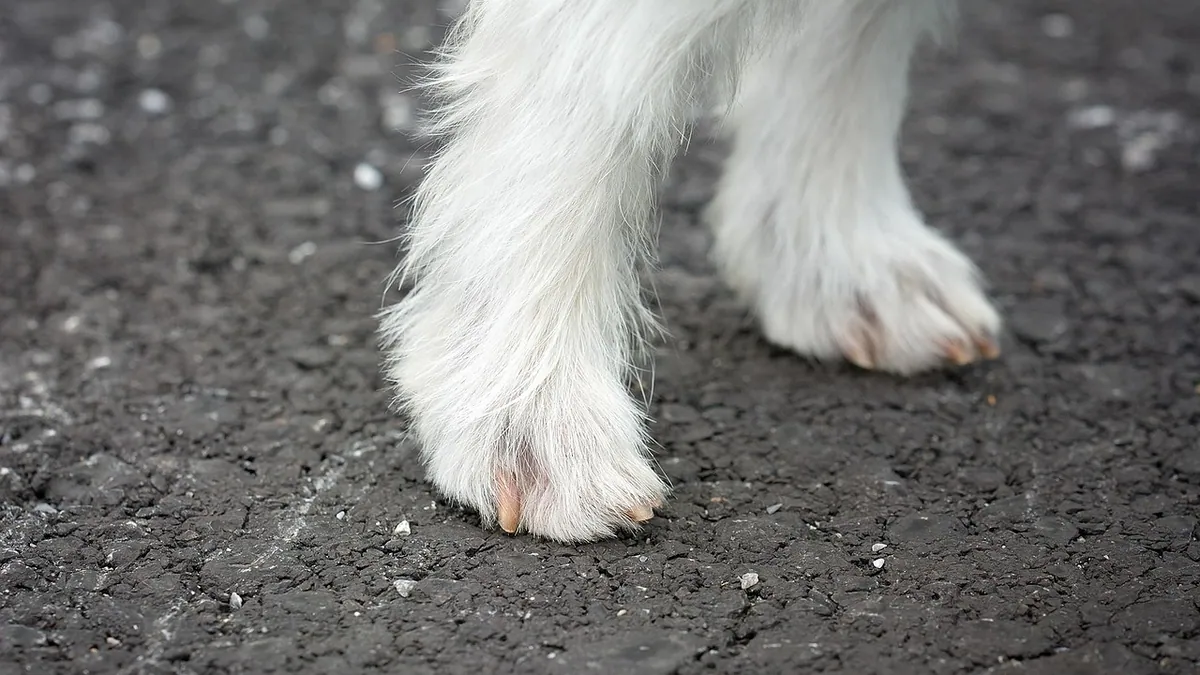
Dog paw pad peeling happens when the tough outer layer of skin on the bottom of the foot lifts, cracks, or sloughs off. It can be simple wear and tear from hot pavement or rough ground, or it can signal burns, allergies, infections, or immune disease. This article is educational and is not a substitute for veterinary diagnosis or treatment.
Quick Answer
- A single thin flap of dead skin after a long hike or a day on hot pavement is often minor and heals on its own.
- Peeling on multiple paws, deep splits, bleeding, limping, or licking that will not stop needs a veterinary visit.
- Burns, chemical contact, and severe lameness are same-day or emergency problems, not wait-and-see problems.
- Stop all walks on hot or rough surfaces until you know the cause, and keep the paws clean and dry.
- Never peel skin off yourself, and never apply human ointments, since dogs lick them off and some are toxic.
What Dog Paw Pad Peeling Looks Like and What Is Normal
A healthy paw pad is thick, slightly rough, and dark or pigmented in most dogs. The surface can feel leathery. Small amounts of flaking are common in winter when indoor air is dry, or after a dog spends hours on gravel, sand, or frozen ground.
Normal wear looks like a thin, dry flake or a shallow crack at the edge of a pad. It does not bleed, does not smell, and does not make your dog limp. Your dog may lick the paw once or twice and then leave it alone.
Peeling that matters looks different. You may see a horizontal split across the pad, a flap of skin lifting away, raw pink tissue underneath, or a pad that is swollen and warm. Some dogs will not put weight on the foot. Others lick and chew constantly. When the skin on the paw is peeling on more than one foot, or keeps coming back, that pattern points to an underlying disease instead of simple wear.
Causes of Dog Paw Pad Peeling
Environmental and Traumatic Causes
Hot pavement is the most common cause of sudden pad injury in warm months. Asphalt can reach temperatures well above the air temperature, and a few minutes of contact can burn the pads. Chemical exposure from ice melt, pool chlorine, or spilled cleaners can also strip the surface. Rough surfaces like gravel, sharp rocks, and crushed shell cause mechanical wear.
These injuries usually affect the pads that touch the ground most, and they often follow a specific event. If your dog was on hot pavement, ice melt, or a long hike and then started limping, that history matters.
Allergies and Skin Disease
Allergies are a frequent reason dogs lick and chew their feet, and chronic licking damages the pad surface. Dogs with environmental allergies often have red, itchy skin between the toes and on the pads, plus itching elsewhere on the body. In one study of dogs with split paw pad dermatosis, four of fourteen dogs also had canine atopic dermatitis [1]. If your dog's paw peeling comes with itchy ears, belly, or face, allergies are worth discussing with your veterinarian. You can read more about this pattern in Dog Paw Allergies: Signs, Causes, and Treatment.
Infections
Bacterial and yeast infections can develop after any break in the pad. Infected pads look red, swollen, and sometimes greasy or malodorous. In a study of dogs with a psoriasiform skin reaction linked to calcineurin inhibitor drugs, bacteria were found on lesional cytology in 22 of 28 dogs, and Staphylococcus pseudintermedius was the most common organism cultured [2]. That study looked at a specific drug reaction, but it shows how often bacteria move into damaged paw skin.
Immune and Genetic Causes
Some dogs have an immune or genetic reason for pad peeling. Split paw pad dermatosis causes horizontal splitting and peeling of the pads, often on all four paws, with pain, lameness, itching, and licking [1]. In that report, eight of thirteen dogs weighed more than 20 kg, three were German shepherd dogs, and five had a seasonal pattern [1].
A separate study of a German shepherd family found a deletion in the KRT5 gene in dogs with intermittent paw pad lesions and lameness [3]. In people, KRT5 variants cause epidermolysis bullosa simplex, a condition where the skin separates easily. This supports the idea that some pad peeling is inherited and not caused by trauma at all [3].
Another inherited form involves paw pad hyperkeratosis, where the outer skin layer becomes abnormally thick. A Labrador retriever with thick, overgrown pads on all four feet had a variant in the GJB6 gene, which was not present in either parent [4]. This is a rare finding, and most thick pads are still caused by trauma, infection, or inflammation [4].
Table: Cause, Clues, and Urgency
| Cause | Typical clues | How urgent |
|---|---|---|
| Hot pavement or surface burn | Sudden limping after a walk, blistered or dark pads, pain when touched | Same day, emergency if blisters cover the pad or your dog will not walk |
| Chemical exposure | Contact with ice melt, cleaner, or pool water, red or weeping pads | Emergency, rinse and call a vet or poison control right away |
| Rough terrain wear | Thin flakes or shallow cracks after hiking or gravel | Routine visit if mild, same day if bleeding or limping |
| Allergies | Itchy feet, red skin between toes, itching elsewhere, seasonal pattern | Routine visit, sooner if your dog is licking raw |
| Bacterial or yeast infection | Swelling, odor, discharge, greasy surface, one or several paws | Same day to a few days, depending on pain and swelling |
| Split paw pad dermatosis | Horizontal splits, multiple paws, recurring, pain and licking | Routine dermatology workup, sooner if lameness is severe |
| Inherited pad disease | Young dog, repeated episodes, breed history such as German shepherd | Routine visit with a dermatology referral if it recurs |
| Drug-associated reaction | Peeling or thick pads while on a calcineurin inhibitor such as ciclosporin | Contact the prescribing vet promptly |
Red Flags That Make It an Emergency
Some paw problems cannot wait. Get emergency care now if you see any of these.
- Your dog will not bear weight on the leg at all, or cries when the foot is touched.
- The pad is bleeding heavily or a large section of pad has come off.
- You suspect a burn from hot pavement, a chemical, or an electrical source.
- The foot is swollen, hot, and spreading redness up the leg.
- Your dog has a fever, is vomiting, or seems depressed along with the paw problem.
- You see pus, a foul smell, or black dead tissue.
- Your dog chews at the paw so hard that it will not stop.
If your dog licked or walked through a chemical, call your veterinarian or a pet poison control line immediately and follow their instructions. Do not wait to see if it gets better.
Safe Things You Can Do at Home While Waiting
Home care is about comfort and preventing more damage. It does not replace a diagnosis.
Clean gently. Rinse the paw with lukewarm water and pat dry with a clean cloth. Do not scrub or soak for long periods, since wet pads soften and split more easily.
Remove the cause. Keep your dog off hot pavement, ice melt, gravel, and sharp surfaces. Use a boot or a sock with a rubber sole for short outdoor trips if your dog will tolerate it.
Prevent licking. An Elizabethan collar or a soft recovery cone is the single most useful tool. Licking keeps wounds wet, introduces bacteria, and turns a small crack into a big problem. If licking is the main issue, see Dog Licking Paws Raw: Causes and How to Stop It.
Do not peel the skin. Lifting a flap can tear healthy tissue and cause bleeding. Let your veterinarian decide what to trim.
Do not use human products. Human antibiotic ointments, hydrocortisone creams, and pain relievers are not made for dogs. Some ingredients are toxic when swallowed, and dogs lick their feet.
Keep the area dry. Moisture between the toes encourages yeast and bacteria. Dry carefully after every walk and after baths.
Check the other paws. Look at all four feet every day. Catching a new split early can prevent a worse injury.
What Your Veterinarian Will Check and Test
Your veterinarian starts with a full history. They will ask when the peeling started, which paws are involved, whether your dog is limping or licking, what surfaces your dog walks on, what food and flea products you use, and what medications your dog takes. That last question matters, because paw pad changes have been reported in dogs receiving calcineurin inhibitors such as ciclosporin, with a median time to lesion onset of six months [2].
The physical exam focuses on the pads, the skin between the toes, the nails, and the rest of the body. Your vet will check for swelling, discharge, odor, and how much of the pad is involved. They will also watch your dog walk.
Testing depends on what they find. Common steps include:
- Skin cytology to look for bacteria and yeast [2].
- Skin scraping to rule out mites.
- Bacterial culture when infection is deep or has not responded to treatment [2].
- A paw pad biopsy when the pattern suggests split paw pad dermatosis, immune disease, or an inherited condition [1][3].
- Allergy testing or a diet trial if itching points to atopic dermatitis [1].
- Blood work before starting long-term medication.
Treatment is built around the cause. Burns need wound care and pain control. Infections need the right antibiotic or antifungal based on testing. Allergies need a plan that may include medication, bathing, and allergen control. Split paw pad dermatosis is often frustrating to treat. In one case series, no single treatment prevented relapses, though a small group of dogs improved with anti-inflammatory medication [1]. Your veterinarian will set the dose and drug based on your dog's weight and health.
If your dog is chewing at the pad hard enough to cause damage, that behavior needs its own plan. See Dog Chewing Paw Pad Off for more on that pattern.
Prevention and Monitoring
Prevention depends on the cause, but a few habits help most dogs.
Test the pavement. Press the back of your hand to the ground for five seconds. If it is too hot for you, it is too hot for your dog's paws.
Protect the feet. Boots help on hot pavement, ice melt, and rough trails. Introduce them slowly with treats so your dog accepts them.
Rinse after exposure. After walks on salted or treated surfaces, rinse the paws with plain water and dry them.
Keep nails trimmed. Long nails change how your dog's foot hits the ground and can add stress to the pads.
Manage allergies. If your dog has atopic dermatitis, keeping the skin disease controlled reduces licking and pad damage [1].
Watch for patterns. Note which paws peel, what season it happens in, and whether it follows a specific activity. Five of fourteen dogs in one report had a seasonal pattern, which is useful information for your vet [1].
Recheck as directed. Pad skin heals slowly because it is thick and bears weight. If your dog is not improving in the time frame your veterinarian gives you, call them.
Limitations and When to Contact a Veterinarian
Paw pad peeling has many causes, and the same appearance can come from very different diseases. No article can tell you which one your dog has. Your veterinarian needs to examine your dog and may need testing to sort it out.
Contact your veterinarian the same day if your dog is limping, if more than one paw is peeling, if you see bleeding or discharge, or if the peeling keeps coming back. Go to an emergency clinic now if your dog will not walk, has a deep wound, has been burned or exposed to a chemical, or has swelling that is spreading.
Call for a routine visit if the peeling is mild, your dog is comfortable, and you want to confirm the cause before it gets worse. If your dog is on a calcineurin inhibitor such as ciclosporin and develops pad changes, contact the prescribing veterinarian promptly [2].
Frequently Asked Questions
Is paw pad peeling always a sign of something serious?
No. A single thin flake after a long walk on rough ground is often minor. Peeling on several paws, deep splits, pain, or repeated episodes point to a medical cause that needs a veterinary exam.
Can I just let the peeled skin fall off on its own?
Yes, if the skin is dry and your dog is not bothered by it. Do not pull or cut it yourself, because you can tear healthy tissue and cause bleeding. Let your veterinarian decide if any trimming is needed.
Why does my dog keep licking the peeling paw?
Licking is a sign of itch, pain, or both, and it also makes the damage worse. A cone or recovery collar breaks the cycle while you find the cause. If licking continues after the pad heals, allergies or a behavior problem may be involved.
Does diet cause paw pad peeling?
Diet is not a well-established direct cause of pad peeling. Food allergies can cause itchy skin and feet in some dogs, and those dogs may lick enough to damage the pads. If your veterinarian suspects a food allergy, they will set up a proper diet trial.
Will my dog's paw pad grow back?
Yes, pad tissue can regrow, but it heals slowly because it is thick and takes constant weight. Healing time depends on how deep the injury is and whether infection is controlled. Your veterinarian will tell you what to expect for your dog's specific injury.
Related Articles
- Dog Skin Rash on Paws: Causes and Treatment
- Dog Chewing Paw Pad Off
- Dog Paw Allergies: Signs, Causes, and Treatment
- Dog Licking Paws Raw: Causes and How to Stop It
- Dog Licking Paws Cause
- Dog Chewing Paw Pads
- Split Paw Pads in Dogs: Causes and Treatment
- Cracked Paw Pads in Dogs: Treatment and Home Remedies
- Bump on Your Dog's Paw or Paw Pad: Causes and Care
References
- Clinical Signs and Treatment Responses of 14 Dogs With Split Paw Pad Dermatosis. Veterinary dermatology, 2025.
- Clinical Features, Treatment and Outcomes of Dogs With Psoriasiform Lichenoid Dermatosis Associated With Calcineurin Inhibitor Therapy. Veterinary dermatology, 2026.
- KRT5 in-frame deletion in a family of German Shepherd dogs with split paw pad disease resembling localized epidermolysis bullosa simplex in human patients. Animal genetics, 2024.
- GJB6 missense variant in a Labrador Retriever with paw pad hyperkeratosis. Animal genetics, 2026.