Cherry Eye in Cats: Causes, Symptoms, and Surgery Options
By Dr. Zubair Khalid, DVM, MS, PhD ·
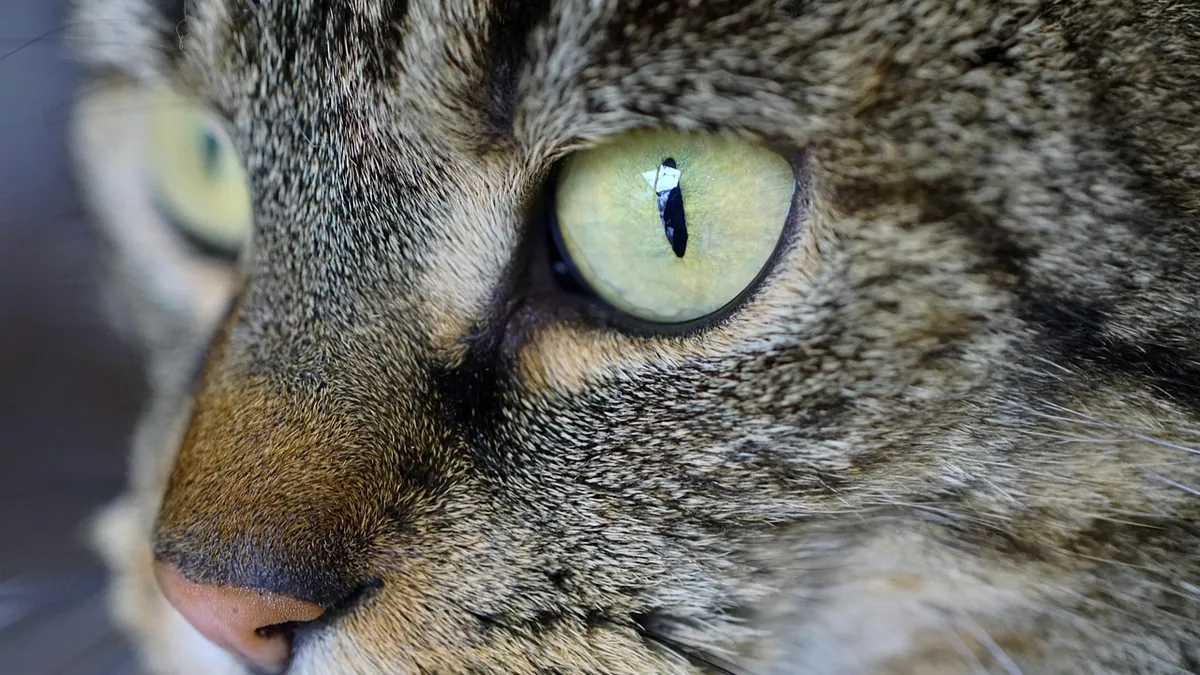
Cherry eye in cats treatment almost always means surgery to tuck the prolapsed tear gland back into place. The condition is not usually an emergency, and home remedies do not fix it. Left alone, the exposed gland can swell, dry out, and become infected.
This article is educational and is not a substitute for veterinary diagnosis or treatment.
Quick Answer
- Cherry eye is a prolapse of the gland of the third eyelid. It shows up as a smooth, round, pink or red bulge in the inner corner of one or both eyes [1].
- It is rarely dangerous at the moment it appears, but it will not go away on its own and can lead to chronic irritation or infection if ignored.
- Home treatment does not work. No drops, compresses, or lubricants will push the gland back into position.
- Surgery is the standard fix. The Morgan pocket technique, which anchors the gland back in place instead of cutting it out, gave good results with no recurrence in reported feline cases [1][2].
- Removing the gland is generally avoided because the third eyelid gland makes a large share of a cat's tears, and losing it can reduce tear production [3].
What Cherry Eye Actually Is
Cats have a third eyelid, a pale membrane that slides across the eye from the inner corner. At its base sits a tear-producing gland. In some cats, the tissue that holds that gland in place weakens, and the gland pops out of its normal pocket. It then sits exposed on the surface of the eye as a rounded red mass.
Veterinarians call this nictitans gland prolapse, or prolapse of the gland of the third eyelid [1]. Owners call it cherry eye because the swollen gland looks like a small cherry tucked into the corner of the eye.
The gland is not a tumor and it is not the eyeball itself. It is normal tissue in an abnormal position.
Symptoms: What You Will Notice
The most obvious sign is a red or pink bulge at the inner corner of one or both eyes. In reported feline cases, the prolapse appeared on its own, without other eye signs at the same time [1].
Other things you may see:
- A raised, smooth mass that does not move when the cat blinks
- Watery discharge or tear staining on the face
- Squinting, blinking more than usual, or holding the eye partly closed
- Pawing at the face or rubbing the eye against furniture
- Redness of the conjunctiva, the pink tissue around the eye
- Cloudiness or a dull look to the surface of the eye if it stays dry
- A smaller opening between the eyelids because the swollen gland takes up space
Some cats show almost no discomfort. Others act irritated right away. The amount of swelling often depends on how long the gland has been out and how much it has dried.
If you also notice the third eyelid covering both eyes, that is a different pattern and points toward other causes. Our guide to Cat Third Eyelid Showing Both Eyes: 4 Causes, Haw's Syndrome & Triage Guide explains how to sort that out.
Causes and Risk Factors
In cats, cherry eye often appears without any clear trigger. Three adult cats of different breeds (Burmese, Persian, and Domestic Shorthair) developed it spontaneously, with no other eye problem present [1].
Breed seems to matter. In one review of congenital and inherited eye problems in cats, nictitans gland protrusion was listed among the adnexal disorders, and the Persian, Burmese, and Siamese were named among breeds with repeated reports of inherited eye disease [4]. A later study of cats with gland prolapse plus cartilage eversion found Persians and British Shorthairs made up the largest share of cases [2].
Other factors that may play a role:
- Weakness or stretching of the connective tissue that holds the gland
- Abnormal folding or scrolling of the cartilage inside the third eyelid, which can push the gland forward [2]
- Breed-related head shape, since flat-faced cats carry more eye and eyelid problems in general [5]
- Age, though reported cases include adult cats instead of only kittens [1]
Some owners ask whether cherry eye in cats causes include injury, infection, or allergies. Those can irritate the eye, but the classic prolapse is a structural problem, not an infection you can treat with antibiotics.
How Veterinarians Diagnose It
Most of the time, the diagnosis is made by looking. A veterinarian will examine both eyes, lift the third eyelid, and check whether the gland is out and whether the cartilage is rolled or everted [2].
The exam usually includes:
- A Schirmer tear test to measure tear production. Normal values in healthy cats were about 16.2 mm/min for test I and 13.2 mm/min for test II in one study [3].
- Fluorescein staining to check for scratches or ulcers on the cornea
- Pressure checks inside the eye when glaucoma or uveitis is a concern
- A close look at the eyelids for entropion, where the lid rolls inward and hairs rub the eye [5]
Your vet may also ask about breed history, how long the bulge has been there, and whether the cat has had eye problems before. Bloodwork is not usually needed unless the cat is heading to surgery.
Cherry Eye in Cats Treatment Options
Home Treatment Does Not Work
There is no effective cherry eye in cats home treatment. You cannot massage the gland back into place, and no over-the-counter drop or ointment will hold it there. Warm compresses may reduce surface swelling, but the gland will still be out.
Do not try to push the gland back yourself. You can scratch the cornea or introduce bacteria.
If your cat has discharge or redness from another cause, such as conjunctivitis, that is a separate problem. See What Can You Do For Cat Conjunctivitis and Cat Eye Conjunctivitis Treatment for those situations.
Medical Management
Your vet may prescribe lubricating drops or ointment to keep the exposed gland and cornea moist until surgery. Anti-inflammatory or antibiotic drops may be used if the tissue is infected or badly irritated. These treat the surface problem. They do not correct the prolapse.
Surgery: The Standard Fix
Surgery is the accepted treatment. The goal is to put the gland back in its pocket and hold it there, not to remove it.
The most common approach is the Morgan pocket technique. The surgeon creates a small pocket in the tissue around the gland and sutures the gland inside it. In three reported feline cases treated this way, results were good and the prolapse did not come back [1].
When the third eyelid cartilage is also rolled or everted, surgeons often combine the pocket technique with partial resection of the scrolled cartilage. In a study of 16 eyes in 13 cats, this combined approach preserved third eyelid function, and the authors tracked recurrence and complications afterward [2].
Removing the gland entirely is generally a last resort. In cats, surgical removal of the third eyelid gland lowered tear production on Schirmer testing [3]. Clinical signs of dry eye did not appear until both the lacrimal gland and the third eyelid gland were removed, at which point tear values dropped close to zero [3]. That is a strong reason to keep the gland whenever possible.
What Surgery Costs
Veterinary prices vary widely by region, clinic type, and whether one or both eyes are involved. No single national price exists. Expect the total to include the exam, pre-anesthetic bloodwork, anesthesia, the procedure itself, medications, and a recheck visit.
Call two or three clinics in your area and ask for an itemized estimate. Ask specifically whether the quote covers both eyes, whether an overnight stay is included, and what a recheck costs. Pet insurance may cover the surgery if the condition is not excluded as pre-existing.
A Note on Pain
Ophthalmic surgery causes real discomfort. A study of cats undergoing eye surgery characterized pain behaviors before and after pain medication, using the Feline Grimace Scale and a feline pain scale, and included brachycephalic cats and cats wearing protective collars as factors [6]. Ask your vet about a pain control plan for home, and follow it exactly.
The Table: At a Glance
| Question | Short Answer |
|---|---|
| Is it an emergency? | Usually no. Call your vet the same day if the eye is suddenly very red, swollen, or the cat is in obvious pain. |
| Will it go away alone? | Rarely. The gland usually stays out until it is surgically replaced. |
| Does home treatment work? | No. Drops and compresses ease surface irritation only. |
| What is the main treatment? | Surgery to replace the gland, often the Morgan pocket technique [1][2]. |
| Is gland removal a good idea? | Usually avoided. It can lower tear production in cats [3]. |
| Which cats are at higher risk? | Persians, Burmese, British Shorthairs, and Siamese have been reported more often [2][4]. |
| How is tear production checked? | Schirmer tear test. Normal values in healthy cats were about 16.2 mm/min (test I) and 13.2 mm/min (test II) [3]. |
Recovery, Outlook, and Long-Term Management
Most cats go home the same day or the next morning. The eye will look red and swollen for several days. That is expected.
What recovery usually involves:
- A protective collar to stop pawing at the eye
- Prescription drops or ointment on a set schedule
- A recheck visit to confirm the gland is staying in place
- Keeping the cat indoors and away from dusty areas during healing
- No bathing or swimming until your vet clears it
Reported outcomes after the pocket technique are good, with no recurrence in the small feline case series [1]. The combined cartilage and gland procedure also tracked recurrence and complications, which means some cats do need follow-up care [2].
Long-term, watch for these issues:
- Dry eye, especially if the gland was removed [3]
- Recurrence of the prolapse, which can happen and may need a second surgery
- Chronic conjunctivitis or discharge, which you can read about in Cat Eye Discharge: Causes and When to See a Vet
- General eye health changes as your cat ages, covered in Cat Eyes: Understanding Feline Vision, Common Eye Problems & Care Tips
Keep up with routine exams. A cat with one eye problem is more likely to develop another.
Prevention
You cannot prevent cherry eye in most cases because the underlying cause is often inherited or structural [4]. What you can do:
- Ask about eye health before adopting a flat-faced or brachycephalic breed
- Tell your vet if a parent or littermate had the condition
- Check your cat's eyes weekly so you catch changes early
- Treat eye irritation promptly so chronic rubbing does not worsen the tissue
- Keep up with vaccines and parasite control, since some eye problems start with systemic illness
If your cat has entropion, where the eyelid rolls in and hairs rub the eye, that is a separate condition that also often needs surgery [5]. Ask your vet to check for it during any eye exam.
Limitations and When to Contact a Veterinarian
This article covers general information. Your cat's case needs a veterinarian who can examine the eye in person.
Call your vet the same day if you see:
- A new red bulge in the corner of the eye
- Squinting that lasts more than a few hours
- Discharge that is yellow, green, or thick
- The cat pawing at the face or refusing to open the eye
Go to an emergency clinic right away if:
- The eye looks cloudy, blue, or bulging outward
- The cat is crying out or cannot be touched near the face
- There is bleeding from the eye
- The eyeball itself looks different in shape or position
- Your cat stops eating or hides because of eye pain
Schedule a routine visit if the bulge has been present for a while, if it comes and goes, or if you are ready to discuss surgery and cost.
Frequently Asked Questions
Is cherry eye in cats dangerous?
It is not usually an emergency, but it is not harmless either. The exposed gland can dry out, swell, and become infected over time. It also will not correct itself, so the sooner you have it evaluated, the better.
Can cherry eye in cats go away on its own?
In most cats, no. The gland stays prolapsed until it is surgically replaced. A few mild cases may improve briefly, but recurrence is common without surgery.
Can I treat cherry eye at home?
No home remedy replaces the gland. Lubricating drops may ease surface irritation, but they do not fix the position of the gland. Trying to push it back yourself can injure the eye.
How much does cherry eye surgery cost for a cat?
Costs vary by region, clinic, and whether one or both eyes need surgery. Ask your vet for an itemized estimate that includes the exam, anesthesia, the procedure, medications, and rechecks. Pet insurance may help if the condition is not excluded.
Will my cat need the gland removed?
Usually not. Surgeons prefer to replace the gland because it produces a large portion of your cat's tears. Removing it can lower tear production and raise the risk of dry eye later.
Related Articles
- What Can You Do For Cat Conjunctivitis
- Cat Eye Conjunctivitis Treatment
- Cat Eyes: Understanding Feline Vision, Common Eye Problems & Care Tips
- Cat Eye Discharge: Causes and When to See a Vet
- Cat Third Eyelid Showing Both Eyes: 4 Causes, Haw's Syndrome & Triage Guide
- Feline Ocular Diseases: Common Conditions and Treatment
- Is Cherry Eye in Cats Contagious? What to Know
- Eye Ulcers in Cats: Symptoms, Causes, and Treatment
- Why Does My Cat Have Eye Boogers? Causes and When to Worry
References
- Three cases of prolapse of the nictitans gland in cats. Veterinary ophthalmology, 2004.
- Surgical treatment of nictitans gland prolapse and cartilage eversion accompanying the nictitating membrane (third eyelid) rotation in cats. Polish journal of veterinary sciences, 2020.
- Effect of removal of lacrimal and third eyelid glands on Schirmer tear test results in cats. Journal of the American Veterinary Medical Association, 1988.
- Congenital and hereditary ocular abnormalities in cats. Clinical techniques in small animal practice, 2005.
- Disorders of the Eyelids in Cats - Cat Owners. Merck Veterinary Manual.
- Keeping an eye on pain: Characterization of pain behaviours in cats undergoing ophthalmic surgery. Veterinary journal (London, England : 1997), 2026.