Should a Dog's Nose Be Wet or Dry? What It Means
By Dr. Zubair Khalid, DVM, MS, PhD ·
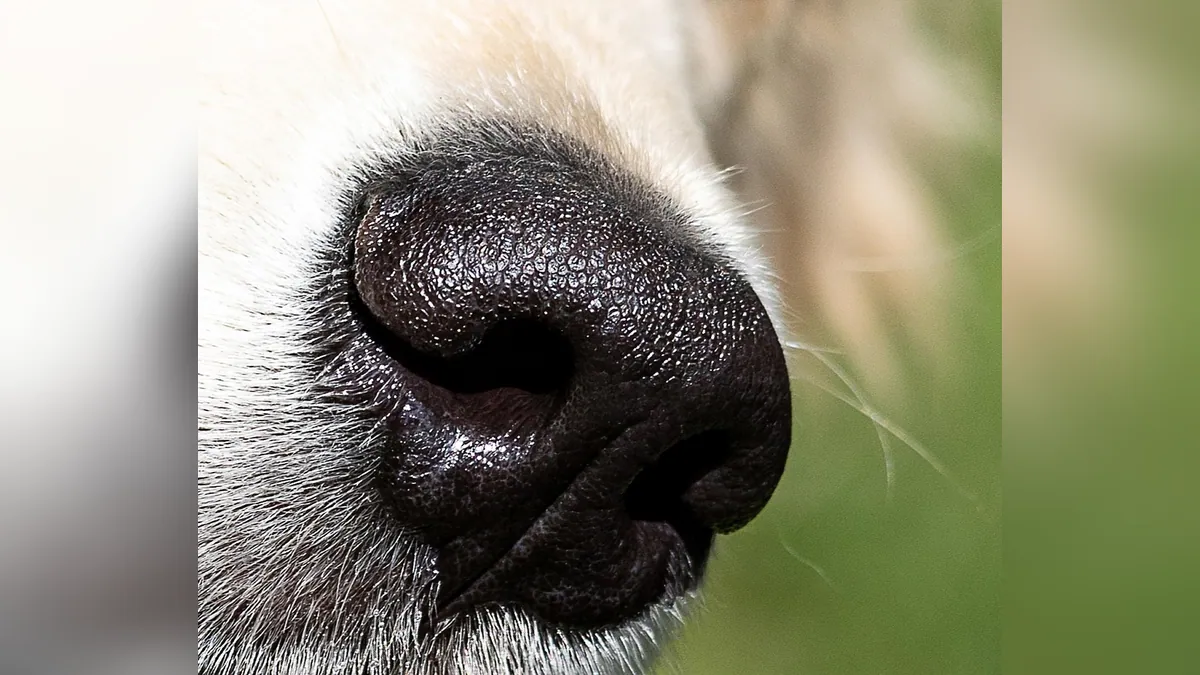
Are dogs noses supposed to be wet? Most of the time, yes. A moist nose is the normal state for a healthy dog, and a dry nose now and then is also normal. Nose moisture is a weak home health test on its own, so the useful question is whether a dry nose comes with other signs.
This article is educational and is not a substitute for veterinary diagnosis or treatment.
Quick Answer
- A wet nose is typical, but a dry nose by itself does not mean your dog is sick.
- Dogs get wet noses from licking, from nasal secretions, and from moisture in the air.
- A dry nose can follow a nap, a warm room, dehydration, or time spent in the sun.
- Judge your dog by the whole picture: appetite, energy, breathing, discharge, and behavior.
- Call your vet the same day if a dry nose comes with lethargy, poor appetite, trouble breathing, or thick nasal discharge.
What a Dog's Nose Looks Like When It Is Normal
The nose leather (the hairless, textured tip called the nasal planum) usually feels cool and slightly damp. Some dogs have a naturally drier nose than others. Breed, age, weather, and activity all shift how moist that surface feels.
A normal nose can also look a little different from hour to hour. Your dog may wake up with a dry, warm nose after sleeping, then have a wet nose again after drinking or licking. That swing is expected and not a sign of illness.
What matters more than moisture is the surface itself. A healthy nose is usually smooth and intact. Cracks, crusts, sores, bleeding, or loss of pigment are changes worth a closer look. If the tip is dry and cracked, that pattern has its own set of causes, which we cover in Why Is My Dog having dry cracked nose? Nasal Hyperkeratosis and Autoimmune.
Hair loss on the nose is another separate issue. A thinning coat around the muzzle is not the same as a dry nose, and it can point to allergy, infection, or other skin disease. See Dog Hair Loss on Nose: Causes and When to Worry if that is what you are seeing.
How Do Dogs' Noses Get Wet?
A few normal processes keep the nose moist.
Licking. Dogs lick their noses often, especially after eating, drinking, or sniffing something interesting. This spreads saliva across the nose leather and is probably the biggest everyday contributor.
Nasal secretions. The lining inside the nose produces a thin layer of mucus. A small amount can reach the surface and keep it damp.
Environment. Humid air, rain, and dew add moisture. Dry indoor heat in winter pulls moisture away.
Cooling and panting. Dogs cool themselves mainly by panting, which drives evaporative cooling [1]. A dog working or playing hard in heat will pant heavily, and that can dry out the mouth and nose surfaces. In one study of detection dogs working in a hot climate, body temperature rose after fieldwork and had not fully returned to resting levels by the next morning [1]. That tells you heat stress has real, measurable effects on the body, even if it does not tell us much about nose wetness specifically.
What a Dry Nose Does and Does Not Mean
A dry nose does not diagnose anything. It is a surface finding, not a body-wide one. Plenty of healthy dogs have dry noses for hours at a time, and plenty of sick dogs have wet noses.
What a dry nose can do is nudge you to look at your dog more carefully. If the nose is dry and everything else is normal, watch and wait. If the nose is dry and your dog is also off food, sluggish, vomiting, or breathing oddly, that combination is what matters.
Dehydration is one of the more common everyday reasons a nose feels dry. If you are unsure whether your dog is drinking enough, a rough estimate can help you spot a change. Try the Dog Water Intake Calculator: Is Your Dog Hydrated? to compare your dog's intake with a typical range.
Main Causes of a Dry or Wet Nose
| Cause | Typical clues | How urgent |
|---|---|---|
| Normal variation | Dry after sleep, wet after drinking, dog acts completely normal | Not urgent |
| Environment or weather | Dry in heated rooms or dry climates, improves with humidity | Not urgent |
| Dehydration | Dry nose plus tacky gums, less urine, reduced drinking | Same-day call if it persists |
| Fever or systemic illness | Warm dry nose, lethargy, poor appetite, sometimes shivering | Same-day call |
| Nasal discharge or rhinitis | Runny nose, sneezing, snorting, sometimes blood | Same-day to urgent |
| Nasal mass or tumor | Chronic one-sided discharge, facial swelling, nosebleeds, neurologic signs | Urgent |
| Nasal dermoid sinus | Firm swelling on top of the nose, sometimes a small pit in the skin | Routine to urgent |
| Heat stress | Heavy panting, dry mouth and nose, weakness, collapse | Emergency |
A few notes on that table.
Chronic nasal discharge is a common reason dogs see a vet for nose problems. Idiopathic rhinitis is one of the most frequent causes of long-term nasal discharge in dogs, and it is a diagnosis of exclusion, meaning other causes have to be ruled out first [2]. In that study, all affected dogs were non-brachycephalic and of various breeds, so a long nose does not protect your dog [2].
Nasal tumors are less common but serious. One report described a 7-year-old Standard Poodle with two weeks of progressive neurologic signs plus nasal discharge, and the cause turned out to be a nasal carcinoma that had spread into the brain [3]. That is an extreme example, but it shows why nasal signs that come with neurologic changes need fast attention.
Structural problems can also show up as a nose issue. A nasal dermoid sinus is a developmental defect that can appear as a firm swelling on the top of the nose, sometimes with a small pit in the skin, and surgical removal was curative in one reported case [4].
Infections and inflammatory conditions inside the nose or sinuses can cause discharge too. One case report described a young dog with sudden thick nasal discharge, fever, and head pain, and imaging showed sinusitis along with bone changes [5]. That dog improved with medical management [5]. The lesson is that nasal discharge with fever or pain is not something to watch at home for a week.
Red Flags That Make It an Emergency
Call an emergency clinic right away if you see any of these:
- Labored breathing, open-mouth breathing at rest, or blue-tinged gums
- Collapse, weakness, or unresponsiveness
- Heavy panting with a body temperature that feels very hot to the touch, especially after heat exposure
- Seizures, disorientation, circling, or a sudden change in behavior
- Large volume of blood from the nose that does not stop
- Facial swelling that is growing quickly, especially with pain when you touch the head
Call your regular vet the same day for:
- A dry nose plus refusal to eat or drink for more than a day
- Thick yellow or green nasal discharge
- Discharge from only one nostril that has lasted more than a week or two
- Repeated sneezing with blood
- A new firm lump or swelling on the nose
- A dry nose with vomiting, diarrhea, or marked lethargy
Safe Things You Can Do at Home While You Wait
You cannot fix a dry nose with a home remedy, and you should not try to treat an underlying illness on your own. What you can do is keep your dog comfortable and gather useful information for your vet.
Offer water often. Fresh water in a clean bowl, available at all times. If your dog is not drinking, note that.
Add moisture to the air. A humidifier in a dry room can help a nose that is dry from indoor heating.
Keep the nose clean. Wipe away discharge gently with a soft damp cloth. Do not pick at crusts or scabs.
Skip human products on the nose unless your vet tells you otherwise. Some human creams and ointments are not safe if your dog licks them off.
Avoid a petroleum-based ointment unless your vet approves it. If your dog is licking it off, it can cause loose stool.
Limit heat exposure. Walk in the cooler parts of the day. Dogs rely on panting for cooling, and heavy work in heat raises body temperature [1].
Write down what you see. When did the nose go dry? Is it dry all day or only sometimes? Any discharge, and what color? Any sneezing? Any change in appetite or energy? This timeline helps your vet more than a single observation.
Do not give any medication without veterinary guidance. That includes over-the-counter pain relievers, which can be toxic to dogs. If your vet prescribes something, the dose is calculated from your dog's weight and health, so follow their instructions exactly.
If your dog is sneezing a lot and you are not sure whether it is normal, Dog Sneezing: Normal or a Sign of Illness? walks through the patterns that matter.
What Your Veterinarian Will Check and Test
Your vet starts with the whole dog, not the nose alone.
History. Duration of the dry nose, discharge, sneezing, appetite, water intake, energy, and any recent travel or boarding.
Physical exam. Temperature, hydration, gum color, breathing effort, lymph nodes, and a careful look at the nose, mouth, and eyes. They will also check for facial swelling or pain when the head is touched, since those were key findings in a reported case of nasal and sinus disease [5].
Nasal exam. A scope or careful visual inspection of the nasal passages may be needed, especially for one-sided discharge.
Imaging. X-rays or CT can show masses, fluid, bone changes, or structural defects. CT was what identified the dermoid sinus in the reported case [4], and it also showed the sinus and bone changes in the young dog with nasal discharge and fever [5].
Bloodwork. A complete blood count and chemistry panel check for infection, inflammation, and organ function.
Cytology or culture. A sample of discharge can be examined under a microscope or sent for culture. Keep in mind that bacteria grown from nasal discharge do not always explain the problem. In one study of dogs with chronic nasal discharge, no correlation was found between culture results and the diagnosis of idiopathic rhinitis [2].
Biopsy. If a mass is found, a tissue sample is the way to confirm what it is. In the Poodle with nasal carcinoma, the diagnosis was confirmed after death, which is a reminder that nasal masses can be hard to identify early [3].
Allergy testing. This is sometimes considered for chronic nasal disease, but results need careful interpretation. In the same study, positive allergy antibody results were found at similar rates across dogs with different nasal diseases and even in controls, so a positive test alone does not prove allergy is the cause [2].
Prevention and Monitoring
You cannot prevent every cause of a dry nose, but you can lower the odds of the everyday ones.
- Keep water available and watch for changes in how much your dog drinks.
- Use a humidifier in dry rooms during winter.
- Protect your dog from prolonged heat and hard exercise in hot weather, since body temperature rises with work in heat [1].
- Keep up with routine vet visits so nasal changes get checked early.
- Track chronic nasal discharge. If it has lasted weeks, it needs a workup, not more waiting [2].
- Watch for new lumps or swelling on the nose. A firm swelling with a small pit in the skin can be a dermoid sinus, and surgery was curative in one reported case [4].
A simple log works well. Note the date, what the nose looked like, and any other signs. Bring it to your appointment.
Limitations and When to Contact a Veterinarian
Nose moisture is a weak signal. It cannot tell you whether your dog has an infection, a tumor, or nothing at all. Only a veterinarian can examine your dog, run tests, and make a diagnosis. Individual cases need a veterinarian, and this article cannot replace that visit.
Use these timing rules.
Emergency now: trouble breathing, collapse, seizures, heavy panting with heat exposure, or bleeding from the nose that will not stop.
Same day: dry nose with lethargy, no appetite, vomiting, fever, thick nasal discharge, or pain when the head is touched.
Routine visit within a few days: one-sided nasal discharge lasting more than a week, a new firm swelling on the nose, or a dry, cracked nose that is not improving with home care.
Watch at home: a dry nose in a dog who is eating, drinking, playing, and breathing normally. Recheck in a day or two.
Frequently Asked Questions
Should I worry if my dog's nose is dry?
Usually no, if your dog is otherwise normal. A dry nose can follow sleep, dry air, or a warm room. Worry when a dry nose comes with lethargy, poor appetite, breathing changes, or nasal discharge.
Can a dry nose mean my dog is sick?
It can be one small clue, but it does not confirm illness. Many sick dogs have wet noses, and many healthy dogs have dry ones. Look at appetite, energy, breathing, and discharge instead.
Why is my puppy's nose not wet?
Puppies often have drier noses than adult dogs, and a dry nose after a nap is common. If your puppy is eating, playing, and breathing normally, a dry nose alone is not a concern. Call your vet if your puppy is also sluggish, not eating, or has discharge.
Does a warm dry nose mean my dog has a fever?
Not reliably. Nose temperature does not measure body temperature. A true fever is diagnosed with a thermometer, and it usually comes with other signs like lethargy, shivering, or loss of appetite.
Can I put anything on my dog's dry nose?
Ask your vet first. Some human creams and ointments are not safe if licked off, and petroleum products can cause loose stool. Your vet can recommend a dog-safe product based on what is causing the dryness.
Related Articles
- Dry Dog Nose Remedy
- Why Is My Dog having dry cracked nose? Nasal Hyperkeratosis and Autoimmune
- Dog Water Intake Calculator: Is Your Dog Hydrated?
- Dog Hair Loss on Nose: Causes and When to Worry
- Dog Sneezing: Normal or a Sign of Illness?
- How to Check Your Dog's Hydration at Home
- Runny Nose in Dogs: Normal or a Warning Sign?
- Why Is My Dog's Nose Running? Causes and When to Worry
- Why Is My Dog Breathing Hard Through the Nose?
References
- Detection Dogs Working in Hot Climates: The Influence on Thermoregulation and Fecal Consistency. Animals : an open access journal from MDPI, 2024.
- Insights into Canine Idiopathic Rhinitis from a Prospective Study: A Multimodal Diagnostic Perspective. Animals : an open access journal from MDPI, 2026.
- Nasal carcinoma with leptomeningeal carcinomatosis in a dog. Journal of veterinary diagnostic investigation : official publication of the American Association of Veterinary Laboratory Diagnosticians, Inc, 2026.
- Computed Tomographic Features of a Histopathologically Confirmed Nasal Dermoid Sinus in a Dog. Veterinary radiology & ultrasound : the official journal of the American College of Veterinary Radiology and the International Veterinary Radiology Association, 2026.
- Case Report: Idiopathic calvarial hyperostosis and concurrent nasal discharge in a 22-week-old Staffordshire bull terrier. Frontiers in veterinary science, 2025.