What Do Guinea Pigs Like to Play With? Toy Ideas
By Dr. Zubair Khalid, DVM, MS, PhD ·
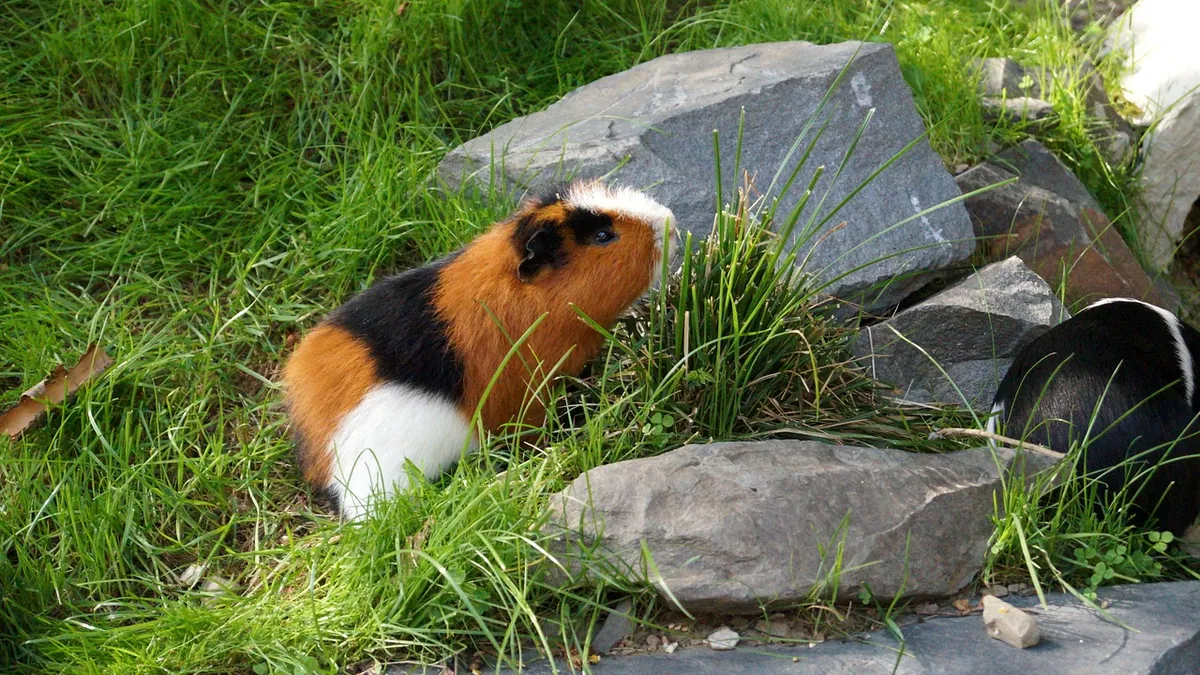
Guinea pigs play with safe chew toys, tunnels, hideouts, cardboard boxes, and foraging puzzles. They are not playful in the way dogs are, so the best toys tap into natural behaviors like chewing, hiding, exploring, and searching for food. This article is educational and is not a substitute for veterinary diagnosis or treatment.
Quick Answer
- Offer safe chew items every day, such as untreated wood blocks, cardboard, and hay-based toys.
- Provide at least one hiding place, like a small wood or cardboard box, so your guinea pig feels secure [1].
- Use tunnels and open-ended tubes for running and exploring, which supports natural activity.
- Turn feeding into play by hiding hay, pellets, and vegetables around the cage.
- Rotate toys every few days so your guinea pig stays interested and active.
What Do Guinea Pigs Play With? Understanding Their Play Style
Guinea pigs are prey animals. They spend much of their time eating, resting, and staying alert for danger. They do not chase balls or fetch like dogs. Their version of play looks more like chewing, burrowing, exploring, and foraging.
A large survey of guinea pig caretakers found that locomotor play, which is active movement like running and hopping, occurred several times per day in about 20% of the animals studied [2]. Eating and resting next to a companion happened several times per day in most of the guinea pigs surveyed [2]. This tells you that social time and movement matter, and toys that encourage both are a good fit.
Negative behaviors like biting, running up and down the cage walls, and bar chewing were rare in that same survey [2]. If your guinea pig shows these behaviors often, something in the environment may be off. More on that in the warning signs section below.
Safe Toys and Enrichment Ideas for Guinea Pigs
Chew Toys
Guinea pigs have open-rooted teeth that grow continuously. Chewing helps wear them down and keeps the mouth healthy. Good options include untreated wood blocks, apple wood sticks, cardboard tubes, plain paper, and hay-based chews.
Avoid soft plastics, treated lumber, painted wood, and anything with wire or small parts that could break off and be swallowed. If a toy starts to splinter or fall apart, remove it.
Tunnels and Tubes
Tunnels let guinea pigs run through, hide, and peek out. Cardboard tubes from paper towels or toilet paper rolls work well. You can also buy fabric tunnels or plastic tubes made for small pets. Make sure any tunnel is wide enough that your guinea pig cannot get stuck.
Hideouts
A hiding place is not optional. A small wood or cardboard box inside the cage gives your guinea pig security and a place to sleep [1]. You can use store-bought hideouts, wooden huts, or simple cardboard boxes. Have at least one hideout per guinea pig, plus one extra so no one gets blocked out.
Foraging Toys
Foraging is one of the most natural and rewarding activities for a guinea pig. You can scatter hay in different corners of the cage, stuff hay into a cardboard tube, or hide small pieces of vegetables under safe toys. This mimics how guinea pigs search for food in the wild and keeps their minds busy.
Balls and Rolling Toys
Most guinea pigs ignore balls. A few may nudge a lightweight ball, but this is not a reliable source of enrichment. If you want to try one, choose a smooth, solid ball with no holes where a toe or tooth could get caught. Do not use exercise wheels. Guinea pigs are not built for them and can injure their backs.
For more ideas on setting up a cage that supports play and comfort, see Guinea Pig Cage Accessories: Liners, Toys, and Hideouts.
DIY Toys You Can Make at Home
You do not need to spend much money. Most guinea pigs are happy with simple household items.
- Cardboard tube stuffed with hay. Fold one end closed, stuff the tube with hay, and let your guinea pig pull it out.
- Paper bag hideout. Cut the handles off a plain brown paper bag, open it up, and place it on its side. Remove it once it gets soiled.
- Cardboard box maze. Cut doorways into a few small boxes and connect them. This works well during floor time.
- Hay ball. Pack loose hay into a small wire basket with no sharp edges. Supervise to make sure toes do not get caught.
- Veggie skewer. Thread safe, guinea pig-friendly vegetables onto a stainless steel skewer made for small pets. Skip this if your guinea pig tries to chew the metal.
Always check DIY toys for staples, tape, ink, and glue. These can cause serious problems if swallowed.
Setting Up a Play Space: Step by Step
- Start with the cage. Many commercial guinea pig cages are too small, especially for more than one animal [1]. A cramped cage limits play. Give your guinea pigs as much room as you can.
- Add a solid floor. Guinea pigs have delicate feet and tiny toes, so avoid wire-mesh floors and provide a smooth bottom [1]. This matters for any play area too.
- Place hideouts first. Put in a small wood or cardboard box for security and sleeping [1]. Add tunnels and chew toys around it.
- Set up a floor time area. Choose a guinea pig-proofed room or a fenced floor area. Block off cords, gaps under furniture, and anything chewable that could be harmful.
- Add foraging stations. Scatter hay and hide vegetables in a few spots. This encourages movement and natural searching behavior.
- Supervise. Stay in the room during floor time. Guinea pigs are small and good at finding trouble.
- Rotate toys. Swap out a few items every few days. New smells and textures keep play interesting.
- Clean and inspect. Check toys for damage daily and wash or replace them as needed.
If you are still deciding how many guinea pigs to keep, Guinea Pig Companionship and Housing Needs explains why social housing matters.
Daily and Weekly Toy Schedule
| Timeframe | What to Do |
|---|---|
| Daily | Refresh hay, check chew toys for damage, offer floor time if possible |
| Daily | Spot-clean soiled cardboard and bedding |
| Every 2 to 3 days | Rotate 2 or 3 toys to keep things new |
| Weekly | Wash hard toys and hideouts, replace worn cardboard |
| Weekly | Check teeth, nails, and feet during handling |
| Monthly | Review cage setup and add one new enrichment item |
Common Mistakes Owners Make
Buying toys meant for other species. Toys made for rabbits, hamsters, or birds may have parts that are unsafe for guinea pigs. Also, do not house guinea pigs and rabbits together, because some diseases can spread between species [1].
Using wire floors or wheels. Wire-mesh floors hurt delicate feet [1]. Exercise wheels are not safe for guinea pigs and can cause spinal injuries.
Skipping hideouts. Without a hiding place, a guinea pig feels exposed and stressed. A simple box solves this [1].
Forgetting companionship. Guinea pigs are social animals. In one large survey, eating and resting next to a companion happened several times per day in most guinea pigs studied [2]. A single guinea pig can become lonely and inactive.
Ignoring hay. Nearly all guinea pigs in a Norwegian study had constant access to hay, and hay should be the foundation of the diet [3]. Toys that hold hay do double duty as food and enrichment.
Leaving damaged toys in the cage. Chewed plastic, splintered wood, and frayed fabric can cause mouth injuries or blockages. Check toys often.
Overlooking cage size. A small cage limits movement no matter how many toys you add. Many commercial cages are too small, especially for multiple guinea pigs [1].
Signs Something Is Wrong
Play and enrichment are only helpful if your guinea pig is healthy enough to enjoy them. Watch for these signs.
- Not eating or drinking. This is serious in guinea pigs and needs same-day veterinary attention.
- Drooling, dropping food, or losing weight. These can point to dental problems.
- Limping, hopping oddly, or reluctance to move. This may mean a foot or leg injury.
- Bar chewing, biting, or running up and down the walls. These behaviors were rare in a large survey of guinea pigs, so frequent versions may signal stress or a housing problem [2].
- Hiding all the time and not coming out to eat. Some hiding is normal, but constant hiding is not.
- Coughing or sneezing. Respiratory problems were among the most common health issues reported by guinea pig owners in one study [3].
- Scratching, hair loss, or skin crusts. Parasites were the most common health problem in that same study [3].
- Overgrown nails. This was also a commonly reported problem [3]. Long nails can make walking and playing painful.
If your guinea pig stops playing, stops eating, or seems painful, that is a medical issue, not a toy problem.
Supplies and Setup Details That Matter for Health
The right setup makes play safe and easy.
Cage size and airflow. Cages may be hard plastic, metal, or wire [1]. Make sure air flows well. If the sides are solid, use a wire mesh top [1]. Guinea pigs usually do not jump, so a lid is not always needed unless you have other pets or small children [1].
Temperature. Keep the cage between 65 and 75°F, out of direct sunlight and drafts [1].
Flooring. Provide a smooth bottom, never wire mesh [1].
Hideouts. Include a small wood or cardboard box for security and sleeping [1].
Chew items. Keep safe wood, cardboard, and hay-based chews available at all times.
Water and food dishes. Have a water bottle and food dishes ready before your guinea pig comes home, along with bedding, chew toys, and a brush [1].
Hay access. Hay should be available at all times. In one study, 93.3% of guinea pigs had constant access to hay, and that is the standard to aim for [3].
Vitamin C. Guinea pigs cannot make their own vitamin C. Many owners meet this need with fresh vegetables, and in one study about 60% of owners fed fresh vegetables daily, which may explain why most never used a supplement [3]. Ask your veterinarian what is right for your guinea pig.
Companionship. Guinea pigs do best with at least one compatible companion. Social housing supports natural behaviors like eating and resting together [2].
For help reading your guinea pig's body language during play, see Guinea Pig Behavior: Understanding Sounds and Actions.
Limitations and When to Contact a Veterinarian
No toy or enrichment plan replaces veterinary care. Every guinea pig is an individual, and only a veterinarian who examines your pet can diagnose and treat a medical problem.
Contact a veterinarian the same day if your guinea pig:
- Stops eating or drinking
- Has diarrhea or no droppings
- Is drooling or dropping food
- Is limping or reluctant to move
- Is breathing noisily or with effort
Seek emergency care right away if your guinea pig:
- Is gasping, open-mouth breathing, or struggling to breathe
- Has a swollen belly and is not passing droppings
- Is bleeding, collapsed, or unresponsive
- Has a suspected broken bone or serious injury
- Ate something toxic, such as a chewed cord or poisonous plant
Schedule a routine visit if you notice:
- Gradual weight loss
- Overgrown nails or teeth
- Persistent scratching or hair loss
- A change in play, appetite, or activity that lasts more than a day or two
Guinea pigs hide illness well because they are prey animals. By the time a guinea pig looks sick, it may already be quite ill. When in doubt, call your veterinarian.
Frequently Asked Questions
Do guinea pigs actually play with toys?
Yes, but their play looks different from a dog or cat. They chew, explore, hide, and forage. Toys that support these natural behaviors get the most use.
What toys are unsafe for guinea pigs?
Avoid soft plastics, treated or painted wood, wire-mesh items, exercise wheels, and toys with small detachable parts. These can cause injuries, blockages, or poisoning if chewed and swallowed.
How often should I change my guinea pig's toys?
Rotate a few items every two to three days. This keeps the environment interesting without stressing your guinea pig with too much change at once.
Can guinea pigs play with toilet paper tubes?
Yes, plain cardboard tubes are a safe and popular chew and tunnel item. Remove the tube once it becomes wet, soiled, or badly chewed.
Do guinea pigs need a companion to play with?
They are social animals and generally do best with at least one compatible guinea pig. A companion supports natural behaviors like eating and resting together.
How much floor time does a guinea pig need?
There is no single number that fits every guinea pig. Aim for daily supervised floor time in a safe, guinea pig-proofed area, and adjust based on your pet's health and comfort.
Related Articles
- Guinea Pig Cage Accessories: Liners, Toys, and Hideouts
- Guinea Pig Names: Creative and Popular Choices
- Guinea Pig Companionship and Housing Needs
- Guinea Pig Behavior: Understanding Sounds and Actions
- Guinea Pig vs Rabbit: Which Pet Is Right for You?
- Guinea Pig Names: Creative and Meaningful Options
- Best Guinea Pig Toys and Enrichment Ideas That Work
- Do Guinea Pigs Need to Be in Pairs? Social Needs
- Do Guinea Pigs Like to Be Held? Handling Guide
References
- Providing a Home for a Guinea Pig - All Other Pets. Merck Veterinary Manual.
- Guinea Pig (Cavia porcellus) Welfare: Associations Between Husbandry Practices, Human-Animal Interactions, and Animal Behaviour. Animals : an open access journal from MDPI, 2025.
- Nutrition, health and welfare of Norwegian pet guinea pigs. Acta veterinaria Hungarica, 2025.