Can Rabbits and Chinchillas or Guinea Pigs Live Together?
By Dr. Zubair Khalid, DVM, MS, PhD ·
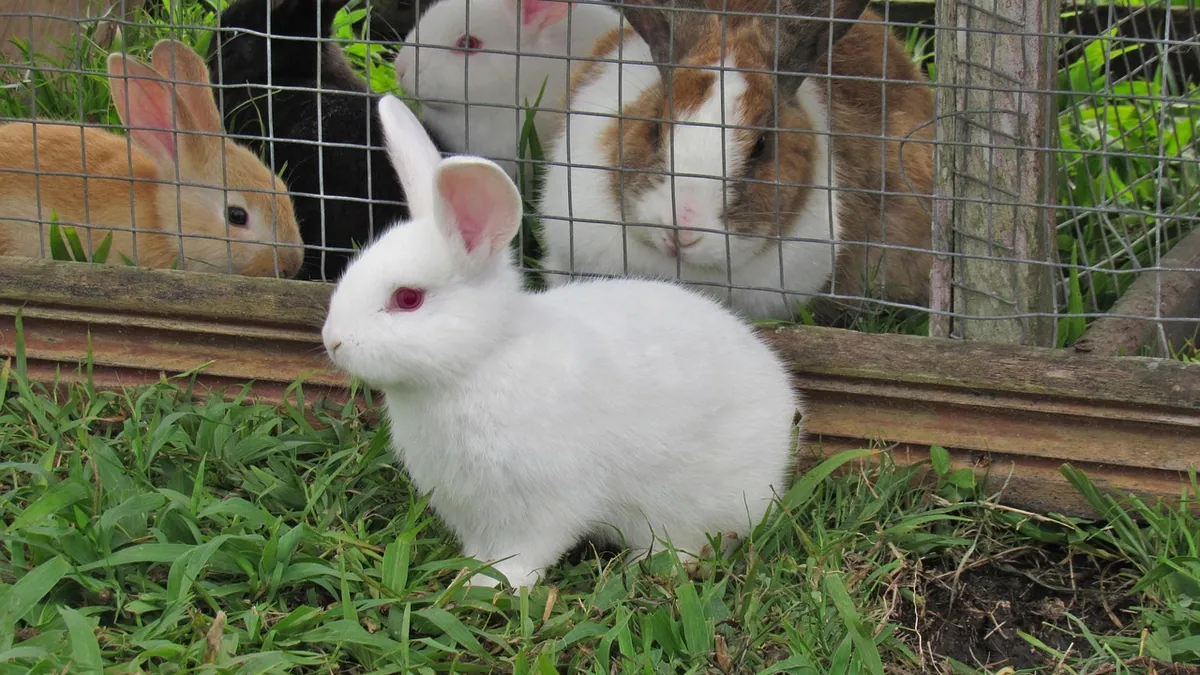
No, chinchillas and rabbits should not live together, and the same goes for guinea pigs and rabbits. These species have different diets, different communication styles, and different ways of defending themselves, and those differences create real risks of injury, illness, and stress. If you are wondering "do chinchillas and rabbits get along," the honest answer is that they can share a home only as neighbors in separate enclosures, never as cage mates.
This article is educational and is not a substitute for veterinary diagnosis or treatment.
Quick Answer
- House rabbits, chinchillas, and guinea pigs in separate enclosures. Supervised playtime together is not safe either.
- A rabbit's powerful hind legs can seriously injure a guinea pig or chinchilla with a single kick, even during what looks like calm interaction.
- These species need different diets, so a shared food bowl or free access to each other's food will cause nutritional problems over time.
- Rabbits can carry bacteria that make guinea pigs sick, and the stress of living with another species can suppress a small pet's immune system.
- If your rabbit seems lonely, the safest companion is another rabbit, ideally one that has been spayed or neutered.
Why Chinchillas and Rabbits Do Not Belong in the Same Cage
Size and strength differences
A rabbit outweighs a guinea pig several times over and can weigh many times what a chinchilla does. That size gap matters because rabbits defend themselves by kicking with their hind legs and by biting. A kick that would be a minor scuffle between two rabbits can fracture a guinea pig's spine or jaw. Chinchillas are fast and fragile, and a startled rabbit can injure one before you can intervene.
Chinchillas also have a unique defense: when grabbed roughly or frightened, they release patches of fur from their skin, a reaction called fur slip [1]. This helps them escape a predator, but it means a chinchilla that feels threatened by a larger cage mate may lose large areas of coat, and the fur takes months to grow back [1].
Stress and incompatible body language
Rabbits thump, chinchillas spray urine and release fur, and guinea pigs freeze or stampede. None of these signals mean the same thing to the other species. A rabbit that is simply curious may look like a predator to a guinea pig. A chinchilla that is playing may startle a rabbit into a defensive kick.
Chronic stress is not just unpleasant. It affects appetite, digestion, and immune function in small mammals. A pet that lives in a state of low-grade fear is more likely to get sick and less likely to eat and drink normally.
Disease transmission between species
Rabbits can carry Bordetella bronchiseptica and Pasteurella bacteria in their nasal passages without appearing sick. Guinea pigs are highly susceptible to respiratory infections from these organisms, and once a guinea pig develops pneumonia, it can decline quickly. Shared air space in a small room, shared bedding, and shared water bottles all increase the risk.
Chinchillas have their own vulnerabilities. They are prone to urinary calculi, urolithiasis, and kidney calcification, and their calcium metabolism differs from that of rabbits and guinea pigs [2]. Mixing species makes it harder to monitor each animal's urine, droppings, and water intake, which are the earliest clues that something is wrong.
Diet Conflicts: One Bowl Cannot Feed Three Species
What each species actually needs
Chinchillas have a high requirement for dietary fiber, and their diet should be based mainly on high-quality grass hay with a pelleted chinchilla diet as a supplement [2]. Guinea pigs need a steady dietary source of vitamin C because they cannot make it themselves. Rabbits need grass hay, a measured amount of plain pellets, and leafy greens, with pellets formulated for their own life stage.
Rabbit pellets and guinea pig pellets are not interchangeable. Guinea pig pellets are often supplemented with vitamin C, which rabbits do not need in those amounts, and rabbit pellets may not provide enough stabilized vitamin C for a guinea pig. Chinchilla pellets are the best match for chinchillas, though guinea pig or rabbit pellets have been used successfully with chinchillas when chinchilla-specific pellets were not available [2].
Why shared feeding fails
When two species share a bowl, one animal usually eats more than the other. Rabbits are bigger and often faster at the bowl. A guinea pig that cannot reach its own food may develop vitamin C deficiency, and a chinchilla that eats too much of the wrong pellet may gain weight or develop digestive upset.
Obesity is already common in pet rabbits and guinea pigs. In one survey of rabbits, guinea pigs, and rats visiting a veterinary clinic, 28% of rabbits and 23% of guinea pigs were overweight [3]. Free access to a cage mate's food makes weight control even harder.
If you keep multiple species, feed each one in its own enclosure at its own height, and pick up leftovers before any supervised out-of-cage time. If you are still deciding which species fits your home, see Guinea Pig vs Rabbit: Which Pet Is Right for You?.
Rabbit and Guinea Pig Housing: What Safe Setup Looks Like
Separate enclosures, shared room
The safest arrangement is one enclosure per species, placed so the animals can see and smell each other but cannot touch. This gives each pet its own food, water, bedding, and hiding spots. It also lets you track droppings, urine, and appetite for each animal separately, which is how you catch illness early.
Do not rely on a wire divider inside one cage. Small mammals can reach through bars, bite toes, and pull fur. Solid barriers or separate cages with a gap between them are safer.
Chinchilla housing specifics
Chinchillas need large cages with multiple levels, ramps, and places to climb because they are very active [4]. Avoid cages with plastic-coated wire, since chinchillas chew the plastic off [4]. If the cage has wire mesh, the openings should be no wider than 1 by 2 inches on the sides and ½ by ½ inch on the bottom so legs cannot get stuck [4].
Chinchillas also need a solid resting area. Wire bottoms help droppings fall through, but constant standing on wire causes foot sores [4]. Good bedding includes kiln-dried pine or recycled paper, and paper bedding is often safer than wood shavings because it will not block the digestive tract if eaten [4].
Guinea pig housing and companionship
Guinea pigs are social and do best with another guinea pig. In a survey of more than 1,100 guinea pig caretakers, eating and resting next to a companion occurred several times per day in 87.6% and 48.1% of animals, respectively [5]. That kind of contact is a basic need, and a rabbit cannot fill it.
If you are adding a guinea pig, read Guinea Pig Companionship and Housing Needs and Guinea Pig Social Needs: Pair Housing, Introductions, and Signs of Conflict before you bring a second pig home.
Comparison Table: Housing Needs by Species
| Need | Rabbit | Guinea Pig | Chinchilla |
|---|---|---|---|
| Best companion | Another rabbit | Another guinea pig | Another chinchilla |
| Main diet | Grass hay, measured pellets, leafy greens | Grass hay, guinea pig pellets, vitamin C source | Grass hay, chinchilla pellets [2] |
| Housing style | Large pen or hutch with hiding boxes | Open floor pen with hides and tunnels | Multi-level cage with ramps and climbing space [4] |
| Bedding cautions | Avoid softwood shavings with strong oils | Avoid dusty bedding | Kiln-dried pine or paper, not untreated pine [4] |
| Handling caution | Support hindquarters | Support body fully | Never grab roughly, fur slip can occur [1] |
| Key monitoring | Appetite, droppings, teeth | Appetite, droppings, vitamin C intake | Appetite, droppings, urine, fur condition |
Step-by-Step: Setting Up a Multi-Species Household
- Choose one enclosure per species. Measure the floor space and make sure each pet has room to move, stretch, and hide.
- Place enclosures in the same room only if the animals stay calm. Watch for hiding, thumping, pacing, or refusal to eat.
- Feed separately, at separate times if possible. Remove uneaten pellets and fresh food within a few hours.
- Provide separate water bottles or bowls at a height each animal can reach comfortably.
- Give each pet daily one-on-one handling and playtime away from the other species.
- Keep a simple log of appetite, droppings, and behavior for each animal. Bring it to veterinary visits.
- Quarantine any new pet for at least two weeks before it shares a room with your current pets, and have it examined by a veterinarian first.
Signs That Something Is Wrong
In the rabbit
- Not eating hay or pellets for more than 12 hours
- Small or missing droppings
- Drooling, pawing at the mouth, or dropping food while chewing
- Hiding more than usual or lunging at the enclosure barrier
In the guinea pig
- Wheezing, labored breathing, or discharge from the nose
- Refusing food or losing weight
- Drooling or difficulty chewing
- Sitting hunched with ruffled fur
In the chinchilla
- Patches of missing fur, which may indicate fur slip from stress or rough handling [1]
- Straining to urinate, blood in the urine, or crying while urinating
- Reduced appetite or fewer droppings
- Chewing cage bars or repetitive pacing
Any of these signs in a small mammal can worsen quickly. Small pets hide illness until they are quite sick, so early action matters.
Common Mistakes Owners Make
- Assuming calm behavior means friendship. A rabbit sitting quietly near a guinea pig may simply be tolerating it, and the risk of a sudden kick remains.
- Letting them share a water bottle. Saliva and nasal secretions contaminate the spout, which spreads bacteria between species.
- Using rabbit pellets for a guinea pig. Guinea pigs need a reliable vitamin C source, and rabbit pellets are not formulated for that need.
- Skipping a quarantine period for a new pet. New animals can carry infections that spread to your existing pets.
- Buying a chinchilla as a companion for a rabbit. Chinchillas are social with their own kind, and a survey of pet chinchilla caretakers found that individual housing was reported for 14.3% of animals, which is a welfare concern [6].
- Assuming a bigger cage solves the problem. Space helps, but it does not remove the injury and disease risks of mixed-species housing.
Supplies and Setup Details That Protect Health
- Solid-bottomed resting areas for every species, especially chinchillas [4]
- Kiln-dried pine or paper bedding for chinchillas, never untreated pine [4]
- Chew-proof, well-ventilated carriers for any travel, kept out of direct sun and heat [1]
- Separate food dishes and water sources, cleaned daily
- Hiding boxes and tunnels so each pet can retreat without being cornered
- A gram scale for weekly weight checks on small pets
- A written care sheet for pet sitters, including emergency contacts and feeding instructions [1]
If you travel, consider a pet sitter or a boarding facility experienced with your species. Travel is stressful for chinchillas and is not recommended unless necessary, and boarding near barking dogs or predators should be avoided [1]. Rabbits also find transport stressful, and rabbit-appeasing pheromone in mist form has been studied as a way to help them cope with car trips [7].
Limitations and When to Contact a Veterinarian
This article covers general housing guidance. Individual animals vary in temperament, health status, and social needs, so your own veterinarian should evaluate your specific situation.
Contact an emergency veterinary hospital immediately if you see:
- A guinea pig or chinchilla that was kicked, bitten, or pinned by a rabbit
- Open wounds, bleeding, or a limb that is not bearing weight
- Labored breathing, open-mouth breathing, or blue-tinged gums
- A pet that has not eaten or produced droppings for 12 to 24 hours
- Straining to urinate with no urine produced
Call your veterinarian the same day if you notice:
- Sudden fur loss or bald patches on a chinchilla [1]
- Nasal or eye discharge in a guinea pig
- Drooling or dropping food in a rabbit
- A pet that is hiding, pacing, or refusing food after a housing change
Schedule a routine visit if:
- You are planning to add a new pet to the household
- Your pet has not had a wellness exam in the past year
- You need help with weight management, since obesity is common in pet rabbits and guinea pigs [3]
Frequently Asked Questions
Can a rabbit and a chinchilla become friends if they grow up together?
No, growing up together does not remove the physical and dietary risks. A rabbit can injure a chinchilla at any age, and the two species need different pelleted diets and different calcium handling [2]. Friendship between species is not a substitute for housing each animal safely.
Is it safe to let my rabbit and guinea pig play together while I watch?
No, supervision does not prevent a sudden kick or bite. Rabbits can injure guinea pigs in seconds, and guinea pigs are vulnerable to respiratory bacteria that rabbits can carry without symptoms. Keep them in separate enclosures and give each pet its own exercise time.
What should I do if my rabbit seems lonely?
Get your rabbit a rabbit companion, ideally one that has been spayed or neutered. Bonding two rabbits takes planning, but it meets your rabbit's social needs without cross-species risk. If bonding is not possible, increase daily handling, enrichment, and out-of-cage time with you.
Do chinchillas need a companion of their own species?
Chinchillas are social animals, and individual housing was reported for 14.3% of chinchillas in one survey of caretakers [6]. A same-species companion is the appropriate choice when you can manage introductions safely. Ask your veterinarian for guidance on bonding and quarantine.
Can rabbits and guinea pigs share the same room if they are in separate cages?
Yes, many households keep them in the same room successfully, as long as the cages are solid and the animals cannot reach each other. Watch for stress signals like hiding, thumping, or reduced appetite, and move the cages apart if either pet seems anxious. For more on guinea pig companionship, see Guinea Pig Companionship: How to Introduce and Bond Pairs.
Related Articles
- Guinea Pig vs Rabbit: Which Pet Is Right for You?
- How Long Do Rabbits Live as Pets?
- Can Chinchillas Eat Rabbit or Guinea Pig Food?
- Managing Aggression and Social Stress in Rabbits
References
- Special Considerations for Chinchillas - All Other Pets. Merck Veterinary Manual.
- Chinchillas - Exotic and Laboratory Animals. Merck Veterinary Manual.
- Prevalence and awareness of obesity and related husbandry practices in Estonian rabbits, guinea pigs, and rats. Animal welfare (South Mimms, England), 2025.
- Providing a Home for a Chinchilla - All Other Pets. Merck Veterinary Manual.
- Guinea Pig (Cavia porcellus) Welfare: Associations Between Husbandry Practices, Human-Animal Interactions, and Animal Behaviour. Animals : an open access journal from MDPI, 2025.
- Husbandry Conditions and Welfare State of Pet Chinchillas (Chinchilla lanigera) and Caretakers' Perceptions of Stress and Emotional Closeness to Their Animals. Animals : an open access journal from MDPI, 2024.
- Use of rabbit-appeasing pheromone in mist form helps pet rabbits cope with transport. American journal of veterinary research, 2026.