Why Is My Rabbit Laying Down So Much? Rest or Illness
By Dr. Zubair Khalid, DVM, MS, PhD ·
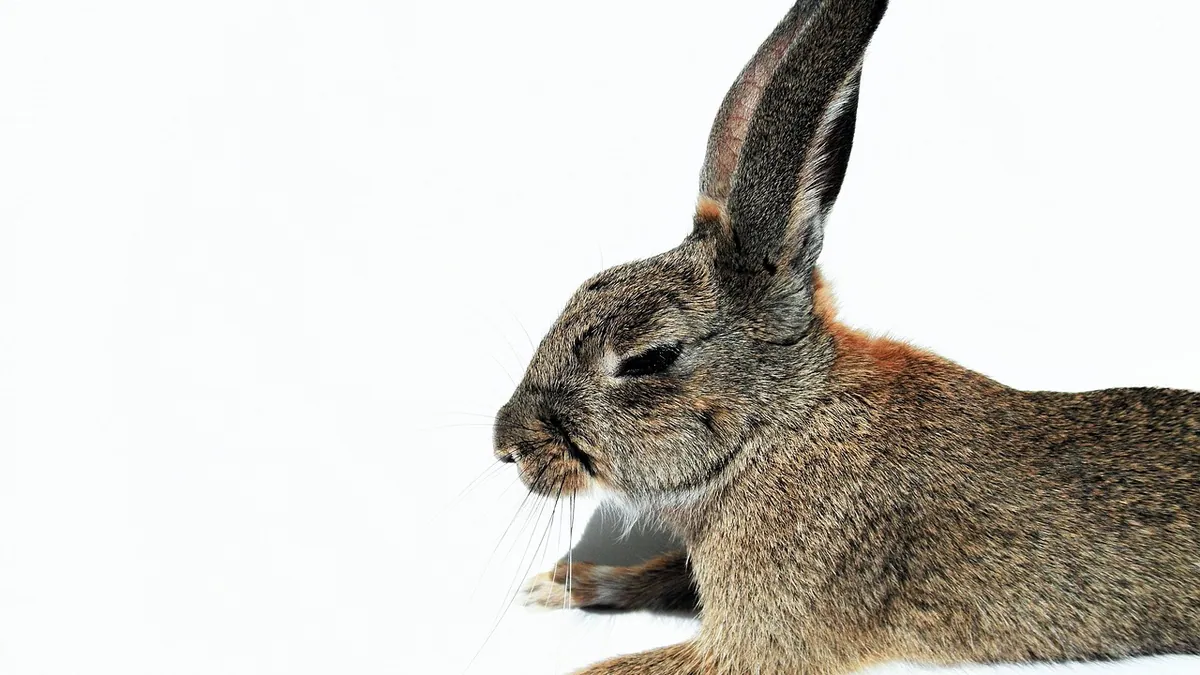
A rabbit that lies down often is usually just relaxed, especially during the day when rabbits naturally rest. But if your rabbit is lying down more than usual, is hard to wake, is not eating, or is pressing its belly to the floor, that is a sign of illness. This guide explains why is my rabbit laying down so much and how to tell normal rest from a problem that needs a veterinarian.
This article is educational and is not a substitute for veterinary diagnosis or treatment.
Quick Answer
- A healthy rabbit rests in a relaxed, loaf-shaped or stretched-out position with soft ears, normal breathing, and a quick response when you offer food.
- A sick rabbit often sits hunched, grinds its teeth, breathes fast, and refuses food. These are signs of pain or illness [1].
- Rabbits hide illness well, so any sudden drop in activity deserves a same-day call to your vet [1].
- Stop all treats and pellets if your rabbit is not eating, keep it warm and quiet, and do not force food or water into its mouth.
- Go to an emergency vet now if your rabbit is limp, gasping, has a bloated belly, or has not eaten or pooped in 12 to 24 hours.
What Normal Rabbit Resting Behavior Looks Like
Rabbits are crepuscular, which means they are most active at dawn and dusk. In between, they sleep and doze in stretches that can add up to many hours a day. A rabbit lying down for most of the afternoon is often completely normal.
Look at the body language, not just the amount of time spent lying down.
A relaxed rabbit may:
- Lie in a "loaf" with legs tucked under the body and eyes half closed
- Stretch out flat on the side or belly, sometimes with hind legs kicked out
- Flop over suddenly onto one side, which looks alarming but is a sign of comfort
- Twitch the nose slowly and keep ears in a neutral position
- Hop over for a treat or a nose rub when you approach
A rabbit in pain or distress usually looks different. Signs of pain or illness include grinding the teeth and sitting in a hunched posture [1]. The rabbit may sit with its back arched, belly pressed to the floor, and eyes squinted or partly closed. It may stay in one spot and not move even when you offer its favorite food.
If your rabbit is lying down but still eating, drinking, pooping, and greeting you, the behavior is likely normal rest. If any of those are off, keep reading.
Why Is My Rabbit Laying Down So Much? Main Causes
Many conditions can make a rabbit slow down. Some are mild and some are life threatening. The table below lists the most common reasons a rabbit lies down more than usual, along with clues that point to each one.
| Cause | Typical clues | How urgent |
|---|---|---|
| Normal rest or boredom | Eats, drinks, poops normally, responds to you, worse at midday | Not urgent |
| GI stasis (slow gut movement) | Not eating, small or no poop, hunched posture, teeth grinding | Emergency, same day |
| Pain from any source | Hunched posture, teeth grinding, reluctance to move, fast breathing [1] | Urgent, same day |
| Dental disease | Drooling, dropping food, weight loss, eating soft food only | Urgent, within 24 hours |
| Respiratory disease | Fast or noisy breathing, blue-tinged gums, extended neck | Emergency |
| Gastric dilatation and volvulus | Sudden loss of appetite, lethargy, marked abdominal pain [2] | Emergency, surgery may be needed [2] |
| Colonic perforation or peritonitis | Apathy, not eating, low body temperature, fast heart rate, belly pain [3] | Emergency |
| Paralysis or spinal problem | Weak or dragging hind legs, inability to hop | Emergency |
| Heat stress | Lying stretched out, fast breathing, warm ears, hot room | Emergency if severe |
| Obesity or arthritis | Slow to rise, stiff gait, prefers soft bedding | Routine visit |
Some of these are rare but serious. Gastric dilatation and volvulus is uncommon in rabbits, yet it should be considered when a rabbit shows sudden loss of appetite, abdominal pain, and lethargy [2]. A rabbit with a perforated colon can present with apathy and anorexia along with a low body temperature, fast heart rate, and abdominal pain [3]. Both of these need immediate veterinary care.
Why Is My Rabbit Sleeping So Much?
Rabbits sleep in short bursts throughout the day and night. A rabbit that sleeps more than usual but still eats well and hops around at dawn and dusk is often fine. The concern starts when extra sleep comes with less eating, less pooping, or a rabbit that will not wake fully.
Rabbit Lethargy Versus Rabbit Resting Behavior
Lethargy means the rabbit is unusually dull and slow to respond. Resting behavior means the rabbit is calm but alert. Test it simply. Offer a small piece of hay or a favorite green. A resting rabbit will usually perk up and take it. A lethargic rabbit may not react at all, or may sniff and turn away.
Why Does My Guinea Pig Lay Down So Much?
Guinea pigs also rest often, and the same rules apply. A guinea pig that lies down but still eats, drinks, and squeaks for food is likely fine. A guinea pig that lies flat, refuses food, or has a bloated belly needs a vet. Guinea pigs cannot make their own vitamin C, so a guinea pig that is suddenly inactive may also be low on vitamin C or fighting an infection. If you keep both species, remember that a rabbit and a guinea pig lying down for different reasons can look similar on the surface.
Red Flags That Make This an Emergency
Call an emergency veterinary hospital right away if your rabbit shows any of these:
- Not eating at all for 12 hours or more
- No poop for 12 to 24 hours, or only tiny, stringy, or misshapen droppings
- A hard, swollen, or tender belly
- Loud teeth grinding, which often means severe pain [1]
- Open-mouth breathing, gasping, or noisy breathing
- Limp body, no response to touch, or a rabbit that cannot lift its head
- Sudden dragging or paralysis of the back legs
- Body temperature that feels cold to the touch
- Collapse, seizures, or heavy bleeding
Rabbits hide illness, so quick veterinary care matters [1]. A rabbit that looks "just tired" in the morning can be in serious trouble by evening. When in doubt, treat it as urgent.
Safe Things You Can Do at Home While You Wait
You cannot diagnose your rabbit at home, but you can keep it stable and gather useful information for your vet.
- Keep the room quiet, dim, and warm. Avoid handling your rabbit more than needed.
- Offer fresh hay, water, and a small amount of its usual greens. Do not introduce new foods.
- Do not force-feed or syringe water into your rabbit's mouth unless your vet tells you to. This can cause choking or make a blockage worse.
- Count the droppings in the litter box over the last few hours and take a photo. Your vet will want to know the size, number, and shape.
- Note the last time your rabbit ate, drank, and pooped.
- Check the breathing rate while your rabbit is calm. Fast, labored breathing is a reason to go in now.
- Keep the carrier ready with a towel and a heat source like a warm water bottle wrapped in cloth if your rabbit feels cold.
If your rabbit is not eating, do not wait to "see if it improves by morning." Gut movement in rabbits depends on constant food intake, and fasting can disrupt normal movement of food through the digestive system [1]. This is also why rabbits are not kept off food for long periods before surgery [1].
What Your Veterinarian Will Check and Test
Your vet will start with a full physical exam. They will check your rabbit's weight, body temperature, heart rate, breathing, hydration, teeth, eyes, ears, and belly. They will also feel along the spine and legs for pain or weakness.
Common tests include:
- Blood work to check organ function and look for signs of infection or inflammation. In one reported case of gastric dilatation and volvulus, blood chemistry showed elevations in ALT, ALP, and total bilirubin [2].
- X-rays to look for gas, blockages, or free air in the abdomen. In a reported case of colonic perforation, radiographs showed free gas along with dilated intestines [3].
- Ultrasound to look at the stomach, intestines, and other organs. In the same gastric dilatation and volvulus case, ultrasound showed the spleen displaced into the left cranial abdomen, which supported the diagnosis and pointed to the need for immediate surgical exploration [2].
- Dental exam, sometimes with sedation, to check for sharp points on the molars.
- Fecal testing if parasites or infection are suspected.
If your rabbit needs anesthesia for imaging or surgery, your vet will assess the lungs first. Respiratory disease is common in rabbits, and subclinical conditions can be hard to spot and can cause breathing problems during anesthesia [4]. This is one reason a thorough exam matters before any procedure.
Treatment depends on the cause. It may include fluids, pain medicine, gut motility drugs, syringe feeding, oxygen, or surgery. Pain medicine is often used for 1 to 2 days after surgery to help rabbits keep eating normally [1]. Your vet will calculate any medication dose from your rabbit's weight and health, so never use a dose meant for another pet.
Prevention and Daily Monitoring
Most of the problems that make a rabbit lie down too much are easier to prevent than to treat.
- Feed unlimited grass hay every day. Hay keeps the gut moving and wears down teeth.
- Measure pellets instead of free-feeding them. Obesity makes arthritis and inactivity worse.
- Offer a variety of safe greens and fresh water in a bowl and a bottle.
- Rabbit-proof the room so your rabbit can exercise safely every day.
- Keep the environment cool. Rabbits handle cold better than heat.
- Weigh your rabbit weekly on a kitchen scale and write it down. Small weight loss is an early clue.
- Check the litter box daily. Dropping size and number tell you a lot about gut health.
- Schedule a wellness exam at least once a year, and twice a year for rabbits over 5 years old.
If you notice your rabbit slowing down, compare it to its normal routine. A rabbit that is less active but still eating and pooping may just need a cooler room or more exercise time. A rabbit that is less active and off its food needs a vet.
If you also have a dog at home, some of the same principles apply to other species. A dog that cries when lying down may have arthritis or disc disease, which you can read about in this guide on why a dog cries when lying down. If your dog is limping after rest, see this article on a dog limping on a front leg after laying down. And if your dog is drinking and urinating more than usual, this guide on why a dog pees so much can help you sort out what to tell your vet.
Limitations and When to Contact a Veterinarian
This article cannot tell you what is wrong with your specific rabbit. Only a veterinarian who examines your rabbit can do that.
Contact an emergency veterinary hospital now if your rabbit is limp, gasping, has a bloated or hard belly, is grinding its teeth loudly, cannot use its back legs, or has not eaten or pooped in 12 to 24 hours.
Contact your regular veterinarian the same day if your rabbit is eating less than normal, has smaller or fewer droppings, is drooling, has lost weight, or is simply much quieter than usual.
Schedule a routine visit if your rabbit is slowly becoming less active over weeks, is stiff when rising, or is gaining weight. These can point to arthritis, dental problems, or obesity, which are easier to manage when caught early.
Frequently Asked Questions
How long can a rabbit lie down before it is a problem?
There is no fixed time limit, because healthy rabbits rest for many hours a day. The problem is not the duration but the quality of the rest. If your rabbit is alert, eating, drinking, and pooping normally, long rest periods are fine. If it stops eating or pooping, that is a problem no matter how long it has been lying down.
Can a rabbit lie down because it is too hot?
Yes. Rabbits are sensitive to heat, and a hot room can make a rabbit stretch out flat and breathe faster. Move your rabbit to a cool, shaded area and offer cool water. If the breathing stays fast or your rabbit becomes limp, treat it as an emergency.
Is a rabbit that flops over on its side okay?
A sudden flop onto the side is often a sign of a relaxed, happy rabbit. The key is what happens next. A relaxed rabbit will right itself, stretch, or hop over for food. A rabbit that stays on its side, cannot lift its head, or breathes heavily is in trouble and needs a vet now.
What does a hunched rabbit look like?
A hunched rabbit sits with its back arched and its belly close to or pressed against the floor. Its front legs may be stiff, and its eyes may be squinted. Hunched posture along with teeth grinding is a common sign of pain or illness in rabbits [1].
Should I force my rabbit to eat if it will not?
No. Do not force food or water into your rabbit's mouth at home. This can cause choking and may worsen a blockage. Offer hay and water, keep your rabbit warm, and call your vet. If syringe feeding is needed, your veterinarian will show you the correct food, amount, and technique for your rabbit's weight and condition.
Related Articles
- Rabbit Lifespan and Aging: Caring for Senior Rabbits
- Why Is My Rabbit Lying on Its Side and Not Moving?
- How Long Do Rabbits Sleep? Daily Rest Patterns Explained
References
- Illness of Rabbits - All Other Pets. Merck Veterinary Manual.
- Gastric dilatation and volvulus in a 5-year-old intact female Holland lop rabbit. The Canadian veterinary journal = La revue veterinaire canadienne, 2025.
- Pneumoperitoneum Secondary to Colonic Perforation in a Domestic Rabbit. Animals : an open access journal from MDPI, 2026.
- Evaluation of the Effects of Sedation and Anesthesia on Total Lung Volume and Attenuation in Rabbit Lung CT Exams. Animals : an open access journal from MDPI, 2024.