Why Is My Rabbit Lying on Its Side and Not Moving?
By Dr. Zubair Khalid, DVM, MS, PhD ·
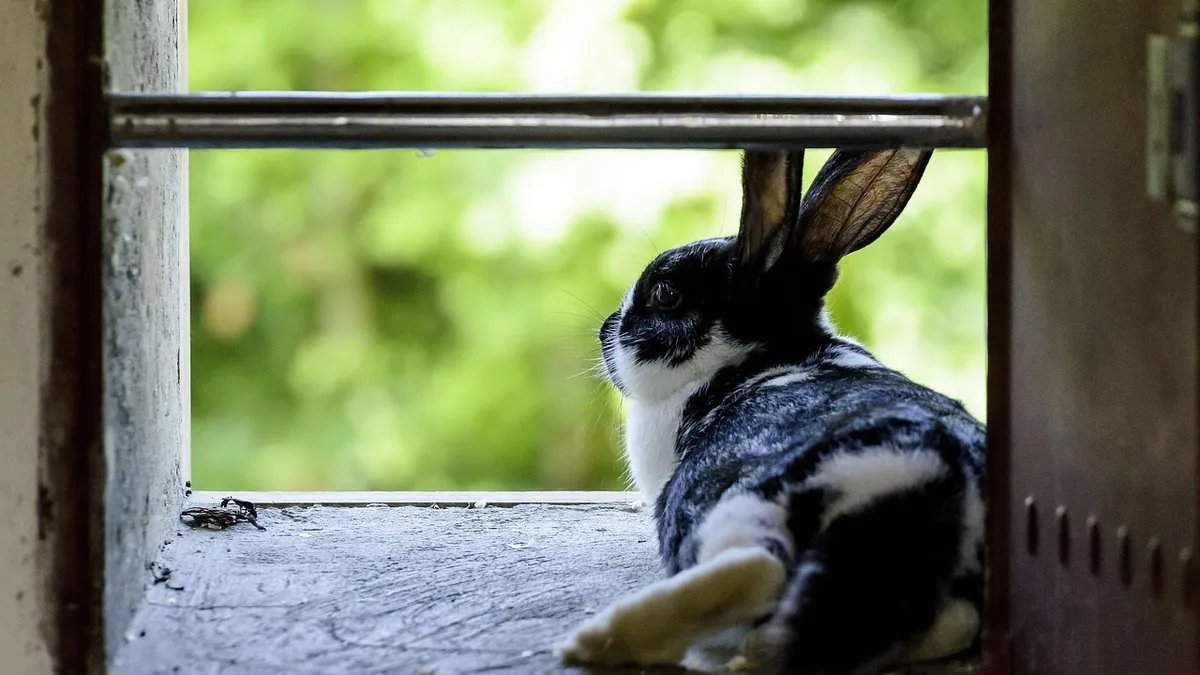
If your rabbit is lying on its side and not moving, the first thing to work out is whether this is normal relaxed behavior or a medical collapse. Rabbits flop over when they feel safe, and they can look startlingly still. But a rabbit that is truly unresponsive, breathing hard, or unable to right itself needs emergency care right away. This article is educational and is not a substitute for veterinary diagnosis or treatment.
Quick Answer
- A relaxed flop looks loose and comfortable. The rabbit will right itself within seconds to minutes when you speak, touch it, or offer a treat.
- A collapse looks stiff, limp, or rigid. The rabbit may not respond to your voice or touch, or may struggle and fail to get up.
- True collapse in rabbits is an emergency. Call an exotic or emergency veterinarian immediately, even if it is late at night.
- Do not force food, water, or medicine into a rabbit that cannot hold its head up. Keep it warm, quiet, and dark, and transport it right away.
- Heat stroke, shock, gut stasis, and neurologic disease are the most common reasons a rabbit goes down and stays down.
What a Rabbit Flop Looks Like vs. a Collapse
The normal flop
A happy rabbit flops onto its side or even its back with a soft thud. The body is relaxed, the legs may stick out at odd angles, and the eyes may be partly closed. Breathing is slow and even. If you say its name or rattle a treat bag, the rabbit pops upright within a few seconds. Some rabbits flop so hard they startle their owners. This is a good sign, not a bad one.
The abnormal collapse
A collapsed rabbit does not get up. It may be limp like a rag doll, or rigid with the head thrown back. Breathing may be fast, noisy, or gasping. The rabbit may paddle its legs, twitch, or roll repeatedly to one side. It may be cold to the touch, or its gums may look pale, blue, or bright red. Some rabbits cry out. Others go completely silent.
Why the difference matters
Rabbits are prey animals. They hide illness until they cannot hide it anymore. By the time a rabbit is down and not moving, the problem is often advanced. That is why speed matters more than certainty. If you are not sure which one you are seeing, treat it as an emergency.
Why Is My Rabbit Lying on Its Side and Not Moving? The Main Causes
| Cause | Typical clues | How urgent |
|---|---|---|
| Heat stroke | Heavy panting, drooling, hot ears, warm environment, no shade or water | Emergency now |
| Shock or severe pain | Pale gums, cold body, fast weak pulse, recent injury, surgery, or trauma | Emergency now |
| Gut stasis or severe GI upset | Not eating, small or no droppings, hunched posture, teeth grinding | Emergency now |
| Head tilt and inner ear disease | Head tilted to one side, rolling, nystagmus (eyes flicking), loss of balance | Same day |
| Encephalitozoon cuniculi (EC) | Head tilt, weakness, urinary incontinence, hind limb problems | Same day |
| Spinal or neurologic injury | Sudden paralysis, dragging limbs, loss of pain response | Emergency now |
| Anesthesia recovery | Recent procedure, still groggy, slow to regain sternal recumbency | Monitor closely, call the vet if not improving |
| Deep sleep or relaxed flop | Soft body, quick to wake, normal appetite when roused | Not urgent |
Heat stroke
Rabbits cannot sweat and they overheat fast. A rabbit in a hot room, a sunny hutch, or a car can go from panting to collapsed in a short time. Heat stroke is one of the few rabbit emergencies where cooling the rabbit on the way to the vet can save its life. Wet the ears and paws with cool (not ice cold) water and use a fan.
Shock
Shock means the body is not delivering enough blood to the organs. It can follow a fall, a dog attack, a major illness, or surgery. A rabbit in shock is often cold, quiet, and unresponsive. This is a life threatening state and needs IV fluids and oxygen at a clinic.
Gut stasis and severe gastrointestinal disease
A rabbit that stops eating also stops moving food through the gut. Gas and pressure build up, and the rabbit may lie on its side or press its belly to the floor. No droppings for 12 hours or more is a red flag. Gut stasis can kill within a day or two if untreated.
Head tilt, ear disease, and EC
Head tilt is common in pet rabbits. In one study of 73 rabbits with head tilt, the most frequent final diagnoses were Encephalitozoon cuniculi meningoencephalomyelitis (41.7%), otitis media/interna (22.2%), and both conditions together (36.1%) [1]. Rabbits with otitis media/interna were more likely to have a slower, more gradual onset than rabbits with EC [1]. Recumbency (lying down and unable to right itself) and impaired mentation were linked to a higher risk of death or euthanasia in that same group [1]. If your rabbit has a head tilt and is now lying down, that is a serious turn and needs same day care.
Spinal and neurologic injury
Sudden paralysis can come from a spinal injury, a blood vessel problem, or a congenital vertebral issue. One report described a 7 month old rabbit that developed acute, rapidly progressive hind limb paralysis after a routine spay, and imaging later showed a congenital thoracic lordosis [2]. This is uncommon, but it shows that sudden loss of movement can have a structural cause. Any rabbit that cannot use its back legs needs urgent assessment.
Anesthesia recovery
Rabbits recover from anesthesia more slowly than dogs and cats. A study of three anesthetic protocols in dwarf rabbits tracked the time to regain sternal recumbency and then a standing position after surgery [3]. If your rabbit was just neutered or spayed, some floppiness is expected for a while. But if it is not lifting its head, is cold, or is not improving, call the clinic.
Normal deep rest
Some rabbits sleep so deeply they look dead. The body is soft, the breathing is slow and regular, and the rabbit wakes quickly when you touch it or make a noise. If your rabbit has been eating, drinking, and pooping normally, this is likely just rest.
Red Flags That Mean Emergency Now
Call an emergency veterinarian immediately if you see any of these:
- The rabbit does not respond to your voice, touch, or a favorite treat.
- Breathing is fast, open mouthed, noisy, or gasping.
- The gums are pale, white, blue, or bright red.
- The body feels cold, or the rabbit is limp like a rag doll.
- The rabbit is rolling, paddling, or having seizure like movements.
- There has been no poop or eating for 12 hours or more.
- The rabbit was in a hot place, or the ears feel hot and the rabbit is panting.
- There was a fall, a dog or cat attack, or recent surgery.
- The rabbit is pregnant or recently gave birth and now will not move.
Do not wait to see if it improves overnight. Rabbits decline fast, and hours matter.
Safe Things You Can Do at Home While You Wait
Keep the rabbit calm and warm
Place the rabbit in a quiet, dark carrier with a soft towel. Keep the room temperature moderate. If the rabbit feels cold, wrap it loosely in a towel, but do not cover the face. If the rabbit feels hot, move it to a cool area and dampen the ears and paws.
Do not force food or water
A rabbit that cannot swallow can choke or aspirate. Do not syringe water or food into its mouth unless your veterinarian tells you to. Do not give any medication unless it was prescribed for this rabbit.
Handle gently
Support the whole body, including the hindquarters. Never pick a rabbit up by the scruff alone. If the rabbit is rolling, pad the carrier with towels so it cannot hurt itself.
Call ahead
Phone the clinic before you arrive. Tell them your rabbit is collapsed and not moving. Ask if they have a rabbit savvy veterinarian on duty. If not, ask where to go.
Watch the clock
Note the time you first saw the rabbit down and the time you leave. Bring a list of what your rabbit ate today, when it last pooped, and any medications it takes.
What Your Veterinarian Will Check and Test
Your veterinarian will start with a full physical exam. They will check the heart rate, breathing rate, temperature, gum color, hydration, and body condition. They will look in the ears and mouth and feel the belly for gas, a mass, or a full bladder.
Common tests
- Blood glucose, to check for low blood sugar.
- Blood work, to look at organ function and infection.
- X-rays, to check the spine, lungs, and gut.
- Ultrasound, to look at the abdomen and bladder.
- CT or MRI, if a neurologic cause is suspected.
- E. cuniculi testing, if head tilt or weakness is present.
- Fecal testing, for parasites.
Treatment depends on the cause
Heat stroke needs active cooling and fluids. Shock needs IV fluids and oxygen. Gut stasis needs fluids, pain relief, and drugs to move the gut. Head tilt from ear disease or EC needs targeted treatment. In the head tilt study, meloxicam (a pain reliever) was linked to improvement of clinical signs [1]. Your veterinarian will calculate the right dose from your rabbit's weight and health.
What the prognosis looks like
Some rabbits recover fully. Others keep a residual head tilt. In the head tilt study, recumbency and impaired mentation were linked to a higher risk of death or euthanasia [1]. That does not mean every down rabbit dies. It means the sooner you get help, the better the odds.
If your rabbit is also limping or favoring a limb after a fall or injury, our guides on Why Is My Dog Limping On Front Left Leg and Why Is My Dog Limping On Both Front Legs explain how veterinarians sort out limping causes, and the same logic of checking pain, nerve function, and joint stability applies to rabbits.
Preventing a Rabbit Collapse
Control the temperature
Keep your rabbit indoors or in a shaded, ventilated area when it is hot. Rabbits do best between about 60 and 75 degrees Fahrenheit. Never leave a rabbit in a car. Provide frozen water bottles wrapped in a towel for the rabbit to lean against in summer.
Feed a proper diet
Unlimited grass hay, fresh leafy greens, and a measured amount of pellets. Clean water always. Sudden diet changes can trigger gut problems.
Give space to move
Rabbits need room to stretch out, sit up, and hop. Housing that is too cramped prevents normal posture and movement. In transport studies, experts recommend enough floor space for every rabbit to lie in ventral recumbency and change position, plus crate height that lets a rabbit sit upright without its ears touching the ceiling [4]. Apply the same idea at home. A rabbit that can never stretch out is a stressed rabbit.
Watch for early warning signs
Weigh your rabbit weekly. A drop in weight, smaller droppings, or a rabbit that hides more than usual can be the first sign of illness. Bring your rabbit in for a checkup at least once a year, and sooner if anything changes.
Know your emergency clinic
Save the number and address of the nearest 24 hour exotic or emergency hospital. Program it into your phone. In an emergency, you will not have time to search.
If you notice your rabbit limping or holding up a leg but not crying, our article on Why Is My Dog Limping Front Leg But Not Crying covers how subtle pain signs can look in animals, and rabbits hide pain even more than dogs do.
Limitations and When to Contact a Veterinarian
This article cannot tell you what is wrong with your specific rabbit. Only a veterinarian who examines your rabbit can do that. Individual cases need a veterinarian.
Emergency now: unresponsive, gasping, blue or pale gums, cold body, seizure like activity, rolling, heat exposure, trauma, or a rabbit that cannot right itself. Go now, do not wait.
Same day: head tilt with loss of balance, no eating or pooping for 12 hours, a rabbit that is down but still alert, or a rabbit that just had surgery and is not waking up normally.
Routine visit: a rabbit that flops normally but has lost weight, has smaller droppings, or seems quieter than usual over several days.
Frequently Asked Questions
How long can a rabbit stay on its side before it is an emergency?
If the rabbit is relaxed and wakes up when you call it, there is no time limit. If the rabbit is unresponsive, limp, or struggling to get up, treat it as an emergency right away. Do not wait more than a few minutes to call a veterinarian.
Can a rabbit recover from a collapse on its own?
Some rabbits with mild heat stress or a brief faint can improve with cooling and rest, but you cannot tell the difference at home. A rabbit that has been down and unresponsive needs veterinary care even if it seems to perk up. The underlying cause is still there.
Is a rabbit lying on its side always a sign of pain?
No. Many rabbits flop on their side when they are relaxed and happy. Painful rabbits often hunch, grind their teeth, or press their belly down instead. A rabbit that is on its side and also not eating, not pooping, or breathing hard is more likely to be in trouble.
What should I do if my guinea pig is laying on its side and not moving?
Guinea pigs have the same two possibilities: a relaxed flop or a true collapse. A guinea pig that is limp, cold, breathing hard, or not responding needs an emergency veterinarian just like a rabbit. Do not force food or water. Keep it warm and quiet, and call ahead.
Can I give my rabbit pain medicine at home while I wait?
No. Never give human pain medicine to a rabbit. Some common pain drugs are toxic to rabbits, and the correct dose depends on weight and health. Your veterinarian will choose the right drug and calculate the dose. If your rabbit is already prescribed meloxicam, give it only as directed.
What if my rabbit is floppy after surgery?
Some grogginess after anesthesia is normal, and recovery times vary by drug protocol [3]. But a rabbit that is not lifting its head, feels cold, or is not improving within the timeframe your clinic gave you needs a call or a visit. When in doubt, phone the clinic that did the procedure.
Related Articles
- Why Is My Rabbit Not Moving? Causes and When to Worry
- Why Is My Rabbit Leaning to One Side? Head Tilt Causes
- Rabbit Not Moving but Breathing: What to Do Right Now
References
- Otitis media/interna and encephalitozoonosis are the most common causes of head tilt in pet rabbits in the UK: 73 cases (2009-2020). The Veterinary record, 2024.
- Haemorrhagic myelopathy causing acute post-operative paralysis in a rabbit (Oryctolagus cuniculus) with a congenital lordosis. The Journal of small animal practice, 2026.
- Comparative study of three anaesthetic protocols (dexmedetomidine/ketamine, dexmedetomidine/midazolam, midazolam/ketamine) in dwarf rabbits undergoing elective orchiectomy. Veterinary journal (London, England : 1997), 2026.
- Effect of stocking density and crate height on the welfare of fattening rabbits during transport to the slaughterhouse under mild Mediterranean summer conditions. Animal : an international journal of animal bioscience, 2026.