Do Guinea Pigs Have Good Memory? Recognition Explained
By Dr. Zubair Khalid, DVM, MS, PhD ·
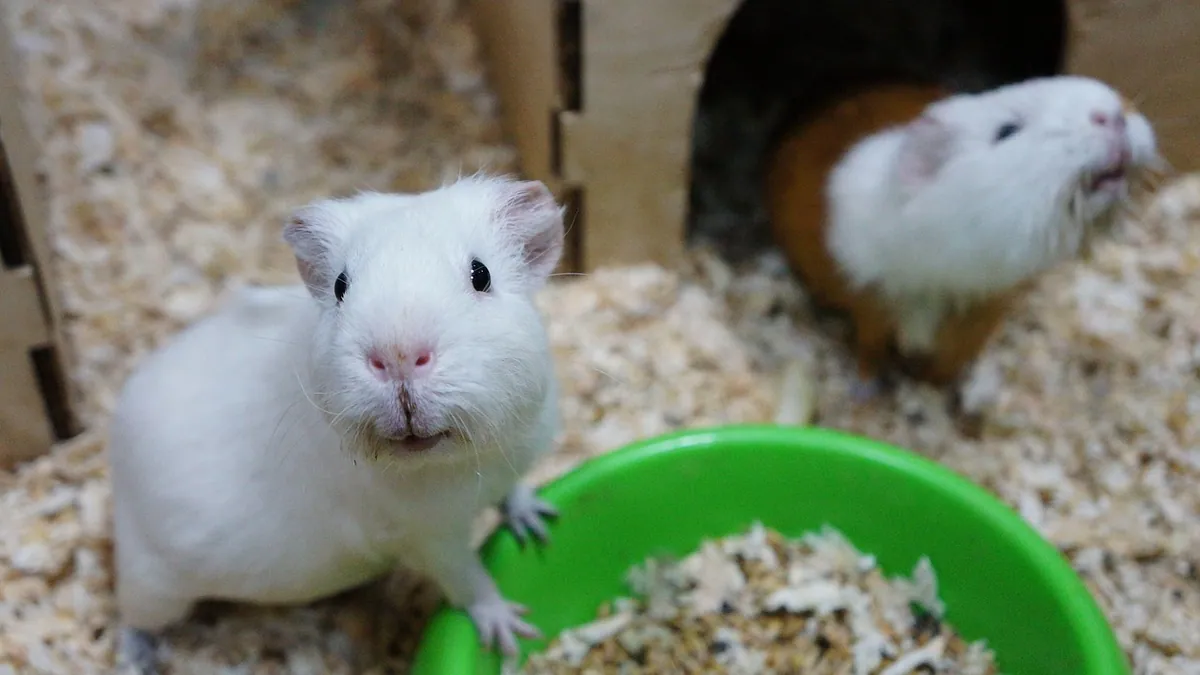
Do guinea pigs have good memory? Yes, guinea pigs can learn and remember tasks, places, and the people who care for them. Research on guinea pig learning shows they can form lasting associations through repeated, calm training [1]. Their memory is best described as practical: they remember what matters for food, safety, and routine.
This article is educational and is not a substitute for veterinary diagnosis or treatment.
Quick Answer
- Guinea pigs can learn new tasks through repetition, and trained guinea pigs have shown conditioned responses after about 10 days of daily sessions [1].
- Memory and learning in guinea pigs depend on overall brain health, not just age. Middle-aged guinea pigs with conductive hearing loss did not show spatial learning or memory deficits in one study [2].
- Guinea pigs recognize familiar people mainly through scent, sound, and routine, not through human-style face recognition.
- Guinea pigs are social animals that learn from each other, so a calm, confident companion can help a shy guinea pig settle into new routines [3].
- Memory does not mean your guinea pig will obey commands like a dog. Training works best with food rewards, short sessions, and a predictable daily schedule.
What Science Says About Guinea Pig Memory and Learning
Guinea pigs are hystricomorph rodents native to the Andes region of South America, and they have been domesticated for a long time [3]. Domestication shaped them into animals that pay close attention to their surroundings, especially food, shelter, and the behavior of other guinea pigs.
Laboratory research gives us a window into guinea pig learning. In one classical conditioning study, guinea pigs learned to blink in response to a signal after 10 consecutive days of training, with more than 60% of animals in several groups learning the response [1]. That is a real, measurable form of associative learning and memory. The same study found that timing mattered: when the gap between the signal and the response was too long, the guinea pigs did not learn the task as well [1].
Other research suggests that guinea pig memory is fairly resilient. In a study of middle-aged guinea pigs, plugging the ear canal to create conductive hearing loss for 8 weeks did not cause deficits in spatial learning or memory [2]. The animals did show a small drop in body weight, which suggests some stress from the hearing loss, but their ability to learn and remember locations held up [2].
What does this mean for you at home? Your guinea pig is not a tiny computer that stores every command. It is a small prey animal that remembers patterns, safe places, and the people who bring food. That kind of memory is strong and useful.
Why Guinea Pigs Remember Certain Things
Food, routine, and sound
Guinea pigs learn quickly when food is involved. They may start wheeking when they hear a refrigerator door, a bag rustle, or your footsteps at the usual feeding time. This is not coincidence. It is your guinea pig linking a sound or sight with a reward.
Scent and recognition
Guinea pigs have a strong sense of smell. They use scent glands along the back and around the anus for marking and communication [3]. Your guinea pig likely knows your scent before it sees you. A familiar smell can signal safety, while an unfamiliar smell can trigger caution.
Social learning
Guinea pigs are social by nature. In related research on pigs, young animals learned foraging behavior by watching and listening to their mother, mostly through visual and auditory contact [4]. Guinea pigs are not pigs, but the principle of social learning in a prey species is similar. A calm companion can show a nervous guinea pig that a new hideout, food bowl, or handling routine is safe.
If you want to understand the sounds and body language behind this recognition, see Guinea Pig Behavior: Understanding Sounds and Actions.
Medical Causes That Can Look Like Memory Problems
Sometimes a guinea pig seems to "forget" where the water bottle is, stops coming to a familiar sound, or acts confused. Before you assume it is a memory issue, rule out health problems.
Dental disease
Guinea pigs have continuously growing teeth. Dental pain or overgrowth can make eating painful and change behavior. A guinea pig that stops responding to a food cue may be in mouth pain, not losing memory.
Pain and arthritis
Older guinea pigs can develop joint pain. A guinea pig that used to run to the front of the cage may slow down or hide because moving hurts.
Respiratory and heart disease
Breathing problems make guinea pigs tired and less responsive. If your guinea pig is breathing hard, sitting hunched, or has a runny nose, that is a medical concern, not a training problem.
Neurologic disease
Balance problems, head tilt, circling, or seizures point to a neurologic issue. These signs need prompt veterinary attention.
Vision or hearing changes
Guinea pigs can lose vision or hearing with age or illness. A guinea pig that does not react to your voice may simply not hear you well. One study found that conductive hearing loss did not impair spatial learning in middle-aged guinea pigs, but it did cause a small weight decline, suggesting stress [2]. Hearing changes still affect how your pet experiences the world.
For a broader look at warning signs, read Guinea Pig Health: Recognizing and Responding to Common Illnesses.
When Memory and Learning Become a Problem
A guinea pig with a good memory is usually a guinea pig with a stable routine. Problems tend to show up in a few ways.
- Your guinea pig suddenly stops recognizing familiar people or routines.
- It gets lost in a cage it has lived in for months.
- It stops eating or drinking despite a normal food setup.
- It becomes aggressive or fearful during handling it used to tolerate.
- It vocalizes or paces in a way that seems distressed.
Any sudden change in behavior deserves a veterinary check. Guinea pigs hide illness well, and behavior is often the first clue.
How to Support Memory, Learning, and Recognition at Home
Build a predictable routine
Feed at similar times each day. Keep the cage layout mostly stable. Change one thing at a time, such as adding a new hideout, so your guinea pig can adjust without feeling overwhelmed.
Use short, positive training sessions
Guinea pigs can learn simple tasks. Keep sessions to a few minutes, once or twice a day. Use a small piece of a safe vegetable as a reward. End on a success. If your guinea pig walks away or freezes, stop and try again later.
Pair a cue with a reward
Say the same word or make the same sound before you offer food. Over time, your guinea pig will connect the cue with the reward. This is the same associative learning seen in guinea pig research [1].
Provide enrichment
Enrichment supports brain health. Offer tunnels, chew-safe items, hiding places, and foraging opportunities. Rotate toys so the environment stays interesting without becoming chaotic.
Respect scent and social needs
Let your guinea pig sniff your hand before you pick it up. Wash your hands between handling different guinea pigs. If you have more than one, follow proper introduction steps. Social housing matters for guinea pig welfare, and a companion can reduce stress. Learn more in Guinea Pig Social Needs: Pair Housing, Introductions, and Signs of Conflict.
Keep the environment calm
Loud noises, sudden movements, and frequent cage changes can make a guinea pig anxious. A calm environment helps your guinea pig feel safe enough to learn and remember routines.
What Not to Do
Do not punish your guinea pig
Punishment does not teach a guinea pig what you want. It increases fear and can damage the bond you have built. Guinea pigs are prey animals. They respond to safety, not intimidation.
Do not expect dog-style obedience
Guinea pigs can learn, but they are not obedience animals. They will not reliably come when called in every situation. Training should be low-pressure and reward-based.
Do not assume memory means understanding
Your guinea pig may remember that the fridge door means food. That does not mean it understands your words. Recognition is based on repeated associations, scent, and sound.
Do not ignore sudden behavior changes
If your guinea pig seems to forget a routine it knew well, do not assume it is just aging. Pain, dental disease, and other medical problems can look like memory loss.
When to Involve a Veterinarian or Behavior Professional
Call your veterinarian if your guinea pig shows any of these signs:
- Not eating or drinking for more than a few hours
- Drooling, dropping food, or weight loss
- Difficulty breathing or open-mouth breathing
- Head tilt, circling, or loss of balance
- Sudden aggression or fear that is new
- A change in memory or recognition that comes on quickly
A certified behavior professional can help if the issue is fear, handling problems, or conflict between guinea pigs. Your veterinarian can rule out medical causes first. If you are comparing species for your household, see Guinea Pig vs Rabbit: Which Pet Is Right for You?.
Limitations and When to Contact a Veterinarian
Research on guinea pig memory is limited. Many studies use laboratory settings, specific tasks, and controlled conditions. That means we cannot say exactly how long a guinea pig remembers a specific person or event. We can say guinea pigs learn associations and retain spatial information well in some studies [2][1].
Individual cases need a veterinarian. If your guinea pig's behavior changes, a physical exam is the safest first step. Contact your veterinarian the same day for not eating, breathing changes, or sudden collapse. Go to an emergency clinic immediately for seizures, severe bleeding, or open-mouth breathing. Schedule a routine visit for gradual changes in activity, appetite, or social behavior.
Frequently Asked Questions
Do guinea pigs remember their owners?
Yes, guinea pigs can recognize familiar people through scent, sound, and routine. They may wheek, run to the cage front, or relax when you approach. This recognition is built on repeated positive experiences, not on human-style face memory.
How long do guinea pigs remember things?
There is no single number that applies to every guinea pig. Research shows they can retain learned associations and spatial information over weeks in controlled tasks [2][1]. Daily routines and repeated rewards strengthen memory the most.
Can guinea pigs learn their names?
Guinea pigs can learn to respond to a specific sound or word if you pair it with food or attention. They are not learning the name as a concept. They are learning that this sound predicts something good.
Do guinea pigs remember other guinea pigs?
Yes, guinea pigs are social animals and can recognize familiar companions by scent and sound. Reuniting guinea pigs after separation may go smoothly if they still recognize each other, but introductions should always be supervised. Follow a slow, neutral-space introduction process.
Does age affect guinea pig memory?
Age can affect energy, mobility, and sensory function, but memory itself is not automatically lost with age. In one study, middle-aged guinea pigs with conductive hearing loss still performed well on spatial learning and memory tasks [2]. If an older guinea pig seems confused, a veterinarian should check for pain, dental disease, or other health problems.
Related Articles
- Guinea Pig Behavior: Understanding Sounds and Actions
- Guinea Pig Health: Recognizing and Responding to Common Illnesses
- Guinea Pig Social Needs: Pair Housing, Introductions, and Signs of Conflict
- Guinea Pig vs Rabbit: Which Pet Is Right for You?
- Husbandry and Welfare of Laboratory Guinea Pigs
- Guinea Pig Companionship and Housing Needs
- Do Guinea Pigs Have Good Eyesight? Vision Explained
- Do Guinea Pigs Have Good Hearing? Sound Sensitivity
- Do Guinea Pigs Smell? Odor Control and Their Nose
References
- Role of cerebellar cortex in associative learning and memory in guinea pigs. Open life sciences, 2022.
- Conductive hearing loss does not affect spatial learning and memory in middle-aged guinea pigs. Scientific reports, 2024.
- Anatomy, Physiology, and Behavior of Guinea Pigs - Exotic and Laboratory Animals. Merck Veterinary Manual.
- Social communication during a sow-piglet foraging paradigm. Behavioural processes, 2026.