Do Guinea Pigs Bite? Why They Bite and What to Do
By Dr. Zubair Khalid, DVM, MS, PhD ·
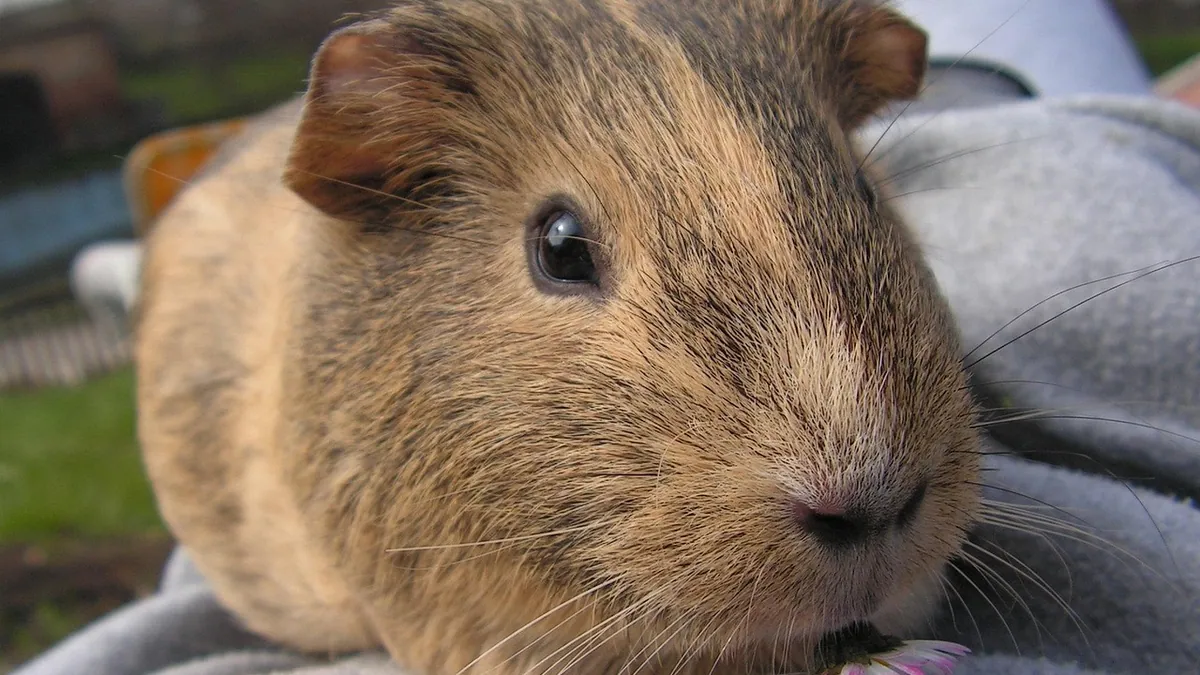
Guinea pigs can bite, but they usually do not. Most guinea pigs are gentle and would rather run away or freeze than use their teeth on a person. Biting is uncommon in well-socialized pets, and when it happens, it almost always has a reason you can identify and fix. This article is educational and is not a substitute for veterinary diagnosis or treatment.
Quick Answer
- Guinea pigs bite when they are scared, in pain, or startled, not because they are mean.
- Biting is rare in normal pet behavior. In a survey of 1,181 guinea pig caretakers, biting several times per day was reported in only 0.4% of animals [1].
- A guinea pig that suddenly starts biting may have a medical problem, especially dental pain or skin trouble.
- Handle your guinea pig gently and support the hindquarters to reduce fear-based nips.
- If you are bitten, wash the wound with soap and running water right away, then watch it for signs of infection.
Why Does My Guinea Pig Bite? Normal Reasons First
Biting is one item in a guinea pig's communication toolkit. Before you assume something is wrong, look at the situation in which the bite happened.
Fear and Startling
Guinea pigs are prey animals. A hand that appears suddenly in published veterinary research looks like a predator. A guinea pig that was asleep and wakes to being grabbed may nip out of pure reflex. This is not aggression. It is a startle response.
Pain or Discomfort
An animal in pain may bite to stop you from touching a sore spot. This is one of the most common reasons a previously calm guinea pig starts biting. Dental disease, bladder problems, arthritis, and skin conditions can all make handling painful.
Rough or Incorrect Handling
Guinea pigs have stocky bodies with short limbs and no tail [2]. They cannot be scruffed or held by the belly the way some other pets can. If a guinea pig feels unsupported or off balance, it may bite to get you to put it down.
Nipping During Feeding
Many guinea pigs nibble fingers that smell like food. This is usually a quick, gentle mouthing instead of a real bite. It happens most when you hand-feed treats and your fingers still carry the scent of vegetables or pellets.
Hormonal and Social Tension
Guinea pigs are social and generally do best housed with compatible companions [3]. Adult males can be aggressive toward each other when females are present, and unfamiliar males may fight when first paired [3]. Biting between guinea pigs is a separate issue from biting people, but the same underlying stress can make a guinea pig more reactive to hands.
Exploring With the Mouth
Rodents explore the world partly with their mouths. A young guinea pig may mouth your fingers the way a puppy does. This is normal and usually fades with gentle, consistent handling.
Is It Normal for Guinea Pigs to Bite? When It Becomes a Problem
Occasional nipping during feeding or a one-time startle bite is normal. A pattern of biting is not.
Watch for these signs that the behavior has crossed into a problem:
- Biting happens every time you reach into the cage.
- The guinea pig lunges or charges your hand.
- Biting is paired with hiding, not eating, or weight loss.
- The guinea pig bites when a specific body area is touched.
- Biting started suddenly in an adult guinea pig with a calm history.
Any of these patterns deserves a closer look, starting with a veterinary exam to rule out pain.
Medical Causes to Rule Out
Pain is the great imitator of behavior problems. A guinea pig that bites when picked up or touched may be telling you something hurts.
Dental Disease
Guinea pig teeth grow continuously. Overgrowth, spurs, and malocclusion cause mouth pain that can make a guinea pig reluctant to eat and reactive to handling. If your guinea pig is dropping food, drooling, or losing weight, dental disease should be high on the list. See Guinea Pig Care: Overgrown Dental Spurs & Tooth Trimming Guide and Guinea Pig Care: Dental disease malocclusion and assisted feeding for more detail.
Skin Problems and Parasites
Mites, lice, and fungal infections cause intense itching. A guinea pig that is being treated for a skin condition may bite because the medication or the handling hurts. Look for hair loss, scabs, and scratching.
Bladder and Joint Pain
Bladder stones, urinary tract infections, and arthritis are common in older guinea pigs. A guinea pig with a painful bladder may bite when you press on the belly. A guinea pig with sore joints may bite when you lift the hind end.
Sudden Behavior Change
Any sudden change in temperament in an adult guinea pig should prompt a veterinary visit. Pain, illness, and stress are the usual suspects.
Do Guinea Pigs Usually Bite? Understanding the Baseline
Most guinea pigs never bite a person in their lives. The survey data support this. Biting several times per day was reported in only 0.4% of guinea pigs, and running up and down the cage was reported in 2.9% [1]. These are low numbers, which tells you that biting is the exception, not the rule.
Guinea pigs also have a relatively weak bite for their size. Research on rodent jaw anatomy found that guinea pigs show adaptations at multiple scales consistent with reduced incisor bite force production [4]. In plain terms, their jaws are built more for grinding plant material than for delivering a powerful bite. A guinea pig bite can still break skin, but it is not the crushing bite of a large dog.
How to Reduce Biting: Step by Step
Step 1: Get a Veterinary Exam First
If biting is new, book an exam. Your veterinarian will check the teeth, skin, bladder, and joints. Treating an underlying problem often stops the biting on its own. Your veterinarian will calculate any medication dose from your pet's weight and health.
Step 2: Change How You Handle Your Guinea Pig
- Approach from the side, not in published veterinary research.
- Let the guinea pig see and sniff your hand before you touch it.
- Scoop with one hand under the chest and one under the hindquarters.
- Hold the guinea pig against your body for support.
- Keep handling sessions short at first, then build up.
- Put the guinea pig down the moment it starts to struggle, before a bite happens.
Step 3: Wash Your Hands Before and After
Food smells on your fingers invite nibbles. Wash with unscented soap before handling so your hands do not smell like carrots.
Step 4: Improve the Environment
A guinea pig that feels safe is a guinea pig that does not bite. Provide a large enclosure with hiding spots, tunnels, and things to chew. Most caretakers in the survey used self-built enclosures (42.8%) or fenced floor areas (21.1%) with enrichment and furnishings [1]. Constant access to hay matters too. Only 0.4% of animals in that survey lacked constant hay access, and it is a basic need you should not skip [1].
Step 5: Respect Social Housing
Guinea pigs are social creatures and should be housed together unless veterinary or scientific reasons prevent it [3]. A lone guinea pig is often a stressed guinea pig. If you are pairing adult males, expect some tension at first. In one study, wound scores were highest 24 hours after pairing and wounding became rare after week 2 [3]. That early period needs supervision, not panic.
Step 6: Use Positive, Low-Stress Training
Offer a small piece of a safe vegetable when your guinea pig stays calm during handling. Pair your hand with good things. Never chase a guinea pig around the cage. Let it come to you. For more on reading body language and sounds, see Guinea Pig Behavior: Understanding Sounds and Actions.
Step 7: Feed a Balanced Diet
Hunger and nutritional gaps can make any animal edgy. A guinea pig needs constant hay, fresh water, plain pellets, and a daily source of vitamin C. See What Guinea Pigs Can and Cannot Eat for a full breakdown.
What Not to Do
Do Not Punish Your Guinea Pig
Never flick, tap, yell at, or scruff a guinea pig as punishment. Guinea pigs do not connect punishment to the bite. They connect it to you. Punishment makes fear worse, and fear is a leading cause of biting.
Do Not Blow in Its Face
Some old advice says to blow on a biting guinea pig. This is startling and stressful. Skip it.
Do Not Grab in published veterinary research
A hand coming down in published veterinary research triggers the predator reflex. Approach from the side and let the guinea pig see you.
Do Not Ignore a Sudden Change
A calm guinea pig that starts biting is not being stubborn. It is likely in pain. Get it checked.
Do Not Separate a Bonded Pair Without Reason
Guinea pigs are social and generally should live with compatible companions [3]. Breaking a bond causes stress that can worsen behavior. Talk to your veterinarian before separating a pair.
Do Not Assume It Is "Just Personality"
Biting is a symptom, not a personality trait. There is almost always a cause you can address.
How to Treat a Guinea Pig Bite on a Person
Guinea pig bites are usually small puncture wounds or scratches. Treat them like any minor animal bite.
- Wash your hands, then wash the wound with mild soap and running water for several minutes.
- Apply pressure with a clean cloth if it is bleeding.
- Pat dry and cover with a clean bandage.
- Watch for redness, swelling, warmth, pus, or increasing pain over the next few days.
- See a doctor if the wound is deep, will not stop bleeding, or shows signs of infection.
People with weakened immune systems should contact a doctor after any animal bite. If you have concerns about infection, call your physician or a poison control center. The two national numbers are 1-800-222-1222 (America's Poison Centers) and 1-888-426-4435 (ASPCA Animal Poison Control Center, for animal exposures).
When a Veterinarian or Certified Behavior Professional Should Be Involved
Call your veterinarian if:
- Biting started suddenly in an adult guinea pig.
- The guinea pig is not eating, is losing weight, or is drooling.
- You see hair loss, scabs, or scratching.
- The guinea pig cries or bites when a specific area is touched.
- The guinea pig is housed alone and seems stressed.
- You have tried handling changes for two to three weeks with no improvement.
A certified behavior professional can help if your veterinarian finds no medical cause and the biting continues. Ask your veterinarian for a referral. Behavior work with guinea pigs is less common than with dogs and cats, so a veterinarian experienced with exotic pets is your best starting point.
Limitations and When to Contact a Veterinarian
This article covers common patterns, but every guinea pig is an individual. A veterinarian who examines your pet is the only one who can diagnose a medical cause or rule one out.
Contact a veterinarian the same day if:
- Your guinea pig stops eating or drinking.
- You see drooling, dropping food, or weight loss.
- There is blood in the urine or the guinea pig strains to urinate.
- The guinea pig is biting when its belly or hind end is touched.
Go to an emergency clinic now if:
- Your guinea pig is struggling to breathe.
- There is heavy bleeding from a bite wound between guinea pigs.
- The guinea pig is collapsed, limp, or unresponsive.
- You see a large open wound or a wound with exposed tissue.
Schedule a routine visit if:
- Biting is new but your guinea pig otherwise seems well.
- You want a baseline dental and general health check.
- You are planning to introduce a new guinea pig to your current one.
Frequently Asked Questions
Do guinea pigs bite humans often?
No. Biting is rare in pet guinea pigs. In a large survey of caretakers, only a small fraction reported biting several times per day, while most guinea pigs showed normal eating, resting, and playful behavior.
Why does my guinea pig bite me when I pick it up?
The most likely reasons are fear, poor support, or pain. Guinea pigs are prey animals and may nip when a hand comes in published veterinary research or when their hindquarters are unsupported. If the biting is new, have a veterinarian check for dental, skin, bladder, or joint pain.
Can a guinea pig bite break the skin?
Yes, a guinea pig bite can break the skin, especially on thin skin like a finger. Their jaws are adapted more for grinding plant material than for powerful biting, so deep crushing injuries are uncommon. Wash any broken skin right away and watch for infection.
Does a guinea pig bite hurt?
A guinea pig bite can hurt, but it is usually brief and shallow. Most bites are quick nips instead of sustained bites. Pain that continues, swelling, or redness that spreads suggests infection and needs medical attention.
Should I get rid of my guinea pig if it bites?
No. Biting almost always has a fixable cause, such as pain, fear, or a handling problem. Start with a veterinary exam and changes to how you handle and house your pet. Rehoming should be a last resort after medical and behavioral causes have been addressed.
Related Articles
- Guinea Pig Behavior: Understanding Sounds and Actions
- Guinea Pig Care: Overgrown Dental Spurs & Tooth Trimming Guide
- Guinea Pig Care: Dental disease malocclusion and assisted feeding
- What Guinea Pigs Can and Cannot Eat
- Guinea Pig Squeaking Noise
- Why Does My Guinea Pig Bite Me? Causes and Fixes
- Why Does My Guinea Pig Nibble My Finger?
- Why Is My Guinea Pig Scared of Me?
References
- Guinea Pig (Cavia porcellus) Welfare: Associations Between Husbandry Practices, Human-Animal Interactions, and Animal Behaviour. Animals : an open access journal from MDPI, 2025.
- Anatomy, Physiology, and Behavior of Guinea Pigs - Exotic and Laboratory Animals. Merck Veterinary Manual.
- Establishing New Isosexual Pairs in Adult Male Guinea Pigs (Cavia porcellus) to Facilitate Social Housing. Journal of the American Association for Laboratory Animal Science : JAALAS, 2024.
- Multiscale adaptations underlie bite force variation in rodents. Communications biology, 2026.