Do Gerbils Get Along With Hamsters, Rats, or Mice?
By Dr. Zubair Khalid, DVM, MS, PhD ·
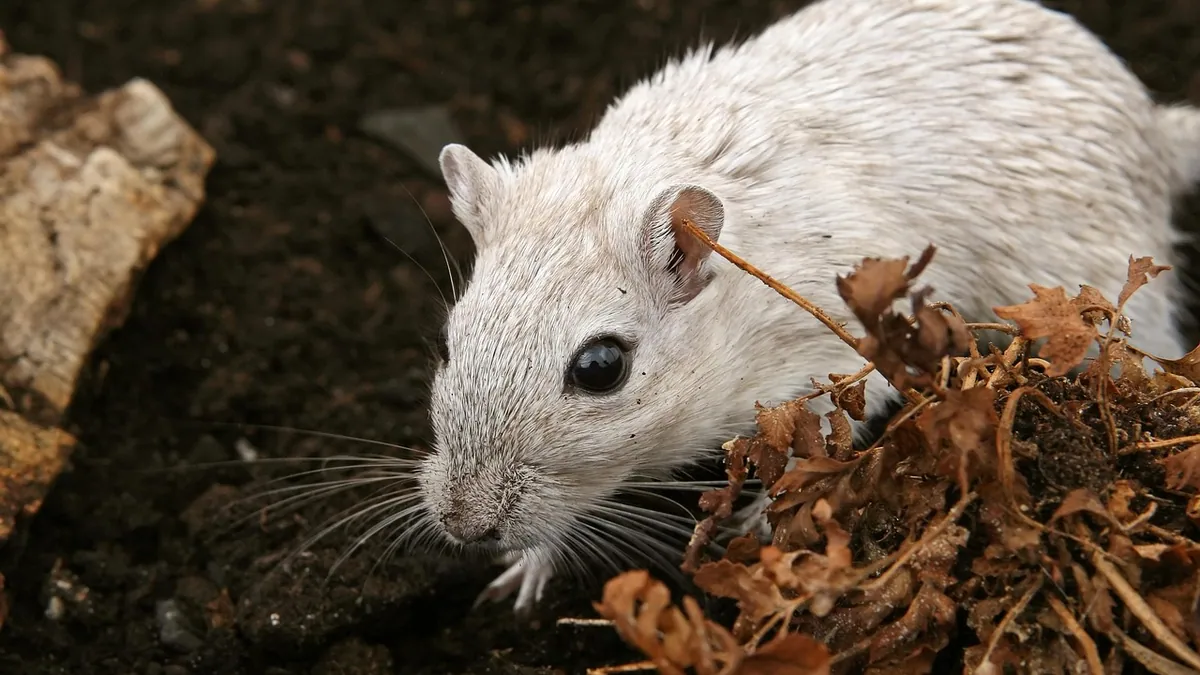
Do gerbils and hamsters get along? No. Gerbils and hamsters are different species with different social rules, and housing them together usually leads to stress, injury, or death. The same is true for gerbils with rats or mice, even though all of these animals are small rodents that look somewhat alike.
This article is educational and is not a substitute for veterinary diagnosis or treatment.
Quick Answer
- Do not house a gerbil with a hamster, rat, or mouse. Each species has its own social structure, and mixing them usually ends badly.
- Gerbils are social and do best in same-sex pairs or small groups of their own kind, ideally introduced young [1][2].
- Syrian hamsters are solitary and females are often aggressive toward other hamsters, so a hamster does not want a gerbil roommate [3].
- Rats and mice are separate species from gerbils and from each other, and they should not share a cage [4].
- If you already have two different species together, separate them into their own enclosures right away, even if they seem calm.
Why Gerbils and Hamsters Do Not Get Along
Different species, different social rules
Gerbils and hamsters may both come from desert environments, but that does not make them compatible cage mates. Wild Mongolian gerbils live in family groups and build burrows in soft soil, where they spend most of their time [1]. Syrian hamsters have a very different history and temperament. Female Syrian hamsters are generally aggressive toward other hamsters, and nonestrous females can behave especially aggressively toward young males, sometimes killing them [3]. If a hamster will attack its own species, a gerbil has no chance of being a safe companion.
Gerbils are social, but only with gerbils
Gerbils are social animals that live in family groups in the wild, and individual housing appears to act as a psychosocial stressor for them [2]. That is why gerbils do best with other gerbils. It does not mean they do best with any small rodent. Social needs are species specific. A gerbil needs a gerbil companion, not a hamster, rat, or mouse.
The species are very far apart
The Mongolian gerbil diverged from rats and mice around 45 million years ago and developed its own adaptations to extreme temperatures and water scarcity [5]. That long separation shows up in behavior, communication, and body language. A gerbil and a rat do not read each other's signals the same way two gerbils do. When two animals cannot read each other, small disagreements can turn into serious fights.
Do gerbils and mice get along?
No. Gerbils and mice should not share a cage. Mice and rats are different species with their own housing and social needs, and even the information available about them as pets is limited compared with what is known about them in research settings [4]. A gerbil and a mouse do not speak the same behavioral language, and the mouse is much smaller, which makes injury more likely.
Do gerbils and rats get along?
No. Gerbils and rats should not be housed together. Rats are sexually mature by 6 to 10 weeks in males and 8 to 12 weeks in females, and they have their own social and reproductive patterns that have nothing to do with gerbils [4]. A rat is also much larger than a gerbil. Size differences plus different communication styles equal risk.
Do rats and mice get along?
No. Rats and mice are separate species and should not be caged together [4]. This matters even if you do not own a gerbil. Owners sometimes assume all small rodents can share, and that assumption is wrong across the board.
What about hamsters and gerbils in the same room?
Housing in the same room is not the same as housing in the same cage. One study found that Syrian hamsters and Mongolian gerbils kept in the same secondary enclosure for 5 months showed no clinical signs of illness and no significant change in health status [6]. That study looked at animals in separate cages within one enclosure, with bedding exchanged between species. It did not test putting a hamster and a gerbil in the same cage. Separate cages in one room can be fine. Shared cages are not.
Medical Causes to Rule Out
Sometimes the problem is not the other animal. It is the gerbil's health.
A gerbil that suddenly becomes aggressive, withdrawn, or reactive may be in pain. Dental problems, injuries, skin conditions, and other illnesses can all change behavior. Pet rodents also have their own set of common gastrointestinal, respiratory, cardiovascular, dermatologic, musculoskeletal, neurologic, and ophthalmic disorders, and these can show up as behavior changes [7].
If your gerbil's temperament changes, start with a veterinary exam. Do not assume the fix is a new cage mate or a bigger cage. Pain and illness need to be treated first.
When Gerbil Behavior Becomes a Problem
Fighting between gerbils
Gerbils are not always peaceful with each other. Mongolian gerbils are highly aggressive in certain contexts and frequently emit calls during conflicts [8]. In same-sex resident-intruder tests, both males and females showed aggressive responses toward intruders, and females that had given birth multiple times showed the most aggressive responses of all four groups [8].
That does not mean your pet gerbils will fight. It means gerbil aggression is real and should be taken seriously. Fights can happen when you introduce a new gerbil, when a group is disrupted, or when a female group's hierarchy shifts.
Do female gerbils get along?
Often yes, but it depends on how they were introduced and their individual temperaments. Sexually naive female gerbils establish a winner-loser relationship quickly when they meet, and winners show more aggression, exploration, scent marking, and self-grooming while losers show more defensive behavior [9]. Once the hierarchy settles, many female groups live together peacefully. The risk is highest during the introduction itself.
Female gerbils can also be the most aggressive group in the house. Females that have had multiple litters showed the strongest aggressive responses in one study [8]. If you keep a breeding group or a group of females with a history of litters, watch them closely.
Stress from being alone
Gerbils are social, and living alone appears to stress them. In one study, gerbils housed alone for a week showed increased anxiety in males and increased freezing behavior in both sexes [2]. This is why a single gerbil is usually not the best setup. The answer is another gerbil, not another species.
What to Do Step by Step
Step 1: Separate mixed-species cages now
If a gerbil is currently sharing a cage with a hamster, rat, or mouse, move them into separate enclosures today. Do not wait for a fight. Do not wait to see whether they "work it out." Separate housing is the only reliable fix.
Step 2: Set up each species correctly
House gerbils in same-sex pairs or small groups. House Syrian hamsters alone, since females are generally aggressive toward other hamsters [3]. House rats and mice according to their own species needs, not mixed together [4]. If you are deciding between species for a first pet, see Best Pet Rodents for Beginners: Care, Lifespan, and Temperament.
Step 3: Introduce gerbils to gerbils carefully
Young gerbils are easier to introduce than adults. Introduce same-sex pairs or groups when they are young if you can. Use a neutral, clean enclosure with no established scent. Watch closely for the first hours and days. Some chasing and mounting can happen while the hierarchy forms, and a winner-loser relationship often develops quickly in female pairs [9]. Separate them if you see biting that draws blood, persistent chasing, or one gerbil hiding and not eating.
Step 4: Give each gerbil enough space and enrichment
Crowding makes conflict worse. Provide a large enclosure, deep bedding for burrowing, a solid-surface exercise wheel, chew items, and hiding spots. Gerbils are terrestrial burrowers in the wild, spending most of their time underground [1], so deep bedding is not optional for them. Enrichment also reduces stress and gives gerbils something to do besides bother each other.
Step 5: Keep the group stable
Once a gerbil group is bonded, avoid breaking it up and re-pairing animals. Social rank between familiar male gerbils forms during cohabitation and stays fairly consistent over time [10]. Removing one gerbil and adding another can restart the whole hierarchy process and trigger fighting.
Step 6: Watch for warning signs
Check your gerbils daily for wounds, weight loss, hiding, and changes in appetite. A gerbil that is being bullied may look fine at a glance but be losing weight or avoiding the food bowl. Weigh your gerbils regularly if you can.
What Not to Do
Do not punish your gerbil
Never hit, flick, spray, or yell at a gerbil for fighting or biting. Punishment does not teach a rodent anything useful. It increases fear and stress and makes aggression more likely. Separate the animals instead.
Do not assume "they will sort it out"
Some owners hope two rodents will settle their differences. With mixed species, there is no hierarchy to settle. A gerbil and a hamster are not negotiating rank. They are two different animals with no shared social rules.
Do not believe the myths
Myth: all small rodents can live together because they are all "pocket pets." False. Species matter. A hamster is not a small gerbil, and a rat is not a large mouse.
Myth: a lonely gerbil will be happy with any companion. False. A gerbil needs another gerbil [2].
Myth: females are always gentler than males. False. Female gerbils can be highly aggressive, especially females that have had multiple litters [8]. Female Syrian hamsters are also generally aggressive toward other hamsters [3].
Do not buy a second species as a "friend"
If your gerbil seems lonely, the fix is a same-sex gerbil companion, not a mouse, rat, or hamster. If you are considering a hamster instead, read Do Hamsters Need a Companion? before you decide. If you are weighing rats and mice, see Rat vs Mouse as a Pet: Which Is Better?.
When to Call a Veterinarian or Behavior Professional
Call your veterinarian if your gerbil has a wound from a cage mate, is losing weight, is not eating, is breathing oddly, or has a sudden change in behavior. Wounds from rodent fights can abscess, and small animals can decline quickly.
Call right away if a gerbil has a deep bite, heavy bleeding, or is not moving normally after a fight. These are same-day or emergency concerns.
For ongoing aggression that does not improve after separating animals, improving the environment, and giving the group time, ask your veterinarian for a referral to a veterinarian who treats exotic pets or a behavior professional with rodent experience. Individual cases need a veterinarian who can examine the animal.
Limitations and When to Contact a Veterinarian
This article covers general housing and behavior principles. It cannot tell you what is happening with your specific gerbil.
Contact a veterinarian the same day if you see:
- A bite wound, torn skin, or a swollen area
- Bleeding that does not stop
- A gerbil that is hunched, quiet, or refusing food
- Labored breathing or a clicking sound when breathing
- Weight loss over days to weeks
Go to an emergency clinic now if:
- Bleeding is heavy or continuous
- A gerbil is limp, unresponsive, or having trouble standing
- A gerbil has been attacked and you cannot tell how badly it is hurt
- Breathing is open-mouthed or clearly distressed
Schedule a routine visit if:
- Your gerbil's temperament changed for no clear reason
- A female gerbil in a group is repeatedly chasing or cornering others
- You are planning to introduce a new gerbil and want guidance first
- You notice overgrown teeth, drooling, or trouble chewing
Frequently Asked Questions
Can a gerbil and a hamster ever live together peacefully?
No reliable evidence supports housing them in the same cage. Hamsters and gerbils can share a room in separate cages without health problems [6], but that is not the same as sharing an enclosure. Keep them apart.
Is it better to keep a single gerbil or to add a different species?
A single gerbil is better than a mixed-species cage, but a same-sex gerbil companion is better than both. Gerbils are social, and living alone appears to increase anxiety and freezing behavior [2]. Choose another gerbil, not another species.
Do female gerbils get along with each other?
Often they do, especially when introduced young and given enough space. Female gerbils establish a winner-loser relationship quickly during introductions, and winners show more aggression and scent marking while losers show more defensive behavior [9]. Watch the introduction closely, then expect things to settle.
Why did my gerbil suddenly attack its cage mate?
A sudden change can mean pain, illness, a change in the group, or a shift in hierarchy. Gerbils are highly aggressive in some contexts, and both sexes show aggressive responses toward intruders [8]. Get the aggressive gerbil examined by a veterinarian, and separate the animals if injuries occur.
Can I keep a rat and a mouse together instead?
No. Rats and mice are separate species and should not share a cage [4]. If you want to understand their behavior as pets, read Understanding Pet Rat Behavior: Bonding, Body Language, and Enrichment. If a rodent bites you, see Hamster Biting Hand for guidance on handling and when to seek care.
Related Articles
- Best Pet Rodents for Beginners: Care, Lifespan, and Temperament
- Selecting Bedding Materials for Laboratory Rodent Welfare
- Do Gerbils Fight or Eat Each Other? Social Behavior Explained
- Do Gerbils Need a Friend? Social Needs Explained
- Why Are My Gerbils Fighting? Normal or Serious?
References
- Gerbils - Exotic and Laboratory Animals. Merck Veterinary Manual.
- The effects of individual housing on 'anxious' behaviour in male and female gerbils. Physiology & behavior, 2007.
- Hamsters - Exotic and Laboratory Animals. Merck Veterinary Manual.
- Mice and Rats as Pets - Exotic and Laboratory Animals. Merck Veterinary Manual.
- Elucidating the neuromeric organization of the Mongolian gerbil brain. Brain structure & function, 2025.
- Lack of negative effects on Syrian hamsters and Mongolian gerbils housed in the same secondary enclosure. Journal of the American Association for Laboratory Animal Science : JAALAS, 2015.
- Rodent Pediatrics. The veterinary clinics of North America. Exotic animal practice, 2024.
- Vocalization during agonistic encounter in Mongolian gerbils: Impact of sexual experience. PloS one, 2022.
- Agonistic behaviors and neuronal activation in sexually naïve female Mongolian gerbils. Behavioural brain research, 2020.
- Scent-marking and sexual activity may reflect social hierarchy among group-living male Mongolian gerbils (Meriones unguiculatus). Physiology & behavior, 2006.