Do Guinea Pigs Groom Each Other? Social Grooming Explained
By Dr. Zubair Khalid, DVM, MS, PhD ·
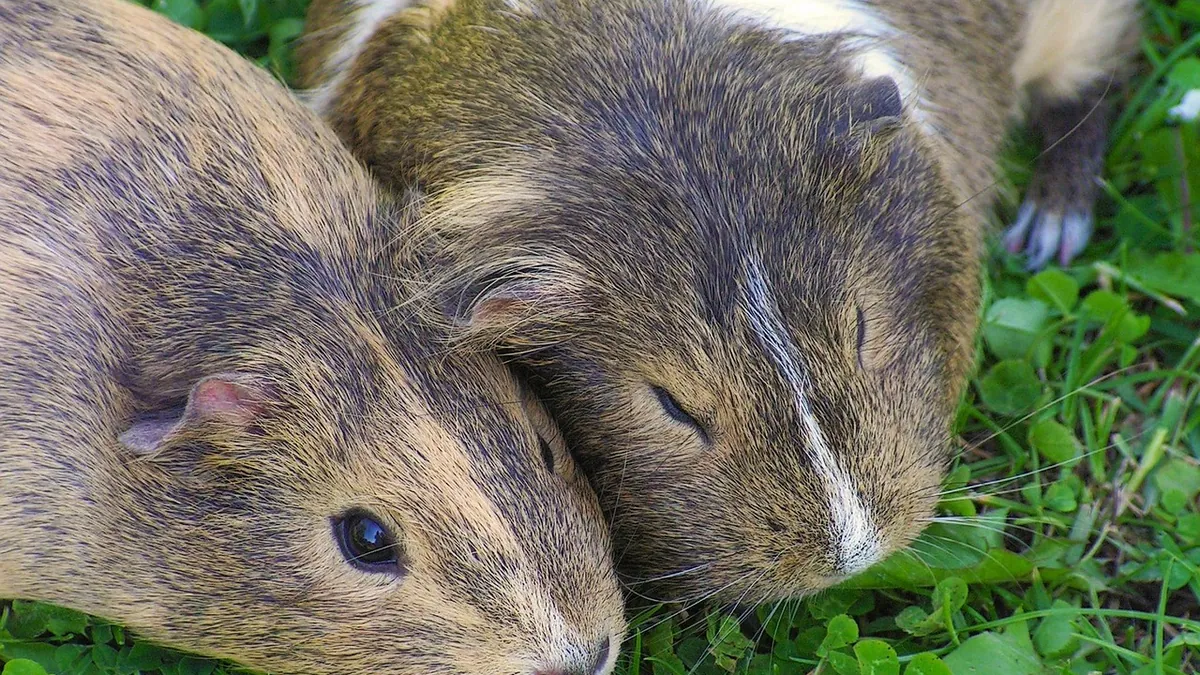
Yes, guinea pigs groom each other. This behavior, called allogrooming, is a normal part of how guinea pigs build and maintain social bonds. When two guinea pigs groom each other, they are usually signaling trust, comfort, and a healthy relationship. This article is educational and is not a substitute for veterinary diagnosis or treatment.
Quick Answer
- Guinea pigs groom each other as a normal social behavior that strengthens bonds and reduces tension within a pair or group.
- Allogrooming most often happens around the head, ears, and neck, areas a guinea pig cannot easily reach on its own.
- A guinea pig that is housed alone may groom itself more, which can be a sign of stress or boredom.
- Over-grooming that removes hair from a cagemate (barbering) is not normal and often points to stress, pain, or a skin problem.
- Any sudden change in grooming behavior, especially with hair loss, scabs, or weight loss, needs a veterinary exam.
What Is Allogrooming in Guinea Pigs?
Allogrooming is the technical term for one animal grooming another. In guinea pigs, this looks like nibbling, licking, and gently combing through a companion's fur with the teeth. It is different from self-grooming, which a guinea pig does to clean its own coat.
Guinea pigs are highly social rodents native to the Andes region of South America [1]. In the wild and in captivity, they live in groups and rely on social contact for comfort and safety. Allogrooming is one of the ways they maintain those social ties.
You may notice one guinea pig grooming another around the ears, eyes, and neck. These are spots that are hard for a guinea pig to reach on its own. The grooming partner often sits still, closes its eyes, or leans into the other guinea pig. That relaxed body language tells you the behavior is welcome.
Why Do Guinea Pigs Groom Each Other?
Bonding and Social Cohesion
Social grooming helps hold guinea pig groups together. In related species like pigs, affiliative behaviors such as allogrooming enhance group cohesion and lower stress levels, which improves individual welfare [2]. Guinea pigs show similar patterns of social contact and comfort behavior.
When two guinea pigs groom each other, they are reinforcing their relationship. This is especially common in established pairs that have lived together for a while. A guinea pig that grooms its companion is saying, in effect, "I trust you."
Stress Relief and Comfort
Grooming can be calming. Social contact with a familiar companion helps regulate stress. Research on guinea pigs shows that social niches and pair relationships shape behavior and cortisol concentrations, which is a key stress hormone [3]. A guinea pig with a stable, compatible partner tends to show more relaxed social behavior.
If you have ever watched two guinea pigs settle down together after a stressful event, like a cage cleaning or a vet visit, you have seen this in action. Grooming each other helps them return to a calm baseline.
Hygiene and Parasite Control
Allogrooming also has a practical purpose. Guinea pigs cannot reach every part of their own body. A companion can clean hard-to-reach areas, remove debris, and help keep the coat healthy. This is a normal part of guinea pig grooming behavior.
Maintaining Social Order
In some cases, grooming is tied to social rank. Dominant guinea pigs may groom subordinates, or the reverse, depending on the pair. Dominance status is associated with aggression and social behavior in guinea pigs, and these dynamics can shift when the social group changes [3]. Grooming is one of the quieter ways guinea pigs manage their relationships.
When Grooming Behavior Changes: Medical Causes to Rule Out
A sudden change in grooming is often the first sign that something is wrong. Before you assume a behavior problem, rule out medical causes.
Skin Problems
Mites, lice, and fungal infections are common in guinea pigs. These can cause intense itching, which leads to excessive self-grooming, scratching, and hair loss. If you see scabs, crusty patches, or bald spots, a veterinarian needs to examine your guinea pig.
Dental Disease
Guinea pigs have continuously growing teeth. Dental problems can cause pain and make eating difficult. A guinea pig in pain may groom less, stop grooming a companion, or become irritable. Weight loss and drooling are other signs to watch for.
Pain or Discomfort
Any source of pain, including arthritis, bladder stones, or injury, can change grooming behavior. A guinea pig that is hurting may stop grooming itself or its companion. It may also snap at a cagemate that tries to groom it.
Nutritional Deficiencies
Severe vitamin C deficiency (scurvy) affects guinea pigs because they cannot make their own vitamin C. In one study, guinea pigs on an ascorbate-free diet showed marked reductions in social grooming and other active behaviors within 9 to 13 days [4]. This is a serious condition that requires veterinary care.
Hormonal and Reproductive Changes
Intact guinea pigs may show changes in grooming behavior related to hormones. Sebaceous glands along the back and around the anus are androgen-dependent and used for marking [1]. Hormonal shifts can affect how much a guinea pig grooms itself and others.
When Grooming Becomes a Problem
Barbering (Over-Grooming a Companion)
Barbering is when one guinea pig chews or pulls out another guinea pig's hair. The chewed coat often looks patchy or short in specific areas. This is not normal allogrooming. It can be a sign of stress, overcrowding, boredom, or a skin irritation on the guinea pig being groomed.
Barbering can also be a dominance behavior. If one guinea pig is consistently barbering the other, the relationship may be unbalanced. Watch for other signs of conflict, such as chasing, mounting, or biting.
Self-Barbering
Some guinea pigs pull out their own hair. This can happen with skin parasites, allergies, or stress. It can also be a sign of pain. A guinea pig that suddenly starts pulling its own fur needs a veterinary exam to rule out medical causes first.
Excessive Self-Grooming
A guinea pig that grooms itself constantly may be itchy, uncomfortable, or stressed. If the grooming is focused on one area, look closely at the skin. Redness, flakes, or scabs point to a skin problem. If the skin looks normal but the behavior continues, stress or boredom may be the cause.
Grooming That Causes Skin Damage
Any grooming that breaks the skin, causes bleeding, or leads to infection is a problem. Guinea pigs have delicate skin. A small wound can become infected quickly. If you see open sores, contact your veterinarian.
What to Do: Step-by-Step
Step 1: Observe Without Interfering
Watch your guinea pigs during their normal active times. Note who grooms whom, how often, and whether the behavior is welcome. A guinea pig that sits still and relaxed is fine. A guinea pig that squeals, runs away, or fights back is not.
Step 2: Check the Skin and Coat
Part the fur gently and look at the skin. Check for redness, flakes, scabs, bald spots, or parasites. Look at both guinea pigs, not just the one being groomed. Skin problems often affect both animals in a pair.
Step 3: Review Housing and Environment
Guinea pigs need enough space to get away from each other when they want to. Overcrowding increases stress and can trigger barbering or conflict. Make sure each guinea pig has its own hiding spot, food bowl, and water source.
A survey of over 1,000 guinea pig caretakers found that eating and resting next to companions occurred several times per day in most animals, which shows how important social housing is for normal behavior [5]. If your guinea pigs are housed alone, consider adding a compatible companion. See our guide on Guinea Pig Companionship: How to Introduce and Bond Pairs for step-by-step introductions.
Step 4: Add Enrichment
Boredom can drive abnormal grooming. Provide hay, tunnels, chew toys, and safe items to explore. Rotate toys to keep things interesting. Guinea pigs that have things to do are less likely to over-groom themselves or each other.
Step 5: Check the Diet
Guinea pigs need a constant supply of fresh hay and a daily source of vitamin C. Most guinea pig pellets are fortified, but the vitamin C can degrade over time. Offer fresh vegetables that are high in vitamin C, such as bell peppers. If you are unsure about your guinea pig's diet, ask your veterinarian.
Step 6: Separate if There Is Injury
If one guinea pig is injuring the other, separate them temporarily. Use a divider so they can still see and smell each other. This reduces stress while preventing further damage. Then work with your veterinarian or a qualified behavior professional to plan next steps.
What Not to Do
Do Not Punish Grooming Behavior
Never punish a guinea pig for grooming. Punishment does not teach guinea pigs what you want. It increases stress and can make behavior problems worse. Guinea pigs do not understand punishment the way dogs or cats might.
Do Not Assume It Is Always Normal
Allogrooming is normal, but barbering and excessive grooming are not. If you see hair loss, scabs, or a guinea pig that seems distressed, do not wait. Get a veterinary exam.
Do Not Skip the Medical Workup
Behavior changes in guinea pigs are often medical until proven otherwise. Skin parasites, dental disease, and pain are common causes of grooming changes. A veterinarian can check for these problems.
Do Not House Guinea Pigs Alone Without a Plan
Guinea pigs are social animals. Individual housing can negatively affect welfare [5]. If your guinea pig is alone, work toward finding a compatible companion. Our article on Guinea Pig Social Needs: Pair Housing, Introductions, and Signs of Conflict explains how to do this safely.
Do Not Use Over-the-Counter Treatments Without Veterinary Guidance
Many flea and mite products are not safe for guinea pigs. Some can cause serious reactions. Always ask your veterinarian before using any medication, shampoo, or topical treatment on your guinea pig.
When to Involve a Veterinarian or Behavior Professional
Contact a veterinarian if you see any of these signs:
- Hair loss, bald patches, or a coat that looks chewed or patchy
- Scabs, sores, redness, or crusting on the skin
- A guinea pig that squeals, runs away, or fights when groomed
- Weight loss, drooling, or difficulty eating
- A sudden stop in grooming behavior
- A guinea pig that grooms itself constantly or pulls its own hair
- Any wound or bleeding
If medical causes are ruled out and the behavior continues, ask your veterinarian for a referral to a qualified behavior professional. Not all trainers work with guinea pigs, so ask about experience with small mammals.
Limitations and When to Contact a Veterinarian
This article covers general information about guinea pig grooming behavior. It cannot tell you what is happening with your specific guinea pig. Individual cases need a veterinarian who can examine your pet, ask about the history, and run any needed tests.
Contact a veterinarian the same day if:
- You see open wounds, bleeding, or signs of infection (swelling, pus, bad smell)
- One guinea pig is actively injuring the other
- Your guinea pig stops eating or drinking
- You notice sudden, severe hair loss
Go to an emergency clinic now if:
- Your guinea pig is struggling to breathe
- Your guinea pig is collapsed, unresponsive, or having seizures
- There is heavy bleeding that will not stop
- Your guinea pig has not eaten or pooped in 12 to 24 hours
Schedule a routine visit if:
- Grooming behavior has changed gradually over days or weeks
- You see mild hair loss or thinning without wounds
- One guinea pig is barbering the other but no skin is broken
- You want help with introductions or housing changes
Frequently Asked Questions
Do guinea pigs groom each other's ears?
Yes, ear grooming is one of the most common forms of allogrooming. Ears are hard for a guinea pig to clean on its own, so a companion often steps in. If you see one guinea pig nibbling gently around the other's ears while the other sits still, that is normal bonding behavior.
Is it normal for one guinea pig to groom the other more?
Yes, it is common for one guinea pig in a pair to do most of the grooming. This can reflect personality differences or social rank. As long as both guinea pigs seem relaxed and neither is losing hair or getting injured, the imbalance is usually not a concern.
Can grooming spread skin problems between guinea pigs?
Yes, parasites and fungal infections can spread from one guinea pig to another through close contact, including grooming. If one guinea pig has a skin problem, the other should be checked too. Treat both as directed by your veterinarian to prevent reinfection.
Why did my guinea pig suddenly stop grooming its companion?
A sudden stop in grooming often points to a medical problem or a change in the social relationship. Pain, illness, or stress can all cause a guinea pig to withdraw from social behavior. A veterinary exam is the best first step to rule out health issues.
Does barbering always mean the guinea pigs are stressed?
No, barbering can have several causes, including stress, boredom, overcrowding, skin irritation, or dominance behavior. It is not always a sign of a bad bond. A veterinarian can help you figure out the cause and whether the pair needs to be separated.
Related Articles
- Guinea Pig Companionship: How to Introduce and Bond Pairs
- Guinea Pig Social Needs: Pair Housing, Introductions, and Signs of Conflict
- Guinea Pig Companionship and Housing Needs
- Husbandry and Welfare of Laboratory Guinea Pigs
- Do Guinea Pigs Need to Be in Pairs? Social Needs
- Do Guinea Pigs Bond With Their Owners?
- Do Guinea Pigs Mourn Each Other? Grief Signs
References
- Anatomy, Physiology, and Behavior of Guinea Pigs - Exotic and Laboratory Animals. Merck Veterinary Manual.
- Social behavioural profiles in pigs and the role of sex, dominance and kinship. Animal : an international journal of animal bioscience, 2026.
- Social niche shapes social behavior and cortisol concentrations during adolescence in female guinea pigs. Hormones and behavior, 2024.
- Changes in social behavior and brain catecholamines during the development of ascorbate deficiency in Guinea pigs. Behavioural processes, 1986.
- Guinea Pig (Cavia porcellus) Welfare: Associations Between Husbandry Practices, Human-Animal Interactions, and Animal Behaviour. Animals : an open access journal from MDPI, 2025.