Do Gerbils Need Hay? Timothy, Oat, and Other Hays
By Dr. Zubair Khalid, DVM, MS, PhD ·
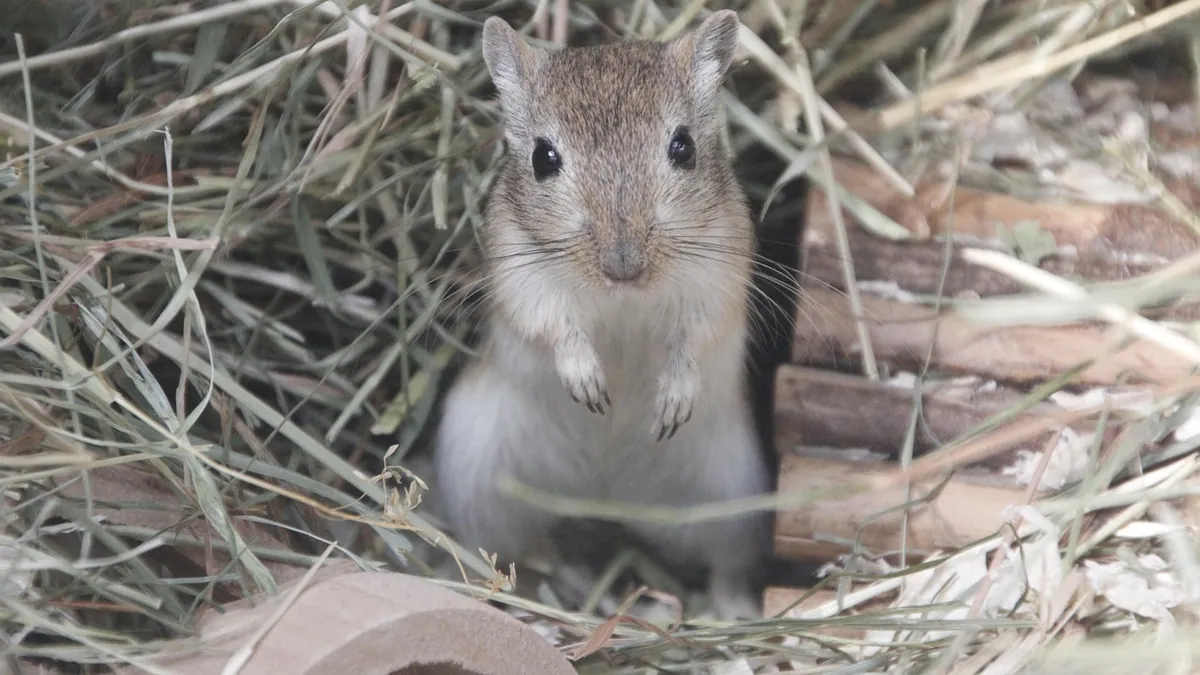
No, gerbils do not need hay. Unlike rabbits, guinea pigs, and chinchillas, gerbils are desert rodents that evolved eating seeds and dry plant material, and they stay healthy on a complete commercial diet without any hay at all [1]. You can still offer certain hays for nesting and chewing, but hay is a bonus, not a staple.
This article is educational and is not a substitute for veterinary diagnosis or treatment.
Quick Answer
- Hay is not a required part of a gerbil's diet. A quality commercial gerbil or hamster mix plus a small amount of fresh vegetables covers their needs.
- Timothy, oat, and most grass hays are safe to offer in small amounts for nesting material and chewing.
- Alfalfa hay is too high in calcium and protein for adult gerbils and should be avoided as a routine offering.
- Never feed hay that contains added flavors, sweeteners, dried fruit, or seeds mixed in. Plain, clean hay only.
- If your gerbil eats a large amount of hay and then stops eating or seems bloated, call your veterinarian the same day.
Can Gerbils Eat Hay? The Short Answer
Yes, gerbils can eat hay, and a nibble here and there is harmless. The better question is whether they should. Gerbils are not hay-eaters in the way rabbits are. Wild Mongolian gerbils live in clay and sandy deserts, bush country, and arid steppes, where they burrow and eat whatever seeds and dry vegetation they can find [1]. Their digestive tract is built for concentrated food, not for large volumes of grass.
One study of the greater gerbil found that concentrated food moved through the digestive tract and was fully evacuated within 24 to 25 hours. When the diet was mostly cellulose-rich plant material, that time stretched to about 50 hours because the food split into fast-moving and slow-moving portions, with the slow portion held in the stomach and cecum [2]. That is a real shift in gut workload. A gerbil can handle some fiber, but a hay-heavy diet is not what their system is designed for.
So hay is optional. Think of it as enrichment and nesting material, not nutrition.
Can Gerbils Eat Timothy Hay?
Timothy hay is safe for gerbils. It is a grass hay with moderate fiber and moderate protein, and it does not carry the calcium load of alfalfa. Offer a small handful, roughly the size of your gerbil's body, once or twice a week.
Most gerbils will ignore timothy hay as food. Some will shred it, drag it into a hide, or line a nest with it. That is fine and even useful, since gerbils are burrowers and enjoy building. If your gerbil is a chewer, timothy also gives them something safe to gnaw that is not a plastic toy.
If you already keep timothy on hand for another pet, the storage and selection rules are similar across species. You can read more about choosing and storing it in Timothy Hay for Rabbits: Selection, Storage, and Feeding Strategies and Timothy Hay for Chinchillas: Nutritional Role and Feeding Guidelines. The same basic rule applies to your gerbil: fresh, dry, dust-free, and plain.
Do Gerbils Eat Oat Hay?
Oat hay is safe and many gerbils like it more than timothy. It is softer, sweeter-smelling, and easier to shred, which makes it a popular nesting choice. Oat hay is harvested before the grain fully forms, so it is still a grass hay, not a bowl of oats.
There is one interesting wrinkle. Oat saponins, natural compounds in oats, have been studied in gerbils. In one trial, gerbils fed oat-based diets had significantly higher HDL cholesterol and significantly lower liver cholesterol than a cellulose control group, though total plasma cholesterol and triglycerides did not differ between groups with different saponin levels [3]. That is a laboratory finding about oat components in a controlled diet, not a reason to feed your pet oat hay by the bale. It simply suggests oats are not harmful to gerbils.
Offer oat hay the same way as timothy: a small handful a few times a week. If your gerbil eats it eagerly, that is fine. If they only nest in it, that is also fine.
Do Gerbils Like Hay?
Some do, some could not care less. Gerbils are individuals. A gerbil that grew up with hay in the cage may shred it on sight. A gerbil that has never seen it may sniff once and walk away.
The foraging behavior of gerbils is driven by texture and energetic payoff. In one study, Allenby gerbils chose to forage more in soil with a texture that made foraging more efficient, even when that soil came from an old oil spill site [4]. Gerbils care about how easy it is to get food and how the ground feels under them. Hay fits that picture. It is something to pull apart, move, and pile up, which is closer to a burrowing activity than a meal.
If your gerbil ignores hay, do not force it. Try a different grass hay, or use plain shredded paper as bedding instead.
What Hay Is Not Safe for Gerbils?
Alfalfa hay is the main one to avoid. It is a legume, not a grass, and it is high in calcium and protein. Adult gerbils do not need that load, and excess calcium can contribute to urinary problems over time. Save alfalfa for young, growing animals only if your veterinarian specifically recommends it.
Also avoid any hay product that is not plain hay. That includes:
- Hay cubes or hay-based treats with molasses, honey, or yogurt coating
- Bagged hay mixes with dried fruit, seeds, or nuts blended in
- Hay with added salt, garlic, onion, or artificial flavoring
- Hay that smells musty, looks moldy, or is damp
Moldy hay can cause serious respiratory and digestive illness. If the bag smells sour or earthy in a bad way, throw it out.
Form | Safe? | Notes
| Form | Safe? | Notes |
|---|---|---|
| Timothy hay, plain | Yes | Small handful 1 to 2 times a week for nesting and chewing |
| Oat hay, plain | Yes | Softer, often preferred for nesting |
| Orchard grass, plain | Yes | Similar to timothy, good alternative |
| Botanical hay (plain grass mix) | Yes | Check the label for no added fruit or seeds |
| Alfalfa hay | No, for adults | Too high in calcium and protein for routine feeding |
| Hay cubes with molasses or honey | No | Added sugar is not appropriate |
| Hay mixed with dried fruit or seeds | No | Unbalanced and can lead to selective eating |
| Musty, moldy, or damp hay | No | Risk of respiratory and digestive illness |
How to Offer Hay Safely
Keep it simple. Put a small, loose handful in a corner of the cage or inside a hide. Do not pack it tightly, and do not use a hay rack with narrow gaps where a leg or tooth could get stuck. Gerbils are small and can injure themselves on cage furniture that was designed for bigger animals [5].
Replace hay every day or two. Gerbils will soil it, and damp hay grows mold fast. Remove any piece that has been urinated on.
Do not use hay as the main bedding if you can avoid it. Plain paper bedding or aspen shavings are safer and more absorbent. Hay works better as a nesting add-on.
Watch your gerbil the first few times. If they stuff their cheek pouches with hay, that is normal. If they seem to be struggling to swallow, pawing at their mouth, or breathing oddly, remove the hay and call your veterinarian.
What If Your Gerbil Ate Too Much Hay?
A small overindulgence is usually not a problem. A gerbil that eats a large amount of hay in one sitting may have a full stomach and skip a meal. Watch for these signs over the next 24 hours:
- Stopping eating entirely
- A swollen or tight-looking belly
- Fewer or smaller droppings
- Sitting hunched or moving less than usual
- Drooling or grinding teeth
If you see any of these, call your veterinarian the same day. A gerbil that stops eating can decline quickly because of its small body size.
If your gerbil ate hay that was moldy or had added sweetener, treat it as a possible poisoning. Call your veterinarian or a pet poison hotline right away. Do not wait for symptoms.
Safer Alternatives to Hay
If you want to give your gerbil something to chew and shred, hay is not your only option. Good choices include:
- Plain cardboard tubes and unscented paper
- Untreated apple wood or willow sticks
- Plain paper bedding for nesting
- A small piece of fresh broccoli, carrot, or leafy green once or twice a week
For the full picture of housing, diet, and handling, see the Gerbil Care Guide. It covers the basics that matter more than hay, including cage setup, social housing, and safe handling.
One handling note that belongs in every gerbil article: never lift a gerbil by the tail. Their tails are delicate and injure easily. Scoop them up under the belly with both hands, and hold them low over your lap or the cage until they are used to you [5].
What Gerbils Actually Need to Eat
A complete commercial gerbil or hamster mix should make up the bulk of the diet. These mixes are formulated to provide the protein, fat, vitamins, and minerals a gerbil needs. Offer about one to two tablespoons per gerbil per day, and adjust based on body condition.
Fiber still matters. A high-fiber diet helped protect gerbils against Giardia infection in one study, where gerbils on a 20 percent fiber diet were significantly less likely to become infected than those on a 5 percent fiber diet [6]. That does not mean you should pour hay into the cage. It means a diet with reasonable fiber from seeds, grains, and vegetables supports gut health.
Fresh water in a bottle should always be available. Gerbils are desert-adapted and drink less than many rodents, but they still need clean water daily [1].
Treats should be small and occasional. A piece of vegetable the size of your fingernail is plenty. Skip sugary treats, and never give anything containing xylitol, which is toxic to rodents.
Limitations and When to Contact a Veterinarian
This article covers general guidance only. Your gerbil's individual situation needs a veterinarian who can examine them.
Call your veterinarian the same day if your gerbil:
- Stops eating for more than 12 hours
- Has a swollen, tight, or painful-looking belly
- Stops passing droppings or passes very few
- Is drooling, pawing at the mouth, or having trouble swallowing
- Ate moldy hay or hay with added sweeteners
Go to an emergency clinic now if your gerbil:
- Is breathing with an open mouth or making clicking sounds
- Is limp, cold, or unresponsive
- Has a seizure or sudden collapse
- Has been injured, especially on the tail
Schedule a routine visit if your gerbil:
- Is losing weight over several weeks
- Has changes in coat, appetite, or activity
- Has never had a wellness exam since you adopted them
Frequently Asked Questions
Can gerbils live without hay?
Yes. Hay is not a required part of a gerbil's diet. A complete commercial mix, fresh water, and small amounts of vegetables meet their needs. Hay is optional enrichment.
Is timothy hay better than oat hay for gerbils?
Neither is better. Both are safe grass hays. Timothy is firmer and lasts longer in the cage. Oat hay is softer and often preferred for nesting. Offer whichever your gerbil actually uses.
Can hay cause a blockage in a gerbil?
A blockage from hay is uncommon, but a gerbil that eats a large amount at once can develop a full, uncomfortable stomach. Watch for a swollen belly, droppings that stop, or a gerbil that stops eating, and call your veterinarian if you see these.
Should I put hay in my gerbil's cage every day?
No. A small handful once or twice a week is enough. Remove soiled hay daily, and replace the whole handful every day or two so it does not get damp and moldy.
What should I do if my gerbil ate alfalfa hay?
A single small nibble is unlikely to cause harm. Do not make alfalfa a regular offering. If your gerbil ate a large amount and seems unwell, call your veterinarian for advice based on your pet's weight and health.
Related Articles
References
- Gerbils - Exotic and Laboratory Animals. Merck Veterinary Manual.
- An experimental study of the rate and dynamics of the progression of different foods through the digestive tract of the greater gerbil. Izvestiia Akademii nauk. Seriia biologicheskaia, 1996.
- Effect of oat saponins on plasma and liver lipids in gerbils (Meriones unguiculatus) and rats. The British journal of nutrition, 1995.
- The foraging behavior of gerbils reveals the ecological significance of crude oil pollution. Environmental pollution (Barking, Essex : 1987), 2025.
- Special Considerations for Gerbils - All Other Pets. Merck Veterinary Manual.
- Dietary fiber and giardiasis: dietary fiber reduces rate of intestinal infection by Giardia lamblia in the gerbil. The American journal of tropical medicine and hygiene, 1989.