How Often Do Cats Shed Whiskers?
By Dr. Zubair Khalid, DVM, MS, PhD ·
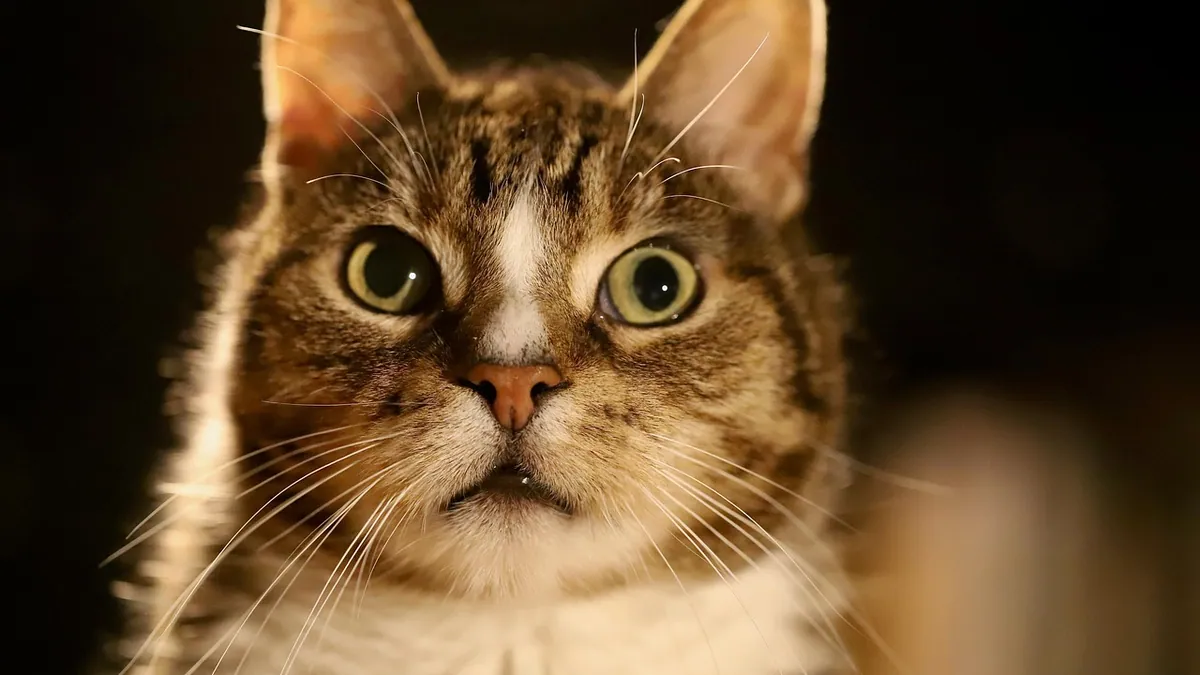
Cats shed whiskers the same way they shed other hair, a few at a time as part of the normal growth cycle. Most healthy cats lose roughly one to three whiskers a month, and each one grows back. So if you keep finding a stray whisker on the floor or in your cat's bed, that is usually nothing to worry about. This article is educational and is not a substitute for veterinary diagnosis or treatment.
Quick Answer
- Normal whisker shedding happens gradually, typically a whisker or two per month, not in large clumps.
- Whiskers fall out because they reach the end of their growth cycle, just like the hair on your cat's body.
- A new whisker usually grows back in the same spot within a few weeks to a couple of months.
- Losing many whiskers at once, or losing them along with bald patches, crusts, or itching, is not normal and needs a vet visit.
- Never trim or pluck your cat's whiskers. They are sensory tools your cat relies on for balance, navigation, and judging tight spaces.
What Normal Whisker Shedding Looks Like
Whiskers are specialized hairs, but they follow the same basic growth cycle as the rest of your cat's coat. Each whisker grows, rests, then falls out, and a new one eventually replaces it. Because whiskers grow on their own individual schedules, they do not all fall out together.
For most cats, this means you might notice a single whisker on the couch cushion every few weeks. You might find one in a hairball, since cats swallow loose hairs while grooming. If your cat vomits hairballs often, that can be a separate issue worth reading about in Cat Vomiting Hairballs: How Often Is Too Often?.
Normal shedding is gradual and symmetric. Both sides of the muzzle should keep a full, even fan of whiskers. You should not see bare patches, broken stubs, or crusty skin where the whiskers attach.
Kittens replace their whiskers as they grow, and senior cats may regrow them more slowly. Neither is a problem on its own.
How Often Should Cats Shed Whiskers? What Is Typical
There is no fixed schedule, and veterinary research has not settled on an exact number. What is well accepted is that whisker loss is a normal, ongoing process. A healthy cat typically drops a small number of whiskers each month, and the loss is spread out over time.
The bigger question is not the count. It is the pattern. One whisker here and there with healthy skin underneath is normal. Several whiskers gone in a week, thinning on one side, or whiskers breaking off mid-shaft is a signal to look closer.
If your cat is also overgrooming, the two problems may share a cause. Excessive licking and chewing can damage whiskers and coat alike. Why Is My Cat Grooming So Much? covers the common triggers.
Main Causes of Whisker Loss
| Cause | Typical clues | How urgent |
|---|---|---|
| Normal growth cycle | One or two whiskers at a time, even on both sides, healthy skin | Not urgent |
| Skin infection or ringworm | Crusts, scaling, redness, broken hairs, patches of hair loss | See a vet within a few days |
| Parasites (mites, fleas) | Itching, scabbing, self-trauma from scratching | See a vet within a few days |
| Nutritional or mineral deficiency | Dull coat, poor hair regrowth, generalized thinning | Routine visit, sooner if worsening |
| Endocrine disease (thyroid, adrenal) | Weight change, appetite change, coat thinning on the body | See a vet promptly |
| Congenital hair disorders | Hair loss starting in young kittens, scaling, crusting | See a vet, especially in kittens |
| Trauma or self-trauma | Broken whiskers, asymmetric loss, visible wounds | Same day if skin is broken |
| Allergies | Itching, face rubbing, ear involvement | Routine visit |
Skin and Follicle Problems
A rare congenital skin condition called sebaceous gland dysplasia has been described in short-haired kittens. It causes progressive hair loss with scaling and crusting, starting on the head between 4 and 12 weeks of age and then spreading over the body [1]. The tail was spared in some kittens, and the skin could look thick and wrinkled [1]. This is uncommon, but it shows why hair loss in a young kitten deserves a veterinary exam.
Another congenital hair shaft abnormality has been reported in a litter of domestic short hair cats with progressive noninflammatory alopecia. Microscopy showed lance-shaped or spear-head defects at the hair tips and swollen hair shafts [2]. These inherited conditions are rare and are diagnosed by a veterinarian, not at home.
Nutrition and Coat Health
Diet affects hair growth and shedding. In a study of adult cats, those fed trace minerals complexed with lysine and glutamic acid tended to shed slightly less hair at day 45 than cats fed standard inorganic mineral sources [3]. The same cats also had better dander scores [3]. This does not mean every cat with whisker loss needs a supplement. It does mean that mineral nutrition plays a role in coat and hair health, and your veterinarian can tell you whether your cat's diet is complete.
Endocrine and Systemic Disease
Hair loss that spreads beyond the whiskers often points to something internal. Thyroid and adrenal disease can change a cat's coat, appetite, weight, and energy level. These conditions are diagnosed with blood tests, so a veterinarian visit is the right next step. If your cat is due for a checkup anyway, How Often Should You Take Your Cat to the Vet? explains a sensible schedule.
Infection and Contagious Disease
Some infections affect hair and skin directly. Others affect cats systemically and can be spread between cats. For example, domestic cat hepatitis B virus has been found to shed from mucosal surfaces including the oral, nasal, and ocular areas, and viremia was detected only in juvenile cats in one cohort [4]. Feline panleukopenia virus DNA has been found in feces, and shedding was significantly associated with diarrheic stool [5]. Neither of these is a direct cause of whisker shedding, but they show why a sick cat with coat changes needs a full evaluation instead of a guess.
Red Flags That Need Prompt Care
Call your veterinarian the same day if you notice any of these:
- Several whiskers gone at once, or a bare patch on the muzzle
- Crusting, oozing, or open sores where whiskers should be
- Broken or bent whiskers on one side only
- Hair loss spreading to the face, ears, or body
- Intense itching, head shaking, or face rubbing
- Swelling around the muzzle or eyes
- Your cat stops eating or seems painful when touched near the face
Go to an emergency clinic now if your cat has trouble breathing, collapses, has a swollen face with hives, or has a wound that will not stop bleeding. Those are not whisker problems. They are emergencies.
Safe Things You Can Do at Home
You cannot stop normal whisker shedding, and you should not try. What you can do is protect the whiskers your cat has and watch for patterns.
- Do not trim, pluck, or pull whiskers. They are not decorative. Your cat uses them to sense the world.
- Use shallow food and water bowls. Deep bowls press on whiskers and can cause discomfort some cats call whisker fatigue.
- Keep the face clean. Wipe away food residue with a soft damp cloth, and do not scrub.
- Check the muzzle weekly. Look for symmetry, crusts, and broken hairs. A quick look in good light is enough.
- Feed a complete and balanced diet. If you want to change foods or add a supplement, ask your veterinarian first.
- Control parasites. Use flea and mite prevention your veterinarian recommends for your cat's age and weight.
- Reduce stress. Overgrooming often has an emotional component. More play, vertical space, and routine can help.
- Photograph the area. A dated photo helps your vet see whether the loss is stable or progressing.
Never apply human skin creams, oils, or medicated shampoos to your cat's face unless your veterinarian tells you to. Cats groom their faces and will swallow whatever you put there.
What Your Veterinarian Will Check
Your veterinarian will start with a full physical exam, including the skin, coat, ears, eyes, and mouth. They will look at the pattern of loss and check for symmetry, crusts, and broken hairs.
Expect questions about diet, recent changes, itching, grooming habits, other pets, and whether your cat goes outdoors. Bring your photos and note when you first saw the problem.
Testing depends on what the exam shows. Common options include:
- Skin scraping or tape prep to look for mites
- Fungal culture or a Wood's lamp exam for ringworm
- Hair pluck or skin biopsy for follicle disorders
- Blood work to check thyroid, organ function, and overall health
- Fecal testing if there is diarrhea or weight loss
Treatment depends on the diagnosis. If the cause is a skin infection, your veterinarian will choose an appropriate medication and calculate the dose from your cat's weight and health. There is no single dose that fits every cat, so never use leftover medication from another pet.
Prevention and Monitoring
You cannot prevent normal whisker shedding, but you can catch problems early.
- Do a monthly nose-to-tail check. Look at the muzzle, ears, coat, and skin. How Often To Clean Cat Ears can help you handle the ears without overdoing it.
- Keep up with wellness visits. Many coat and skin problems are found at routine exams before owners notice them.
- Track changes in writing. Note the date, how many whiskers are missing, and whether the skin looks different.
- Watch the whole cat, not just the whiskers. Appetite, weight, energy, and litter box habits tell you a lot.
- Ask about your cat's diet at every visit. If regrowth seems slow, nutrition may be part of the picture.
If you are worried about ringworm or a possible nutritional deficiency, Why Is My Cat losing whiskers? Ringworm and Nutritional Deficiency walks through those two common concerns.
Limitations and When to Contact a Veterinarian
Whisker shedding is usually normal, but you cannot diagnose the cause at home. Skin, nutritional, and endocrine problems can all look similar at first, and some need blood work or a biopsy to sort out.
Contact your veterinarian the same day for sudden, widespread whisker loss, crusting or sores on the muzzle, facial swelling, or a cat that seems painful around the face.
Go to an emergency clinic now for breathing trouble, collapse, severe facial swelling, or bleeding that will not stop.
Schedule a routine visit for gradual thinning, a dull coat, slow hair regrowth, or any change you have watched for more than two weeks.
Every cat is different. Your veterinarian needs to examine your cat to give you a real answer.
Frequently Asked Questions
Is it normal for cats to lose whiskers?
Yes, losing a whisker now and then is normal. Whiskers cycle through growth and rest just like other hairs, so an occasional shed whisker is expected. The key is that new whiskers grow back and the skin underneath stays healthy.
Can a cat regrow a whisker after it falls out?
Yes, whiskers regrow in most cases. The new whisker emerges from the same follicle, though it may take several weeks to reach full length. If a spot stays bare for months, that is worth a veterinary exam.
Does whisker loss mean my cat is sick?
Not by itself. A single lost whisker is rarely a sign of illness. You should be concerned when loss is rapid, one-sided, or paired with itching, crusting, hair loss elsewhere, weight change, or appetite change.
Should I pull out a loose whisker?
No. Leave it alone and let it fall out on its own. Pulling can injure the follicle and the sensitive skin around it, and it can cause your cat pain.
Can diet affect whisker shedding?
Diet affects coat and hair health, including how well hair regrows. One study found cats fed certain complexed trace minerals tended to shed less hair and had better dander scores than cats on standard mineral sources [3]. Ask your veterinarian before changing your cat's food or adding supplements.
Related Articles
- How Often To Clean Cat Ears
- Why Is My Cat losing whiskers? Ringworm and Nutritional Deficiency
- Cat Vomiting Hairballs: How Often Is Too Often?
- Why Is My Cat Grooming So Much?
- How Often Should You Take Your Cat to the Vet?
- Cat Hiding All the Time: Causes and When to Be Concerned
- Why Is My Cat Losing Whiskers? Causes and What to Do
- Do Cat Whiskers Grow Back? Regrowth and When to Worry
- How Do Cats Use Their Whiskers? Function and Care
References
- Abnormal sebaceous gland differentiation in 10 kittens ('sebaceous gland dysplasia') associated with generalized hypotrichosis and scaling. Veterinary dermatology, 2012.
- Hair follicle dystrophy in a litter of domestic cats resembling lanceolate hair mutant mice. Veterinary dermatology, 2021.
- Effect of Supplemental Trace Mineral Source on Haircoat and Hair Loss in Adult Cats. Animals : an open access journal from MDPI, 2025.
- Dynamics of domestic cat hepatitis B virus infection in juvenile cats. Veterinary microbiology, 2026.
- Shedding of feline panleukopenia virus DNA in cats in breeding catteries. Tierarztliche Praxis. Ausgabe K, Kleintiere/Heimtiere, 2025.