Why Is My Tortoise Climbing the Walls? Causes and Solutions
By Dr. Zubair Khalid, DVM, MS, PhD ·
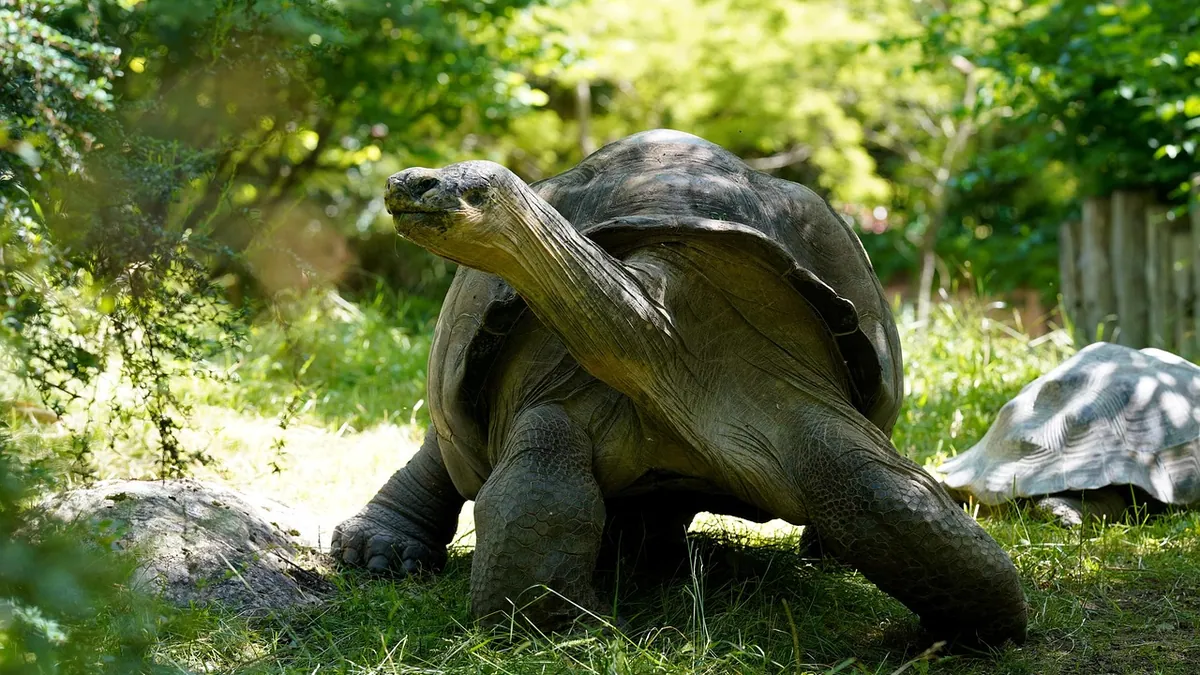
If your tortoise keeps trying to climb the walls, it is usually trying to escape something uncomfortable, not acting out. The most common reasons are an enclosure that is too small, temperatures that are too warm or too cool, poor lighting, or a stressful setup. This article is educational and is not a substitute for veterinary diagnosis or treatment.
Quick Answer
- A tortoise that paces and climbs the walls is often telling you the enclosure is too small or too open, so it feels exposed and keeps searching for a way out.
- Wrong temperatures are a top cause. A basking spot that is too hot or a cool side that is too cold drives restless climbing.
- Glass or clear walls can confuse a tortoise because it sees through them but cannot pass, which increases repeated climbing.
- Some climbing is normal activity, especially in active species, males in breeding season, and tortoises that are hungry or bored.
- Fix the enclosure first (size, heat, light, hides, substrate). If the behavior continues with a good setup, a veterinarian should check for illness or pain.
Why Is My Tortoise Climbing the Walls? Normal Reasons First
Not every tortoise climbing the walls is in trouble. Some of this behavior is built into how tortoises live.
Natural activity and exploration
Tortoises are active animals during their waking hours. They walk, dig, and push against objects in their path. A tortoise that climbs a corner, slides down, and walks on may simply be exploring. The behavior becomes a concern when it repeats for long stretches, when the tortoise ignores food, or when it flips onto its back.
Breeding season behavior
Male tortoises often become restless and patrol the walls during breeding season. They may pace, ram objects, and try to climb toward another tortoise. Females can also pace when they are looking for a place to nest. If you house more than one tortoise together, separate housing is often the simplest fix, because tortoises are largely solitary and forced company adds stress.
Hunger and routine
A tortoise that is fed at the same time each day may start pacing before meals. If the diet is low in fiber or the portions are small, the tortoise may stay hungry and keep searching. Review the diet with your veterinarian, especially for grass-eating species such as sulcatas. You can read more about diet and shell health in Sulcata Tortoise Pyramiding: Enclosure Humidity and High-Fiber Diet Fixes.
Medical Causes to Rule Out
When a tortoise suddenly starts climbing walls after being calm, think health first.
Pain or injury
A tortoise in pain may pace, climb, and refuse to settle. Common sources include shell damage, abscesses, constipation, bladder stones, and egg binding in females. Any tortoise that strains, stops passing stool, or has a swollen or soft shell needs a veterinary exam.
Respiratory and eye problems
Reptiles with respiratory infections may breathe with an open mouth, wheeze, or hold the head up. Eye infections and vitamin A deficiency can also make a tortoise restless because it cannot see well. These conditions need diagnosis and treatment, not home remedies.
Parasites and gut upset
Internal parasites and gut infections cause discomfort that shows up as pacing and climbing. A fecal test is a routine part of sorting this out. If your tortoise has diarrhea, weight loss, or a poor appetite along with wall-climbing, book a visit.
Temperature and lighting problems
This is the most common "medical-looking" cause that is really an environment problem. Tortoises are ectotherms, meaning they rely on their surroundings for body heat. If the basking zone is too hot, the tortoise will climb the walls trying to get away from the heat. If the enclosure is too cold overall, it will climb trying to find warmth. Both look like distress.
When Climbing the Walls Becomes a Problem
Occasional climbing is not a crisis. Watch for these patterns that mean the behavior has crossed into a welfare problem.
- The tortoise climbs for hours most days.
- It flips onto its back, which is dangerous and can be fatal if it cannot right itself.
- It stops eating, hides constantly, or loses weight.
- It rubs its face or shell raw against the walls.
- It paces in a tight loop along one wall, which is a classic sign of an enclosure that is too small.
- It tries to climb out whenever you open the enclosure, which points to escape motivation.
Any of these patterns deserves a closer look at the setup and a call to your veterinarian.
What to Do Step by Step
Work through these in order. Most wall-climbing improves when the first three are fixed.
Step 1: Check the size of the enclosure
This is the single biggest factor for most tortoises. An enclosure that is too small causes pacing, climbing, and stress. As a general rule, the enclosure should be many times the tortoise's body length in each direction, and larger is always better. Outdoor pens with safe fencing are ideal for species that tolerate your climate. If you cannot go bigger, add supervised time in a safe outdoor or floor area each day.
Step 2: Measure the temperatures
Use a digital thermometer at the basking spot and at the cool end. Check them at different times of day. If the basking spot is too hot, raise the heat lamp or lower the wattage. If the cool side is too cold, add gentle background heat. Your veterinarian or an experienced reptile keeper can help you set target ranges for your species, because ideal temperatures differ between species.
Step 3: Fix the lighting
Tortoises need a proper day and night cycle and UVB light for calcium use. A missing or worn-out UVB bulb can cause restlessness and long-term shell and bone problems. Replace bulbs on the schedule the manufacturer gives, since UVB output fades even when the bulb still glows.
Step 4: Add hides and visual barriers
An open enclosure makes a tortoise feel exposed. Add at least one hide on the warm side and one on the cool side. Use plants, cork bark, and solid walls to break up sight lines. If the enclosure has clear glass or plastic walls, cover the lower portion with an opaque barrier so the tortoise cannot see through. This reduces the "invisible wall" frustration that drives repeated climbing.
Step 5: Improve the substrate and digging space
Tortoises dig. A substrate that is too shallow or too hard removes a natural outlet. Provide a deep, species-appropriate substrate so the tortoise can burrow. This alone can reduce wall-climbing in burrowing species.
Step 6: Review diet and feeding schedule
Feed a high-fiber diet appropriate for the species and spread food out so the tortoise has to walk to it. Scattering food and adding safe items to explore gives the tortoise something to do. Check with your veterinarian before adding any new food.
Step 7: Reduce handling stress
Frequent handling, loud rooms, and dogs or cats staring into the enclosure all raise stress. Give the tortoise a quiet area and limit handling to what is needed for care. Stress from a busy environment is a real driver of restless behavior, just as it is in other pets. The same principle shows up in Why Is My Cat Suddenly Peeing on the Wall? and Why Is My Dog Suddenly Scared of the Stairs?, where a change in surroundings triggers a behavior change.
Step 8: Keep a simple log
Write down when the climbing happens, the temperatures at that time, what the tortoise ate, and whether it passed stool. Patterns jump out fast. Bring the log to your veterinary visit.
What Not to Do
Some common reactions make the problem worse.
- Do not punish the tortoise. Tortoises do not learn from punishment, and handling them roughly or tapping the shell adds stress and can cause injury.
- Do not block climbing with sharp or unstable objects. A tortoise that falls onto a hard edge can crack its shell.
- Do not assume the tortoise is "just bored" and skip the temperature check. Heat problems are common and easy to miss.
- Do not add a companion tortoise to "keep it company." Tortoises are generally solitary, and adding another animal often increases stress, competition, and climbing.
- Do not use home remedies for suspected infections or parasites. These can delay real treatment.
- Do not ignore flipping. A tortoise stuck on its back can die within hours, especially in hot conditions.
When to Involve a Veterinarian or Behavior Professional
Call a veterinarian who treats reptiles if the behavior continues after you fix the enclosure, or if you see any sign of illness. A certified behavior professional with reptile experience can help with enrichment plans, but health comes first. Many behavior problems in tortoises turn out to be environment or medical problems, so a veterinary exam is the right starting point.
Limitations and When to Contact a Veterinarian
This article covers common causes, but every tortoise is an individual. Your veterinarian needs to examine your tortoise to know what is happening in your case.
Contact a veterinarian the same day if your tortoise:
- Has been on its back and cannot right itself
- Has a soft, swollen, or cracked shell
- Is straining to pass stool or eggs with no result
- Has discharge from the nose or eyes, open-mouth breathing, or wheezing
- Has stopped eating for more than a few days
- Has bloody or very loose stool
Treat this as an emergency now if your tortoise is unresponsive, limp, gasping, or has been flipped for an unknown length of time. These are life-threatening situations.
Schedule a routine visit if the climbing started gradually, the tortoise is still eating, and you have already corrected the enclosure but the behavior persists. Bring your temperature log and a fresh stool sample if you can.
Frequently Asked Questions
Is wall-climbing always a sign of stress?
No, some climbing is normal activity, especially in active species and during breeding season. It becomes a stress sign when it repeats for hours, happens most days, or comes with appetite loss, hiding, or flipping.
Can a tortoise climb out of its enclosure?
Yes, tortoises are stronger and better climbers than many owners expect. They can push up on corners and use objects as steps. Use solid walls, remove climbable props near the edges, and add a lip or screen top.
Does a bigger enclosure really stop the behavior?
Often it does, because space is one of the main drivers of pacing and wall-climbing. Size alone may not fix it if temperatures, lighting, or health problems are also present, so address all of them together.
Should I let my tortoise climb on furniture or stairs?
No, that is risky. Falls can crack the shell or cause internal injury, and household floors are usually too cold. Provide safe climbing and digging space inside a proper enclosure or a supervised outdoor pen.
How long does it take for the behavior to improve after changes?
Many tortoises settle within days to a few weeks once the enclosure and temperatures are right. If nothing changes after two to three weeks of correct care, or if your tortoise gets worse, see a veterinarian.
Related Articles
- Sulcata Tortoise Pyramiding Prevention
- Sulcata Tortoise Pyramiding: Enclosure Humidity and High-Fiber Diet Fixes
- Why Is My Snake Not Eating? Causes and Solutions
- Why Is My Tortoise Pacing Back and Forth? Causes
- Why Is My Tortoise Not Moving? Causes and What to Do
- Why Is My Turtle or Tortoise Digging? Normal vs. Problem