Why Is My Tortoise Poop or Pee White? What It Means
By Dr. Zubair Khalid, DVM, MS, PhD ·
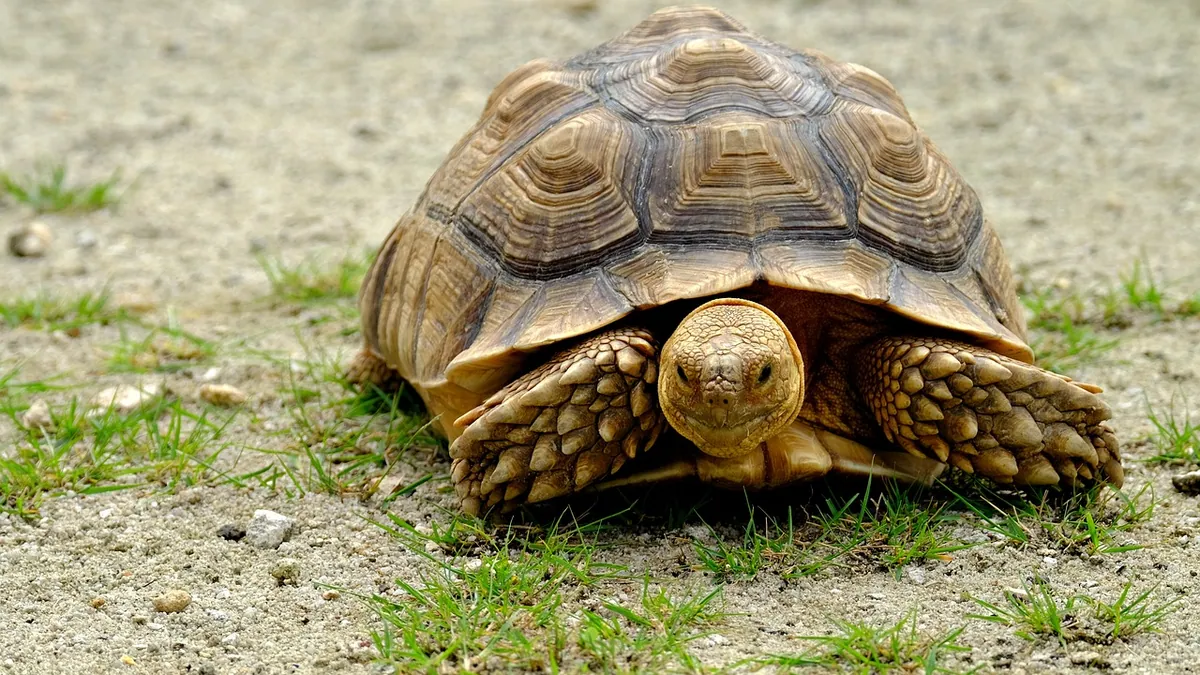
White material in your tortoise's poop or pee is usually urates, the solid form of nitrogen waste that healthy reptiles excrete. A small amount of creamy white urate is normal. Large, hard, or frequent white output can point to dehydration, kidney disease, or other problems that need a veterinarian. This article is educational and is not a substitute for veterinary diagnosis or treatment.
Quick Answer
- Reptiles excrete excess nitrogen as solid urates instead of liquid urine, so some white paste in the poop or urination is expected [1].
- Normal urates look like smooth white or cream-colored paste, often passed with a small amount of clear or slightly cloudy liquid.
- Dry, crumbly, chalky, or rubbery urates are a common sign of dehydration and should prompt a check of your tortoise's water intake, humidity, and soaking routine.
- A complete stop in urate output, straining, or a swollen, soft shell area can mean a blockage or kidney problem and needs same-day veterinary attention.
- A white, chalky coating on the shell is usually a separate issue (hard water, shedding, or fungal growth) and is not the same as white urates.
What White Tortoise Poop and Pee Actually Look Like
Normal urates
Tortoises are uricotelic, which means they convert excess nitrogen into uric acid instead of urea. This adaptation lets them conserve water, which matters for animals that may go long stretches between drinks [1]. The white or cream-colored material you see is that uric acid, often called urates.
In many reptile species, urates are made of tiny microspheres of uric acid monohydrate nanocrystals, and their structure helps the body also get rid of small amounts of salts [1]. Some species produce a mix that includes ammonium urate hydrate, so the color and texture can vary a bit between individuals and species [1].
What counts as normal:
- Smooth, toothpaste-like white or cream paste
- Passed along with brownish fecal material or a small amount of liquid
- Produced regularly, roughly in step with eating and pooping
- Not rock hard, not gritty, not huge in volume
What abnormal white output looks like
Watch for these changes:
- Chalky, dry, crumbly, or sandy urates
- Thick, rubbery, or rubber-cement texture
- Very large urate volume compared with the fecal portion
- No urates at all for several days, especially with straining
- White discharge that smells strong or comes with a swollen vent area
- White, chalky deposits on the shell, which is a different problem (see the shell section below)
Why Is My Tortoise Poop White? The Main Causes
| Cause | Typical clues | How urgent |
|---|---|---|
| Normal urates | Smooth white paste, regular output, normal appetite and activity | Not urgent, monitor |
| Dehydration | Dry or chalky urates, sunken eyes, poor appetite, low humidity or no water bowl | See a vet soon, often within a few days |
| Kidney disease or kidney mass | Persistent abnormal urates, lethargy, anorexia, weight loss, swelling in the body cavity | Urgent, same day to a few days |
| Urinary blockage or urolith | Straining, no urates, swollen coelom, reluctance to move | Emergency |
| Gout (urate deposits in tissues) | White chalky deposits, joint swelling, lameness, lethargy | Urgent |
| Shell problems (fungal, bacterial, hard water stains) | White patches on the shell surface, not in the poop | Routine to urgent depending on depth |
| Diet imbalance | Excess protein or purine-rich foods, too much of one item | Routine, adjust with vet guidance |
Dehydration
This is the most common reason urates look wrong. When a tortoise does not take in enough water, the body pulls as much water as it can from the urates, leaving them dry and chalky. Low humidity in the enclosure, a water bowl that is too shallow or too deep, and missed soaking sessions all contribute.
A dehydrated tortoise may also have sunken eyes, a dull shell, and a poor appetite. In a case report of a Russian tortoise with a kidney tumor, the tortoise arrived significantly dehydrated with abnormal shedding, which shows how often dehydration shows up alongside serious illness [2].
Kidney disease
The kidneys are where urates are processed and packaged for excretion. When kidney function drops, urate output can change in quality or quantity. Reptiles can develop several urinary tract diseases, including urolithiasis (stones), gout, acute and chronic kidney injury, and secondary renal hyperparathyroidism [3].
Kidney tumors are rare but possible. A Russian tortoise was diagnosed with a urothelial carcinoma arising from the renal pelvis, which was the first report of this tumor type in a tortoise [2]. The tortoise had a one-week history of not eating and being lethargic, and imaging found a large mass in the body cavity [2]. This is uncommon, but it shows why persistent changes in urate output deserve a real workup.
Gout and visceral urate deposits
Sometimes urates do not leave the body properly and instead deposit in tissues. This is called visceral gout or visceral urate deposition. In a little bittern, a wild bird, white chalky deposits were found on the heart and air sacs at necropsy, and testing confirmed uric acid [4]. Birds and reptiles share this uric acid system, so the same principle applies. In tortoises, gout can cause swollen joints, lameness, and white deposits in soft tissues.
Blockages and stones
A stone or thick urate plug can block the urinary tract. The tortoise may strain, stop passing urates, and become dull. This is an emergency. Imaging such as radiographs, ultrasound, CT, or MRI is used to find urinary tract disease in reptiles [3].
Shell whitening (a different problem)
If the white you are seeing is on the shell, not in the poop, the cause is different. Common reasons include hard water mineral deposits, normal shedding of scutes, fungal infection, or bacterial shell rot. Fungal and bacterial shell disease can spread and deform the shell if untreated. A tortoise with a kidney tumor in one report also had generalized abnormal shedding, so skin and shell changes can sometimes travel with internal disease [2].
Red Flags That Make It an Emergency
Call an exotic veterinarian right away if you see any of these:
- No urates or no poop for several days, especially with straining
- A swollen, soft, or visibly enlarged area on the belly (plastron) or body cavity
- Open-mouth breathing, wheezing, or bubbles from the nose
- Complete refusal to eat for more than a few days
- Lethargy so severe the tortoise does not respond to touch or warmth
- Blood in the stool or around the vent
- A shell wound, soft spot, or spreading white or gray patch
- Sudden weight loss or a sunken, hollow look around the eyes and hips
If your tortoise is a species that brumates and it is mid-brumation, some slowdown is expected. But straining, swelling, or a total stop in output is not normal at any time.
Safe Things You Can Do at Home While You Wait
You cannot fix kidney disease or a blockage at home, but you can support your tortoise and gather useful information for the vet.
- Soak your tortoise in shallow, lukewarm water. The water should reach the bottom of the shell, not the chin. Soak for 15 to 30 minutes in a quiet, supervised spot.
- Offer fresh water in a shallow dish at all times. Some tortoises prefer to drink during or right after a soak.
- Check your enclosure humidity and temperature against your species' needs. A hygrometer is inexpensive and takes the guesswork out.
- Keep a simple log. Note the date, what the urates looked like (color, texture, size), whether poop was passed, and what your tortoise ate.
- Do not give any medication, supplement, or home remedy without veterinary guidance. Doses depend on species, weight, and health status, and your veterinarian will calculate them.
- Do not pull at or scrub hard white material on the shell. You can injure the underlying tissue.
If your tortoise shares habits with other pets in the house, some of the same principles apply to mammals with urinary signs. You can read more about urinary changes in Why Is My Dog Peeing So Much? and How Do I Know If My Dog Has A Uti. Blood in urine is another sign that needs prompt care, as covered in Why Is My Dog having bloody urine? Cystitis Bladder Stones and UTI Guide.
What Your Veterinarian Will Check and Test
A reptile-savvy veterinarian will start with a full history: diet, enclosure temperatures, humidity, soaking routine, UVB lighting, and how long the white output has been abnormal.
The physical exam includes:
- Weight and body condition
- Hydration status (eyes, skin, mouth)
- Shell and skin check for shedding problems, fungus, or wounds
- Palpation of the body cavity for swelling or masses
- Checking the vent and tail area for straining or discharge
Testing and imaging may include:
- Blood work to check kidney values, calcium, phosphorus, and overall health. In the Russian tortoise with the kidney tumor, blood parameters were within normal limits, which shows that normal blood work does not rule out serious disease [2].
- Radiographs to look for stones, soft tissue changes, or loss of detail in the body cavity [3].
- Ultrasound to look at the kidneys and other organs. In the Russian tortoise case, ultrasound found a large cavitated mass in the right coelom [2].
- CT or MRI for detailed imaging of masses and urinary tract disease [2][3].
- Fecal testing for parasites and digestive issues.
- Urate or urine testing to look at crystals, infection, or blood.
Reptiles can develop urolithiasis, gout, acute and chronic kidney injury, and secondary renal hyperparathyroidism, and imaging is a major tool for telling these apart [3]. Your vet will choose the tests that fit your tortoise's signs and species.
Prevention and Monitoring
Most white urate problems in pet tortoises come down to hydration and husbandry. Here is what to focus on.
Water and soaking
- Provide a shallow water dish that your tortoise can easily climb in and out of.
- Soak young, ill, or newly acquired tortoises several times a week.
- Soak adults at least once or twice a week, more in dry climates or during hot weather.
- Mist the enclosure or use a humid hide to raise humidity for species that need it.
Diet
- Feed a species-appropriate mix of leafy greens, grasses, and hay.
- Limit high-protein and purine-rich foods, which increase urate production.
- Use a calcium supplement only as directed by your veterinarian, since over-supplementation causes its own problems.
- Keep a feeding schedule and note any changes in appetite.
Enclosure
- Match temperature gradient and basking spot to your species.
- Replace UVB bulbs on the schedule the manufacturer recommends, since output fades over time.
- Keep the substrate clean and dry enough to prevent shell rot, but humid enough for healthy shedding.
Monitoring
- Weigh your tortoise monthly on a kitchen scale and write it down. Slow weight loss is easy to miss.
- Check urates at every poop. Note texture, color, and size.
- Look at the shell weekly for white patches, soft spots, or lifting scutes.
- Book a wellness exam with a reptile vet once a year, or twice a year for seniors and species with known kidney sensitivity.
If you also keep mammals, some white output has different meanings. A cat vomiting white foam is a separate problem from reptile urates, explained in My Cat Threw Up White Foam What Does That Mean. And if you have a dog with unusual stool habits, see Why Does My Dog Eat Poop?.
Limitations and When to Contact a Veterinarian
This article cannot tell you what is wrong with your individual tortoise. Only a veterinarian who examines your pet can do that. Use the guidance below to decide how fast to act.
Emergency now (call or go immediately):
- Straining to urinate or defecate with no output
- A swollen or soft area on the plastron or body cavity
- Open-mouth breathing, gasping, or bubbles from the nose
- Collapse, severe lethargy, or unresponsiveness
- Bleeding from the vent or a shell wound that is deep or foul-smelling
Same day or within 24 hours:
- No urates for 3 or more days
- Chalky, dry, or bloody urates that keep recurring
- Not eating for more than 2 to 3 days
- Vomiting, head tremors, or weakness
Routine visit within a week:
- Urates that look slightly drier than usual but the tortoise is eating and active
- A new white patch on the shell
- Gradual weight loss over weeks
- Any change you are unsure about
When in doubt, call your veterinarian. Reptiles hide illness well, and early treatment is almost always easier than waiting.
Frequently Asked Questions
Do tortoises pee white?
Tortoises do not urinate the way mammals do. They pass solid urates, which look like white or cream paste, along with a small amount of liquid waste [1]. So the white material you see is normal urate output, not pee in the mammal sense.
Why is my turtle pooping white?
Turtles are reptiles too, and they also excrete urates as their main nitrogen waste product [1]. White material in turtle poop is usually normal urates. If it looks dry, chalky, or your turtle is straining, treat it the same way you would for a tortoise and see a vet.
Why is my tortoise pee white and thick?
Thick, rubbery, or paste-like urates often mean the tortoise is not getting enough water. Low humidity, missed soaks, and a water dish that is hard to use are common causes. Increase soaking and water access, and see a vet if it does not improve within a few days.
Why is my tortoise shell getting white?
A white shell is usually a surface problem, not a urate problem. Common causes include hard water mineral stains, normal scute shedding, fungal infection, and bacterial shell rot. Fungal and bacterial shell disease can spread, so have any soft, smelly, or spreading white patch checked by a veterinarian.
Can kidney problems cause white poop in tortoises?
Yes. The kidneys process urates, so kidney disease can change how much white material your tortoise passes and what it looks like. Reptiles can develop kidney injury, stones, gout, and rarely kidney tumors, and imaging is often needed to tell these apart [2][3]. Persistent changes in urate output deserve a veterinary workup.
Related Articles
- Do Tortoises Poop? Normal Stool and Warning Signs
- Do Tortoises Pee? How Reptiles Excrete Waste
- Why Does My Tortoise Have Diarrhea? Causes and Care
References
- Uric Acid Monohydrate Nanocrystals: An Adaptable Platform for Nitrogen and Salt Management in Reptiles. Journal of the American Chemical Society, 2025.
- Urothelial carcinoma in a Russian tortoise (Testudohorsfieldii). Journal of comparative pathology, 2023.
- Diagnostic Imaging of the Reptile Urinary System. The veterinary clinics of North America. Exotic animal practice, 2020.
- Visceral urate deposition in a little bittern (Ixobrychus minutus). Veterinary research forum : an international quarterly journal, 2015.