Why Is My Tortoise Hiding? Normal or a Warning Sign
By Dr. Zubair Khalid, DVM, MS, PhD ·
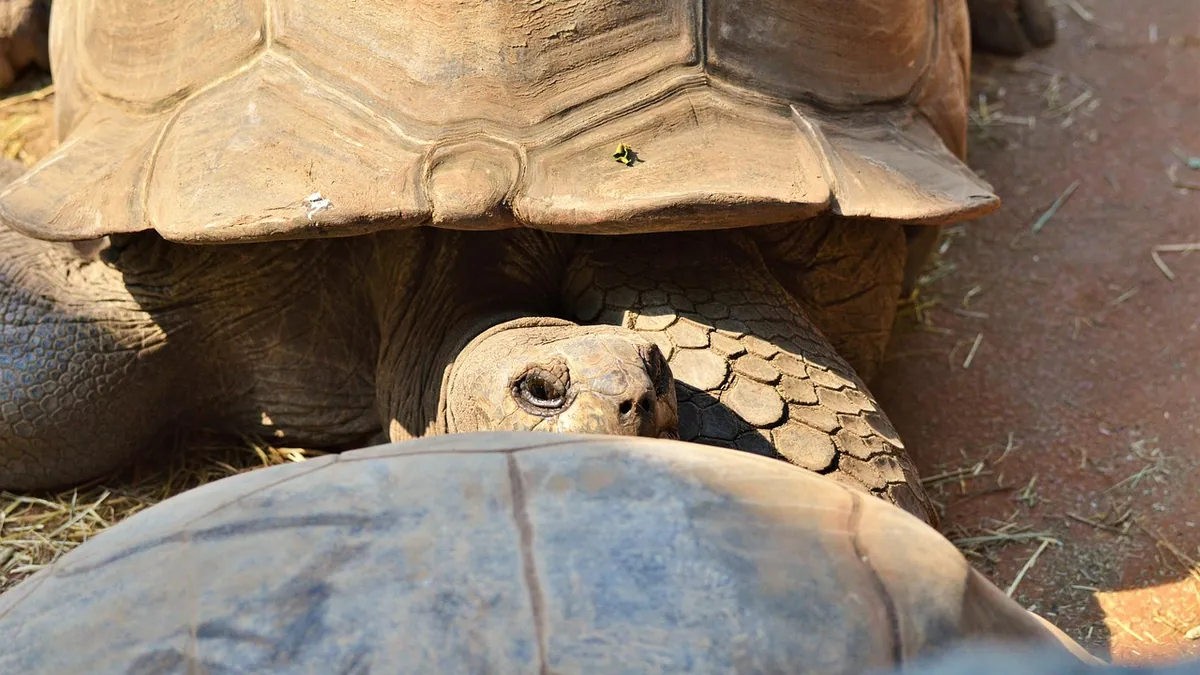
If your tortoise is hiding, the first thing to know is that hiding is normal for many species. Tortoises are prey animals, and a secure hide is where they feel safe, sleep, and regulate their body temperature. The question is whether your tortoise is hiding on a normal schedule or hiding more than usual, refusing food, or acting sick.
This article is educational and is not a substitute for veterinary diagnosis or treatment.
Quick Answer
- Hiding for part of every day is normal, especially during sleep, hot afternoons, and the first weeks in a new enclosure.
- A tortoise that hides constantly, stops basking, refuses food, or avoids the heat lamp may be too cold, too hot, or sick.
- Check your temperature gradient first. A tortoise that cannot find the right temperature will hide instead of basking.
- Weigh your tortoise weekly and watch for weight loss, swollen eyes, discharge, or soft shell spots.
- Any tortoise that has not eaten for several days, is lethargic, or has trouble breathing needs a veterinary visit.
Why Is My Tortoise Hiding? Normal Reasons First
Before you assume something is wrong, rule out the ordinary reasons. Most healthy tortoises hide for a good part of the day.
Hiding is part of normal tortoise behavior
Wild tortoises spend much of their time in burrows, under vegetation, or in rock crevices. This protects them from predators and from extreme heat or cold. A captive tortoise with a proper hide box is doing exactly what its instincts tell it to do.
Baby tortoises hide more than adults. They are small, easy prey, and they tire quickly. If your hatchling spends most of the day buried in substrate but comes out to eat and bask, that is usually fine.
New enclosure or recent change
A tortoise moved to a new enclosure, a new room, or a new home often hides for days or even a couple of weeks. This is a stress response to an unfamiliar space. Give it time, keep handling to a minimum, and let the tortoise explore on its own schedule.
Brumation and seasonal slowdowns
Many tortoises slow down in winter, even indoors. Some species brumate, a hibernation-like state where activity and appetite drop. One tracking study of an Australian freshwater turtle, Chelodina longicollis, recorded an adult female remaining in one area of a creek pool for a seven-month period that included winter [1]. That is an extreme example from a different species, but it shows how long natural inactivity can last in chelonians.
If you keep a species that brumates, follow a species-specific plan. Do not let a tortoise cool down and stop eating without preparation, because a tortoise that brumates with food in its gut can become seriously ill.
Shedding, egg laying, and other normal events
Female tortoises may hide more when they are gravid or looking for a nesting site. Shedding can also make a tortoise irritable and less active. These are temporary changes, but they still deserve a check of appetite and weight.
Medical Causes of Hiding You Need to Rule Out
When hiding comes with other signs, illness moves up the list. Reptiles hide illness well, so subtle changes matter.
Pain and internal disease
A tortoise in pain often withdraws. A case report described an adult female Russian tortoise (Testudo horsfieldii) brought to a clinic with a one-week history of anorexia and lethargy [2]. She was significantly dehydrated and had abnormal shedding. Imaging found a large mass in the right coelom, and surgery revealed a urothelial carcinoma arising from the renal pelvis [2]. This is a rare cancer, but the early signs were simple: not eating and not acting normal.
A separate report described a 14-year-old female red-eared slider turtle (Trachemys scripta elegans) with about two weeks of inappetence and lethargy [3]. Ultrasound and CT found ovarian follicle problems and coelomitis, and the turtle needed surgery [3]. Again, the first visible signs were appetite loss and low activity.
The pattern is consistent. A tortoise that hides and stops eating may have a real medical problem, and imaging or blood work is often needed to find it.
Parasites and skin problems
Ectoparasites such as ticks and mites can wear a reptile down. A report on an African rock python (Python sebae) with a severe tick infestation described anorexia, lethargy, incomplete shedding, and facial swelling [4]. Treatment included mechanical tick removal, medication, and improved husbandry, and the snake resumed feeding and normal shedding within five days [4]. Ticks and mites are less common on tortoises than on snakes, but the lesson holds. External parasites cause stress, anemia, and skin damage, and they are treatable once identified.
Respiratory and shell infections
Wheezing, open-mouth breathing, nasal discharge, and a soft or discolored shell are not normal. A tortoise with a respiratory infection often stops basking and hides instead. These conditions usually need prescription treatment, not home remedies.
Metabolic bone disease and nutritional problems
A tortoise without proper ultraviolet light, calcium, and a balanced diet can develop soft bones and a deformed shell. It may become weak and inactive. This is largely preventable with correct lighting and diet, and it is one of the most common reasons a tortoise stops moving normally.
When Hiding Becomes a Problem
Hiding crosses the line from normal to concerning when it changes your tortoise's basic daily routine.
Watch for these patterns:
- The tortoise stays hidden all day for more than two or three days.
- It stops coming out to bask under the heat lamp.
- It refuses food for more than a few days.
- It avoids the warm side of the enclosure entirely.
- It sleeps in the cool zone when it should be digesting.
- It is losing weight.
- It has discharge, swelling, or a bad smell.
A tortoise that hides but still eats, basks, and moves around is usually fine. A tortoise that hides and does nothing else is not.
If you also keep mammals, the behavior can look similar across species. Hiding in cats and dogs often signals pain or stress, and the same principle applies here. You can read more about it in Why Is My Cat Hiding? and Dog Hiding and Acting Weird: What Does It Mean?. The species differ, but the rule is the same. A sudden change in hiding behavior deserves attention.
What to Do Step by Step
Work through these steps in order. Most hiding problems trace back to the enclosure.
Step 1: Check the temperature gradient
Measure the temperature at the basking spot, the warm end, and the cool end with a digital thermometer. Do this at tortoise shell height, not at the top of the tank. If the basking spot is too cool, your tortoise cannot digest food and will hide. If the whole enclosure is too hot, it will hide to escape the heat.
Check nighttime temperatures too. A big drop at night can push a tortoise into hiding during the day.
Step 2: Check the lighting
Tortoises need a proper ultraviolet B light for calcium metabolism. Replace UVB bulbs on the schedule the manufacturer gives, because they lose output before they burn out. Keep the light on a consistent daily cycle, roughly 10 to 14 hours depending on species and season.
Step 3: Review the hide and substrate
A hide should be dark, snug, and big enough for the tortoise to turn around. Some tortoises prefer a humid hide for shedding and hydration. Substrate should allow burrowing for species that dig. If your tortoise cannot bury itself, it may pace or hide in a corner instead.
Step 4: Look at diet and hydration
Offer a varied diet appropriate for the species, with calcium supplementation as your veterinarian advises. Fresh water should be available at all times, and some tortoises need regular soaks. A dehydrated tortoise becomes lethargic and hides more. The Russian tortoise in the case report was significantly dehydrated when it arrived at the clinic [2], which shows how quickly hydration problems show up in sick reptiles.
Step 5: Reduce stress and add enrichment
Reptiles can experience chronic stress from housing conditions. A study measuring corticosterone in shed snake skins found that housing design affected stress markers, and the effect differed by species [5]. In ball pythons (Python regius), individuals in enriched terraria had higher corticosterone concentrations than those in rack systems, while the opposite pattern appeared in another species [5]. The takeaway for tortoise owners is that enrichment should be matched to the species, not copied from a care sheet for a different animal.
For tortoises, enrichment usually means deep substrate for digging, safe plants to explore, varied terrain, and a predictable routine. Limit handling, especially in a new tortoise. Let it settle for a week or two before you start regular interaction.
Step 6: Track weight and appetite
Weigh your tortoise weekly on a kitchen scale and write it down. Weight loss is one of the earliest signs of illness in reptiles. Track how much it eats and how often it basks. Bring these notes to your veterinarian.
Step 7: Quarantine new animals
If you add a new reptile, keep it separate for a period your veterinarian recommends. Parasites and infections spread easily between animals in the same room.
What Not to Do
Some common responses make hiding worse.
Do not punish or force your tortoise out of its hide. Reptiles do not learn from punishment, and handling a stressed tortoise increases stress. Do not dig it out repeatedly to check on it.
Do not assume brumation is happening just because it is winter. A tortoise that is sick and cool is not brumating, and the two look similar to an untrained eye.
Do not raise the temperature blindly. Overheating an enclosure causes its own set of problems, including dehydration and organ damage.
Do not use home remedies for suspected infections. Shell rot, respiratory infections, and parasites need specific treatments, and the wrong product can harm your tortoise.
Do not skip the UVB light because your tortoise gets window light. Glass blocks most ultraviolet B, so window light does not replace a proper bulb.
When to Call a Veterinarian or Behavior Professional
Reptile behavior problems and medical problems overlap heavily. A tortoise that hides because it is too cold needs an enclosure fix. A tortoise that hides because of cancer or an ovarian problem needs a veterinarian.
Find a veterinarian who treats reptiles, ideally one with additional training in reptile medicine. If your tortoise's hiding is tied to stress from handling, enclosure changes, or a multi-pet household, ask your veterinarian for a referral to a qualified behavior professional who works with reptiles.
Limitations and When to Contact a Veterinarian
This article cannot tell you what is wrong with your specific tortoise. Individual cases need a veterinarian who can examine the animal, review the enclosure, and run tests if needed.
Contact a veterinarian the same day if your tortoise:
- Has not eaten for several days
- Is losing weight
- Has discharge from the nose or eyes
- Is breathing with its mouth open or making clicking sounds
- Has a soft, discolored, or foul-smelling shell
- Has swollen eyes or limbs
- Has visible ticks or mites
- Has not passed stool in an unusually long time
Seek emergency care immediately if your tortoise:
- Is unresponsive or limp
- Has been flipped on its back and cannot right itself
- Has prolapsed tissue from the vent
- Has been attacked by another animal
- Is bleeding or has a deep shell crack
- Collapsed after overheating
Schedule a routine visit if your tortoise is hiding more than usual but still eating and moving. Bring your weight log, a photo of the enclosure, and notes on temperatures and lighting. That information helps your veterinarian sort out husbandry problems from medical ones.
Frequently Asked Questions
How long can a tortoise hide before it is a problem?
A few hours of hiding each day is normal. If your tortoise stays hidden for more than two or three days straight and stops basking or eating, that is a problem. Call your veterinarian.
Why is my turtle hiding instead of swimming?
Turtles hide for the same reasons tortoises do, including stress, temperature problems, and illness. A turtle that hides constantly and refuses food may have an internal problem, and a case report described a red-eared slider with two weeks of appetite loss and lethargy that turned out to need surgery [3]. Have a veterinarian evaluate any turtle that stops eating.
Can stress alone make my tortoise hide all the time?
Yes. New environments, frequent handling, and poor enclosure design all cause stress, and stress can suppress appetite and activity. A study of captive snakes found that housing conditions affected a measurable stress hormone in shed skins, and the response varied by species [5]. Match the setup to your species and give your tortoise time to adjust.
Does hiding mean my tortoise is brumating?
Not necessarily. Brumation is a seasonal, species-specific slowdown, and it looks similar to illness in a tortoise that is not prepared for it. Never let a tortoise cool down and stop eating without a plan from your veterinarian, because a tortoise that brumates with a full gut can become very sick.
Should I force my tortoise out of its hide to check on it?
No. Forcing a stressed tortoise out increases stress and does not fix the underlying problem. Instead, check temperatures, lighting, and food intake, and weigh your tortoise weekly. If the hiding continues or other signs appear, see a reptile veterinarian.
Related Articles
- Why Is My Tortoise Sleeping a Lot? Normal vs Concerning
- Why Is My Tortoise Lethargic? Causes and When to Worry
- Why Is My Tortoise Not Moving? Causes and What to Do
References
- Overwintering under ice: A novel observation for an Australian freshwater turtle. Ecology and evolution, 2024.
- Urothelial carcinoma in a Russian tortoise (Testudohorsfieldii). Journal of comparative pathology, 2023.
- Partial unilateral ovarian torsion in a red-eared slider turtle (Trachemys scripta elegans). Frontiers in veterinary science, 2025.
- Severe Tick Infestation and Haemogregarina spp. Infection in a Captive African Rock Python (Python sebae): A Clinical and Parasitological Case from Nigeria. Veterinary medicine and science, 2026.
- Species-specific variations in corticosterone concentrations in captive snake shed skins: implications for housing systems and welfare. BMC veterinary research, 2026.