Leopard Gecko Growth and Weight Chart Explained
By Dr. Zubair Khalid, DVM, MS, PhD ·
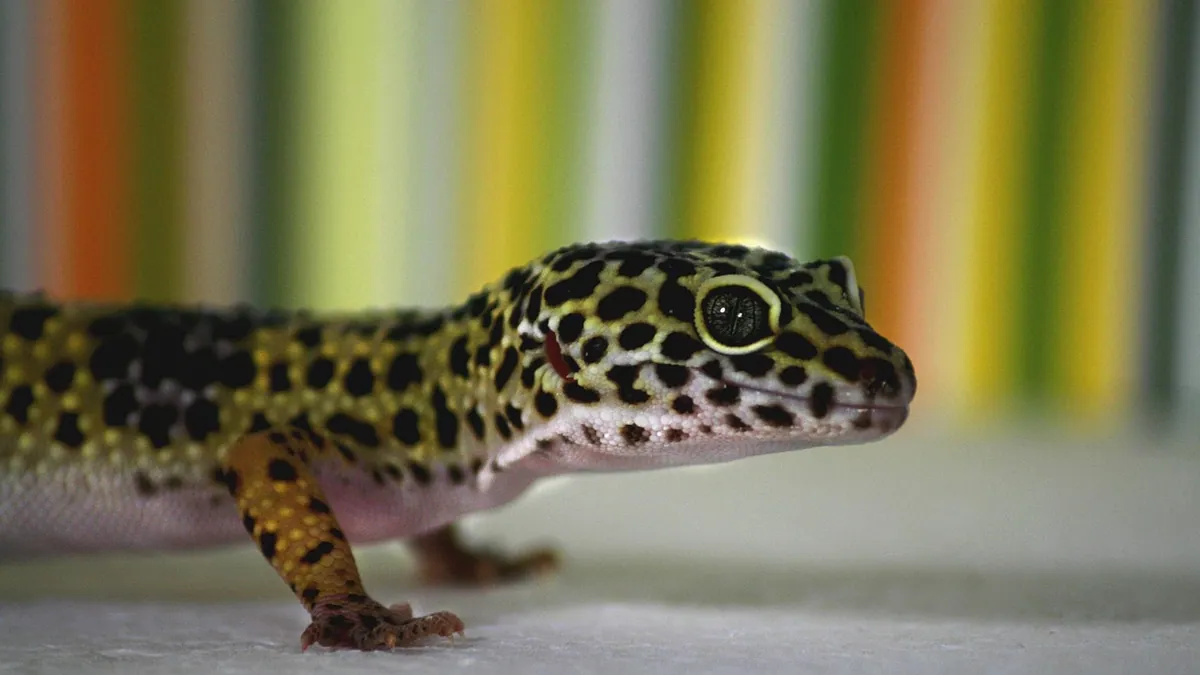
A leopard gecko growth chart gives you realistic weight and length ranges by age, so you can tell normal development from a problem. Most healthy leopard geckos gain steadily for their first year, then slow down once they reach adult size. Tracking weight and length at home is one of the simplest ways to catch stunting or obesity before it becomes serious.
This article is educational and is not a substitute for veterinary diagnosis or treatment.
Quick Answer
- Weigh your gecko on a digital gram scale every 2 to 4 weeks and write down the number.
- Measure snout-to-vent length (SVL), which is the standard reptile measurement from nose to the vent [1].
- A steady upward trend matters more than any single number on a chart.
- Adult geckos should stay lean, with a tail that is thick but not ballooning.
- Sudden weight loss, a shrinking tail, or a gecko that stops growing needs a veterinary visit.
What a Leopard Gecko Growth Chart Actually Tracks
A growth chart for leopard geckos is not one official document. It is a set of expected ranges that breeders and veterinarians use as a guide. The two numbers that matter most are weight in grams and snout-to-vent length in inches or centimeters.
SVL is the standard measurement used in reptile descriptions, taken from the tip of the snout to the vent [1]. This matters because tail length varies and can be regrown after a drop, so total length is a less reliable growth marker. Weight is the other half of the picture. A gecko can look long enough but still be underweight, or look chunky but actually be a normal adult.
Growth in reptiles is tied to temperature. Ectotherms (cold-blooded animals) raised in cooler conditions tend to grow slower and mature later than those kept warmer [2]. That means your gecko's growth rate depends partly on how well you manage its heat gradient. A gecko kept too cool may eat less, digest poorly, and fall behind.
Leopard Gecko Size Chart and Weight Chart by Age
The table below shows typical ranges for healthy pet leopard geckos. These are general guides, not strict rules. Individual geckos vary with genetics, sex, diet, and temperature.
| Age | Typical Weight | Typical SVL | Notes |
|---|---|---|---|
| Hatchling (0 to 1 month) | 2 to 5 grams | 1.5 to 2.5 inches | Very small, fragile, eats tiny prey |
| Juvenile (1 to 3 months) | 5 to 15 grams | 2.5 to 4 inches | Rapid growth phase |
| Juvenile (3 to 6 months) | 15 to 35 grams | 4 to 5.5 inches | Appetite usually strong |
| Sub-adult (6 to 12 months) | 35 to 55 grams | 5.5 to 7 inches | Growth starts to slow |
| Adult (12 to 18 months) | 50 to 80 grams | 7 to 9 inches | Near full size |
| Adult male | 60 to 100 grams | 8 to 10 inches | Males are often larger |
| Adult female | 50 to 80 grams | 7 to 9 inches | Females often smaller |
A healthy adult leopard gecko usually lands somewhere between 50 and 90 grams. Males tend to be heavier and longer than females. A gecko that reaches 12 months at 30 grams is likely stunted and needs a closer look at husbandry and health.
How to Track Growth at Home Step by Step
Step 1: Get the Right Scale
Use a digital kitchen or postal scale that reads in 1-gram increments. A scale that only reads in ounces is not precise enough for a small gecko. Weigh the gecko in a small container or a cloth bag, then subtract the container weight.
Step 2: Weigh on a Schedule
Weigh hatchlings and juveniles every 2 weeks. Weigh adults every 3 to 4 weeks. Always weigh at the same time of day, ideally before feeding. This keeps your numbers comparable.
Step 3: Measure SVL
Lay the gecko flat against a ruler or use a soft tape. Measure from the tip of the snout to the vent, not to the tip of the tail [1]. Have a second person help if your gecko will not stay still. Never pull on the tail, since leopard geckos can drop it.
Step 4: Record Everything
Keep a simple log with date, weight, SVL, and any notes about appetite, shedding, or stool. Patterns show up fast in a written record. A gecko that gains 3 grams a month for three months is doing well. A gecko that loses 5 grams in two weeks is a concern.
Step 5: Compare to the Chart, Not to One Number
Use the table above as a range, not a target. A gecko at the low end of normal that is gaining steadily is usually fine. A gecko at the high end that keeps climbing may be heading toward obesity.
Leopard Gecko Feeding Chart Basics
Growth depends on what and how often you feed. A leopard gecko feeding chart should match the gecko's age.
- Hatchlings and young juveniles: feed small prey daily or every other day.
- Older juveniles: feed every other day.
- Adults: feed 2 to 3 times per week.
Offer a variety of insects, and dust them with a calcium and multivitamin supplement according to your veterinarian's guidance. Poor diet and poor supplementation are linked to health problems in captive geckos. One review of 214 leopard geckos found that skin, gastrointestinal, and eye conditions were the most common problems, and husbandry factors played a significant role in several disorders [3]. The most frequent single diagnosis was dysecdysis, or difficulty shedding, at nearly 30 percent of cases [3].
For a full feeding plan, see the Leopard Gecko Diet and Feeding Guide.
Leopard Gecko Obesity Chart: When Weight Becomes a Problem
Obesity is common in adult leopard geckos that are fed too often or given too many fatty prey items. You can judge body condition without a scale by looking at the tail and body shape.
| Body Condition | Tail | Body | Action |
|---|---|---|---|
| Underweight | Thin, narrow, bony base | Ribs or spine visible | Vet visit, review diet and health |
| Ideal | Thick, plump, carrot-shaped | Smooth, rounded belly | Keep current routine |
| Overweight | Very wide, bulging | Belly drags, fat pads visible | Cut feeding frequency, reduce fatty prey |
| Obese | Extremely fat, lumpy | Cannot lift belly off ground | Vet visit, structured weight plan |
A healthy leopard gecko tail is thick at the base and tapers toward the tip. An obese gecko has a tail that looks swollen and a body that spreads out. Fat pads behind the front legs can also enlarge.
Obesity raises the risk of fatty liver disease and other metabolic problems. If your gecko is overweight, do not crash diet it. Reduce feeding frequency and prey fat content gradually, and ask your veterinarian for a plan. For more on this, read Leopard Gecko Care: Fatty liver disease weight and diet management.
Leopard Gecko Age Chart: How to Estimate Age
If you adopted an adult gecko with no history, you may not know its exact age. You can estimate roughly using size and weight.
- Under 3 inches SVL: likely under 2 months old.
- 3 to 5 inches SVL: likely 2 to 6 months old.
- 5 to 7 inches SVL: likely 6 to 12 months old.
- 7 inches or more SVL at adult weight: likely over 12 months old.
These are estimates only. Growth rate depends on temperature, since cooler conditions slow growth and delay maturity in ectotherms [2]. A gecko kept too cool may look younger than it is. A gecko kept warm and fed well may reach adult size faster.
Signs Something Is Wrong
Watch for these warning signs during your regular checks.
- Weight loss over two or more weigh-ins
- A tail that is getting thinner
- Refusing food for more than a week
- Difficulty shedding, especially retained skin on toes or eyes
- Swollen eyes, discharge, or cloudy eyes
- Loose or bloody stool
- Lethargy or a gecko that stays hidden and inactive
- A belly that drags or fat pads that keep growing
Reduced appetite, weight loss, and lethargy were the most commonly reported problems in a review of 214 leopard geckos seen at veterinary practices [3]. Skin issues were the most affected body system at nearly 38 percent, followed by gastrointestinal problems at 36 percent and eye problems at 22 percent [3]. These numbers show why routine checks matter. Small changes often show up before a gecko looks obviously sick.
Common Mistakes Owners Make
- Weighing only once and panicking. One number means little. Trends matter.
- Measuring total length instead of SVL. Tail drops and regrowth make total length unreliable.
- Feeding adults like juveniles. Adult geckos need fewer meals and less fat.
- Skipping calcium and vitamin supplements. This contributes to shedding and other problems [3].
- Keeping the tank too cool. Cool temperatures slow growth and digestion in ectotherms [2].
- Ignoring a slow-growing juvenile. A gecko that is far behind may have parasites or husbandry problems.
- Guessing body condition by weight alone. Look at the tail and belly shape too.
Setup Details That Affect Growth and Weight
Your enclosure directly affects how well your gecko grows.
- Heat gradient: provide a warm side and a cool side so your gecko can regulate its body temperature. Poor heat is one of the most common causes of slow growth and appetite loss.
- Hides: offer at least three, including a humid hide to support shedding. Shedding problems are the most common diagnosis in captive leopard geckos [3].
- Substrate and cleanliness: dirty enclosures raise the risk of skin and gastrointestinal problems [3].
- Water: fresh water in a shallow dish, changed daily.
- Supplements: calcium and multivitamin dusting as directed by your veterinarian.
If you are new to the species, start with the Leopard Gecko Care Guide for Beginners. Morph and color variety does not change growth needs, but some lines are bred for specific traits, which you can read about in Leopard Gecko Morphs Explained for Owners.
Limitations and When to Contact a Veterinarian
Growth charts are guides, not diagnoses. Every gecko is an individual, and normal ranges overlap a lot. Only a veterinarian who examines your gecko can tell you whether its size and weight are healthy for its age, sex, and history.
Contact a veterinarian the same day if you see:
- Weight loss of 10 percent or more in a short period
- A gecko that has not eaten in over a week
- Retained shed around the eyes or toes
- Swollen, cloudy, or discharging eyes
- Repeated vomiting or abnormal stool
Seek emergency care immediately if you see:
- Open-mouth breathing or gasping
- A prolapse (tissue protruding from the vent)
- Severe lethargy or a gecko that will not move when touched
- Bleeding or a serious wound
- A seizure or tremors
Schedule a routine visit if your gecko is growing much slower than the chart suggests, if you cannot get its weight up despite good feeding, or if you are unsure whether it is overweight. Bring your weight and measurement log to the appointment. That record helps your veterinarian spot patterns quickly.
Frequently Asked Questions
How fast should a baby leopard gecko grow?
Hatchlings and young juveniles grow quickly, often gaining several grams per month during their first half year. Growth slows as they approach adult size around 12 months. If your juvenile is barely gaining, check heat, diet, and parasite risk with a veterinarian.
Is my leopard gecko overweight or just big?
Look at the tail and belly shape, not weight alone. A thick, carrot-shaped tail and a smooth belly are normal. A swollen tail, dragging belly, and enlarged fat pads suggest excess weight. Your veterinarian can confirm body condition during an exam.
Can a stunted leopard gecko catch up?
Some stunted geckos catch up once husbandry and diet improve, especially if the cause was temperature or feeding. Others stay smaller for life if growth was interrupted for a long time. Early correction gives the best chance of normal development.
Do male and female leopard geckos grow at different rates?
Males usually grow larger and heavier than females, and the difference becomes clear after maturity. Both sexes follow similar growth patterns early on. Use sex-specific ranges once your gecko is an adult.
How often should I weigh my leopard gecko?
Weigh juveniles every 2 weeks and adults every 3 to 4 weeks. Always weigh at the same time of day and before feeding. Consistent timing makes your records far more useful for spotting real changes.
Related Articles
- Leopard Gecko Diet and Feeding Guide
- Leopard Gecko Care: Fatty liver disease weight and diet management
- Leopard Gecko Morphs Explained for Owners
- Leopard Gecko Care: Overgrown Dental Spurs & Tooth Trimming Guide
- Leopard Gecko Care Guide for Beginners
- Leopard Gecko Care: Pyramiding & Shell Health Management
- Leopard Gecko Lifespan: How Long Do They Live?
- What Do Leopard Geckos Need in Their Tank?
- Leopard Gecko Poop: What's Normal and What's Not
References
- A dictionary of abbreviations used in reptile descriptions. Zootaxa, 2022.
- Predicting responses to warming temperatures for early growth rate, size and age at sexual maturity and mortality in male Xiphophorus multilineatus. PeerJ, 2026.
- Husbandry factors are associated with skin, gastrointestinal and ophthalmic disorders in leopard geckos (Eublepharis macularius). The Veterinary record, 2026.