Why Is My Bearded Dragon Staring or Waving at Me?
By Dr. Zubair Khalid, DVM, MS, PhD ·
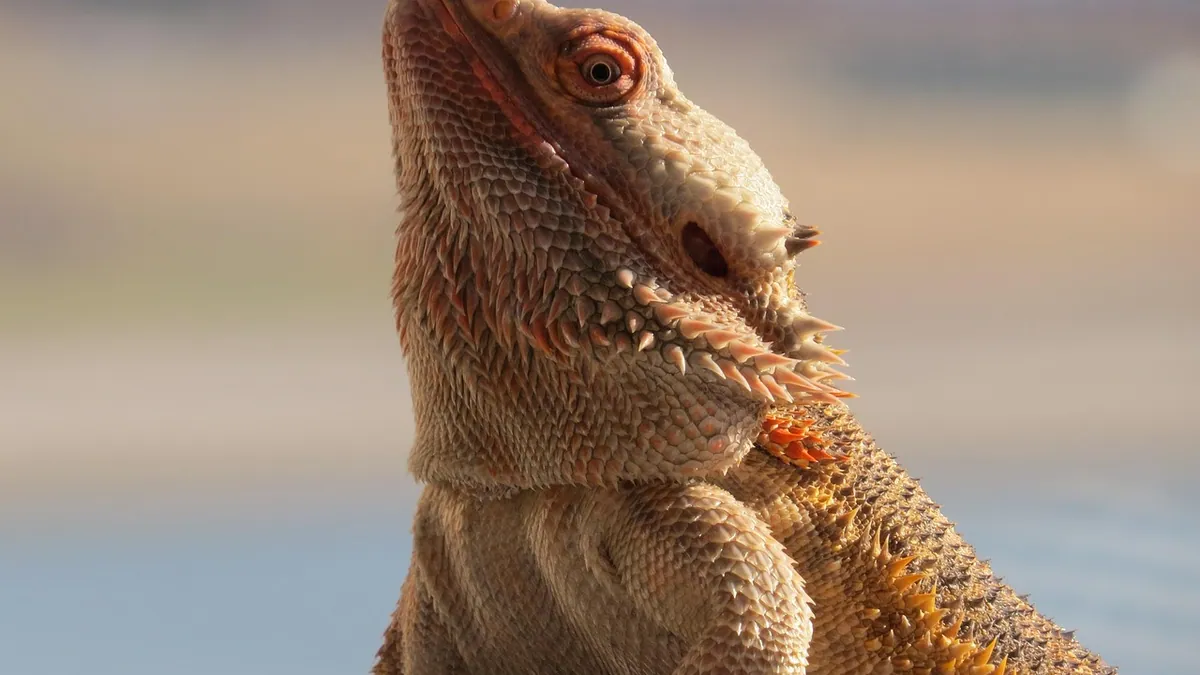
Why does my bearded dragon stare at me? Most of the time, your bearded dragon is staring because you are the most interesting thing in the room. Bearded dragons are visual animals that watch their surroundings closely, and a calm, relaxed stare usually means your pet is paying attention to you, waiting for food, or simply tracking movement. Waving is different. It is a deliberate visual signal, and in most cases it means your dragon is telling you or another dragon that it is not a threat.
This article is educational and is not a substitute for veterinary diagnosis or treatment.
Quick Answer
- A relaxed stare with a normal-colored beard and loose body posture is usually curiosity or food anticipation, not aggression.
- A slow wave, where one front leg circles in the air, is a submissive or appeasement signal, not a friendly greeting.
- A sudden jump toward you, a black beard, a puffed body, or an open mouth is a stress or defensive response, so give your dragon space.
- Reptiles communicate mainly through visual and chemical signals, and leg-waving has been documented as a visual signal in lizards [1].
- Any new staring combined with head tilt, tremors, poor balance, or appetite loss needs a veterinary exam, because neurological signs in bearded dragons can have serious causes.
Why Does My Bearded Dragon Stare at Me?
You Are the Most Interesting Thing in the Room
Bearded dragons are sit-and-wait predators with excellent vision. In the wild, they spend long stretches motionless, watching for insects, predators, and other lizards. Your living room is a smaller version of that same job. When your dragon stares at you, it is often doing exactly what it would do on a rock in Australia: tracking a large, moving object and deciding whether it matters.
This kind of stare looks calm. The body is flat or slightly propped up. The beard is its normal color. The eyes are open and the head may turn to follow you as you walk past. Some dragons will hold this stare for many minutes. That is normal.
Food Anticipation and Routine
Bearded dragons learn routines quickly. If you open the same cabinet before feeding, your dragon may stare at that cabinet, then at you, then back at the cabinet. This is a learned association, not affection in the human sense, but it is a sign your pet is engaged with its environment. A dragon that stares at you at the same time each evening is often just waiting for dinner.
Watching as Social Attention
Many animals follow the gaze of others to gather information about their surroundings. Pigeons, for example, follow the gaze of other pigeons, and the behavior increases when more birds are looking in the same direction [2]. Bearded dragons are not pigeons, but the underlying idea applies. A dragon that watches you closely is gathering information about a social partner. You are part of its daily world, and it pays attention to you.
Why Does My Bearded Dragon Wave at Me?
Waving is one of the most misunderstood bearded dragon behaviors. The dragon lifts one front leg and moves it in a slow circle. This is a visual signal, and it has been formally described in lizards. In the Andean lizard Pholidobolus montium, leg-waving appeared only when another lizard or a mirror was present, which supports its role as a social signal [1].
In bearded dragons, waving is generally submissive. A dragon waves to say, "I see you, and I am not a threat." Young dragons wave often, especially when a larger dragon is nearby. Adults may wave at a new person, a mirror, or another pet in the room. A wave is not a wave hello. It is a way to lower the risk of conflict.
If your dragon waves at you and then relaxes, nothing is wrong. If it waves constantly, hides, or stops eating, the stressor may be too much and you should adjust the setup.
Why Does My Bearded Dragon Jump at Me?
Jumping is the behavior that worries owners most, and it deserves a closer look. A dragon may launch itself toward you for several reasons.
- Feeding response. A dragon that associates your hand with food may lunge before you even open the tank.
- Startle response. Sudden movement, a shadow, or a loud noise can trigger a jump.
- Defensive display. A dragon that feels cornered may jump, puff up, open its mouth, and darken its beard. This is a threat, not an invitation.
- Breeding or territorial behavior. Some adults, especially males in season, become more reactive.
A jump paired with a black beard is a clear warning. Learn to read that signal, and give your dragon room. For a closer look at beard color, see Bearded Dragon Black Beard: What It Means and When to Worry.
Medical Causes to Rule Out
Behavior changes in reptiles can be the first sign of illness. Bearded dragons hide pain and weakness well, so a dragon that suddenly stares blankly, tilts its head, or seems unsteady needs a veterinary evaluation.
Neurological Signs
Atadenovirus (also called adenovirus) is a common viral infection in bearded dragons. It can cause weight loss, diarrhea, and neurological signs such as head tilt, tremors, and star gazing, where the dragon looks upward for no clear reason. Star gazing is not the same as calmly watching you. If your dragon stares upward, circles, or loses balance, contact a reptile veterinarian. More detail is available in Bearded Dragon Care: Atadenovirus star gazing neurological signs.
Metabolic Bone Disease
Metabolic bone disease (MBD) develops when a bearded dragon does not get enough calcium or proper ultraviolet B (UVB) light. Early signs include weakness, twitching, a soft jaw, and difficulty walking or holding the body up. A dragon with MBD may sit and stare because moving is hard. Correct UVB lighting and calcium are central to treatment. See Bearded Dragon Care: Metabolic Bone Disease (MBD) Signs & UVB Lighting.
Pain, Impaction, and Infection
A dragon that is uncomfortable may become still and watchful instead of active. Impaction, where the digestive tract is blocked, can cause straining, lethargy, and loss of appetite. Respiratory infections cause labored breathing, mucus, and a stretched neck. Any of these problems can change how your dragon looks at you and reacts to handling. If you suspect impaction, read Bearded Dragon Impaction: Signs, Causes, and Veterinary Care.
Vision Problems
Shedding around the eyes, retained eye caps, or an eye infection can make a dragon squint, stare, or react oddly to movement. A veterinarian can examine the eyes and check for underlying disease.
When Staring, Waving, or Jumping Becomes a Problem
Normal communication becomes a welfare concern when it comes with any of these patterns.
- The dragon waves or freezes every time you enter the room, even after weeks of calm handling.
- The dragon hides for most of the day and only comes out to eat.
- The dragon jumps at the glass repeatedly, rubs its snout, or paces the enclosure.
- The dragon black-beards, hisses, or opens its mouth when you approach.
- The dragon stops eating, loses weight, or has abnormal droppings.
These signs point to stress, an unsuitable environment, or illness. Stress in reptiles is not just an emotional state. It can suppress appetite and immune function over time.
What to Do Step by Step
Step 1: Observe Before You Interact
Sit near the enclosure and watch your dragon for a few minutes without opening the door. Note the beard color, body posture, breathing, and whether the dragon waves, freezes, or approaches. This baseline tells you what is normal for your pet.
Step 2: Fix the Basics
Check temperature gradient, basking spot, UVB bulb age, and enclosure size. A bearded dragon that cannot thermoregulate properly will behave differently. Replace UVB bulbs on the schedule recommended for your specific bulb type, since output drops before the bulb burns out.
Step 3: Build Positive Handling Sessions
Keep sessions short at first, five to ten minutes. Support the body and legs. Handle your dragon low over a soft surface so a jump cannot cause a fall injury. End the session when the dragon stays calm, not when it struggles.
Step 4: Use Food to Build Trust
Offer insects with tongs instead of fingers if your dragon lunges. This reduces accidental bites and teaches your dragon that hands are not food. Feed at consistent times so the dragon learns the routine.
Step 5: Add Enrichment
Provide climbing branches, a hide, and a textured basking area. Let your dragon watch activity from a secure spot. Bearded dragons are visual animals, and a tank with a view and cover gives them choices. For background on how wild bearded dragons use space and signals, see Understanding the Wild Bearded Dragon: Natural Habitat and Behavioral Insights.
Step 6: Reduce Triggers
If your dragon waves or jumps at a mirror, another pet, or a reflection in the glass, block that view. Move the enclosure away from high-traffic areas if the dragon seems overwhelmed. Cover part of the glass with a background if reflections are a problem.
What Not to Do
- Do not punish your dragon. Reptiles do not learn from punishment the way mammals do, and spraying, tapping, or yelling increases fear.
- Do not assume a wave is affection. It is a signal, and it usually means the dragon is trying to reduce tension.
- Do not force handling on a dragon that is black-bearding, hissing, or gaping. That is a defensive display, and pushing through it can lead to a bite.
- Do not ignore a sudden change in staring behavior. A dragon that was active and now sits and stares may be sick.
- Do not rely on a red light or a heat rock to solve behavior problems. Correct heat and UVB are the foundation.
When to Involve a Veterinarian or Behavior Professional
Contact a reptile-experienced veterinarian if your dragon shows neurological signs, breathing difficulty, a swollen or soft jaw, weight loss, or a sudden change in appetite or behavior. These signs can indicate infection, metabolic bone disease, or another serious condition.
A certified behavior professional can help if your dragon shows persistent aggression or fear despite a correct environment. Ask your veterinarian for a referral to someone who works with reptiles.
Limitations and When to Contact a Veterinarian
This article covers common behavior patterns, but every bearded dragon is an individual. A calm stare in one dragon may be a pain response in another. Individual cases need a veterinarian who can examine your pet, review the enclosure, and run tests if needed.
Contact a veterinarian the same day if your dragon has a new head tilt, tremors, trouble walking, labored breathing, or a swollen jaw. Seek emergency care now if your dragon is unresponsive, gasping, has prolapsed tissue, or has been straining without passing stool. Schedule a routine visit if your dragon has slowly become less active, is eating less, or has changed how it responds to you over several weeks.
Frequently Asked Questions
Is it normal for a bearded dragon to stare at its owner?
Yes, calm staring is normal and usually means your dragon is watching a familiar part of its environment. A relaxed body, normal beard color, and steady breathing all point to curiosity instead of stress.
Does a waving bearded dragon mean it likes me?
No, waving is not a sign of affection. It is a submissive visual signal that tells another animal, including you, that your dragon is not a threat.
Why does my bearded dragon watch me but run away when I open the tank?
Your dragon may be interested in you from a distance but still wary of hands entering its space. Short, calm handling sessions and feeding with tongs can slowly reduce that wariness.
Can staring be a sign of illness in bearded dragons?
Yes, a blank or upward stare, especially with head tilt, tremors, or poor balance, can be a neurological sign. Bearded dragons with atadenovirus may show star gazing and other neurological problems, so a veterinary exam is warranted.
Should I worry if my bearded dragon jumps at the glass?
It depends on the context. A single jump toward food or during a startle is common, but repeated jumping, snout rubbing, or pacing suggests stress or an enclosure problem that needs to be fixed.
Related Articles
- Bearded Dragon Impaction: Signs, Causes, and Veterinary Care
- Bearded Dragon Black Beard: What It Means and When to Worry
- Bearded Dragon Care: Atadenovirus star gazing neurological signs
- Understanding the Wild Bearded Dragon: Natural Habitat and Behavioral Insights
- Bearded Dragon Care: Metabolic Bone Disease (MBD) Signs & UVB Lighting
- Bearded Dragon Illnesses: A Comprehensive Guide to Symptoms and Care
- Does My Bearded Dragon Like Me? Bonding Signs
- Why Is My Bearded Dragon Bobbing His Head? Meaning and Causes
- Why Is My Bearded Dragon Puffing Its Beard? Meaning
References
- Visual Signaling in the Semi-Fossorial Lizard Pholidobolus montium (Gymnophthalmidae). Animals : an open access journal from MDPI, 2021.
- Gaze following in pigeons increases with the number of demonstrators. iScience, 2025.