Why Does My Bearded Dragon Run Away From Me?
By Dr. Zubair Khalid, DVM, MS, PhD ·
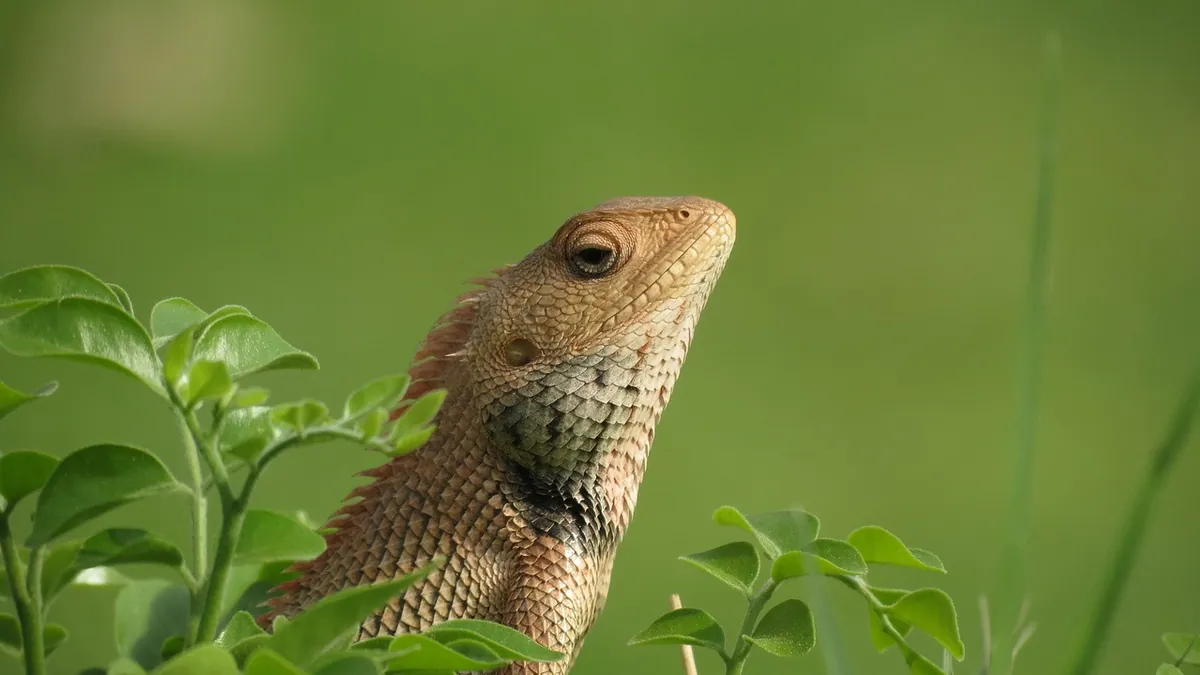
If your bearded dragon bolts when you reach into the enclosure, you are seeing a normal prey-animal response, not a sign that your pet hates you. Bearded dragons are wired to treat large, fast, overhead movement as a possible predator, so fleeing is often instinct. The good news is that most skittish dragons can be tamed with patience, correct handling, and a healthy environment.
This article is educational and is not a substitute for veterinary diagnosis or treatment.
Quick Answer
- Running away is usually fear or stress, not aggression, and it often improves within a few weeks of calm, consistent handling.
- Check temperature, lighting, and enclosure size first, because chronic stress from poor husbandry makes taming much harder.
- Never chase, grab in published veterinary research, or punish your dragon. These actions teach it that hands are dangerous.
- Move slowly, scoop from below, and keep sessions short (5 to 10 minutes) at first.
- If your dragon also stops eating, hides constantly, or shows a black beard, see a reptile veterinarian to rule out pain or illness.
Why Does My Bearded Dragon Run Away From Me?
It Sees You as a Predator
To a small reptile, a hand coming in published veterinary research looks like a hawk or a snake. Many reptiles respond to a moving threat by repositioning their body away from it to reduce visual exposure, a behavior documented in chameleons facing a moving object [1]. Your dragon is doing the same thing. It is not judging you. It is trying to survive.
It Was Not Handled Much as a Baby
Dragons that were raised in large groups or never handled by people often start life wary of hands. Taming is a learned process, and an adult dragon that was never socialized can still learn, it just takes longer.
The Enclosure Feels Unsafe
A dragon that cannot hide, thermoregulate, or get away from traffic in the room will stay on edge. Stress hormones in captive reptiles respond to housing conditions, and the response can differ by species and setup [2]. If your dragon has no cave, no basking spot at the right temperature, or lives in a busy hallway, it may flee every time you approach.
It Is in Shed, Brumation, or a New Home
New arrivals, shedding, and brumation (a seasonal slow-down) all make dragons more reactive. Give a new dragon at least one to two weeks of quiet before you start handling.
It Is in Pain or Sick
This is the reason owners miss most often. A dragon with an injury, impaction, or infection may run because being touched hurts. If the fleeing started suddenly in a dragon that used to be calm, treat it as a medical clue, not a training problem. You can read more about digestive emergencies in our guide to bearded dragon impaction.
Medical Causes to Rule Out First
Before you start a taming plan, rule out pain and illness. A sick dragon does not have the energy or patience to be handled.
Signs That Point to a Health Problem
- Sudden change in behavior in a previously calm dragon
- Refusing food for more than a few days
- Weight loss, sunken eyes, or a soft jaw
- Swollen limbs, wounds, or retained shed around toes and tail
- Straining to poop, or no poop for several days
- Open-mouth breathing, wheezing, or mucus
- A black beard held for long periods
A black beard is a stress and pain signal, not just an attitude. Our article on bearded dragon black beard explains what different displays mean.
Husbandry Problems That Mimic Behavior Problems
Reptiles are ectotherms, so temperature drives nearly everything they do. When temperature, water balance, and other stressors stack up, the physiological cost is greater than any single stressor alone [3]. In practice, that means a dragon kept too cool, too hot, or too dry may act fearful and defensive even when nothing is wrong with its health.
Check these basics:
- Basking surface temperature: 100 to 110 F for adults, measured with a digital probe or infrared gun, not a stick-on gauge.
- Cool side: 75 to 85 F.
- UVB: a linear tube bulb, replaced every 6 to 12 months depending on the brand, mounted 10 to 15 inches from the basking spot.
- Enclosure size: 4x2x2 feet minimum for an adult.
- Substrate and hides: at least two hides, one on the cool side and one on the warm side.
Substrate matters more than many owners realize. In a study of juvenile softshell turtles, animals kept on fine sand showed more hidden resting and fewer maladaptive behaviors than turtles kept with no substrate, and they grew better too [4]. The species is different, but the principle holds for many reptiles: a natural, diggable floor reduces stress behavior.
If your setup needs a full review, start with our overview of bearded dragon lifespan and common health problems, which covers the husbandry basics that prevent most problems.
When Does Running Away Become a Problem?
Fleeing is a problem when it interferes with basic care or when it comes with other warning signs.
See a veterinarian if your dragon:
- Runs away and also refuses food or loses weight
- Cannot be handled at all for cage cleaning, soaking, or medication
- Shows a black beard, gaping, or hissing every time you enter the room
- Has not improved after 3 to 4 weeks of consistent, gentle taming work
- Has a visible injury or swelling
A dragon that simply scoots away but calms down within a minute and eats well is usually just undersocialized, not sick. That is a training issue, and it is fixable.
How to Tame a Bearded Dragon That Runs Away
Step 1: Fix the Environment First
Taming does not work in a stressful enclosure. Set temperatures, UVB, hides, and substrate correctly before you start handling. A dragon that feels safe in its home is far easier to tame.
Step 2: Sit Near the Enclosure Without Touching
Spend 10 to 15 minutes a day sitting next to the enclosure, talking softly or reading out loud. Do not open the door. Do this for 3 to 5 days. You are teaching your dragon that your presence predicts nothing bad.
Step 3: Offer Food by Hand or Tongs
Once your dragon stops hiding when you sit nearby, offer a favorite insect with tongs. Let it come to you. If it backs away, drop the insect and try again the next day. Never chase it with the food.
Step 4: Touch Briefly, Then Stop
When your dragon takes food calmly, rest one finger gently on its back for 2 seconds, then withdraw. Repeat over several days, gradually increasing to a light stroke along the back. Stop before the dragon pulls away. Ending on a calm note is what builds trust.
Step 5: Scoop From Below, Support the Whole Body
When you are ready to pick up your dragon, slide your hand under its chest and belly from the side or front, never from directly above. Support the hind legs with your other hand. Hold it close to your body, low over a soft surface, for 1 to 2 minutes. Put it back before it struggles.
Step 6: Keep Sessions Short and Predictable
Five to 10 minutes, once or twice a day, is plenty at first. Same time, same calm room, same slow movements. Predictability lowers fear.
Step 7: Use Enrichment to Build Confidence
Add climbing branches, a dig box, and new hide placements. Let your dragon explore a safe, supervised area outside the enclosure, such as a warm room with no gaps or other pets. A dragon that chooses to approach you is a dragon that is starting to trust you.
Step 8: Track Progress in Weeks, Not Days
Expect small wins. Week 1 might be no hiding when you sit nearby. Week 3 might be eating from tongs. Week 6 might be a calm 5-minute hold. If you see no progress at all after a month, get a veterinary check and consider a certified behavior professional.
What Not to Do
- Do not punish. Yelling, tapping the glass, or squirting water teaches fear, not calm.
- Do not grab in published veterinary research. This triggers the predator reflex directly.
- Do not chase. Chasing confirms that hands are dangerous.
- Do not force handling when the dragon is hissing, gaping, or black-bearding. That is a hard stop signal.
- Do not wake a brumating dragon to handle it. Let it rest.
- Do not assume "he will grow out of it." Untamed adults stay untamed without deliberate work.
- Do not skip the vet check. Pain and illness are common hidden reasons for sudden fear.
One common myth is that a dragon that runs away is "mean" or "dominant." Bearded dragons are not pack animals and do not compete for rank with you. Fear and pain explain nearly all of this behavior.
When to Involve a Veterinarian or Behavior Professional
Call a reptile-experienced veterinarian if your dragon shows any medical sign listed above, if the behavior changed suddenly, or if taming has stalled after a month of consistent work. A veterinarian can examine for injury, impaction, infection, and metabolic bone disease, and can calculate any needed medication dose based on your dragon's weight and health.
If your dragon is medically healthy and still panics during handling, ask your veterinarian for a referral to a certified behavior professional who works with reptiles. In some cases, a veterinarian may discuss short-term calming support, but any drug or dose must come from your veterinarian after an exam.
Limitations and When to Contact a Veterinarian
This article cannot diagnose your individual dragon. Behavior is a puzzle with medical, environmental, and learning pieces, and only a veterinarian who examines your pet can sort them out.
Contact a veterinarian the same day if your dragon:
- Stops eating or drinking
- Has diarrhea, vomiting, or a prolapse
- Shows swelling, a wound, or a retained shed cutting off a toe or tail tip
- Has been straining to poop for more than 24 hours
Go to an emergency clinic now if your dragon:
- Is limp, unresponsive, or cannot right itself
- Has trouble breathing or breathes with its mouth open at rest
- Has a seizure or sudden paralysis
- Has been attacked by another pet
Schedule a routine visit within a week if the fleeing is new, if your dragon hides all day, or if you cannot complete basic care like cleaning the enclosure.
Frequently Asked Questions
Why is my bearded dragon running away from me all of a sudden?
A sudden change usually points to pain, illness, or a recent stressful event like a move, a new pet, or a temperature problem. A healthy dragon that was calm and is now fearful needs a veterinary exam before you assume it is a training issue.
How long does it take to tame a scared bearded dragon?
Most dragons show clear improvement in 2 to 6 weeks with daily, gentle, short sessions. Dragons that were never handled as babies may take several months. Progress is measured in small steps, not in one big breakthrough.
Should I pick up my bearded dragon if it runs away?
No. Picking up a fleeing dragon reinforces that hands are a threat. Wait until it is calm, then scoop from below and keep the hold brief. If it struggles, put it down and try again later.
Can a bearded dragon bond with its owner?
Yes. Bearded dragons can learn to recognize their keeper and often become calm and curious with people they trust. Bonding is built through predictable, low-stress handling and good care, not through forcing contact.
Does a black beard mean my bearded dragon is scared of me?
A black beard usually signals stress, pain, or a defensive mood, and it often appears when a dragon feels threatened. If it shows up every time you approach, pause handling, check the enclosure and health, and see a veterinarian if it persists.
Is it normal for a baby bearded dragon to run away?
Yes, babies are small prey animals and startle easily. They need a quiet enclosure, short handling sessions, and time. Most settle down as they grow if you handle them gently and consistently.
Can poor lighting or temperature make my bearded dragon afraid of me?
Indirectly, yes. A dragon kept too cool or without proper UVB is stressed and may act defensive or lethargic. Correct heat and lighting are the foundation of any taming plan.
Will my bearded dragon ever stop running away?
Most do, with patience and correct care. If a dragon is medically healthy and still panics after a month of consistent work, ask your veterinarian about a behavior referral.
Related Articles
- Understanding the Wild Bearded Dragon: Natural Habitat and Behavioral Insights
- Bearded Dragon Lifespan: What to Expect and How to Maximize It
- Bearded Dragon Impaction: Signs, Causes, and Veterinary Care
- Bearded Dragon Lifespan and Common Health Problems
- Bearded Dragon Black Beard: What It Means and When to Worry
- Bearded Dragon Illnesses: A Comprehensive Guide to Symptoms and Care
- Why Is My Bearded Dragon Hiding? Normal or Concerning?
- Why Is My Bearded Dragon Staring or Waving at Me?
- Why Does My Bearded Dragon Lick or Bite Me? Behavior Explained
References
- Relating lateralization of eye use to body motion in the avoidance behavior of the chameleon (Chamaeleo chameleon). PloS one, 2013.
- Species-specific variations in corticosterone concentrations in captive snake shed skins: implications for housing systems and welfare. BMC veterinary research, 2026.
- Physiological responses and adaptive mechanisms of amphibians and reptiles to multiple interacting environmental stressors: an integrative review. Frontiers in physiology, 2026.
- Effects of Different Substrates on Growth, Serum Biochemical Parameters, and Behavioral Characteristics of Juvenile Asian Giant Softshell Turtles, Pelochelys cantorii. Animals : an open access journal from MDPI, 2026.