Can a Ball Python Eat a Cat? Safety for Both Pets
By Dr. Zubair Khalid, DVM, MS, PhD ·
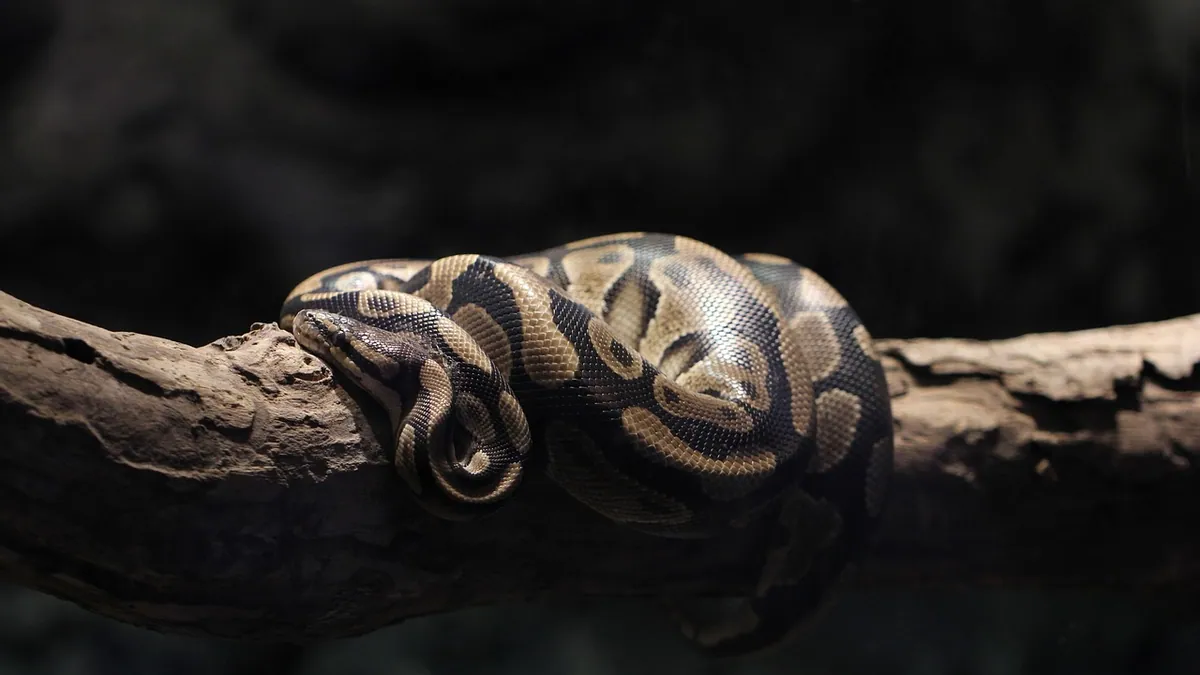
Can ball pythons eat cats? No. A ball python is far too small to swallow a cat, and a healthy adult cat is far more likely to injure the snake than the other way around. The real danger in a mixed-species home runs in both directions, and it comes down to supervision, secure caging, and household rules.
This article is educational and is not a substitute for veterinary diagnosis or treatment.
Quick Answer
- A ball python cannot eat a cat. Adult ball pythons typically top out around 3 to 5 feet and eat rodents roughly the width of their body, while a cat weighs many times more than any prey a ball python can swallow.
- A cat can kill or seriously injure a ball python. Cat bites and claw punctures cause deep wounds, infection, and stress, and even a single bite can be fatal to a snake.
- Never let them interact, even "just to see." Keep the snake in a locked, escape-proof enclosure and keep the cat out of the room during handling.
- Cats are significant predators of reptiles and other wildlife when they roam outdoors [1]. Indoors, that same hunting drive points at your snake.
- If a bite or scratch happens on either animal, treat it as urgent. Snake wounds can look minor and still become infected, and cat bites in cats need prompt veterinary care.
Do Ball Pythons and Cats Get Along?
No. Ball pythons and cats do not get along, and they should never share space. They do not bond, they do not "become friends," and they do not learn to tolerate each other. What you may see is a cat staring at the enclosure for hours, which is predatory interest, not affection.
Cats are efficient predators of small animals, including reptiles. Research from communities near protected areas in Ghana found that predation on wildlife was significantly higher in cats than in dogs, and that cats with unrestricted outdoor access and rationed feeding were more likely to hunt [1]. Your indoor cat has the same instincts. A ball python is a slow-moving, heat-signature-rich target.
From the snake's side, a cat is a threat, not food. Ball pythons are ambush predators built to eat rodents and small birds. They are not built to handle a struggling, clawed animal ten times their weight.
Can a Ball Python Eat a Cat? Size and Anatomy
No, and the math makes it obvious. A ball python's jaws can stretch, but the prey still has to fit through the mouth, throat, and body. A ball python eats prey roughly as wide as its own midsection, usually a rat or mouse. A cat is far wider and far heavier.
There is also a behavior problem. Ball pythons are famous for going off food for weeks or months, and a stressed snake may refuse meals entirely. If you want to understand normal feeding patterns and hunger strikes, see the Ball Python Feeding Guide and Refusing to Eat.
So the fear that your snake will eat your cat is misplaced. The fear that your cat will hurt your snake is not.
Will a Ball Python Attack My Cat?
A ball python will not hunt your cat, but it can bite in self-defense. If a cat paws at the snake, picks it up, or corners it, the snake may strike. That bite is a defensive reaction, not predation.
Ball python bites are not venomous. They can still cause puncture wounds, bleeding, and infection in a cat. A cat that gets bitten needs a veterinary visit, because cat and snake mouths both carry bacteria.
The bigger risk is the reverse. Cats use claws and teeth, and a snake has no way to escape a determined cat in an open room. A single bite through the spine or a deep claw wound can be fatal.
Do Ball Pythons Attack Cats? Household Rules That Prevent Injury
Set rules and follow them every single day. Consistency is what keeps both animals safe.
1. House the snake in a locked, escape-proof enclosure
Use a front-opening enclosure with a secure latch, not a screen-top tank a cat can pop open. Place it on a sturdy stand the cat cannot tip. Route cords so a cat cannot pull them.
2. Keep the snake room off-limits to the cat
Close the door. If you cannot close the door, use a sturdy barrier. This is the single most effective step you can take.
3. Handle the snake only when the cat is secured
Put the cat in another room or have someone hold it. Never handle a snake with a cat in the same room, even for a second.
4. Never leave them together unsupervised
Not while you shower, not while you cook, not "just for a minute." Most injuries happen in the seconds you look away.
5. Wash your hands after handling either animal
Captive snakes can carry Salmonella enterica and other bacteria [2]. Wash with soap and water after touching the snake, its enclosure, or its supplies. This protects you, your family, and your cat.
6. Feed the snake in its enclosure or a secure bin
Do not feed near the cat. A cat that smells a thawed rodent may try to grab it, and a snake in feeding mode may strike at anything warm and moving.
7. Keep the cat's needs met
Cats that hunt more often tend to be fed rationed meals and roam freely [1]. Feed your cat complete meals on a schedule, provide play and enrichment, and keep it indoors. A bored, hungry cat is a cat that stalks the snake tank.
Daily and Weekly Safety Checklist
| Task | How often | Why it matters |
|---|---|---|
| Check enclosure latch and lid | Daily | A loose latch is how snakes escape and cats get in |
| Confirm the snake room door is closed | Every time you leave | Prevents unsupervised contact |
| Inspect the snake for wounds or scale damage | Weekly | Cat bites can hide under scales |
| Check the cat for bites, limping, or swelling | Weekly and after any contact | Cat wounds need early treatment |
| Wash hands after handling | Every time | Reduces Salmonella and bacterial spread |
| Clean water bowl and spot-clean enclosure | Daily | Dirty water and waste raise illness risk |
| Full enclosure clean and bedding change | As needed, often weekly | Reduces parasite and bacteria buildup |
| Weigh the snake and log feedings | Monthly | Early weight loss signals a problem |
Signs Something Is Wrong
Signs in the snake
- New wounds, punctures, or missing scales
- Swelling, redness, or discharge around a wound
- Refusing food for longer than usual
- Hiding constantly, striking at nothing, or acting defensive
- Wheezing, open-mouth breathing, or mucus around the mouth
- Regurgitating a meal
Stress and sudden changes in housing or diet can raise parasite loads in reptiles, and combined changes caused a measurable increase in fecal parasite eggs in one study of captive geckos [3]. A snake that has just survived a cat encounter is stressed, and stress can show up as appetite loss or illness.
Signs in the cat
- Puncture wounds, especially on the paws, face, or mouth
- Swelling, heat, or pus at a bite site
- Limping or refusing to walk on a paw
- Drooling, pawing at the mouth, or trouble eating
- Hiding, crying, or acting painful
- Fever, lethargy, or loss of appetite
Cat bite wounds are notorious for forming abscesses. Even a tiny puncture can seal over and trap bacteria underneath.
Common Mistakes Owners Make
- Assuming the snake is the danger. The cat is the bigger physical threat to the snake in almost every case.
- Letting them "meet." There is no safe introduction between a cat and a ball python.
- Using a screen-top tank with a loose lid. Cats can open or collapse these.
- Handling the snake with the cat in the room. A cat can cross a room in under a second.
- Ignoring a small wound. Snake wounds and cat bites both get worse without care.
- Feeding the snake while the cat watches. This invites a grab attempt.
- Skipping handwashing. Snakes can carry Salmonella and other bacteria that spread to people and pets [2].
- Leaving uneaten prey in the enclosure. Live or thawed rodents left behind can bite the snake and attract the cat.
- Letting the cat outdoors to "burn off energy." Free-roaming cats kill wildlife, including reptiles [1].
Setup Details That Matter for Health
Enclosure
Choose a front-opening enclosure sized for an adult ball python, with a locking latch. Place it against a wall on a stand rated for the weight. Add a thermostat-controlled heat source and a secure screen or vent the cat cannot push through.
Substrate and hides
Use a substrate that holds humidity and is easy to spot-clean. Provide at least two hides, one on the warm side and one on the cool side. A snake with good hiding spots is calmer and less likely to strike.
Quarantine and cleaning
If you bring home a new reptile, keep it away from other pets and wash your hands between animals. Plastic waste and improper disposal can reach wildlife and pets through the environment, and reptiles are affected by plastic pollution in terrestrial habitats [4]. Keep enclosures and supplies clean, and dispose of waste properly. Snakes have also been documented swallowing plastic debris in the wild, which shows how easily foreign material gets into a reptile's gut [5]. Keep small plastic items, wrappers, and bags away from the enclosure.
Feeding
Feed appropriately sized frozen-thawed rodents. Never feed prey wider than the snake's body. If your snake refuses food, do not panic and do not offer a live animal as a "fix." Review the Ball Python Feeding Guide and Refusing to Eat and talk to your veterinarian.
Household nutrition basics
If you also have a dog, keep species-appropriate food separate. Dogs should not live on cat food, and cats should not live on dog food. See Can Dogs Eat Cat Food and Can Cats Eat Dog Food for the details.
Limitations and When to Contact a Veterinarian
No article can assess your specific animals. Individual cases need a veterinarian who can examine the snake or cat in person.
Contact an emergency veterinary hospital right now if:
- Your cat bit or scratched the snake and you see a wound, bleeding, or a change in breathing
- Your snake bit your cat and the cat has a puncture wound, swelling, or is limping
- Your cat is vomiting, lethargic, or has trouble breathing after any contact
- Your snake is open-mouth breathing, wheezing, or has discharge from the mouth or nose
- Your snake regurgitated a meal and is now lethargic
Call your veterinarian the same day if:
- You find a small wound on either animal, even if it looks minor
- Your snake refuses food for longer than its normal pattern
- Your cat has a swollen paw or face after being near the enclosure
- You are unsure whether contact actually happened
Schedule a routine visit if:
- Your snake has not been seen by a reptile veterinarian since you got it
- Your cat is overdue for vaccines or a wellness exam
- You are planning to add another pet to the home
For any suspected poisoning or toxin exposure, call the ASPCA Animal Poison Control Center at (888) 426-4435 or the Pet Poison Helpline at (855) 764-7661. A consultation fee may apply.
Frequently Asked Questions
Can a ball python eat a cat?
No. A ball python is too small to swallow a cat, and cats are not part of its natural prey. A ball python eats rodents and small birds, and prey must be roughly the width of the snake's body.
Will a ball python eat my cat while I am asleep?
No. A ball python cannot eat a cat at any time. The realistic risk is the opposite, your cat injuring or killing your snake while you sleep, which is why a locked enclosure and a closed door matter.
Can a ball python kill a cat?
A ball python does not have venom and is not built to overpower a cat. It can bite in self-defense and cause puncture wounds that may become infected, but it cannot constrict and kill a healthy adult cat.
Do ball pythons and cats get along?
No. They should never be allowed to interact. Cats are predators of reptiles, and a ball python sees a cat as a threat, so any contact risks injury to one or both animals.
What should I do if my cat bites my snake?
Separate them immediately, put the snake back in its enclosure, and call a reptile veterinarian. Snake wounds can look minor and still become infected, so same-day evaluation is the safest choice.
Related Articles
- Ball Python Feeding Guide and Refusing to Eat
- Do Ball Pythons Make Good Pets? Honest Owner Guide
- Do Ball Pythons Bite? Why and How to Avoid It
- Why Is My Ball Python Eating So Much? Appetite Explained
References
- Pet-Wildlife Interactions Near Ghana's National Parks: Conservation and Health Risks. EcoHealth, 2026.
- Bacterial diversity in certain captive snake species in Bulgaria: A One Health challenge - pilot study. Open veterinary journal, 2026.
- Changes in housing and diet combined increase fecal oxyurid load in captive tokay geckos. PeerJ, 2026.
- Terrestrial reptiles and plastic pollution: a review. Environmental science and pollution research international, 2026.
- Silent Threats: First Case of Plastic Ingestion by Drymarchon corais (Yellow-tailed Indigo Snake) Highlights Environmental Risks of Improper Waste Disposal in the Amazon. Anais da Academia Brasileira de Ciencias, 2025.